


Vaginal Bleeding After a Bowel Movement During Menopause: Causes and When to Seek Care

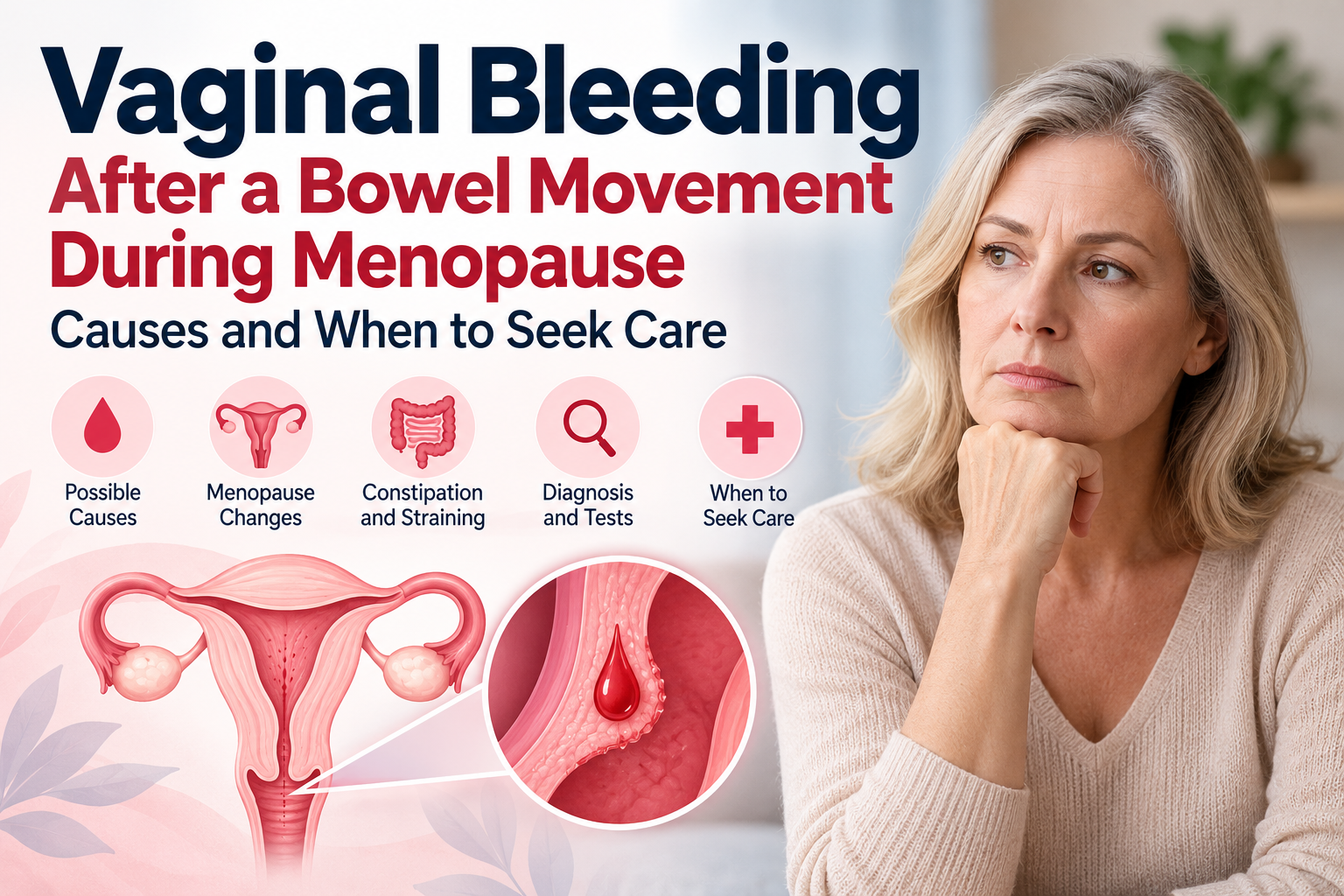
Noticing blood after passing stool can be unsettling, especially if your periods have stopped. Is the blood coming from the vagina or the rectum? Could straining be responsible? Vaginal bleeding after menopause needs medical assessment, even when it happens only after a bowel movement or appears as a few spots. This guide explains possible causes, what to observe, and how clinicians investigate the symptom.
Medical safety note: Bleeding after menopause is not something to diagnose at home. Most causes are not cancer, but a clinician needs to exclude important conditions. Seek urgent care for heavy bleeding, fainting, severe pelvic pain, or feeling very unwell.
What counts as postmenopausal bleeding?
Menopause is generally defined as 12 consecutive months without a menstrual period, when this is not due to another cause. Any subsequent vaginal bleeding, including pink staining, brown spotting or blood seen only when wiping, counts as postmenopausal bleeding and should be reported to a healthcare professional. If you take hormone replacement therapy, bleeding patterns may have additional explanations but still need assessment under the guidance appropriate to your regimen.
Is the blood vaginal or rectal?
Blood noticed after a bowel movement is not automatically vaginal. Constipation, hemorrhoids and anal fissures can cause rectal bleeding, while vaginal or uterine bleeding may become noticeable at the same time. You can note where blood appears and whether it is mixed with stool, but wiping patterns and blood color cannot reliably establish the source. A clinician may need to examine the area.
For more detail, read how to distinguish possible vaginal and rectal bleeding after a bowel movement. Our main guide to vaginal bleeding after a bowel movement covers the broader causes across different life stages.
Can straining or constipation cause vaginal spotting during menopause?
Straining raises pressure in the abdomen and pelvis. It may make existing bleeding more noticeable, but it does not prove that constipation caused bleeding from the vagina. After menopause, lower estrogen levels can make the vaginal tissues thinner and more fragile, and other conditions can also cause bleeding. Do not assume a small amount of blood is harmless simply because it appeared while pushing to pass stool.
See also our related explanation of constipation and vaginal bleeding.
Possible causes of bleeding after menopause
Vaginal or endometrial atrophy
Lower estrogen levels after menopause can lead to thinner, drier, more delicate vaginal tissues (sometimes called genitourinary syndrome of menopause) and thinning of the uterine lining. These changes can be associated with spotting, but a clinician must establish the source rather than assuming atrophy explains the bleeding.
Cervical or uterine polyps
Polyps are growths that are often noncancerous and can produce intermittent spotting. They may require examination or testing to confirm their nature.
Endometrial hyperplasia
Thickening of the uterine lining may cause abnormal bleeding, and certain types can increase the risk of endometrial cancer. Evaluation may include imaging and sampling of the uterine lining.
Endometrial or cervical cancer
Most postmenopausal bleeding does not indicate cancer. Nevertheless, it is an important warning symptom of endometrial cancer and must be assessed promptly rather than attributed to straining. Cervical and other gynecologic conditions may also be considered.
Medication or hormone-related bleeding
Some hormone therapies and blood-thinning medicines can contribute to bleeding. Do not stop prescribed treatment yourself; tell your clinician what you take, including the dose and when bleeding began.
When should you seek medical attention?
Arrange a prompt appointment for any vaginal bleeding after menopause, even one isolated episode. Seek urgent medical help for very heavy bleeding, faintness, collapse, significant weakness or severe abdominal/pelvic pain. If you are unsure whether blood is vaginal or rectal, explain that uncertainty when booking the appointment.
How is postmenopausal bleeding investigated?
Your healthcare professional may ask about the timing, amount and appearance of bleeding, hormone therapy, medication use and relevant medical history. Examination can help identify vaginal, cervical or rectal sources.
Depending on the assessment, testing may include transvaginal ultrasound, endometrial biopsy, hysteroscopy or other investigations. ACOG updated its guidance in April 2026: for most patients with postmenopausal bleeding, initial assessment includes both transvaginal ultrasound and endometrial tissue sampling. Ultrasound alone may be appropriate in selected low-risk, single-episode situations under clinician guidance; persistent or recurrent bleeding requires further evaluation.
What information should you record before your appointment?
- When the bleeding happened and whether it recurred
- Whether the blood seemed vaginal, rectal or uncertain
- The approximate amount and whether there were clots
- Any constipation, pain, urinary symptoms or discharge
- Hormone therapy, anticoagulants and other medicines
- When your last natural menstrual period occurred
You may also find our guide on spotting outside the expected menstrual cycle useful for terminology, although bleeding after menopause requires its own evaluation.
Frequently asked questions
Is one spot of blood after menopause serious?
Even a single small episode should be assessed. Many causes are benign, but the amount of bleeding alone cannot rule out a significant condition.
Can hemorrhoids be mistaken for vaginal bleeding?
Yes. Blood from an anal fissure or hemorrhoid may be noticed when wiping. If its source is uncertain, clinical examination is more reliable than a home wiping test.
Can vaginal dryness cause bleeding when wiping?
Fragile vaginal tissue may bleed, but it is important not to presume dryness is the cause without evaluation.
Does constipation cause uterine bleeding?
Constipation does not establish a uterine cause. Straining may coincide with bleeding or make it more noticeable, so postmenopausal vaginal bleeding still warrants investigation.
Will I need an ultrasound or biopsy?
Many patients require both ultrasound and uterine-lining sampling under updated ACOG guidance. The clinician will select tests based on your presentation and risk factors.
Related Pinkline Exports guides
- Vaginal bleeding after bowel movement: main causes and next steps
- Vaginal versus rectal bleeding
- Constipation and vaginal bleeding
- Pelvic pain during bowel movements
Medical references
Editorial note: Educational information only. Clinical reviewer attribution should be added only after review by a verified qualified professional.