


Vaginal Bleeding When Pooping: Causes, Concerns, and What to Do Next
Medically Reviewed by Dr. Neil K, GP and Medical Researcher: This article is for informational purposes only and does not substitute for professional medical advice. If you are experiencing unexplained pelvic pain, heavy bleeding, or severe discomfort, contact your healthcare provider immediately.
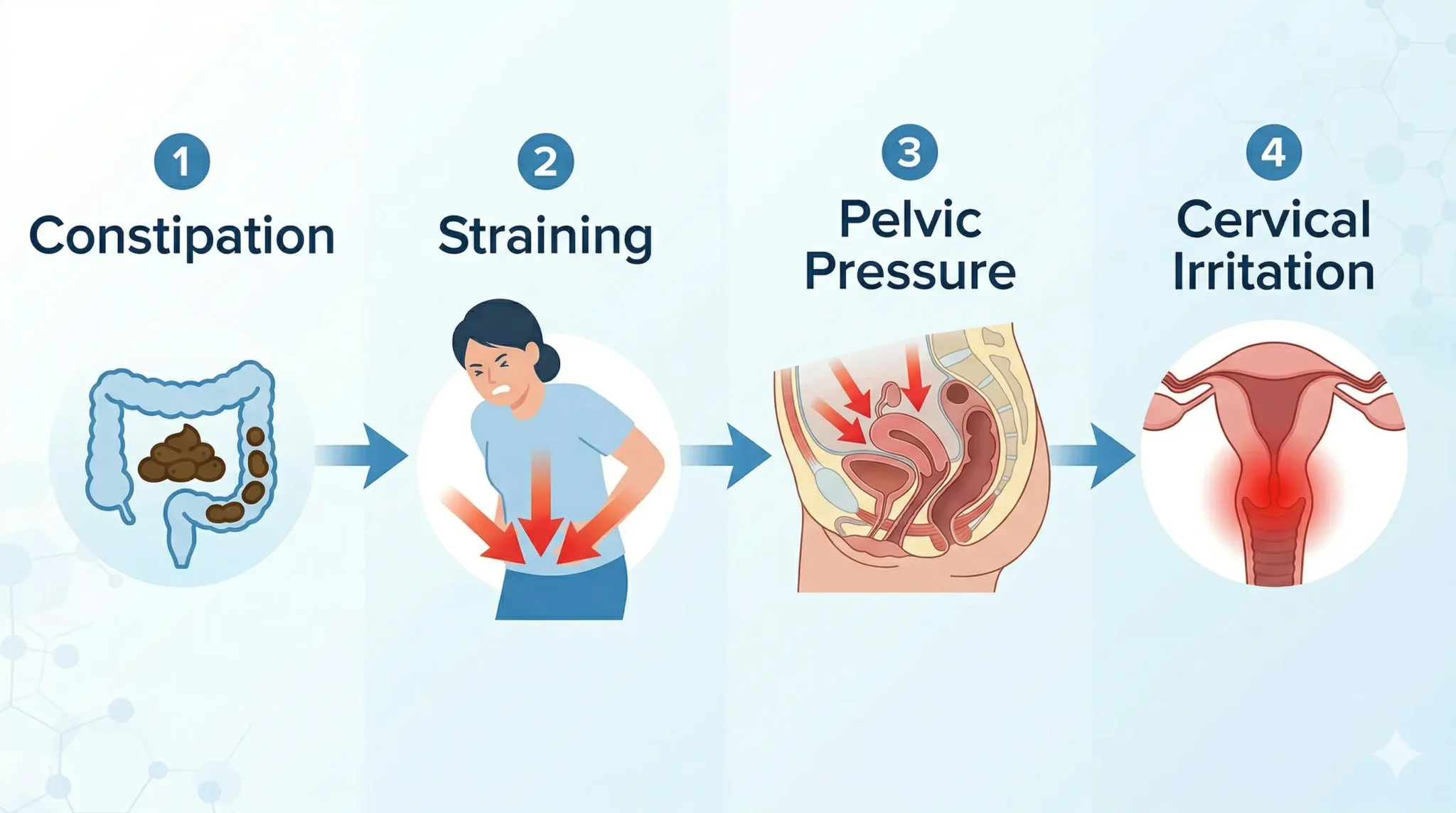
Noticing vaginal bleeding when pooping can be an alarming and stressful experience. However, while it is understandably concerning, it is a relatively common symptom with a variety of potential causes.
Whether you are experiencing light, occasional spotting or more noticeable vaginal bleeding with a bowel movement, the physical strain of passing a stool can directly affect your pelvic organs. In many cases, this bleeding is related to benign, easily treatable conditions like cervical polyps or pooled menstrual blood. In other instances, it may point to more complex structural or gynecological issues.
Understanding the root cause is the first step toward finding relief and getting the right medical care. Here is everything you need to know about why this happens and when to seek help.
The Crucial First Step: Is It Vaginal or Rectal Bleeding?
Because the vagina and rectum are located so closely together, it is incredibly common to mistake rectal bleeding for vaginal bleeding, especially after a bowel movement. Before evaluating potential gynecological causes, it is important to rule out gastrointestinal issues.
The most common causes of bleeding during a bowel movement are actually rectal:
- Hemorrhoids: Swollen blood vessels in the lower rectum or anus that can rupture under pressure.
- Anal Fissures: Tiny tears in the lining of the anus caused by passing hard or large stools.
How to Tell the Difference (The Wipe Test): To determine the true source of the blood, gently wipe the vaginal area front-to-back with one piece of toilet paper, and the anal area with a separate, fresh piece. If the blood is strictly isolated to the vagina, the bleeding is indeed gynecological, and the pressure of the bowel movement is acting as the trigger.
Why the Physical Act of Pooping Triggers Bleeding
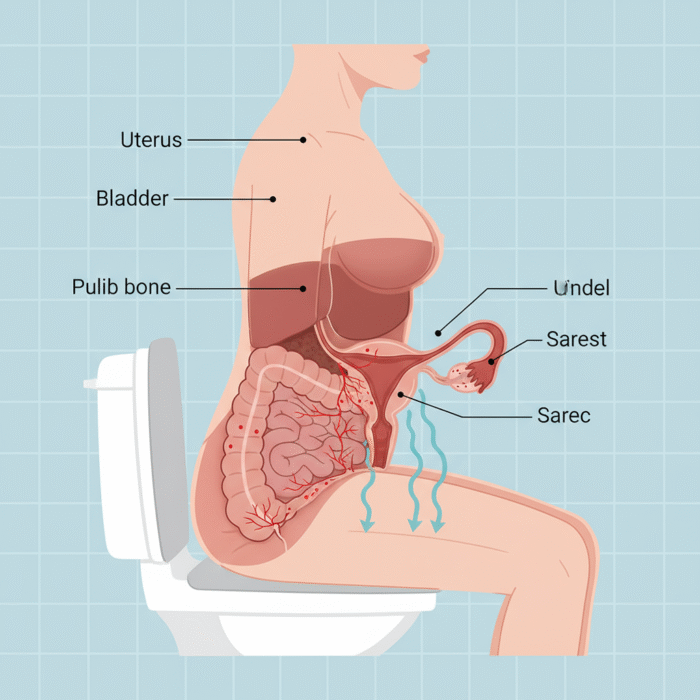
If you have confirmed the bleeding is vaginal, you might wonder why it only seems to happen when you are on the toilet. The answer lies in physics and anatomy.
When you bear down to have a bowel movement, you engage in what medical professionals call the Valsalva maneuver. This action significantly increases your intra-abdominal and pelvic pressure. If you have sensitive tissues, minor tears, or pooled blood in the vaginal canal, this sudden increase in physical pressure literally forces the blood or spotting out.
Common Causes of Vag Bleeding with Bowel Movements
1. Cervical Friability and Polyps
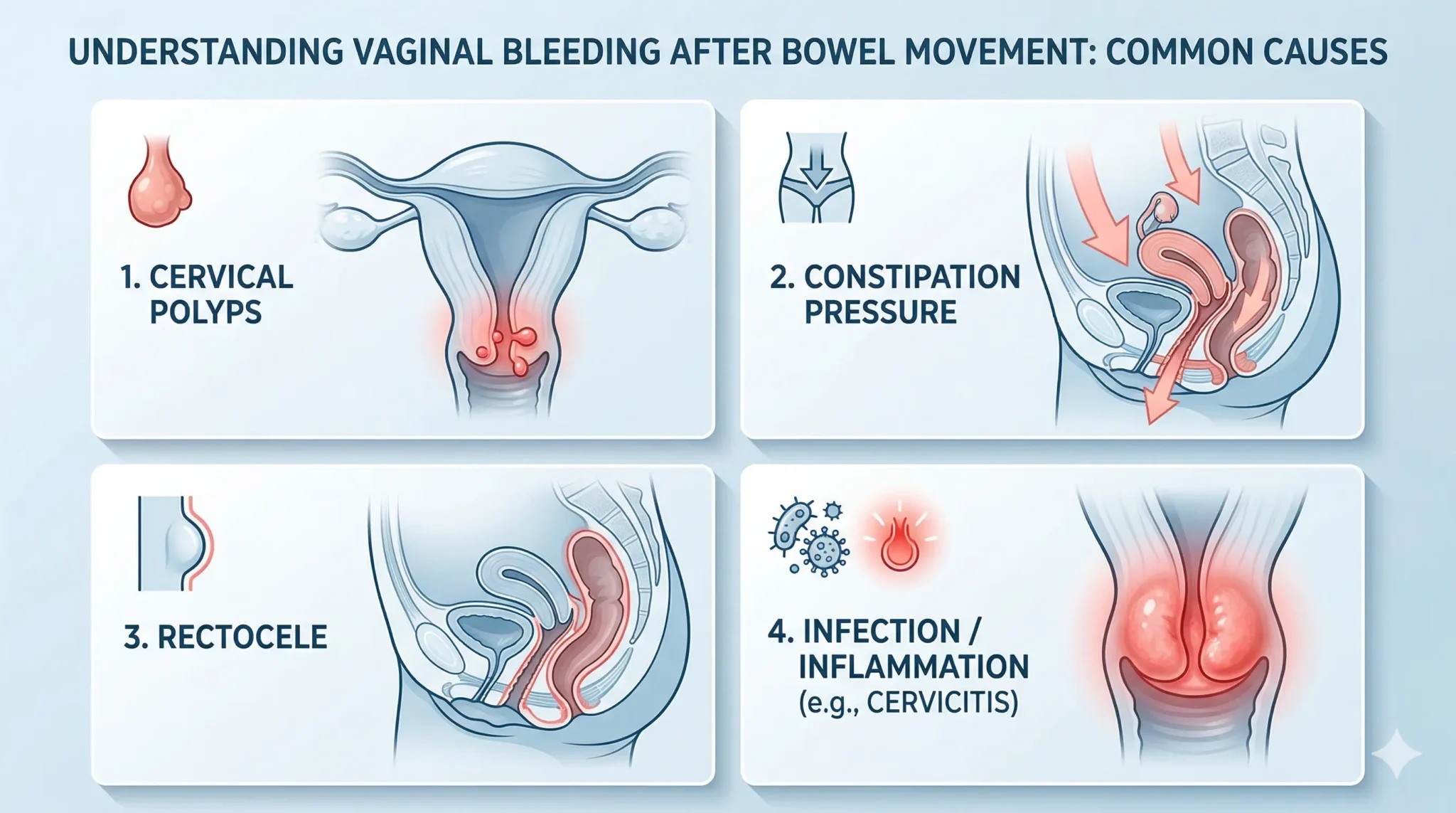
The cervix can become "friable"—meaning the tissue is easily irritated, inflamed, and prone to bleeding. This can be caused by benign cervical polyps, hormonal fluctuations, or minor infections like cervicitis. The physical strain of a bowel movement can rub or pressure these sensitive tissues, causing them to bleed slightly.
2. Pooled Menstrual or Postpartum Blood
If you are at the tail end of your menstrual cycle, experiencing early pregnancy spotting, or are in the postpartum recovery phase, old blood can pool in the vaginal vault. The pressure from pushing during a bowel movement acts like a squeeze, expelling pooled menstrual blood that was already present but resting higher up in the canal.
3. Bowel Endometriosis
Endometriosis is a condition where tissue similar to the lining of the uterus grows outside of it. In some cases, these endometrial lesions grow on the bowel or in the rectovaginal septum (the thin wall of tissue separating the vagina and rectum). Straining to poop can irritate these lesions, causing concurrent pelvic pain and vaginal spotting.
4. Pelvic Organ Prolapse (Rectocele)
A rectocele occurs when the fascia (connective tissue) separating the rectum from the vagina weakens. This allows the rectum to bulge forward into the back wall of the vagina. This structural shift can make bowel movements physically difficult, requiring excess straining, which can cause friction, micro-tears, and light vaginal bleeding.
5. Atrophic Vaginitis (Vaginal Atrophy)
Common in perimenopausal and post-menopausal women, decreasing estrogen levels cause the vaginal walls to thin, dry out, and become less elastic. The sheer pressure of a hard bowel movement pressing against these fragile, thinned walls can cause microscopic tears and light vaginal bleeding.
Maintaining your gynecological well-being requires understanding your body. For more comprehensive guides, expert advice, and resources, explore our dedicated Women's Health section.
Frequently Asked Questions (FAQs)
Can pushing too hard to poop cause vaginal bleeding?
Yes. Pushing too hard—known medically as straining or the Valsalva maneuver—dramatically increases the pressure inside your abdomen and pelvic floor. If you have any fragile tissue (such as cervical polyps or vaginal atrophy) or if there is old blood pooled in the vaginal canal from a recent period, this intense pressure acts almost like a vacuum, forcing the blood out. It is highly recommended to stay hydrated and eat enough fiber to avoid constipation and reduce the need to bear down forcefully.
Is it normal to spot after a bowel movement during early pregnancy?
During pregnancy, your body pumps a significantly higher volume of blood to your cervix, making it highly sensitive and "friable." Because of this, slight straining during a bowel movement can easily cause a few drops of pink or brown blood. While light spotting can be completely benign and common, any vaginal bleeding during pregnancy should be immediately evaluated by your OBGYN to rule out serious complications like an ectopic pregnancy or a threatened miscarriage.
How do I know if the blood is from my period or something else?
Timing and color are your best indicators. If you are within a few days before or after your expected period, it is likely just residual menstrual blood being pushed out by the pressure of the bowel movement. Menstrual blood is usually dark red or brown. If the bleeding happens entirely outside of your menstrual window, is bright red, or is accompanied by pain, foul-smelling discharge, or itching, it is likely tied to a structural issue, infection, or cervical irritation rather than a normal period.
Could vaginal bleeding when pooping be a sign of cancer?
While it is natural for your mind to jump to the worst-case scenario, it is important to know that the vast majority of cases are caused by benign issues like polyps, hemorrhoids (mistaken for vaginal blood), or hormonal changes. However, persistent, unexplained vaginal bleeding is a recognized symptom of cervical or uterine cancer. If the bleeding is recurring, heavy, or happens after menopause, you should schedule a screening with your doctor immediately for peace of mind and proper diagnosis.
Red Flag Symptoms: When to See a Doctor
Occasional, light spotting with a bowel movement may not be an immediate emergency, but you should schedule an evaluation with your gynecologist if it becomes a recurring pattern.
Seek immediate medical attention if your bleeding is accompanied by any of the following "red flag" symptoms:
- Heavy bleeding: Soaking through a pad or tampon in an hour or two.
- Severe, sudden pain: Sharp pelvic, vaginal, or abdominal pain that does not subside.
- Foul-smelling discharge or fever: These are primary indicators of a pelvic or vaginal infection.
- Passing stool or gas through the vagina: This is a clear sign of a rectovaginal fistula, an abnormal medical connection between the lower intestine and the vagina that requires prompt surgical consultation.
- Dizziness or lightheadedness: Signs that you are losing too much blood.