


Sildenafil 50 mg vs 100 mg: How Doctors Select the Right Dose

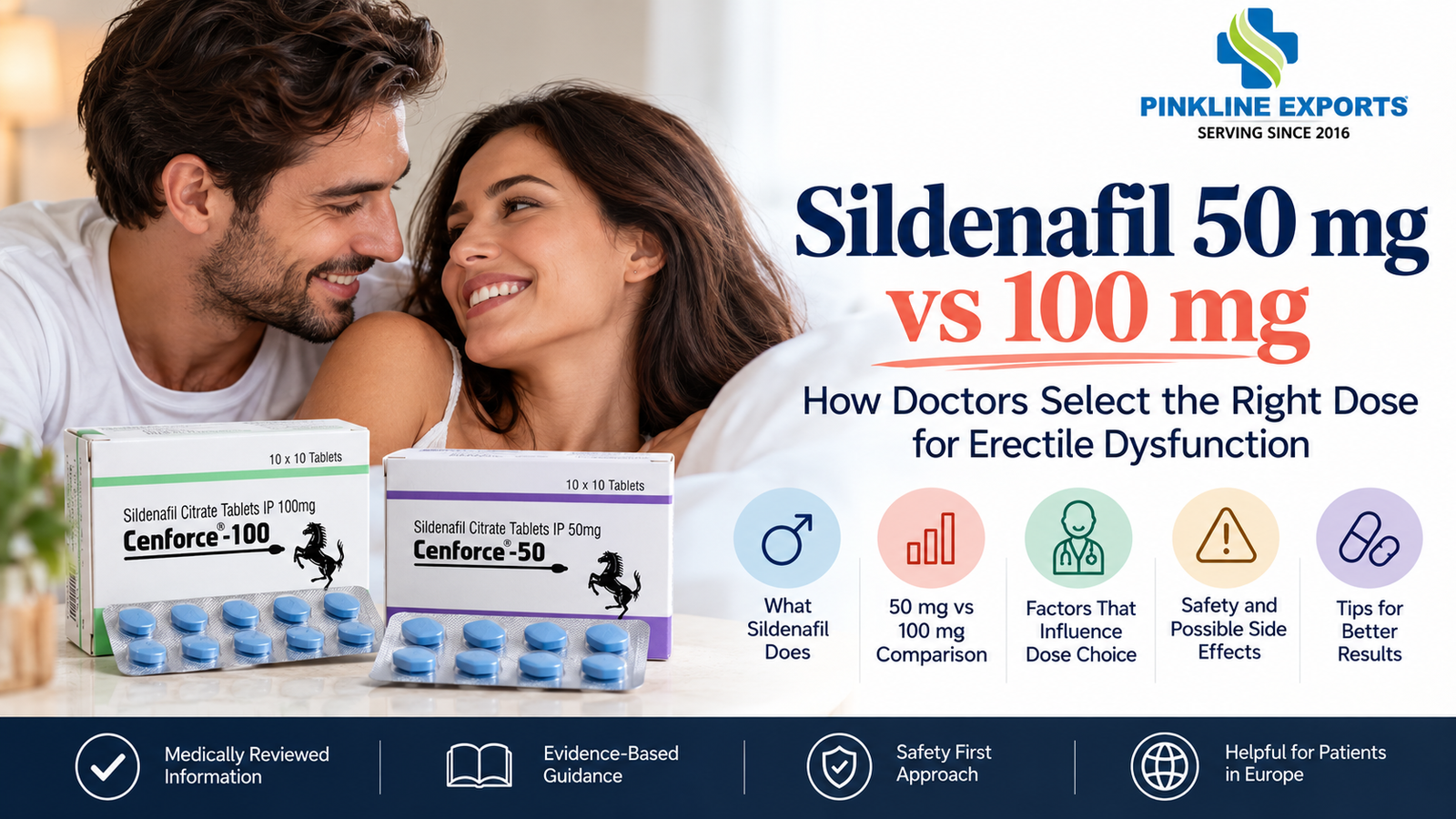
Is sildenafil 50 mg or 100 mg the better choice? The answer depends on the person’s diagnosis, response to treatment, other medicines and side-effect risk. Both strengths contain the same active ingredient. This guide focuses on how healthcare professionals evaluate dosage rather than treating the higher strength as automatically more effective.
Quick answer: For many adults with erectile dysfunction, authorised sildenafil information describes 50 mg as the usual recommended dose. A clinician may adjust it down to 25 mg or up to 100 mg based on individual response and tolerability. The maximum recommended dose in EU Viagra prescribing information is 100 mg, taken no more than once daily. Do not increase the strength without medical guidance.
What does sildenafil do?
Sildenafil is a phosphodiesterase type 5 (PDE5) inhibitor. In response to sexual stimulation, it helps preserve cGMP signalling in penile tissue, supporting the blood-flow changes needed for an erection. Sildenafil is not an aphrodisiac and does not automatically cause an erection.
Erectile dysfunction may be associated with diabetes, cardiovascular conditions, medication effects or psychological concerns. A proper assessment can identify concerns that dose changes alone will not address.
Sildenafil 50 mg vs 100 mg: At a glance
| Factor | 50 mg | 100 mg |
|---|---|---|
| Active ingredient | Sildenafil | Sildenafil |
| Common role | Usual recommended starting dose for many adults | Higher dose sometimes selected after clinical review |
| Effectiveness | May be adequate for many people | May benefit some people who have not responded adequately at lower doses |
| Side effects | Possible | Potential for greater frequency or severity of dose-related effects |
| Need for sexual stimulation | Yes | Yes |
| Medical assessment | Required | Required, including response and tolerability at lower doses |
This comparison concerns sildenafil as described in authorised medicine information. It does not establish that any specific imported brand is authorised or interchangeable in a destination country.
Why do clinicians often start with 50 mg?
Starting at 50 mg allows the prescriber to evaluate the balance between a useful erectile response and side effects. The clinician may need to choose a lower starting dose in particular circumstances, including certain medical conditions or interacting medicines.
Clinical response can vary between encounters. Adequate sexual stimulation, timing, meals, stress, relationship factors and other health issues can influence whether a medicine appears effective. Before changing the dose, clinicians may explore these factors. See why sildenafil may not work the first time.
When might 100 mg be considered?
If 50 mg is insufficient despite correct use and is well tolerated, a prescriber may consider a higher dose within the authorised limits. This is not a guarantee of improved erectile function and should never be a reason to ignore dizziness, headache, flushing, visual disturbances or other effects.
The European product information identifies 100 mg as the maximum recommended sildenafil dose for ED. A 150 mg or 200 mg product should not be presented as a routine next step for patients.
Factors that influence the correct strength
Medical history and cardiovascular health
Because erectile dysfunction can coincide with cardiovascular disease, clinicians may assess symptoms, exercise tolerance, blood pressure, and whether sexual activity is safe.
Other medicines and drug interactions
Sildenafil is contraindicated with nitrates such as nitroglycerin and with riociguat. Alpha-blockers and some blood pressure medicines may increase hypotension risk; strong CYP3A4 inhibitors can increase sildenafil exposure. Always disclose prescribed medicines, supplements and recreational nitrite products sometimes called “poppers.”
Kidney and liver function
Significant impairment can affect drug exposure. Depending on the patient’s health profile and local product information, clinicians may choose a lower dose.
Tolerability and experience
The right strength is not always the highest strength. A clinician may reduce the dose if adverse effects occur, investigate other causes of ED or consider alternative treatment approaches.
Potential side effects: what changes with dose?
Common sildenafil effects include headache, flushing, nasal congestion, indigestion, dizziness and temporary visual disturbances. Higher exposure can increase the likelihood or severity of some side effects. Seek urgent medical assistance for chest pain, collapse, sudden vision or hearing loss, severe allergic symptoms, or an erection lasting longer than four hours.
People who develop chest pain after taking sildenafil should tell emergency responders when it was taken. They should not self-administer nitrate medicines while awaiting emergency care.
Does a bigger dose last longer?
A larger dose does not reliably extend the useful duration in a predictable way. Sildenafil response varies with health, food and medicines. If duration is a concern, a prescriber should assess whether sildenafil or another ED treatment is appropriate, rather than recommending dose escalation alone. Compare the duration of common erectile dysfunction medicines.
Prescription and access considerations in Europe
Sildenafil for erectile dysfunction is prescription-only in the EU. Before considering any product, verify the seller’s legal authorisation and the marketing status of the exact brand and presentation in the destination country. A manufacturer’s identity or another product’s regulatory approval does not establish authorisation of every brand. For background, consult the EMA Viagra prescribing information and European guidance on buying medicines online.
Related product composition pages
For ingredient and strength details, see Cenforce 50 mg and Cenforce 100 mg. These product listings are not proof of EU marketing authorisation or a recommendation to obtain prescription medicines without proper local medical and regulatory checks.
Related educational guide: Sildenafil treatment options and safety in Europe.
Frequently asked questions
Is sildenafil 100 mg twice as effective as 50 mg?
Not necessarily. A higher dose may improve response for some people but can also increase adverse effects. The prescriber weighs both factors.
Is 50 mg a common starting dose?
For many adults, the authorised sildenafil information identifies 50 mg as a usual recommended dose, adjusted based on tolerability, other medicines and clinical response.
When might a clinician recommend 25 mg?
A lower strength may be appropriate for certain older patients, people with impaired liver or kidney function, or those taking interacting medicines, depending on the product information and clinical evaluation.
Is 100 mg the highest recommended ED dose in Europe?
The EMA-authorised Viagra information lists 100 mg as the maximum recommended dose for erectile dysfunction, with no more than one dose per day. Do not increase the dose independently.
Can I take two 50 mg tablets instead of one 100 mg tablet?
Only if a prescriber or pharmacist confirms that the exact medicines and total dose are appropriate. Do not change a prescription yourself.
Will sildenafil work without sexual stimulation?
No. Sildenafil supports the physiological response to sexual stimulation; it does not cause an automatic erection.
Can I combine sildenafil with tadalafil?
Do not combine PDE5 inhibitors without explicit clinician guidance. Combining products can cause adverse effects and excessive blood-pressure lowering.
What about sildenafil with nitrate heart medicines?
Sildenafil must not be combined with nitrate medicines such as nitroglycerin because blood pressure can fall dangerously. Tell your clinician about all heart medicines.
Does food affect how quickly sildenafil works?
A high-fat meal may delay onset. Response varies; the prescribing clinician can explain product-specific use.
What should I do if 50 mg does not work?
Do not immediately increase to 100 mg. Discuss timing, food, underlying conditions, medicine interactions and tolerability with your clinician.
Medical references
- European Medicines Agency: Viagra (sildenafil), authorised information
- MedlinePlus: Sildenafil prescribing and safety information
- NHS: How and when to take sildenafil
Educational content only. This article is not an individual dosing recommendation and has not been independently signed off by a named clinician.