


Oxandrolone Blood Tests: Liver, Cholesterol & Hormone Monitoring

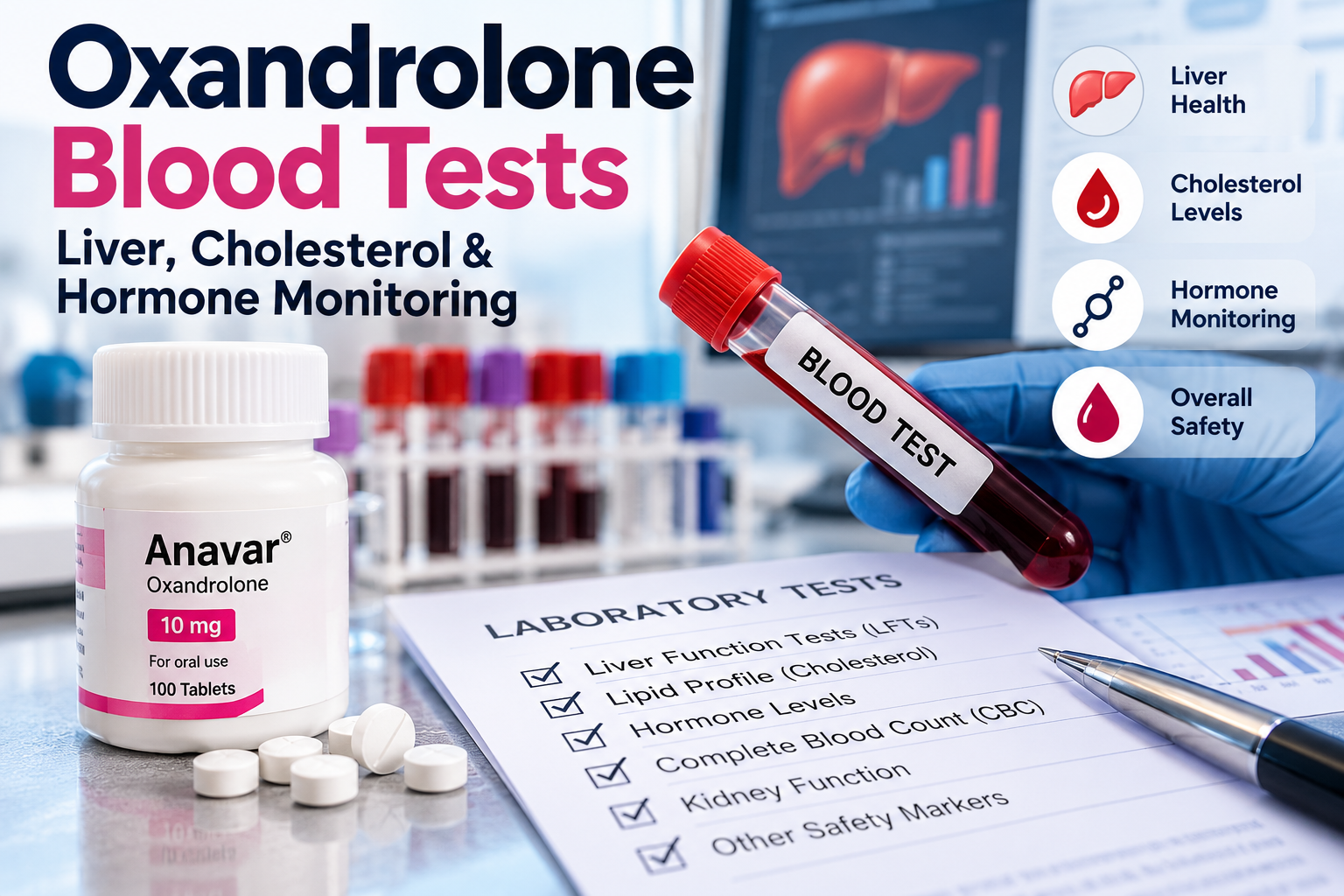
Medical information: Oxandrolone (historically sold under the brand name Anavar) is an anabolic-androgenic steroid with potentially serious liver, cardiovascular and hormonal effects. This article explains how clinicians may assess safety; it is not a guide to nonmedical steroid use.
If you’re looking for a general introduction, read our guide to Anavar (oxandrolone), its history and risks. This companion article focuses specifically on what blood tests can—and cannot—reveal. For the medicine listing and its important precautions, see the Anavar Tablets product information page; availability and prescribing requirements depend on local law.
Why might blood tests be considered for oxandrolone?
Oxandrolone can affect the liver, blood lipids, endocrine function and other body systems. A clinician may evaluate a person’s underlying health, medicines and risk factors before considering any exposure, and investigate abnormalities or symptoms during or after exposure. Importantly, normal blood tests do not establish that taking oxandrolone is safe.
US regulatory note: In 2023 the FDA determined that Oxandrin (oxandrolone) tablets were withdrawn for reasons of safety or effectiveness. In October 2026, the FDA corrected its notice to also cover referencing generic applications. Historical labeling and past indications should not be mistaken for a current FDA-approved treatment. Laws and medicine availability vary by country.
1. Liver tests: ALT, AST, bilirubin and more
Clinicians may request alanine aminotransferase (ALT), aspartate aminotransferase (AST), alkaline phosphatase (ALP) and bilirubin. These can help investigate liver inflammation or impaired bile flow. Additional tests such as albumin and INR may be appropriate when liver function is a concern.
Oxandrolone belongs to a class of oral 17-alpha-alkylated androgens associated with cholestatic liver injury and rare, serious hepatic complications. Some abnormalities may occur without obvious early symptoms. Exercise-related muscle injury can also raise AST and sometimes ALT, so results require clinical interpretation rather than self-diagnosis.
2. Cholesterol testing: HDL, LDL and triglycerides
A lipid panel typically measures total cholesterol, LDL cholesterol, HDL cholesterol and triglycerides. Oxandrolone can lower HDL and increase LDL, which can worsen cardiovascular risk. A normal lipid panel at one point does not remove the possibility of future adverse changes.
3. Hormone testing when clinically indicated
Exogenous androgens may suppress the body’s own hormone production. Depending on symptoms and individual circumstances, a clinician may consider testosterone, luteinizing hormone (LH), follicle-stimulating hormone (FSH) or other endocrine tests. Interpretation differs according to age, sex, timing and concurrent treatments.
4. Blood count and other assessments
A complete blood count (CBC) may help assess hemoglobin and hematocrit. Blood pressure, cardiovascular history, medication interactions and kidney health may also merit evaluation. There is no single universal ‘Anavar blood test panel’ suitable for everyone; investigations depend on clinical context.
Symptoms that need prompt medical attention
- Yellowing of the skin or eyes, dark urine, pale stools, or persistent right-upper-abdominal pain
- Unusual bruising or bleeding, severe fatigue, nausea or loss of appetite
- Chest pain, shortness of breath, sudden weakness or severe headache
- Marked swelling or concerning new mood or hormonal symptoms
Chest pain, sudden weakness or severe difficulty breathing warrants emergency assessment. Other symptoms above should be discussed promptly with a healthcare professional.
Are there drug interactions?
Yes. Historical oxandrolone labeling warns that interaction with warfarin can substantially raise INR and bleeding risk. People taking blood thinners or other prescription medicines should seek professional review rather than altering treatment on their own.
Frequently asked questions
Can normal liver enzymes rule out oxandrolone liver damage?
No. Blood tests are useful but do not reliably exclude every form of liver injury, including some rare structural complications.
Does oxandrolone affect good cholesterol?
It may lower HDL (‘good’) cholesterol and can raise LDL, potentially increasing cardiovascular risk.
Is a hormone panel needed for everyone?
Not necessarily. The choice of tests depends on clinical symptoms, history and a qualified clinician’s judgment.
Is oxandrolone currently FDA-approved in the US?
No. The FDA determined in 2023 that Oxandrin oxandrolone tablets were withdrawn for reasons of safety or effectiveness. Do not rely on older articles describing historic FDA indications as current approval.
Can blood testing make non-prescribed anabolic steroid use safe?
No. Monitoring can identify certain problems but cannot eliminate serious hepatic, cardiovascular, endocrine or reproductive risks.
Further reading and primary references
- Pinkline Exports: What Is Anavar (Oxandrolone)? — background and general safety overview.
- MedlinePlus: Oxandrolone drug information — liver and cholesterol warnings.
- Federal Register: FDA determination (September 2023).
- FDA October 2026 correction regarding generic oxandrolone applications.
- DailyMed: Historical oxandrolone prescribing information — safety warnings and interactions; not evidence of current FDA approval.
Editorial note: Draft prepared October 2026. Arrange review by an appropriately qualified licensed clinician before publication. This article does not provide individualized medical advice.