


What Is Anavar (Oxandrolone)? Approved Medical Uses, Benefits and Safety

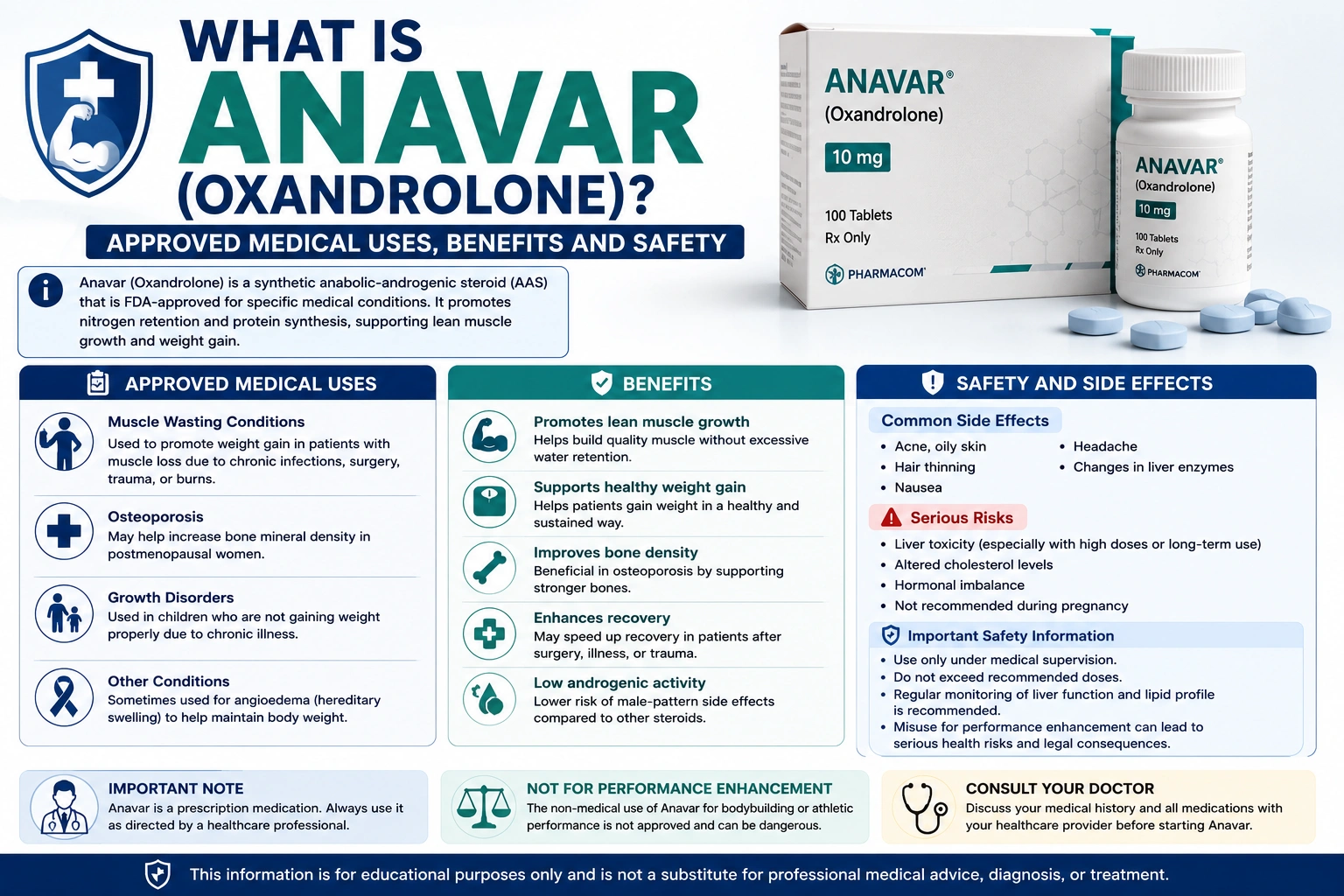
What Is Anavar (Oxandrolone)? Approved Medical Uses, Benefits, and Safety Profile
Critical Regulatory & Health Warning
Oxandrolone (commonly known by its original brand name, Anavar) is a synthetic oral androgenic-anabolic steroid (AAS). It is classified as a Controlled Substance in most international jurisdictions due to risks of abuse, cardiovascular strain, liver toxicity, and endocrine disruption. Oxandrolone is strictly indicated for specific medical conditions—such as countering catabolic muscle wasting—under direct clinical supervision. Unsupervised or non-medical use carries severe health risks. This guide serves strictly educational purposes.
Developed in the 1960s, **Oxandrolone** was synthesized to provide a specialized therapeutic compound that maximized anabolic (tissue-building) properties while minimizing androgenic (masculinizing) side effects. Historically marketed under the trade name Anavar, this oral derivative of dihydrotestosterone (DHT) became a significant tool in clinical settings for treating severe involuntary weight loss and muscle-wasting conditions.
Unlike many older anabolic agents, Oxandrolone exhibits a unique molecular structure that allows it to promote nitrogen retention and protein synthesis with a comparatively low rate of virilization. However, despite its milder clinical profile compared to other synthetic androgens, it remains a potent pharmaceutical agent that requires strict medical oversight.
Understanding Oxandrolone requires a clear look at its chemical structure, legitimate FDA-approved clinical indications, health benefits in therapeutic settings, potential adverse effects, and essential safety guidelines.
Chemical Structure and Mechanism of Action
Oxandrolone is structurally modified from Dihydrotestosterone (DHT) through two primary chemical alterations:
- Oxygen Substitution at C2: The second carbon atom in the A-ring is replaced with an oxygen atom. This structural change significantly enhances its anabolic potency while resisting metabolic degradation.
- 17-alpha Alkylation ($17\alpha$-alkylation): A methyl group is added at the 17th carbon position, allowing the molecule to survive oral administration and first-pass liver metabolism.
Mechanistically, Oxandrolone binds to intracellular androgen receptors in skeletal muscle and metabolic tissue. This binding stimulates nuclear transcription, increasing protein synthesis and reducing protein catabolism (breakdown). Because it cannot be converted into estrogen by the aromatase enzyme, it does not cause estrogenic side effects like fluid retention or gynecomastia in clinical settings.
Approved Medical Indications & Therapeutic Benefits
In legitimate medical practice, physicians prescribe oral formulations—such as Anavar Tablets—to target severe catabolic states where tissue repair and weight maintenance are compromised.
1. Severe Weight Loss Following Trauma or Surgery
Oxandrolone is FDA-approved as adjunctive therapy to promote weight gain after extensive surgery, severe infections, chronic trauma, or unexplainable muscular atrophy.
2. Countering Corticosteroid-Induced Catabolism
Patients requiring long-term, high-dose corticosteroid therapy (for autoimmune conditions or organ transplants) often suffer severe muscle wasting and bone density loss. Oxandrolone helps offset these catabolic side effects by preserving lean muscle mass.
3. Severe Burn Injury Recovery
Severe burn injury patients enter extreme hypermetabolic states where the body rapidly breaks down muscle tissue. Clinical trials demonstrate that Oxandrolone accelerates wound healing, preserves lean body mass, and shortens hospital stays in pediatric and adult burn patients.
4. Bone Pain Associated with Osteoporosis
By promoting bone mineral density and nitrogen retention, Oxandrolone is indicated to help relieve bone pain associated with advanced osteoporosis.
For a deep dive into the clinical spectrum and pharmacological classifications of synthetic hormones within the broader Anabolic therapy category, reviewing peer-reviewed medical databases is essential.
Clinical Overview Matrix
The table below summarizes the key pharmacological characteristics, clinical indications, and primary safety monitoring parameters for Oxandrolone:
| Parameter | Clinical Detail | Monitoring & Safety Requirement |
|---|---|---|
| Chemical Class | $17\alpha$-alkylated oral androgenic-anabolic steroid (DHT derivative). | Baseline and ongoing liver function tests (LFTs) required. |
| Primary Indications | Adjunctive therapy for weight restoration post-trauma, burn recovery, severe muscle wasting. | Must be combined with a high-protein, calorie-adequate nutritional plan. |
| Aromatization Potential | Zero (cannot convert to estrogen). | No direct estrogenic fluid retention, but lipid profiles must be tracked. |
| Primary Metabolic Risks | Hepatic strain, HDL reduction, LDL elevation, natural testosterone suppression. | Routine blood panels measuring lipid profiles and endogenous hormone markers. |
Potential Adverse Effects and Health Risks
Despite its reputation as a milder androgen, Oxandrolone carries significant potential side effects that necessitate careful medical monitoring:
Key Adverse Effects
1. Hepatic Stress (Hepatotoxicity): Because Oxandrolone is $17\alpha$-alkylated, it places stress on the liver during metabolic clearance. Prolonged use or high doses can cause elevated liver enzymes, peliosis hepatis, or hepatic lesions.
2. Cardiovascular & Lipid Disruption: Oxandrolone significantly alters serum cholesterol profiles by suppressing High-Density Lipoprotein (HDL – “good” cholesterol) and increasing Low-Density Lipoprotein (LDL – “bad” cholesterol), accelerating cardiovascular risk if unmonitored.
3. Endocrine & HPTA Suppression: Exogenous administration suppresses the Hypothalamic-Pituitary-Testicular Axis (HPTA), leading to reduced natural testosterone production and potential testicular atrophy.
4. Virilization in Females: While the risk is lower than with other anabolic agents, high doses or extended use in females can cause irreversible virilization, including voice deepening, body hair growth, and clitoral enlargement.
For an exhaustive, peer-reviewed database detailing the chemical structure, molecular mechanics, and clinical trials of Oxandrolone, consult the official National Center for Biotechnology Information (NCBI) PubChem Database.
For global international health guidelines and regulatory directives concerning controlled substances, visit the World Health Organization (WHO) Health Directory.
Oxandrolone Clinical Safety Checklist
Keep these core clinical guidelines in mind regarding Oxandrolone usage:
- ✔️ Use Only Under Medical Supervision: Oxandrolone must only be taken when explicitly prescribed by a licensed physician for approved medical conditions.
- ✔️ Complete Baseline Blood Work: Evaluate liver enzymes, lipid panels, and baseline hormone levels before starting therapy.
- ✔️ Monitor Lipid & Liver Function: Schedule routine blood panels during treatment to catch early signs of hepatic or cardiovascular strain.
- ✔️ Do Not Exceed Prescribed Duration: Treatment cycles should be kept as short as clinically necessary to protect liver health and HPTA function.
- ✔️ Pair with Proper Nutrition: Therapeutic muscle restoration requires an adequate diet rich in protein and essential nutrients.