

Ivermectin, Fenbendazole and Doxycycline: Why These Medicines Are Discussed Together in Some Repurposed Drug Protocols


Ivermectin, Fenbendazole, and Doxycycline: Why These Medicines Are Discussed Together in Repurposed Drug Protocols
Critical Medical & Scientific Disclaimer
The combination of Ivermectin, Fenbendazole, and Doxycycline within alternative integrative oncology protocols (such as the Joe Tippens protocol or Dr. Lodi protocol) represents off-label, non-standard clinical research concepts. These combinations are not approved by the US FDA, EMA, or major global health authorities for the treatment or prevention of cancer in humans. Evidence for these multi-drug stacks is limited primarily to in vitro (cell culture) and in vivo (animal model) laboratory experiments. Combining non-approved anti-infective and antiparasitic agents carries risks of severe drug-induced liver injury, bone marrow suppression, microbiome disruption, and adverse interactions with standard chemotherapy or targeted therapies. Always consult a licensed oncologist before considering any integrative drug protocol.
In recent years, the scientific concept of drug repurposing—investigating non-cancer medications with established safety profiles for potential anti-tumor properties—has gained considerable interest in medical research. Within alternative and integrative oncology communities, specific multi-agent combinations have drawn widespread public attention.
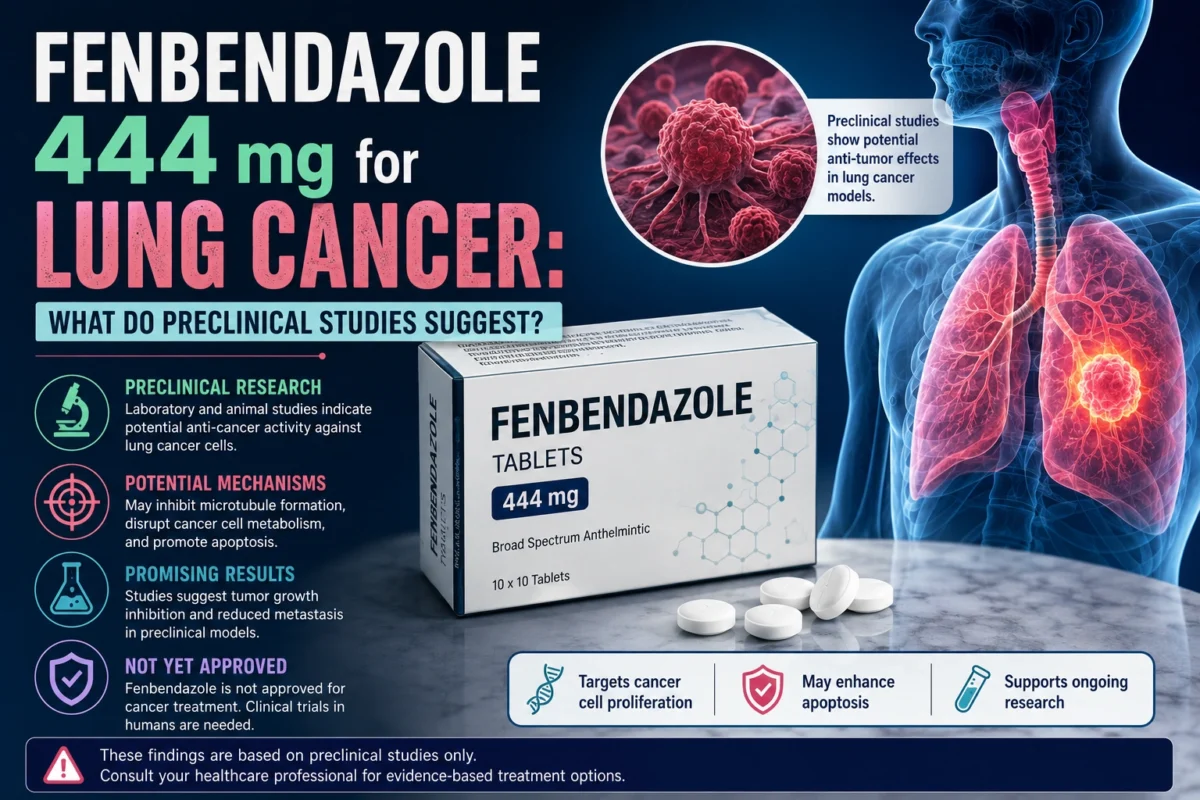
Among these, a specific triad of medications is frequently cited in public discussions: an antiparasitic macrocyclic lactone (**Ivermectin**), a benzimidazole anthelmintic (**Fenbendazole**), and a tetracycline antibiotic (**Doxycycline**). Relevant product references include Iverheal 12 Mg, Fenbendazole 444 Mg Tablets, the Dr. Lodi Antiparasitic Protocol Kit, and the Joe Tippens Fenbendazole Support Kit. Browse the Ivermectin & Fenbendazole category for the complete cluster.
Patients and caregivers often wonder why three medications from entirely different therapeutic classes—antiparasitics and antibiotics—are grouped together in these repurposed regimens. This clinical review breaks down the proposed laboratory mechanisms, synergistic concepts, pharmacokinetic limitations, and clinical realities of this three-drug combination.
The Three Pillars: Proposed Molecular Pathways
Advocates of repurposed drug stacks hypothesize that targeting multiple metabolic and structural pathways simultaneously makes it harder for cancer cells to adapt. Each of the three medications targets a distinct cellular pathway in laboratory models:
Mechanistic Targets Evaluated in Preclinical Studies
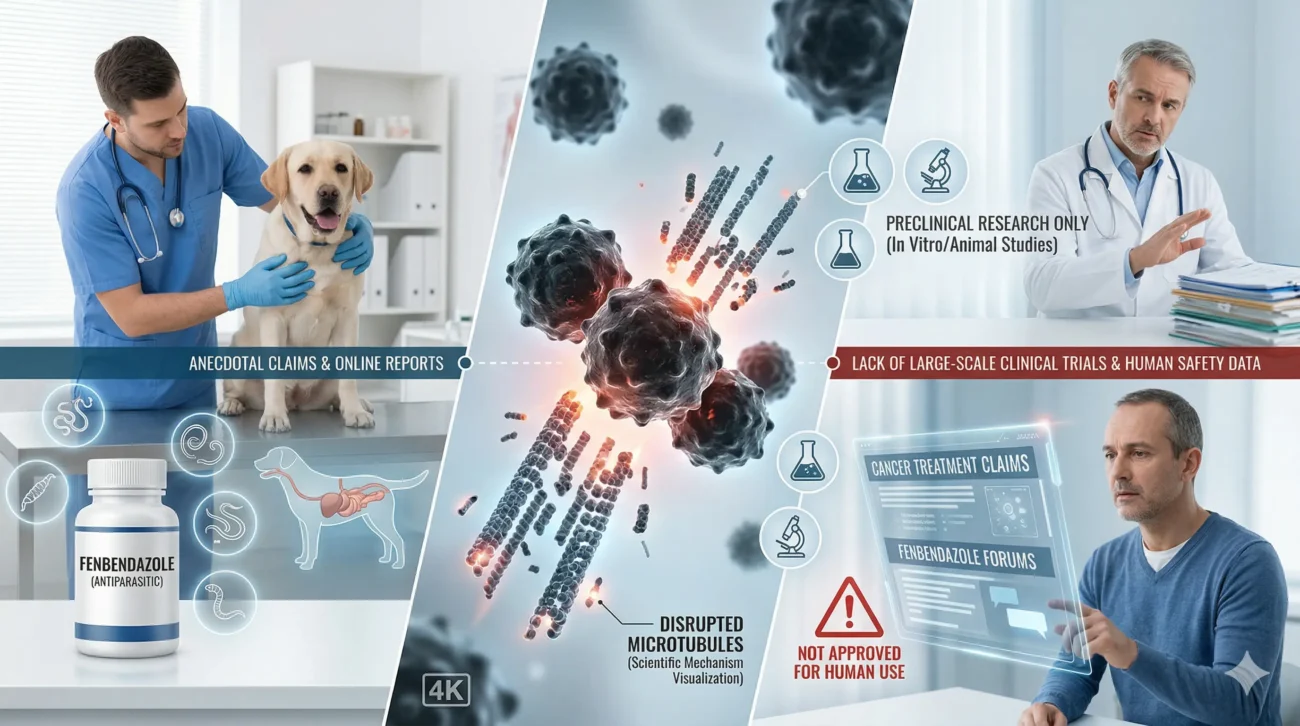
1. Fenbendazole (Microtubule & Glucose Suppression): A veterinary benzimidazole that binds to $\beta$-tubulin, disrupting microtubule polymerization and halting cell division (mitosis). In laboratory cell lines, it also downregulates glucose transporters (GLUT4), starving cancer cells of their primary energy source (the Warburg effect).
2. Ivermectin (PAK1 & Stem-Cell Pathway Inhibition): An antiparasitic macrocyclic lactone that inhibits p21-activated kinase 1 (PAK1), a signaling protein involved in tumor growth, cell survival, and metastasis. Preclinical models suggest it may also suppress cancer stem cell (CSC) pathways and modulate intracellular chloride ion channels.
3. Doxycycline (Mitochondrial Biogenesis Disruption): A broad-spectrum tetracycline antibiotic. Because human mitochondria evolved from ancient bacteria, Doxycycline inhibits mitochondrial protein translation. This disrupts energy production (ATP synthesis) specifically inside cancer stem cells, making them more vulnerable to cellular stress.
Why Are These Medicines Grouped Together?
The rationale behind combining these three distinct agents rests on three main concepts discussed in preclinical drug-repurposing literature:
1. Dual-Energy Starvation (Glycolysis + Mitochondria)
Cancer cells rely on two primary pathways for energy: glycolysis (converting glucose to lactate) and mitochondrial oxidative phosphorylation (OXPHOS). In laboratory hypotheses, Fenbendazole targets glycolytic pathways, while Doxycycline targets mitochondrial biogenesis. Combining them is thought to create a “dual metabolic block,” preventing cancer cells from switching to alternative energy sources.
2. Target Diversity: Bulk Tumor Cells vs. Cancer Stem Cells
Standard oncology therapies often shrink bulk tumor mass but may leave behind resilient **cancer stem cells (CSCs)**, which drive disease recurrence. In cell-culture studies, Fenbendazole targets rapidly dividing bulk tumor cells via microtubule disruption, while Doxycycline and Ivermectin selectively target cancer stem cell markers and survival signaling pathways.
3. Popularization via Alternative Care Protocols
Public interest in this combination has been driven largely by internet-based protocol kits and online wellness communities. Formulations like Joe Tippens Fenbendazole Support Kit popularized the use of benzimidazoles alongside supportive supplements. Similarly, practitioner-led alternative regimens—such as the Dr. Lodi Antiparasitic Protocol Kit—combine broad antiparasitic and antimicrobial compounds into structured off-label protocols.
Multi-Drug Protocol Component Matrix
The table below outlines the primary pharmacological classifications, intended target pathways, and relevant clinical considerations for each agent in this stack:
| Medication | Pharmacological Class & Standard Indication | Proposed Preclinical Anti-Cancer Target | Primary Risk & Clinical Caution |
|---|---|---|---|
| Fenbendazole (e.g., Fenbendazole 444 Mg Tablets) |
Veterinary Benzimidazole Anthelmintic (Intestinal Parasites) | $\beta$-tubulin polymerization inhibition; glucose uptake disruption. | Veterinary agent; risk of drug-induced liver toxicity (DILI) and poor human oral absorption. |
| Ivermectin (e.g., Iverheal 12 mg – Ivermectin) |
Human/Veterinary Macrocyclic Lactone (Tissue Nematodes/Ectoparasites) | PAK1 signaling pathway inhibition; cancer stem cell target. | Central nervous system toxicity at excessive doses; CYP3A4 metabolic interactions. |
| Doxycycline (e.g., DoxyPEP – Doxycycline 100 Mg) |
Broad-Spectrum Tetracycline Antibiotic (Bacterial Infections / STI Prophylaxis) | Mitochondrial ribosome inhibition in cancer stem cells. | Gastrointestinal erosion, severe photosensitivity, microbiome disruption with chronic use. |
Clinical Reality: Bioavailability, Toxicity, and Drug Interactions
While multi-agent laboratory hypotheses sound promising in cell-culture studies, translating these protocols into safe human therapy presents major scientific hurdles:
1. The Bioavailability Barrier
Cell culture experiments apply pure, dissolved drug molecules directly to isolated cells. In contrast, oral Fenbendazole has extremely low intestinal absorption in humans (less than 10%–20%), making it difficult to achieve the plasma concentrations needed to replicate laboratory findings without taking high doses that increase liver toxicity risks.
2. Compound Liver Strain (Hepatotoxicity)
Both Fenbendazole and Ivermectin are metabolized heavily by hepatic cytochrome P450 enzymes (specifically CYP3A4). Taking high doses of multiple fat-soluble antiparasitic drugs simultaneously over extended periods increases the risk of severe elevation of liver enzymes (ALT/AST), jaundice, and drug-induced liver injury (DILI).
3. Interference with Standard Oncology Care
P450 enzyme competition can dangerously alter blood levels of standard chemotherapy, immunotherapy, or targeted therapy agents. This can either increase toxic side effects or reduce the effectiveness of proven, life-saving cancer treatments.
To examine the official chemical profiles, pharmacokinetics, and clinical trial records for these compounds, consult the peer-reviewed National Center for Biotechnology Information (NCBI) PubChem Database.
Human-Grade Alternatives Under Formal Study
For patients interested in the scientific principles of drug repurposing, oncologists emphasize exploring human-grade compounds evaluated in structured clinical settings:
- Mebendazole: A human-grade benzimidazole analogue of Fenbendazole with established human pharmacokinetic profiles, currently in Phase I/II human clinical trials for brain and solid tumors.
- Metformin & Statins: Well-studied human metabolic medications currently being evaluated in clinical oncology trials for their effects on tumor energy metabolism.
For official, evidence-based cancer resources and verified clinical trial registries, visit the National Cancer Institute (NCI) Comprehensive Cancer Directory.
Integrative Protocol Safety Checklist
If you or a loved one are evaluating repurposed drug protocols, keep these essential steps in mind:
- ✔️ Maintain Complete Transparency: Disclose every off-label drug, protocol kit, or supplement to your oncology care team.
- ✔️ Never Delay Standard Care: Do not pause or replace FDA-approved chemotherapy, surgery, or radiation for unproven alternative regimens.
- ✔️ Monitor Liver & Kidney Function: Schedule regular baseline and ongoing blood panels (ALT, AST, Bilirubin, Creatinine) if taking off-label combinations.
- ✔️ Check for Drug Interactions: Verify that off-label antiparasitic or antibiotic drugs do not interfere with your primary cancer treatment.
- ✔️ Prioritize Human-Grade Research: Discuss formal Phase I/II clinical trial options with your oncologist rather than relying on self-administered veterinary protocols.