

How to Build a Beginner-Friendly Tretinoin Skincare Routine

How to Build a Beginner-Friendly Tretinoin Skincare Routine
Critical Medical & Dermatological Notice
Tretinoin (all-trans retinoic acid) is a high-potency prescription topical retinoid indicated for acne vulgaris, photoaging, and fine wrinkles. Due to its direct influence on epidermal cell turnover, initial use often causes skin irritation, dryness, and peeling (retinization). Tretinoin must only be introduced under the guidance of a licensed dermatologist. It is strictly contraindicated during pregnancy.
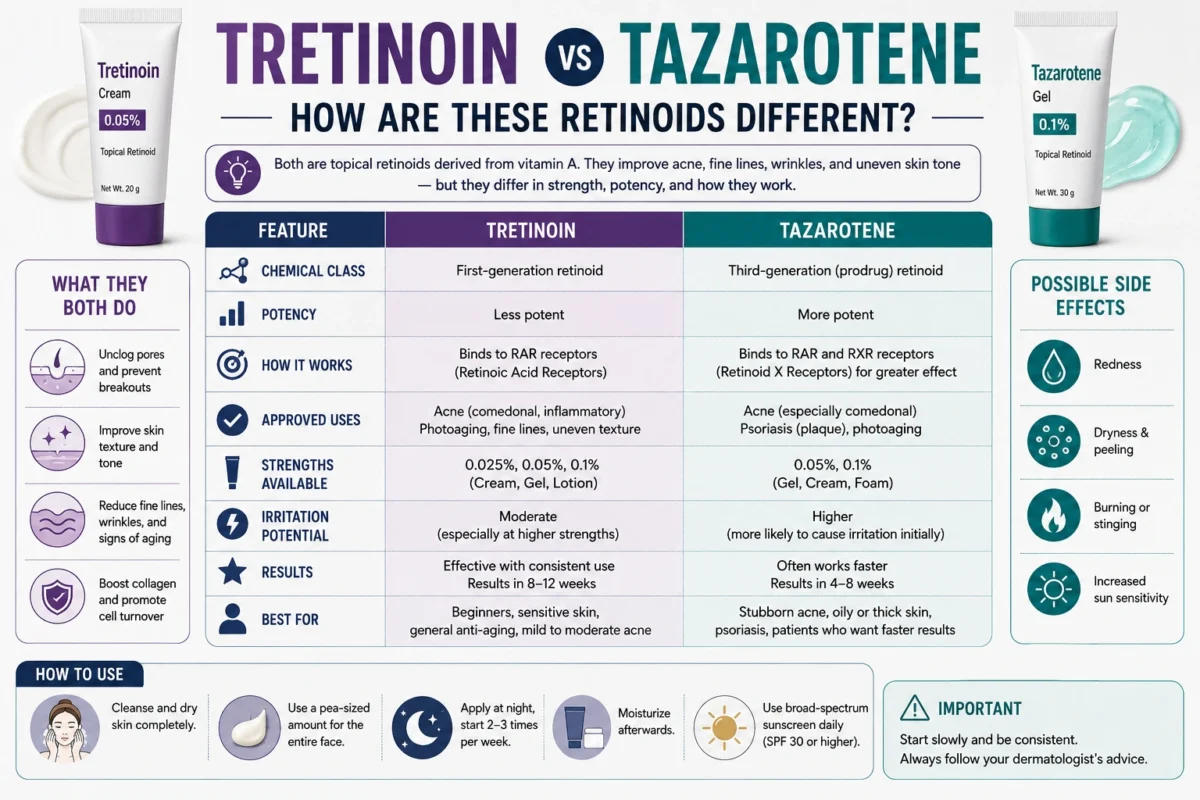
In the world of skincare, few active ingredients boast the extensive clinical backing and proven results of **topical Tretinoin**. As a first-generation retinoid, Tretinoin binds directly to retinoic acid receptors in the skin, accelerating cellular turnover, clearing clogged pores, boosting collagen production, and smoothing skin texture.
However, introducing Tretinoin into your daily routine requires patience, preparation, and precision. Bypassing the adjustment phase—known as **retinization**—by applying too much product or using a strength that is too high can compromise your skin barrier, leading to redness, peeling, and discomfort.
Building a beginner-friendly routine isn’t about using the strongest formula right away; it’s about supporting your skin barrier so you can use the product consistently over time. This step-by-step guide covers how to choose the right starting concentration, master application methods like the “sandwich technique,” and structure your morning and evening skincare routines for success.
Selecting Your Starting Concentration & Vehicle
One of the most common mistakes beginners make is starting with an excessively high strength. Tretinoin comes in various concentrations—typically ranging from 0.025% up to 0.1%—as well as two primary vehicle types: **creams** and **gels**.
1. Creams vs. Gels
Cream formulations are generally more hydrating, gentler on the skin barrier, and easier to spread evenly, making them the gold standard for beginners or those with dry or sensitive skin. Gel formulations absorb quickly and are ideal for oily or acne-prone skin, though they can feel more drying initially due to their fast-penetrating base.
2. Finding Your Ideal Starting Point
When initiating therapy, dermatologists recommend starting at a low concentration to allow your skin to build tolerance gradually:
- Entry-Level Baseline (Sensitive or Dry Skin): Starting with a gentle cream such as Tretin 0.025% Cream 30gm for Acne and Pimples provides an ideal entry point that minimizes early irritation while delivering proven cellular benefits.
- Entry-Level Baseline (Oily or Acne-Prone Skin): Beginners with oily skin who prefer a lightweight vehicle often start with a low-dose gel formulation like Tretinoin Gel 0.025%.
- Intermediate Step-Up Strengths: Once your skin has fully adapted to 0.025% after several months of consistent use, you can transition up to intermediate formulas like Tretinoin Gel 0.05%.
- Maximum Maintenance Potency: High-potency options like Tretinoin Cream 0.1%, 20g, Tretiheal, Healing Pharma are reserved for experienced users who have built significant retinoid tolerance over time.
The Complete Beginner Routine Architecture
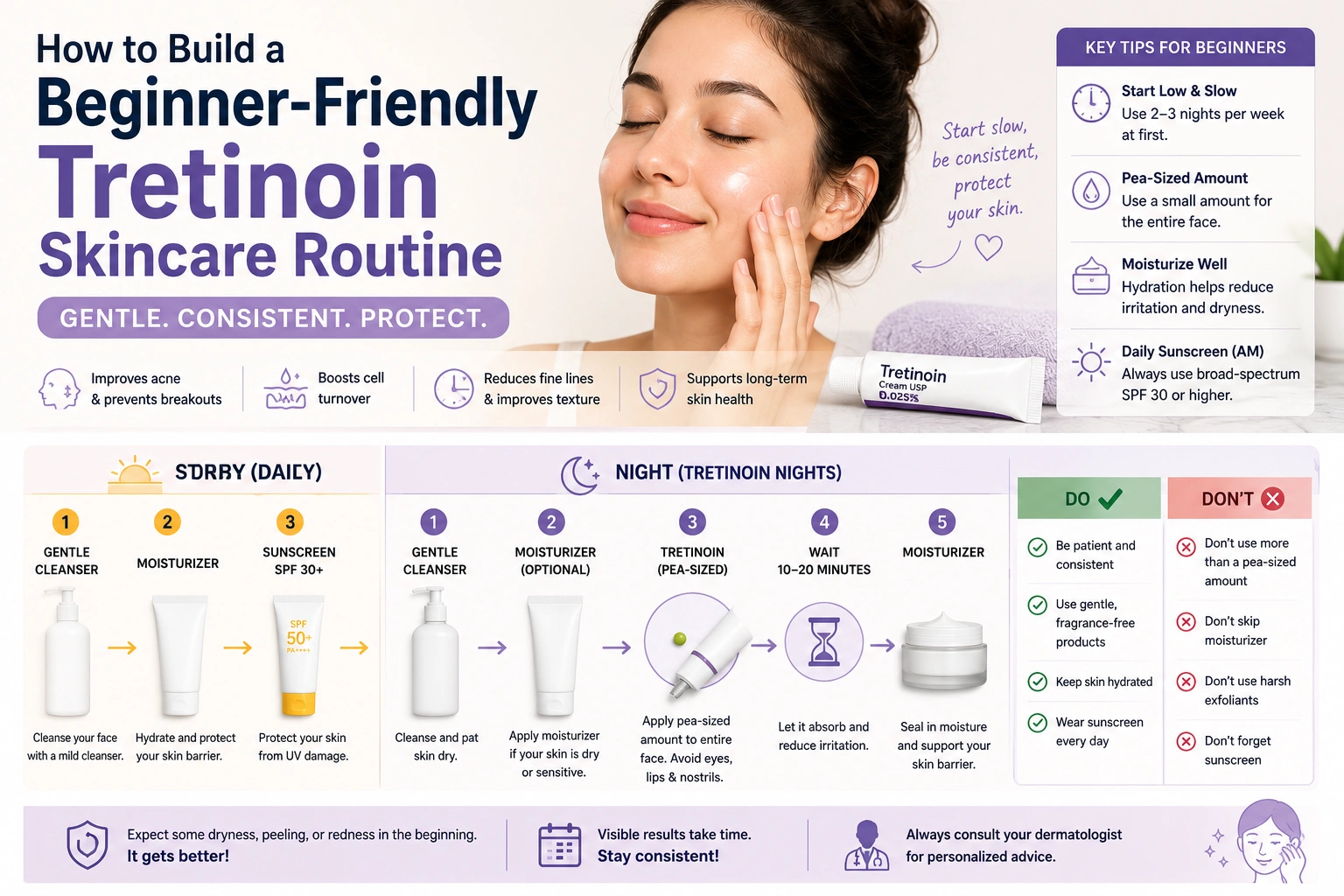
When using Tretinoin, your supporting skincare products should focus on three goals: **cleansing gently, hydrating deeply, and protecting against UV damage**. Keep your routine simple and avoid using other strong active ingredients (like AHAs, BHAs, or Vitamin C) during the first few months.
Morning Routine (AM): Protect & Hydrate
- Gentle Cleanser: Wash your face with lukewarm water or a mild, non-foaming cleanser that won’t strip natural oils.
- Hydrating Serum/Moisturizer: Apply a soothing moisturizer containing ceramides, hyaluronic acid, or niacinamide to repair the skin barrier.
- Broad-Spectrum Sunscreen (Non-Negotiable): Tretinoin increases photosensitivity. Apply a generous layer of broad-spectrum SPF 30+ every morning, rain or shine.
Evening Routine (PM): Treat & Repair
- Gentle Cleansing: Remove sunscreen, makeup, and daily impurities with a hydrating cleanser. Gently pat your face completely dry with a clean towel.
- The Waiting Period: Wait 15 to 20 minutes for your skin to dry completely. Applying Tretinoin to damp skin speeds up absorption, which can increase irritation.
- Pea-Sized Application: Squeeze a strict **pea-sized amount** of Tretinoin onto your fingertip. Dot it onto your forehead, cheeks, nose, and chin, then smooth it evenly over your face, avoiding the delicate eye area, corners of the nose, and lips.
- Moisturize: Follow with a rich, nourishing night cream to lock in hydration and prevent water loss overnight.
The “Sandwich Method” for Sensitive Skin
If you have sensitive skin or experience significant dryness when starting, dermatologists often recommend the **Sandwich Method**. This technique buffers the retinoid, slowing its absorption rate without sacrificing long-term efficacy:
How to Perform the Sandwich Method
Step 1: Apply a thin layer of a lightweight moisturizer to clean, dry skin.
Step 2: Wait 10 to 15 minutes for the moisturizer to absorb completely.
Step 3: Apply your pea-sized amount of Tretinoin evenly across your face.
Step 4: Wait another 5 minutes, then apply a second layer of a thicker, barrier-repairing moisturizer to seal everything in.
Frequency Roadmap: Building Tolerance Slowly
Do not use Tretinoin every night right away. Instead, build frequency gradually over several weeks using this recommended schedule:
| Timeframe | Application Frequency | Focus & Expected Skin Response |
|---|---|---|
| Weeks 1 & 2 | Once or twice a week (e.g., Monday and Thursday). | Monitor for baseline skin tolerance; minor dryness or flaking around the mouth is normal. |
| Weeks 3 & 4 | Every other night. | Retinization peak; keep your routine simple and focus on barrier repair and hydration. |
| Weeks 5 & 6+ | 2 nights on, 1 night off (or nightly if tolerated). | Skin adapts; texture starts to feel smoother, and flaking decreases noticeably. |
Managing Side Effects & Understanding Retinization
During the first 2 to 6 weeks, most users experience some degree of **retinization**. Common signs include mild flaking, tightness, light redness, and occasional purges (where underlying micro-comedones come to the surface faster).
If your skin feels stinging, inflamed, or overly tender, take a 2-to-3-day break from Tretinoin. Focus exclusively on gentle cleansing and barrier repair creams until your skin settles, then resume your schedule at a lower frequency.
For a deep dive into the official clinical trials, cellular mechanisms, and safety profiles of topical retinoic acid, consult the peer-reviewed National Center for Biotechnology Information (NCBI) PubChem Database.
Related products: Compare prescription options in the Acne Treatment category and browse the wider Skin Care range.
Tretinoin Beginner’s Success Checklist
Keep these essential guidelines in mind to build a successful routine:
- ✔️ Start Low & Slow: Begin with a low strength (0.025%) and apply it just 2 nights a week initially.
- ✔️ Use a Pea-Sized Amount: More product won’t speed up results—it will only cause unnecessary irritation.
- ✔️ Apply to Completely Dry Skin: Always wait 15 to 20 minutes after cleansing before applying Tretinoin.
- ✔️ Wear Sunscreen Daily: Protect your skin with a broad-spectrum SPF 30+ every morning.
- ✔️ Keep Supporting Products Gentle: Pause exfoliating acids (AHAs/BHAs) and harsh scrubs while your skin adjusts.