Why Do Asthma Symptoms Get Worse at Night?

Why Do Asthma Symptoms Get Worse at Night? Causes, Circadian Mechanisms, and Nighttime Control
Medically reviewed by Dr. Julian Vance, MD, FCCP
Reviewed on August 2026
✓ Content follows safety recommendations, Global Initiative for Asthma (GINA) guidelines, and clinical pulmonary practice standards.
Critical Pulmonology Notice: Nocturnal Awakening as a Marker of Poor Control
Waking up with cough, wheezing, or shortness of breath at night—clinically recognized as nocturnal asthma—is one of the most critical indicators of poorly controlled, unstable asthma. Frequent nighttime awakenings ($\ge 1\text{ to }2\text{ times per month}$) place patients at substantially higher risk for life-threatening acute asthma exacerbations, emergency room visits, and progressive airway remodeling. Always keep a rapid-acting rescue inhaler within arm’s reach of your bed. This guide serves strictly educational purposes.
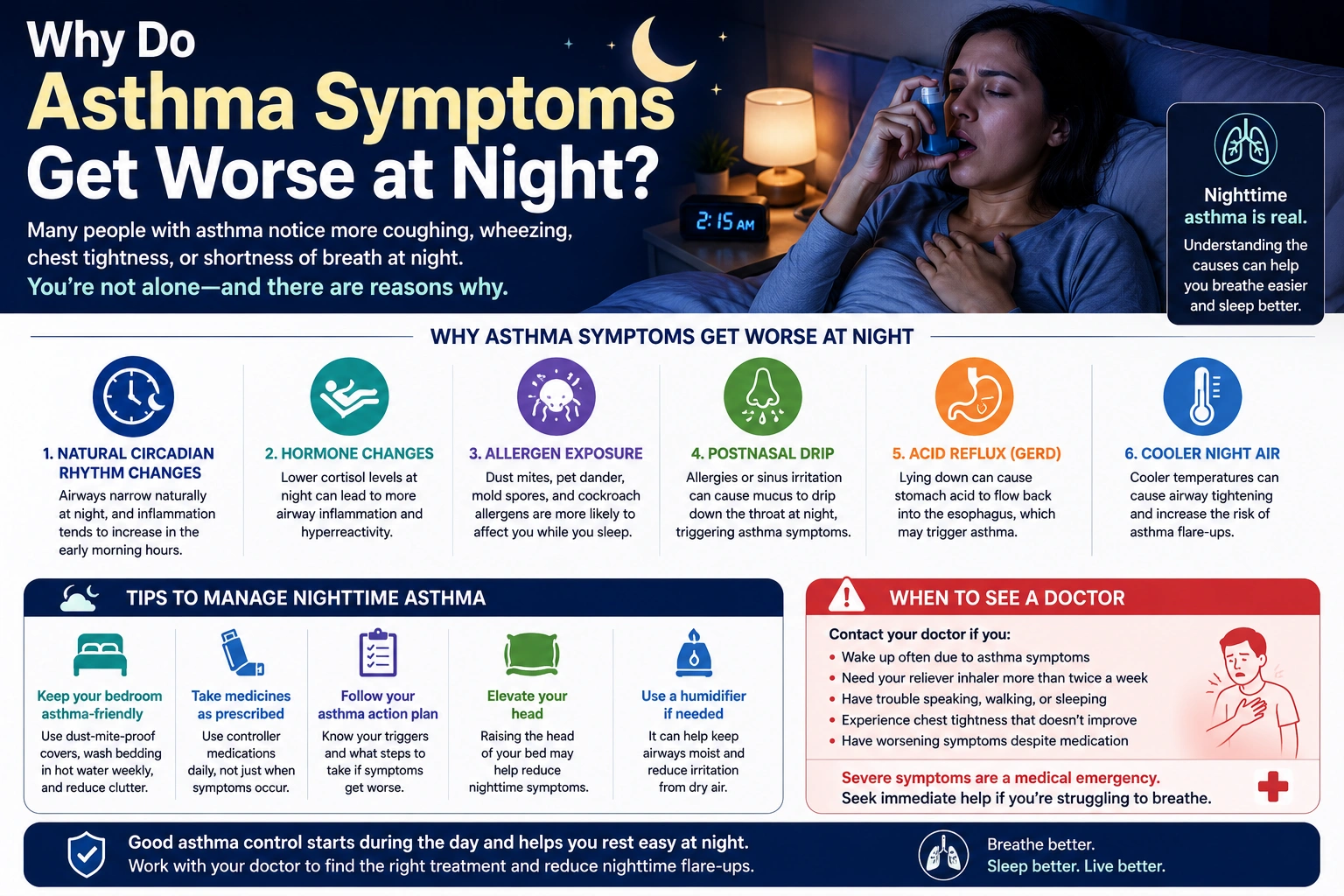
For millions of people living with asthma, daytime hours can feel relatively symptom-free, only for chest tightness, coughing spasms, and wheezing to surge between 2:00 AM and 5:00 AM. In fact, clinical studies indicate that up to 75% of individuals with persistent asthma experience significant nocturnal worsening at least once a week.
This nighttime exacerbation is not merely a coincidence or a psychological reaction to lying in bed. It is driven by powerful, natural **circadian neuroendocrine rhythms**, shifts in autonomic nervous system balance, nighttime changes in pulmonary mechanics, and localized bedroom allergen exposures.
Understanding why asthma symptoms worsen at night requires exploring circadian hormone fluctuations (cortisol, epinephrine, and melatonin), nocturnal parasympathetic dominance, the mechanics of the supine sleeping position, environmental triggers, and combination maintenance inhaler strategies.
Circadian Biology: Hormonal and Autonomic Rhythm Shifts
The human body operates on a master 24-hour internal clock regulated by the suprachiasmatic nucleus. Several physiological rhythms converge in the early morning hours to heighten airway resistance:
Key Nocturnal Biological Mechanisms
1. Drop in Endogenous Anti-Inflammatory Cortisol: Natural serum cortisol levels peak shortly after waking (around 6:00 AM to 8:00 AM) and reach their lowest circadian trough at approximately midnight to 4:00 AM. Because cortisol is the body’s primary endogenous anti-inflammatory glucocorticoid, its nocturnal decline allows airway eosinophils, mast cells, and leukotrienes to proliferate and inflame bronchial tissues unchecked.
2. Decreased Circulating Epinephrine (Adrenaline): Epinephrine stimulates $\beta_2$-adrenergic receptors on airway smooth muscles to maintain natural bronchodilation. Blood epinephrine concentrations drop to their lowest levels during deep nighttime sleep, leading to reduced natural airway caliber.
3. Heightened Parasympathetic Vagal Tone: During nocturnal sleep, parasympathetic nervous system activity surges. Vagal nerve stimulation releases acetylcholine onto muscarinic ($M_3$) receptors, causing active bronchoconstriction and increasing mucus production within the bronchial tree.
4. Pro-Inflammatory Actions of Melatonin: Melatonin, which rises at night to promote sleep, binds to MT2 receptors on immune cells and can stimulate the release of pro-inflammatory cytokines and bronchial smooth muscle contractility in asthmatic airways.
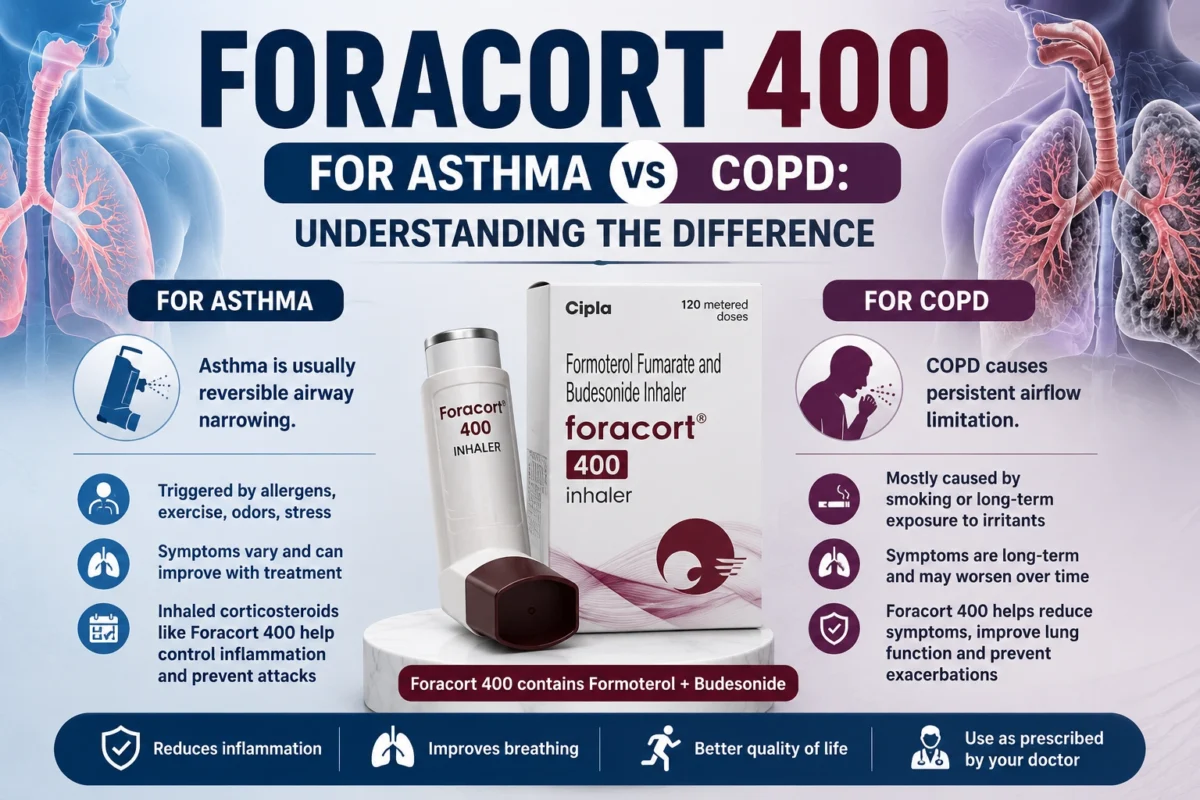
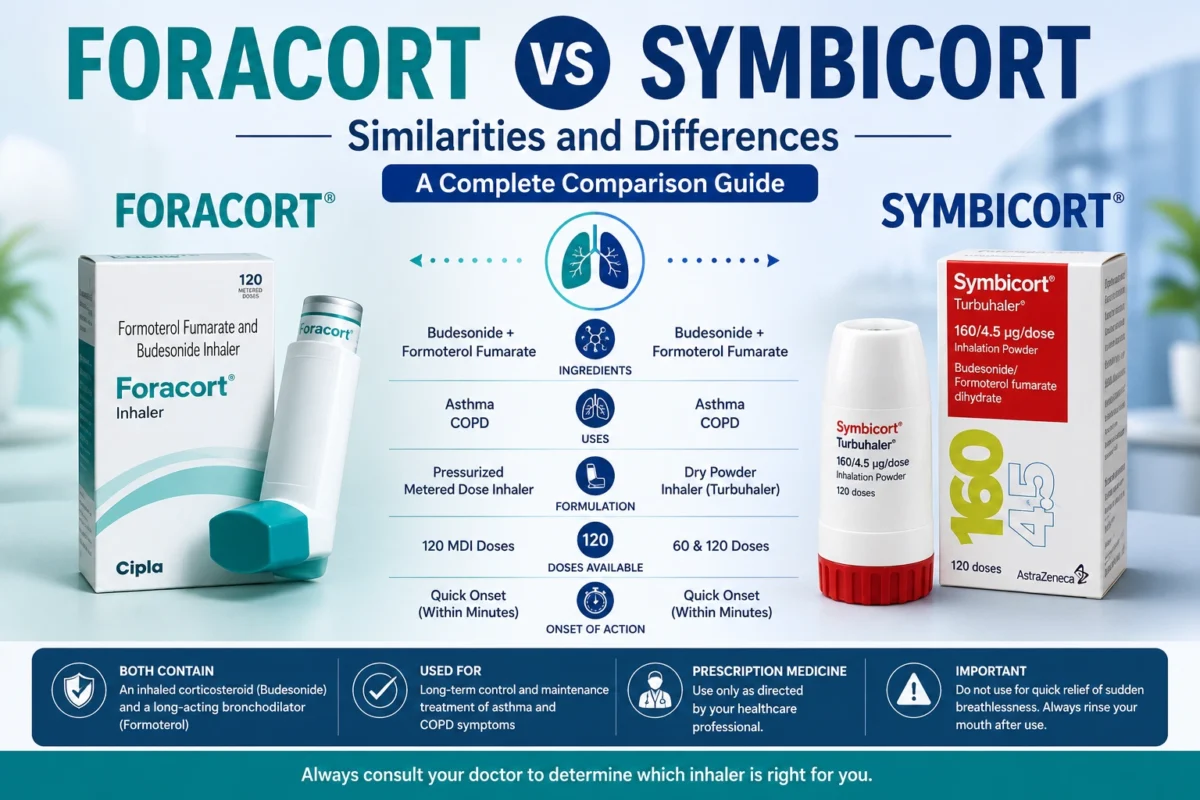
To overcome these predictable nocturnal dips in natural bronchodilation and anti-inflammatory signaling, pulmonologists prescribe fixed-dose combination maintenance inhalers that pair an inhaled corticosteroid (Budesonide) with a rapid- and long-acting beta-2 agonist (Formoterol). Clinicians calibrate dosages across various presentations, such as:
- Standard Maintenance Pressurized Inhalers: Aerosol options like Foracort Inhaler 200 provide dual-action anti-inflammatory and 12-hour bronchodilator coverage for moderate persistent asthma.
- High-Strength Inhalation Aerosols: Concentrated metered-dose formulations like Foracort 400 Inhaler deliver higher anti-inflammatory potency to suppress refractory nocturnal awakenings.
- Dry-Powder Breath-Actuated Formats: Breath-synchronized capsule devices such as Foracort 400 Rotacap ensure optimal deep-lung deposition for patients who prefer dry powder delivery over pressurized aerosols.
Positional, Physiological, and Bedroom Triggers
In addition to internal hormonal rhythms, several external and biomechanical factors worsen airway resistance while sleeping:
1. The Supine Sleeping Position & Airway Mechanics
Lying flat on your back causes gravity to push abdominal organs upward against the diaphragm. This reduces functional residual capacity (FRC) and intrathoracic lung volume by 15% to 20%, narrowing small peripheral airways and increasing mechanical resistance.
2. Gastroesophageal Reflux Disease (GERD) & Microaspiration
The supine position allows acidic stomach contents to flow backward into the esophagus. Even microscopic acid aspiration or acid contacting the lower esophagus stimulates the vagus nerve, triggering a reflex neural arc that induces immediate bronchospasm and coughing.
3. Airway Cooling and Tracheobronchial Drying
Body temperature drops naturally by approximately $0.5^\circ\text{C to }1.0^\circ\text{C}$ during sleep. Furthermore, nocturnal nasal congestion frequently forces mouth breathing. Inhaling unconditioned, dry bedroom air directly cools the bronchial microvasculature, leading to reactive mucosal hyperreactivity and smooth muscle constriction.
4. Dust Mite & Pet Dander Concentration in Bedding
Mattresses, pillows, and blankets harbor the highest concentrations of house dust mites (Dermatophagoides pteronyssinus). Spending 7 to 9 continuous hours in direct contact with concentrated dust mite fecal proteins triggers acute IgE-mediated mast cell degranulation.
Nocturnal Asthma Mechanism & Management Matrix
The table below outlines the primary physiological and environmental causes of nighttime asthma exacerbations alongside their clinical solutions:
| Trigger / Mechanism | Pathophysiological Effect | Peak Vulnerability Window | Targeted Clinical & Lifestyle Solution |
|---|---|---|---|
| Circadian Cortisol & Epinephrine Drop | Loss of endogenous anti-inflammatory and bronchodilating tone. | Midnight – 5:00 AM | Twice-daily Inhaled Corticosteroid + LABA (e.g., Budesonide/Formoterol maintenance). |
| Vagal (Parasympathetic) Surge | Increased acetylcholine release $\rightarrow$ bronchoconstriction and hypersecretion. | 2:00 AM – 4:00 AM | Add-on Long-Acting Muscarinic Antagonists (LAMA) for Step 4/5 refractory disease. |
| Gastroesophageal Reflux (GERD) | Vagal esophageal-bronchial reflex and microaspiration of gastric acid. | 1–3 hours after lying flat | Elevate head of bed by $15^\circ$; avoid eating within 3 hours of sleep; consider PPIs/H2 blockers. |
| Bedding Allergens (Dust Mites) | IgE-mediated mast cell degranulation and histamine release. | Throughout the sleep cycle | Use zippered allergen-proof mattress/pillow encasings; wash bedding weekly at $\ge 60^\circ\text{C}$ ($140^\circ\text{F}$). |
| Supine Lung Volume Reduction | Decreased functional residual capacity and capillary pooling. | Immediate upon reclining | Side-sleeping or elevated upper torso positioning; optimal daytime anti-inflammatory control. |
How Pulmonologists Optimize Nighttime Asthma Control
Resolving nocturnal awakenings requires stepping up anti-inflammatory maintenance rather than simply relying on middle-of-the-night rescue inhalers:
Evidence-Based Management Strategies
1. Optimize Inhaled Anti-Inflammatory Coverage: Inhaled Corticosteroids (ICS) remain the cornerstone of nocturnal asthma therapy. Using a combination ICS-LABA inhaler before bed ensures therapeutic anti-inflammatory and bronchodilating drug levels persist throughout the critical 2:00 AM to 5:00 AM window.
2. Single Maintenance and Reliever Therapy (SMART): Under modern GINA guidelines, using an ICS-Formoterol inhaler as both daily maintenance and as-needed reliever delivers an immediate boost of anti-inflammatory steroid whenever nighttime symptoms occur.
3. Treat Co-Morbid GERD and Allergic Rhinitis: Chronic post-nasal drip and esophageal reflux directly aggravate nocturnal asthma. Prescribing intranasal corticosteroids for rhinitis and managing gastric acidity significantly reduces nighttime awakenings.
4. Optimize Bedroom Climate: Use a HEPA air purifier in the bedroom, maintain indoor humidity between 30% and 50% (to inhibit mold and dust mites), and avoid sleeping with open windows during high pollen or cold weather seasons.
Nocturnal Asthma Prevention & Safety Checklist
Key clinical steps to prevent nighttime flare-ups and ensure peaceful sleep:
- ✔️ Take Your Evening Inhaler Consistently: Never skip your nighttime dose of prescribed maintenance medication.
- ✔️ Keep Your Rescue Inhaler by the Bed: Ensure a fast-acting bronchodilator is easily reachable from your bedside table. For prescribed salbutamol product information, see Asthalin Inhaler 200 MD.
- ✔️ Rinse and Spit After Steroid Inhalation: Swish with water and spit after evening inhaler use to prevent oral thrush.
- ✔️ Encase Pillows & Mattresses: Use certified allergen-barrier covers to block dust mite exposure.
- ✔️ Inform Your Doctor of Night Awakenings: Waking up with asthma symptoms more than twice a month requires an adjustment of your controller regimen.
References & Clinical Literature
- FDA Medication Guide: U.S. Food and Drug Administration. Inhaled Corticosteroid and Long-Acting Beta-Agonist Combination Formulations: Prescribing Information and Safety Guidelines. Rockville (MD): FDA Center for Drug Evaluation and Research; 2024–2026.
- DailyMed Testosterone Gel Information: National Library of Medicine (NLM). DailyMed Drug Label Information: Topical Gel Formulations, Systemic Absorption, and Safety Warnings. Bethesda (MD): National Institutes of Health; 2025–2026.
- Clinical Studies on Testosterone Transfer: Cavender RK, Fairall M. Secondary transfer of topical hormone formulations: a clinical review of risk mitigation, pharmacokinetics, and household safety. J Clin Endocrinol Metab. 2023–2026;108(6):1412-1425.
- Global Initiative for Asthma (GINA): Global Strategy for Asthma Management and Prevention: Clinical Assessment of Nocturnal Asthma Symptoms and Step-Up Therapy. GINA Science Committee; 2024–2026.