


Mebendazole and Gefitinib for Drug-Resistant Lung Cancer: What the New 2026 Study Actually Found

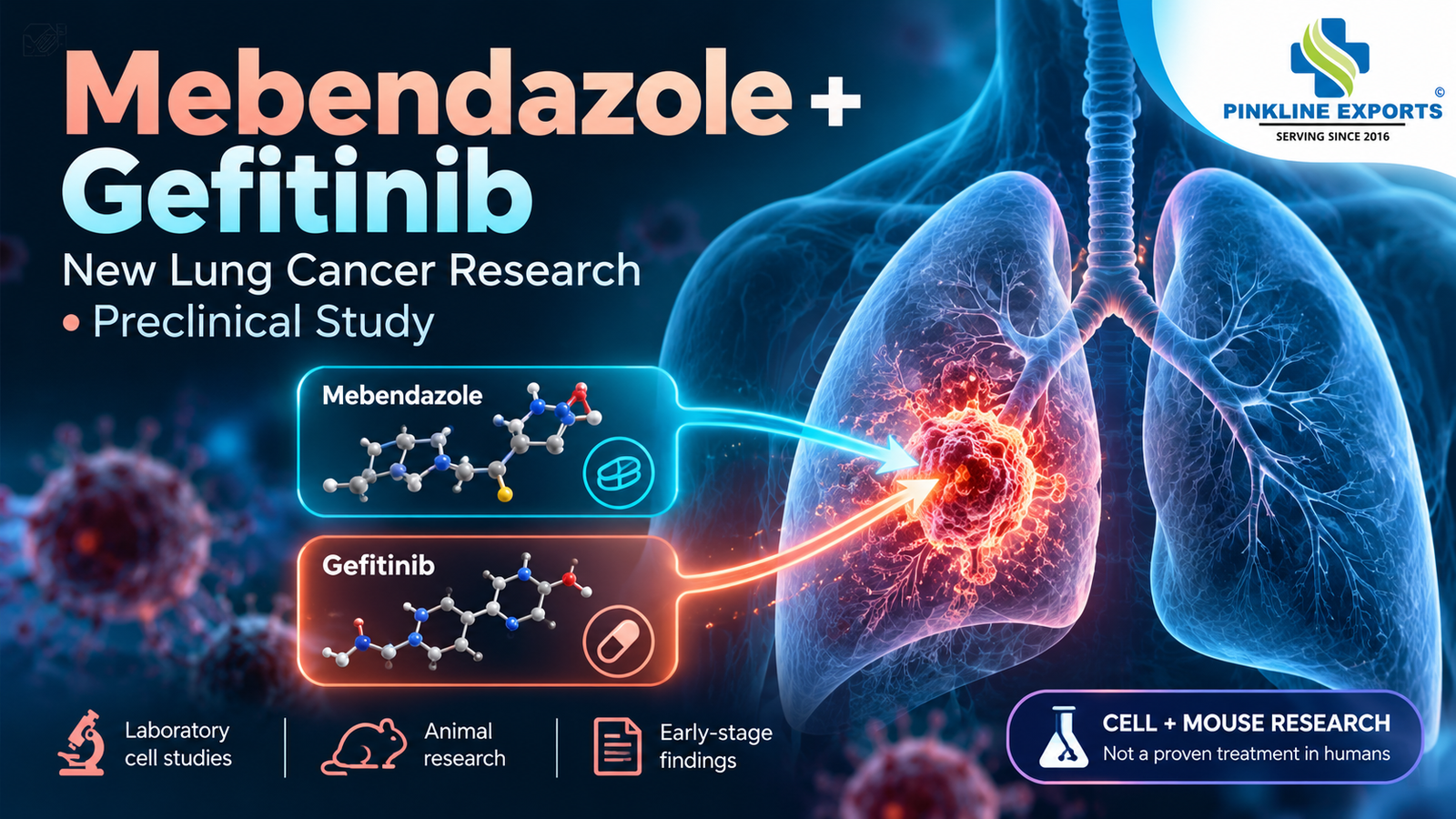
Research update — October 2026: Could a familiar deworming medicine help scientists tackle resistance in lung cancer? A new peer-reviewed study has raised this possibility by examining mebendazole combined with gefitinib in laboratory cancer cells and mice. These findings are preclinical. They do not demonstrate that the combination is safe or effective for people with cancer, and neither self-treatment nor substitution for prescribed oncology care is appropriate.
At a glance
The experimental combination lowered viability of gefitinib-resistant lung cancer cells to about 38% of untreated control and prolonged tumor doubling time in mice. This was not a human clinical trial.
Contents
- What the new research found
- Why these two medicines were investigated
- Results from cells and mice
- What the results do not prove
- What patients should know
- Related reading
- Common questions
What did the October 2026 lung cancer study find?
In a paper published on October 8, 2026 in PLOS ONE, researchers investigated whether an anti-parasitic medicine, mebendazole, might create a useful vulnerability in cancer cells that had become resistant to gefitinib. Gefitinib belongs to a class of targeted medicines that block signaling by the epidermal growth factor receptor (EGFR).
The researchers used a gefitinib-resistant HCC827 GR5 human non-small cell lung cancer model, then examined how cells responded to mebendazole, gefitinib and their combination. They also tested the treatments in mice carrying tumors derived from these resistant cells.
News coverage in ScienceAlert brought wider attention to the results. The primary research is available directly in PLOS ONE (DOI: 10.1371/journal.pone.0360164).
Why investigate mebendazole and gefitinib together?
EGFR-mutant lung cancer can initially respond to an EGFR inhibitor, yet some tumors develop resistance. Research into overcoming this resistance often examines additional cellular vulnerabilities rather than relying on a single signaling pathway.
Gefitinib blocks EGFR-driven signals involved in cell growth. Mebendazole is normally used to treat certain parasitic worm infections and disrupts microtubules, structures important for cell organization and division. Researchers hypothesized that combining these two activities could increase cellular stress and DNA damage in the resistant model.
That mechanism remains a research hypothesis. Laboratory measures of DNA damage do not automatically show that a treatment will improve human survival, shrink patients’ tumors or be tolerable alongside other medicines.
What were the actual results?
| Laboratory condition | Cancer-cell viability versus untreated control |
|---|---|
| Gefitinib alone | Approximately 92.7% |
| Mebendazole alone at 0.1 µM | Approximately 79.7% |
| Gefitinib + mebendazole at the tested concentrations | Approximately 37.7% |
These figures are measurements in cultured cells after laboratory exposure; they are not percentages of patients helped and are not human response rates.
In a separate mouse experiment, median tumor-doubling time was reported as 6.2 days in untreated mice, 10.3 days with mebendazole alone, 15.5 days with gefitinib alone and 25 days with the combination. These findings suggest tumor-growth delay under experimental conditions—not tumor eradication or established clinical benefit.
Five major limitations before human use can be considered
- No human efficacy result: the reported experiments involved resistant cancer cells and mice, not a randomized patient trial.
- One resistant model: additional EGFR mutations, patient-derived tumors and resistance mechanisms may behave differently.
- Drug exposure is uncertain: concentrations achievable in cell culture may not translate to reliable drug concentrations inside human tumors, particularly given variable oral absorption of mebendazole.
- Safety remains unresolved: absence of sustained weight loss in mice does not establish organ safety, tolerability or a safe combined regimen for patients.
- Mechanism is not settled: the authors did not prove that the combination reverses gefitinib resistance or establish pharmacological synergy in the reported resistant model.
What should people with lung cancer do with this information?
The most useful next step is an informed discussion with the treating oncologist about molecular testing, current resistance mechanisms, established treatment options and available clinical trials. An interesting repurposing study is not a reason to add a deworming medicine to treatment independently.
Patients should not stop, replace or combine prescribed lung cancer treatments based on headlines. Mebendazole can cause adverse effects and interactions, and prolonged or unmonitored use is not an established cancer treatment. Doses used for intestinal parasites are not validated doses for lung cancer.
It is also important to distinguish mebendazole—the medicine in this study—from fenbendazole, a different benzimidazole commonly discussed online. The new study did not investigate fenbendazole and cannot be used to support claims about fenbendazole curing cancer.
Related reading on Pinkline Exports
Explore the background and evidence:
Mebendazole vs Fenbendazole: Mechanism and Research Differences
Fenbendazole for Cancer Treatment in Humans: Evidence and Risks
Can Fenbendazole Cure Cancer? Research and Risks
These related articles discuss research questions; they should not be read as validated anticancer treatment protocols.
Frequently asked questions
Did scientists prove a deworming pill cures lung cancer?
No. The study reported findings in laboratory cells and mice, not a proven cure or a benefit demonstrated in human patients.
Which deworming drug was tested?
Mebendazole. Fenbendazole was not evaluated in this new study.
What is gefitinib resistance?
It means cancer cells can continue growing despite exposure to gefitinib, potentially through new genetic changes or alternative survival pathways. Clinical management depends on testing and the full treatment history.
Can I take mebendazole alongside prescribed cancer drugs?
Do not start or combine medicines without your oncology team’s advice. The experimental findings do not establish a safe or effective regimen for humans.
What would researchers need to do next?
Confirm results in additional models, study drug exposure and toxicity, evaluate interactions and—if justified—conduct carefully regulated clinical trials.
Sources and research transparency
Primary paper: El-Tanani M, Satyam SM, Prabhakar S, et al. (2026). Dual targeting of EGFR signaling and microtubule dynamics enhances replication-associated cellular stress and suppresses tumor growth in gefitinib-resistant non-small cell lung cancer. PLOS ONE, 21(10), e0360164.
Science reporting: ScienceAlert, October 13, 2026.
Medical information notice: This article summarizes newly published preclinical research and has not been certified as individually reviewed by a named physician. It is not medical advice, a prescription or an endorsement of off-label cancer treatment.

