

Foracort 400 for Asthma vs COPD: Understanding the Difference

Foracort 400 for Asthma vs. COPD: Understanding the Differences in Dosing, Efficacy, and Clinical Strategy
Critical Medical & Pulmonology Notice
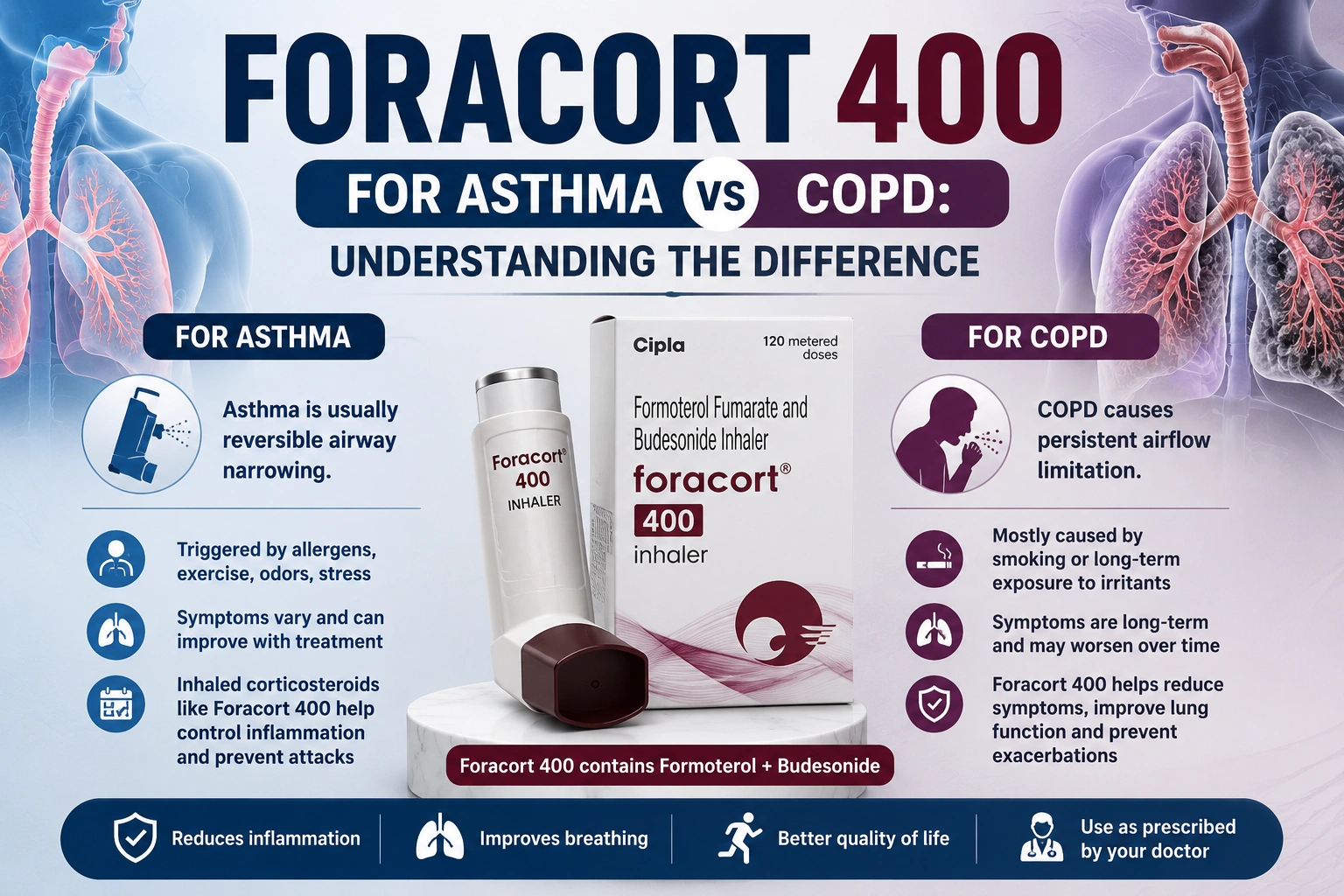
Foracort 400 is a high-potency combination inhalation therapy containing Budesonide (400 mcg), an Inhaled Corticosteroid (ICS), and Formoterol Fumarate (6 mcg), a Long-Acting Beta2-Agonist (LABA). While it is prescribed for both Asthma and Chronic Obstructive Pulmonary Disease (COPD), the underlying disease mechanisms, therapeutic goals, and step-up treatment strategies for these conditions differ significantly. Foracort 400 is a daily maintenance medication and must not be used as a primary rescue inhaler during acute, life-threatening bronchospasms unless explicitly prescribed under a specialist-directed SMART protocol. Always consult a licensed pulmonologist before adjusting your dose or switching inhaler strengths.
Asthma and Chronic Obstructive Pulmonary Disease (COPD) are two of the most prevalent chronic lower respiratory conditions worldwide. Both disorders cause airway narrowing, shortness of breath, coughing, and wheezing, leading many patients to assume they are treated identically.
While combination therapies like **Foracort 400**—which pair an anti-inflammatory corticosteroid with a rapid-onset, long-acting bronchodilator—are widely used for both conditions, the clinical rationale behind prescribing this specific high-dose strength varies fundamentally between Asthma and COPD.
Understanding how Foracort 400 works in bronchial asthma versus chronic bronchitis or emphysema requires an examination of the underlying inflammation types, disease reversibility, step-up dosing guidelines, and potential long-term risks. This comprehensive guide outlines the key differences in how Foracort 400 is utilized for Asthma versus COPD.
The Dual-Action Mechanism of Foracort 400
Foracort 400 delivers a fixed-dose combination designed to address both major components of obstructive airway disease: tissue inflammation and smooth muscle constriction.
How the Two Components Function Together
1. Budesonide (400 mcg – Inhaled Corticosteroid): A potent anti-inflammatory glucocorticoid that targets mucosal edema, suppresses inflammatory cytokine release, reduces hyper-responsiveness, and limits mucus hypersecretion in the bronchial tree.
2. Formoterol Fumarate (6 mcg – Long-Acting Beta2-Agonist): A long-acting, selective $\beta_2$-adrenoceptor agonist. Formoterol works rapidly (within 1 to 3 minutes) to relax bronchial smooth muscle, providing sustained bronchodilation that lasts for up to 12 hours.
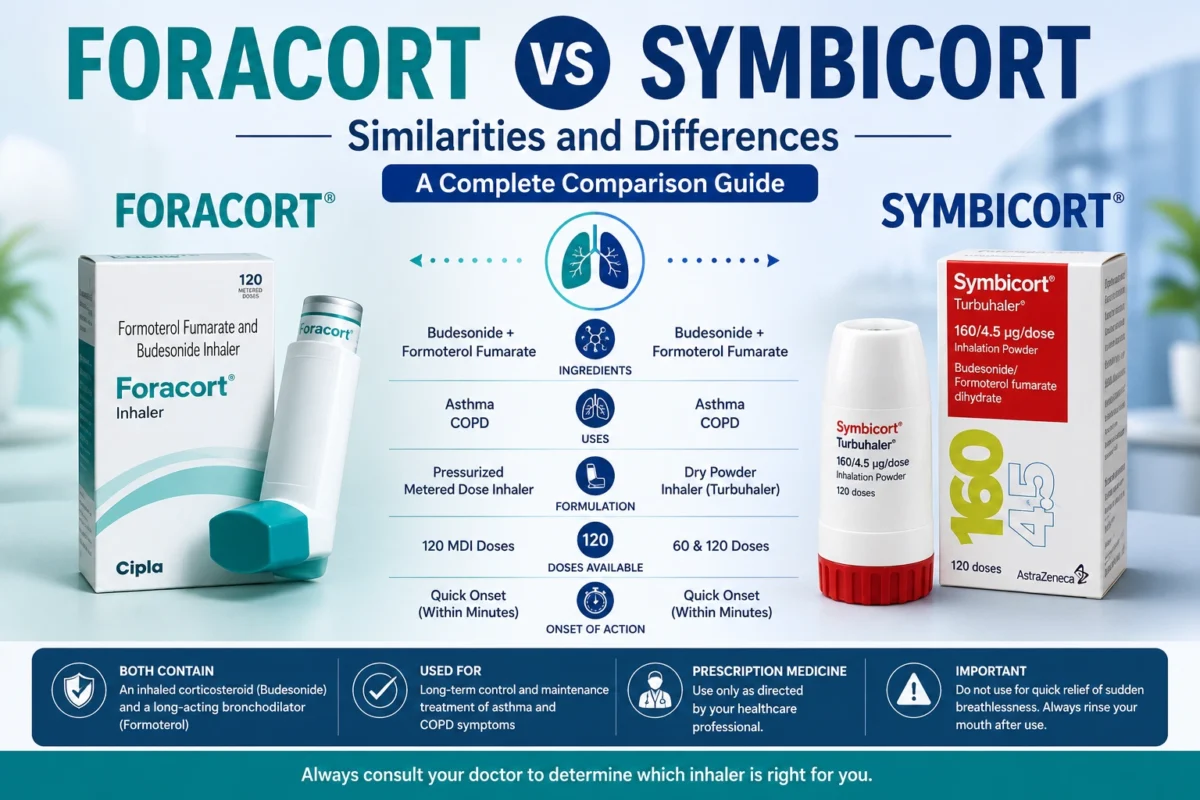
Depending on patient preference, inspiratory flow rate, and clinical severity, physicians prescribe lower maintenance options like Foracort Inhaler 200 for mild-to-moderate steps, or a clinician-selected higher-strength presentation such as Foracort 400 Inhaler. A compatible-device dry-powder presentation is available as Foracort 400 Rotacap. Strength and device choice should be decided by a clinician based on the diagnosis and the patient’s inhaler technique.
Pathophysiology: Why Inflammatory Pathways Matter
The fundamental reason Foracort 400 acts differently in Asthma compared to COPD lies in the type of cellular inflammation driving each disease:
1. Asthma: Eosinophilic & Reversible Inflammation
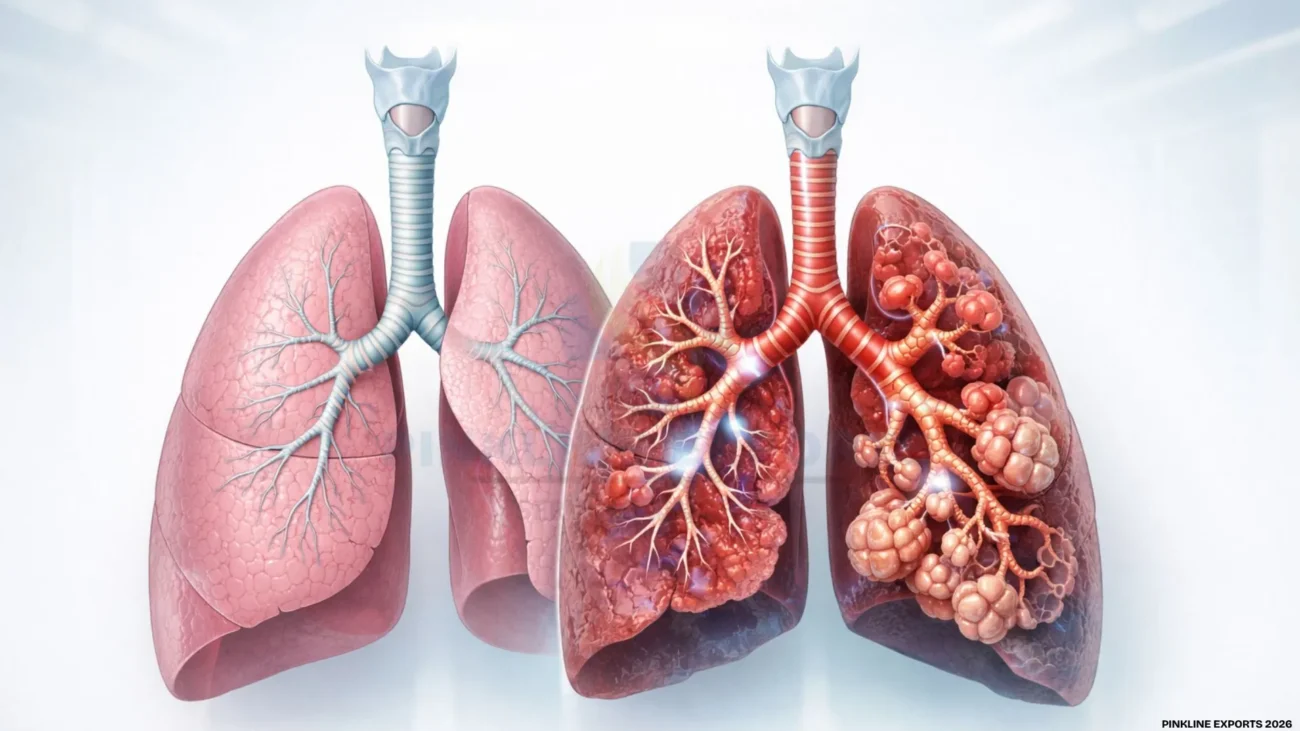
Asthma is primarily driven by eosinophilic, CD4+ T-lymphocyte inflammation (often allergic or Type 2 high). This type of inflammation is highly sensitive to corticosteroids. Because airway hyper-responsiveness in asthma is largely reversible, high doses of inhaled Budesonide (such as 400 mcg per puff) can dramatically suppress swelling, clear symptoms, and restore near-normal lung function.
2. COPD: Neutrophilic & Largely Irreversible Obstruction
COPD (including chronic bronchitis and emphysema) is primarily driven by neutrophilic, CD8+ T-lymphocyte, and macrophage-driven inflammation, typically triggered by long-term exposure to tobacco smoke or toxic particles. Neutrophilic inflammation is relatively resistant to corticosteroids. In COPD, the primary benefit of Foracort 400 comes from the long-acting bronchodilator (Formoterol), while the corticosteroid (Budesonide) is added specifically to lower the risk of severe, recurrent exacerbations in high-risk patients.
Asthma vs. COPD Clinical Comparison Matrix
The table below contrasts how Foracort 400 is deployed across both conditions according to global clinical consensus guidelines (GINA for Asthma, GOLD for COPD):
| Clinical Parameter | Asthma Management (GINA Guidelines) | COPD Management (GOLD Guidelines) |
|---|---|---|
| Primary Role of Inhaled Corticosteroid (ICS) | First-line foundational treatment. Resolves baseline eosinophilic inflammation at all severity levels. | Add-on / Selective therapy. Reserved for patients with frequent exacerbations or blood eosinophils $\ge 300\text{ cells/\mu L}$. |
| Primary Disease Target | Suppresses airway hyper-reactivity and prevents asthma attacks. | Reduces exacerbation frequency and improves daily exercise tolerance. |
| Airway Reversibility | High (bronchodilators and ICS often restore normal $FEV_1$). | Fixed or minimal (structural remodeling limits complete airflow recovery). |
| Role of Foracort 400 High Dose | Used as a Step 4/Step 5 treatment for severe, persistent, or hard-to-control asthma. | Used for Group E / severe COPD patients with a history of $\ge 2$ moderate exacerbations per year. |
| Pneumonia Risk Considerations | Low pneumonia risk at standard therapeutic doses. | Elevated risk of bacterial pneumonia with long-term, high-dose ICS therapy. |
Dosing Strategies & The Role of SMART Protocol in Asthma
How Foracort 400 is scheduled throughout the day depends heavily on the condition being treated:
1. COPD Dosing Protocol
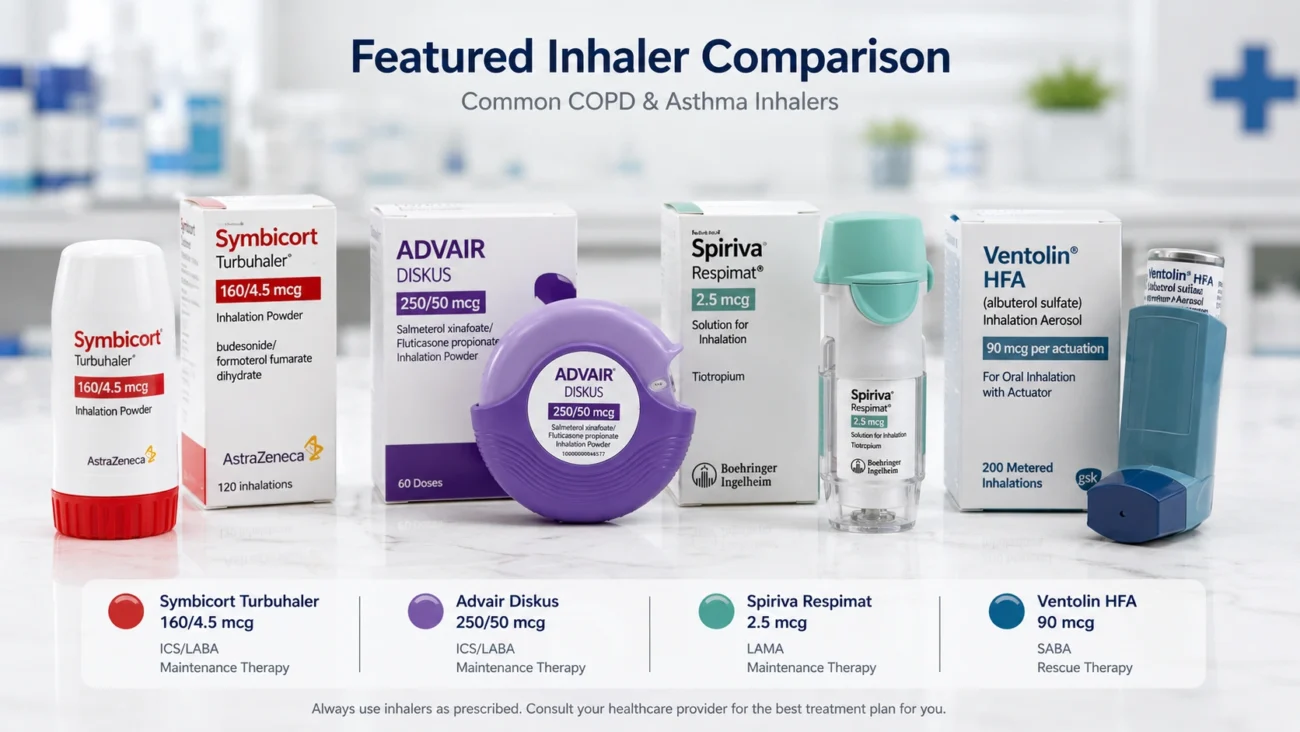
In COPD, Foracort 400 is administered on a strict, fixed schedule: 1 puff twice daily (morning and evening). COPD patients should carry a separate, short-acting bronchodilator (such as ipratropium or albuterol) for immediate relief of sudden breathlessness.
2. Asthma Dosing & SMART Protocol
In moderate-to-severe asthma, Foracort 400 is taken as a daily maintenance treatment (usually 1 puff twice daily). However, because Formoterol acts within 1 to 3 minutes, guidelines also permit its use under Single Maintenance and Reliever Therapy (SMART). Under SMART, patients use their combination inhaler for daily maintenance and take additional rescue puffs at the first sign of asthma symptoms, delivering extra anti-inflammatory Budesonide directly when the lungs are under stress.
Adverse Effects, Safety Boundaries, and Oral Hygiene
Because Foracort 400 delivers a relatively high microgram dose of inhaled steroid per puff, maintaining proper administration habits is essential for preventing local and systemic side effects:
Essential Inhaler Care Guidelines
1. Always Rinse and Spit: Inhaled corticosteroids leave micro-droplets of Budesonide in the mouth and throat. To prevent oral candidiasis (thrush) and hoarseness (dysphonia), always swish your mouth thoroughly with water and spit it out after every dose. Do not swallow the rinse water.
2. Monitoring Pneumonia Risk in COPD: Long-term use of high-dose inhaled corticosteroids in COPD patients is associated with an increased risk of lower respiratory tract infections and pneumonia. Report any increases in sputum volume, color changes, or fever to your physician immediately.
3. Cardiac Monitoring for LABA Use: Formoterol can occasionally cause mild tremors, a racing heart (tachycardia), or minor potassium shifts. Patients with pre-existing arrhythmia or hypertension should undergo routine cardiovascular evaluations.
For an exhaustive, peer-reviewed database detailing the chemical structure, pharmacokinetics, and molecular properties of Budesonide and Formoterol, consult the National Center for Biotechnology Information (NCBI) PubChem Database.
For global clinical practice guidelines on managing chronic respiratory diseases, visit the official World Health Organization (WHO) Chronic Respiratory Diseases Directory.
Foracort 400 Clinical Management Checklist
Keep these core best practices in mind to optimize your respiratory treatment plan:
- ✔️ Rinse and Spit After Every Dose: Swish water in your mouth and spit it out immediately after inhaling to prevent thrush and hoarseness.
- ✔️ Use Daily for Maintenance: Take your maintenance doses consistently twice a day, even when your breathing feels clear.
- ✔️ Know Your Rescue Plan: Confirm with your pulmonologist whether you should use a separate rescue inhaler or follow a SMART protocol.
- ✔️ Watch for Infection Signs: COPD patients should report changes in cough, fever, or darker sputum to screen for early pneumonia.
- ✔️ Maintain Regular Pulmonology Visits: Schedule routine lung function tests ($FEV_1$/FVC spirometry) to evaluate whether your dose should be stepped up or stepped down.