


Tretinoin 0.025% vs 0.05% vs 0.1%: Which Strength Is Used for Acne and Anti-Aging?

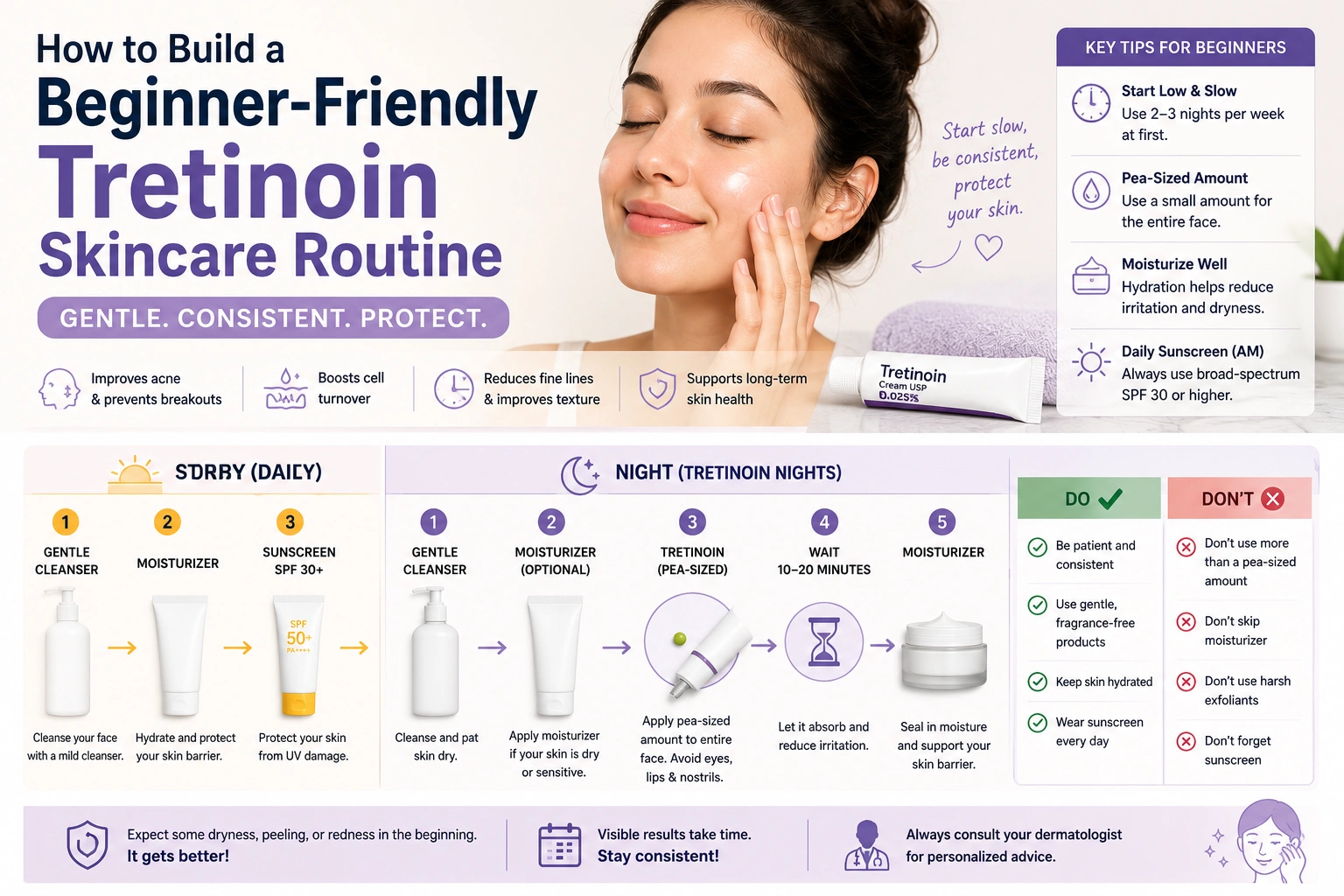
Tretinoin is one of the best-studied topical retinoids for acne and photoaged skin, but choosing between 0.025%, 0.05% and 0.1% is not simply a matter of “stronger is better.” The right concentration depends on the condition being treated, skin tolerance, formulation, previous retinoid use and a clinician’s judgment.
This guide explains how the three commonly discussed strengths differ, what the evidence says about effectiveness and irritation, and why a lower strength may sometimes be the better long-term option.
Table of contents
What Does Tretinoin Do?
Tretinoin is a prescription topical retinoid. In acne, topical retinoids are strongly recommended in current American Academy of Dermatology guidance because they help keep pores from becoming clogged and reduce inflammatory acne lesions. Tretinoin is also widely studied for visible signs of photoaging such as fine lines, uneven pigmentation and rough skin texture.
Important: concentration is only one factor. Cream, gel and microsphere formulations can behave differently on the skin, and irritation may limit how consistently someone can use a higher-strength product.
Tretinoin 0.025% vs 0.05% vs 0.1%: Quick Comparison
| Strength | Typical role | Main trade-off |
|---|---|---|
| 0.025% | Common starting strength for acne or photoaging in people who need a gentler introduction. | Usually easier to tolerate, but results still require consistent use over time. |
| 0.05% | Often used when 0.025% is well tolerated but greater treatment intensity is clinically appropriate. | Higher irritation potential than 0.025%. |
| 0.1% | A higher concentration sometimes used in selected patients who already tolerate tretinoin well. | Most likely of these three strengths to cause redness, dryness, peeling or burning. |
Which Tretinoin Strength Is Used for Acne?
There is no single “best” concentration for everyone with acne. FDA labeling for Retin-A cream includes 0.025%, 0.05% and 0.1% strengths for topical treatment of acne vulgaris. In practice, clinicians often balance acne severity against irritation risk rather than automatically starting with the highest concentration.
For someone new to topical retinoids, a lower strength may make it easier to build consistent use. If acne remains active and the skin is tolerating treatment well, a clinician may consider a higher strength or a different formulation. The goal is sustained treatment with acceptable tolerability—not maximal peeling.
Pinkline has an existing educational guide on how tretinoin 0.05% is used for acne and a broader beginner-friendly tretinoin skincare routine.
Which Strength Is Used for Anti-Aging and Photoaging?
A higher tretinoin concentration does not automatically produce better long-term photoaging results. In a 48-week randomized trial, 0.025% and 0.1% tretinoin produced similar clinical improvement in facial photoaging, while 0.1% caused significantly more irritation. That finding is one reason clinicians may favor the lowest concentration that can be used consistently.
For anti-aging goals, patience matters. Improvements in texture, fine wrinkling and mottled pigmentation develop gradually, and daily sunscreen is essential because ultraviolet exposure continues to drive photoaging regardless of retinoid strength.
Why Stronger Tretinoin Can Cause More Irritation
Common local reactions include dryness, peeling, redness, burning and stinging. These effects are usually most noticeable during the first weeks of treatment or after increasing strength or frequency.
More irritation does not mean the treatment is working better. If irritation becomes significant, a clinician may reduce application frequency, change the formulation, step down the strength or adjust the surrounding skincare routine.
Practical Use and Safety
- Apply only as directed by the prescribing clinician.
- Use a gentle cleanser and allow skin to dry before application if advised.
- Avoid layering multiple irritating actives unless a clinician has recommended the combination.
- Use broad-spectrum sunscreen during the day.
- Keep tretinoin away from the eyes, mouth, corners of the nose and irritated or broken skin.
- Topical tretinoin is generally avoided during pregnancy; discuss pregnancy or plans for pregnancy with a healthcare professional.
Relevant Tretinoin Formulations on Pinkline
For informational reference, Pinkline lists several tretinoin formulations, including Tretinoin Gel 0.025%, Tretinoin Gel 0.05% and Tretinoin Cream 0.1%. The appropriate formulation and concentration should be selected with medical guidance rather than by strength alone.
Medical Review & Evidence
This article was updated using current evidence and prescribing references. It is educational and does not replace individualized dermatology advice.
- American Academy of Dermatology: Updated acne management guidelines
- U.S. FDA: Retin-A (tretinoin) prescribing information
- Clinical trial: 0.025% vs 0.1% tretinoin for photoaging
Frequently Asked Questions
Is tretinoin 0.1% always better than 0.025%?
No. Higher concentration increases treatment intensity but also irritation. Long-term photoaging data found similar improvement with 0.025% and 0.1%, with substantially more irritation at 0.1%.
Is 0.025% tretinoin strong enough for acne?
It can be. Tretinoin 0.025% is an established prescription strength and may be a reasonable starting point depending on acne severity, formulation and skin tolerance.
When might 0.05% tretinoin be considered?
A clinician may consider 0.05% when a lower strength is well tolerated but additional treatment intensity is appropriate.
Can I move straight to 0.1%?
That is not automatically advisable. Higher strengths can cause substantially more irritation, and the best concentration depends on prior retinoid exposure and individual skin tolerance.
Does peeling mean tretinoin is working?
No. Peeling is an irritation effect, not a requirement for benefit. Excessive irritation can make consistent treatment harder.
Can tretinoin be used during pregnancy?
Topical tretinoin is generally avoided during pregnancy. Anyone who is pregnant, may be pregnant or is planning pregnancy should discuss use with a healthcare professional.
Medical disclaimer: This information is for education only and is not a substitute for diagnosis, prescription or treatment from a qualified healthcare professional.
