


What Is Calcium Dobesilate? Uses, Benefits and How It Works

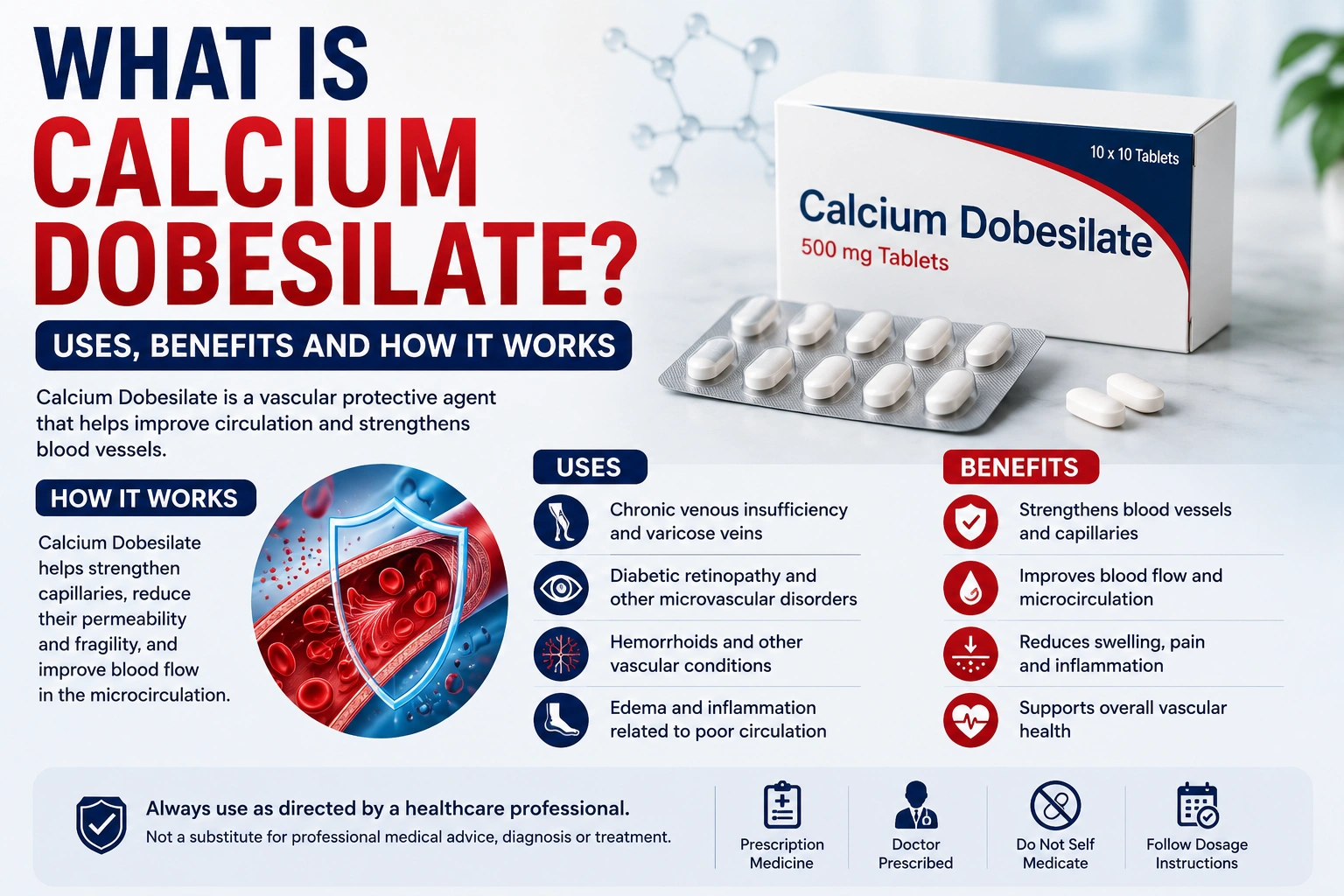
What Is Calcium Dobesilate? Uses, Benefits, and How It Works
Critical Medical & Safety Notice
Calcium Dobesilate is a targeted vasoactive and vasoprotective agent prescribed primarily for chronic venous insufficiency, microvascular disorders, and diabetic retinopathy. Therapy must be initiated, monitored, and adjusted under the supervision of a qualified physician. Patients with renal impairment require specific dosage adjustments. This document serves strictly educational purposes.
Vascular and microcirculatory disorders affect millions of individuals worldwide, often resulting from chronic conditions like diabetes, hypertension, or prolonged venous insufficiency. When the structural integrity of tiny capillaries and larger venous walls begins to degrade, patients experience persistent lower-limb swelling, pain, heaviness, and progressive tissue damage.
Among the therapeutic options engineered to reinforce microvascular health, Calcium Dobesilate stands out as a unique, highly effective angioprotective agent. Unlike generic venotonics, Calcium Dobesilate acts directly on capillary walls and blood vessel linings to reduce hyperpermeability, strengthen structural collagen, and optimize blood flow.
Understanding how this medication functions requires a close look at its molecular mechanics, primary clinical uses, expected health benefits, and safe administration guidelines. This clinical reference guide breaks down everything you need to know about Calcium Dobesilate therapy.
What Is Calcium Dobesilate?
Calcium Dobesilate (chemically known as calcium 2,5-dihydroxybenzenesulfonate) is a synthetic vasoprotective compound. It belongs to the class of medications known as microvascular protectors and venotonics.
First developed to address capillary fragility and abnormal blood vessel permeability, it operates at the endothelial level—the inner lining of blood vessels—where it helps regulate fluid exchange between blood plasma and surrounding tissues.
In clinical practice, standardized oral treatments like Calcium Dobesilate Capsules 500 Mg are widely prescribed to deliver consistent, therapeutic concentrations needed to repair damaged capillary beds and relieve chronic venous congestion.
How It Works: Mechanism of Action
Calcium Dobesilate exerts its therapeutic effects through several distinct physiological pathways:
Core Physiological Mechanisms
1. Reducing Capillary Permeability & Fragility: It inhibits vasoactive substances like histamine, bradykinin, and leukotrienes that cause vessel walls to leak. By tightening the endothelial junction barriers, it prevents plasma fluid from leaking into surrounding tissues, directly reducing swelling (edema).
2. Inhibiting Endothelial Breakdown: It decreases the activity of enzymes like collagenase and hyaluronidase, which normally break down structural proteins in vessel walls. This helps preserve the physical strength and flexibility of capillaries.
3. Decreasing Blood Viscosity & Platelet Aggregation: Calcium Dobesilate reduces excess plasma viscosity and lowers platelet hyper-aggregability, allowing blood to flow more smoothly through narrow, congested capillary beds without forming micro-clots.
4. Enhancing Lymphatic Drainage: It stimulates lymphatic vessel pumping, helping the body clear excess interstitial fluid and waste proteins from swollen limbs far more efficiently.
For a deep dive into the official chemical profile, clinical pharmacokinetics, and molecular properties of this compound, consult the peer-reviewed National Center for Biotechnology Information (NCBI) PubChem Database.
Primary Clinical Uses & Indications
Calcium Dobesilate is routinely prescribed across several major clinical specialties due to its versatile vascular benefits:
- Diabetic Retinopathy: Helps prevent micro-aneurysms, hemorrhages, and fluid buildup (macular edema) in the tiny blood vessels of the eye caused by prolonged high blood sugar.
- Chronic Venous Insufficiency (CVI): Relieves symptoms associated with damaged leg vein valves, including leg pain, heaviness, muscle cramps, restless legs, and lower-limb swelling.
- Hemorrhoidal Disease: Reduces localized inflammation, bleeding, and painful venous engorgement in acute and chronic hemorrhoids by strengthening rectal venous walls.
- Microangiopathies: Protects small blood vessels throughout the body from damage caused by hypertension, vascular disease, or metabolic disorders.
Key Clinical Benefits Matrix
The table below summarizes the key health benefits patients experience during Calcium Dobesilate therapy:
| Clinical Target Area | Observed Patient Benefit | Underlying Physiological Impact |
|---|---|---|
| Lower Extremities & Legs | Dramatic reduction in leg swelling, heaviness, and evening aching. | Reduces fluid leakage from leg veins and enhances lymphatic clearing. |
| Ocular / Retinal Health | Slowing of vision loss and reduction in retinal hemorrhages in diabetic patients. | Stabilizes retinal capillary membranes and stops micro-leakage in the eye. |
| Skin & Tissues | Accelerated healing of venous stasis ulcers and skin discoloration. | Restores microcirculatory oxygen delivery to starved, fluid-logged tissues. |
| Rectal Vascular Beds | Rapid reduction in painful hemorrhoidal flare-ups and rectal bleeding. | Tightens distended rectal veins and lowers local vascular inflammation. |
Safety Profile and Potential Side Effects
Calcium Dobesilate is generally well-tolerated when taken at prescribed therapeutic doses. Most reported side effects are mild, transient, and resolve without requiring treatment discontinuation.
Common side effects include mild gastrointestinal discomfort (such as nausea, heartburn, or diarrhea), minor headaches, and transient skin rashes. In rare instances, a sudden fever or sore throat may occur; if this happens, patients should contact their physician promptly to check white blood cell levels.
For official clinical guidelines on managing vascular health and monitoring microcirculatory therapies, refer to the World Health Organization (WHO) Clinical Guidelines Directory.
Calcium Dobesilate Treatment Checklist
Keep these core guidelines in mind to ensure a safe, successful treatment experience:
- ✔️ Take with Meals: Administer capsules alongside meals to minimize potential gastrointestinal upset.
- ✔️ Maintain Daily Consistency: Take your prescribed dose regularly at the same time each day for optimal vascular protection.
- ✔️ Monitor Renal Health: Inform your physician if you have a history of kidney disease so your dosage can be adjusted appropriately.
- ✔️ Track Symptom Changes: Keep a record of changes in leg swelling, pain levels, or vision markers to review with your doctor.
- ✔️ Follow Professional Guidance: Always consult your physician before adjusting doses or stopping therapy.