


Hyperthyroidism vs Hypothyroidism: Symptoms, Differences & When to Get Your Thyroid Checked

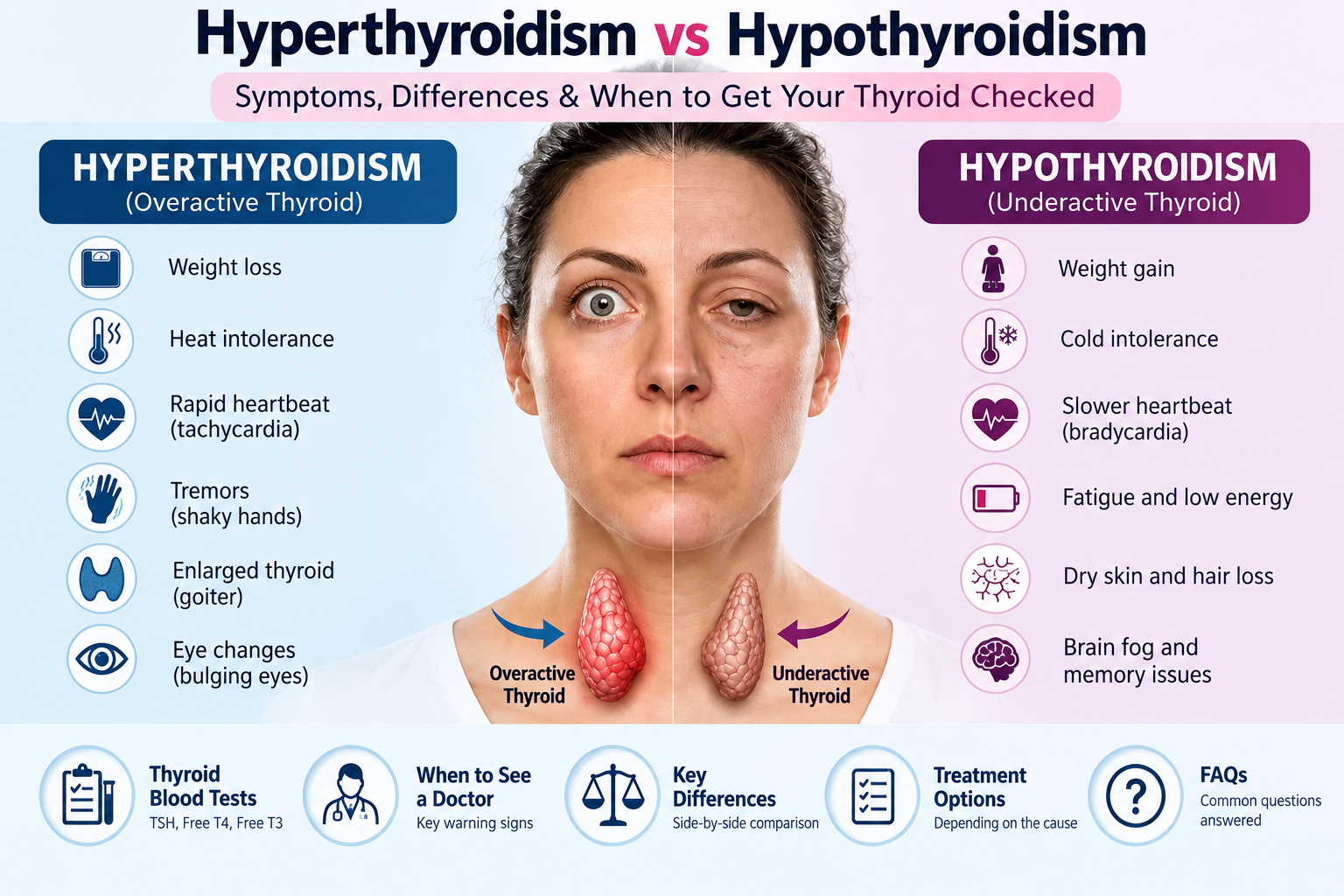
Feeling unusually tired, noticing unexplained weight changes, struggling with temperature sensitivity, or experiencing changes in your heart rate can make you wonder whether your thyroid is involved. The thyroid is a small gland in the neck, but the hormones it produces influence metabolism, energy use, heart function and many other processes throughout the body.
Two of the most common thyroid problems are hyperthyroidism, when the thyroid produces too much thyroid hormone, and hypothyroidism, when it produces too little. Their symptoms can look very different—and symptoms alone cannot confirm either condition.
Hyperthyroidism vs Hypothyroidism at a Glance
| Hyperthyroidism (overactive thyroid) | Hypothyroidism (underactive thyroid) |
|---|---|
| Unintentional weight loss may occur | Weight gain may occur |
| Heat intolerance or increased sweating | Increased sensitivity to cold |
| Fast or irregular heartbeat | Slower heart rate may occur |
| Tremor, nervousness or restlessness | Fatigue, sluggishness or low energy |
| More frequent bowel movements | Constipation |
| Difficulty sleeping | Increased tiredness |
What Is Hyperthyroidism?
Hyperthyroidism occurs when the thyroid produces more thyroid hormone than the body needs. Because thyroid hormones influence metabolic activity, an excess can make several body systems work faster. Possible symptoms include a racing or irregular heartbeat, tremor, sweating, heat intolerance, anxiety or irritability, difficulty sleeping and unintended weight loss. Some people may develop an enlarged thyroid (goiter).
What Is Hypothyroidism?
Hypothyroidism occurs when the thyroid does not produce enough thyroid hormone. Body processes may slow down, leading to fatigue, sensitivity to cold, constipation, dry skin, weight gain, muscle weakness or changes in mood and concentration. Symptoms can develop gradually and may be mistaken for everyday tiredness, stress or other health conditions.
Can Thyroid Problems Affect the Eyes?
Some thyroid disorders—particularly Graves’ disease—can be associated with thyroid eye disease. Symptoms may include eye irritation, dryness, redness, swelling, prominent-looking eyes, eyelid changes, double vision or discomfort. However, an eye that looks more open or closed than the other is not enough to diagnose a thyroid disorder and can have many other causes. New, persistent or worsening eye changes should be assessed by a healthcare professional.
Why Symptoms Can Be Misleading
Fatigue, anxiety, changes in weight, poor sleep, hair changes and difficulty concentrating are not unique to thyroid disease. They can occur with many other medical or lifestyle factors. This is why comparing yourself with a symptom graphic or another person’s experience cannot establish a diagnosis.
How Are Thyroid Problems Checked?
A healthcare professional will consider your symptoms and medical history and may perform a physical examination. Blood testing commonly begins with thyroid-stimulating hormone (TSH), often together with free T4. Additional tests such as T3 or thyroid antibodies may be appropriate depending on the results and suspected cause. Imaging is needed only in selected situations.
When Should You Seek Medical Advice?
Consider discussing persistent unexplained fatigue, significant weight change, ongoing heat or cold intolerance, neck swelling, unusual heart-rate changes or persistent eye symptoms with a healthcare professional. Seek urgent medical attention for severe chest pain, significant breathing difficulty, fainting, severe confusion, sudden vision loss or other acute symptoms.
Thyroid Treatment Depends on the Diagnosis
Hyperthyroidism and hypothyroidism require different approaches, and treatment depends on the underlying cause, test results, age, other health conditions and individual circumstances. Medicines used for one thyroid disorder are not interchangeable with those used for another. Do not start, stop or change thyroid medication based only on symptoms or online information.
Related thyroid medicine: Thyroxine Sodium Tablets 100 Mcg — thyroid-hormone replacement used for hypothyroidism when prescribed at an individualized dose. View product information.
Available strengths: 12.5 mcg · 37.5 mcg · 62.5 mcg · 88 mcg · 112.5 mcg · 125 mcg · 150 mcg.
Not a treatment for hyperthyroidism. Dose selection requires professional assessment and thyroid-function testing.
Pinkline Exports provides additional information within its Thyroid category. Medicine information should complement—not replace—care from a qualified healthcare professional.
Frequently Asked Questions
Can you tell whether your thyroid is overactive or underactive from symptoms?
No. Symptoms can provide clues, but thyroid blood tests and clinical evaluation are generally required to determine thyroid function.
Can thyroid problems cause weight changes?
They can. Hyperthyroidism may be associated with weight loss and hypothyroidism with weight gain, but weight changes have many possible causes and are not diagnostic by themselves.
Can thyroid disease affect your eyes?
Yes, certain thyroid conditions—especially Graves’ disease—can affect the tissues around the eyes. Eye asymmetry alone, however, does not establish thyroid disease.
What blood tests are commonly used to check thyroid function?
TSH and free T4 are commonly used. A clinician may order additional tests such as T3 or thyroid antibodies when appropriate.
Medical disclaimer: This article is for general educational purposes and is not a diagnosis or a substitute for professional medical advice. If you are concerned about thyroid symptoms, consult a qualified healthcare professional.

