

How Zopiclone Works: Understanding Prescription Sleep Medicines

How Zopiclone Works: Understanding Prescription Sleep Medicines
Critical Medical & Controlled Substance Notice
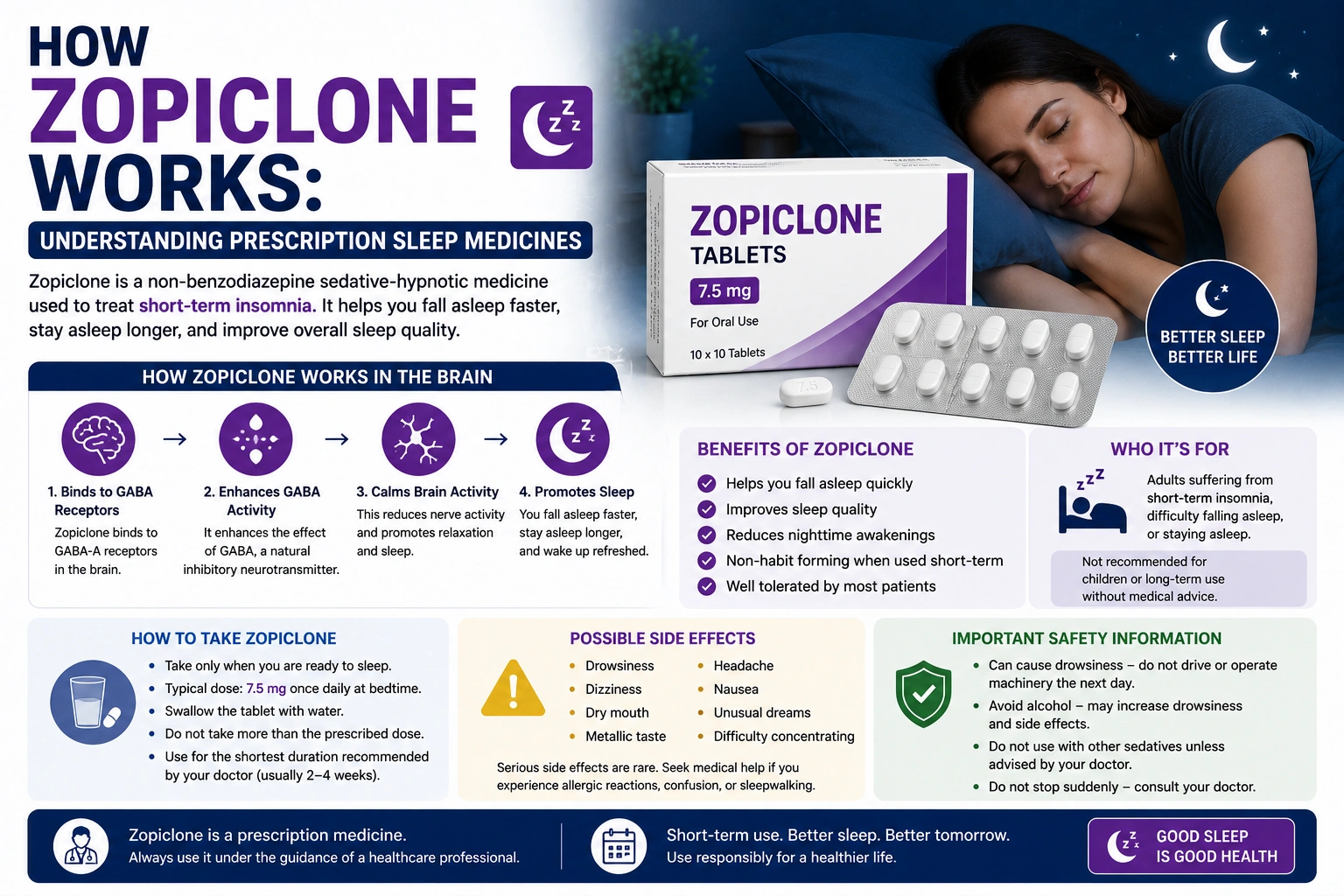
Zopiclone is a non-benzodiazepine hypnotic agent (commonly classified as a “Z-drug”) indicated strictly for short-term management of severe, disabling insomnia in adults. Because Zopiclone depresses the central nervous system (CNS), it carries potential risks of tolerance, psychological and physical dependence, daytime sedation, and complex sleep behaviors (such as sleep-walking or sleep-driving). Treatment must be initiated and monitored under direct medical supervision, typically limited to 2 to 4 weeks. This document serves strictly educational purposes.
Insomnia—characterized by persistent difficulty falling asleep, staying asleep, or experiencing non-restorative sleep—affects millions of individuals worldwide. Chronic sleep deprivation impairs cognitive processing, mood regulation, metabolic health, and immune function, making effective sleep management essential for overall well-being.
When non-pharmacological interventions like Cognitive Behavioral Therapy for Insomnia (CBT-I) require temporary pharmacological support, physicians may prescribe targeted hypnotic agents like **Zopiclone**.
Understanding Zopiclone requires an examination of its neurochemical mechanism in the brain, proper clinical indications, dosage variations, potential adverse effects, and guidelines for safe, short-term usage.
Neurochemical Mechanism: How Zopiclone Induces Sleep
Zopiclone belongs to the cyclopyrrolone chemical class. Although structurally distinct from classic benzodiazepines, it acts on the same major inhibitory neurotransmitter pathway in the brain:
GABA-A Receptor Modulation
1. Binding to GABA-A Receptors: Zopiclone binds selectively to the macromolecular GABA-A receptor complex in the central nervous system, specifically modulating the benzodiazepine receptor site.
2. Enhancing Inhibitory Neurotransmission: Binding increases the affinity of the neurotransmitter Gamma-Aminobutyric Acid (GABA) for its receptor. This opens neuronal chloride channels, allowing chloride ions to flow into the neuron.
3. Hyperpolarization & CNS Depression: The influx of chloride hyperpolarizes the neuronal membrane, reducing neuronal excitability. This dampens brain activity, rapidly inducing sedation, muscle relaxation, and anxiolytic effects that help initiate and maintain sleep.
Prescription choices in clinical sleep medicine—such as Zop 7.5 Mg – Zopiclone Tablets or higher-strength options like Zopsign 10 Mg – Zopiclone Tablets—are carefully tailored to individual sleep latency, patient age, and clinical severity within the broader Sleep Aid directory.
Clinical Indications & Dosing Principles
Zopiclone is prescribed for short-term relief of acute insomnia, including difficulty falling asleep (sleep onset), frequent nocturnal awakenings, or early morning awakening.
Standard Adult vs. Elderly Dosing
Because Zopiclone is metabolized by the liver (via CYP3A4 and CYP2C8 enzymes) and cleared through the kidneys, dosing must account for patient age and organ function:
- Standard Adult Dosage: The standard therapeutic dose for adults is 7.5 mg taken orally once daily immediately before bedtime.
- Elderly or Renal/Hepatically Impaired Patients: Treatment usually begins at a lower dose of 3.75 mg to account for slower drug clearance and lower the risk of next-day confusion or falls.
Clinical Overview Matrix
The table below summarizes the key pharmacological parameters, physiological actions, and safety guidelines for Zopiclone:
| Parameter | Clinical Detail | Safety & Administration Protocol |
|---|---|---|
| Chemical Class | Cyclopyrrolone derivative (Non-benzodiazepine “Z-drug”) | Binds selectively to the GABA-A receptor complex. |
| Onset & Duration | Rapid onset (15–30 mins); elimination half-life ~5 hours | Take immediately before turning off lights; ensure 7–8 hours of uninterrupted sleep. |
| Treatment Duration | Short-term (typically 2 to 4 weeks max) | Avoid continuous long-term use to prevent tolerance and dependence. |
| Common Side Effect | Dysgeusia (metallic or bitter taste in mouth) | Harmless; caused by salivary excretion of the drug. |
Adverse Effects, Dependency, and Safety Precautions
While Zopiclone has a favorable safety profile compared to older barbiturates, it requires strict adherence to safety guidelines:
1. Common Mild Side Effects
The most frequent side effect is **dysgeusia**—a bitter or metallic taste on the tongue shortly after taking the tablet or upon waking, caused by salivary secretion of Zopiclone. Other mild effects include dry mouth, morning drowsiness, and lightheadedness.
2. Complex Sleep Behaviors & CNS Depression
Zopiclone can trigger complex sleep behaviors (such as sleep-walking, preparing food, or making phone calls while not fully awake), with no memory of the event afterward. Combining Zopiclone with alcohol or other CNS depressants significantly increases these risks and can cause severe respiratory depression.
3. Tolerance, Dependence, and Rebound Insomnia
Using Zopiclone continuously for more than 4 weeks can lead to pharmacological tolerance (requiring higher doses for the same effect) and physical dependence. Abruptly stopping after prolonged use can trigger **rebound insomnia**, where sleep difficulties temporarily worsen for a few nights.
For an exhaustive, peer-reviewed database detailing the chemical structure, pharmacokinetics, and molecular properties of Zopiclone, consult the National Center for Biotechnology Information (NCBI) PubChem Database.
For general international health resources and management guidelines on mental health and sleep hygiene, visit the official World Health Organization (WHO) Health Directory.
Zopiclone Treatment Safety Checklist
Keep these core clinical guidelines in mind when using prescription sleep aids:
- ✔️ Take Right Before Bed: Ingest your prescribed tablet immediately before getting into bed, not earlier in the evening.
- ✔️ Allow 7–8 Hours of Sleep: Only take Zopiclone if you can remain in bed for a full 7 to 8 hours to minimize next-day grogginess.
- ✔️ Avoid Alcohol Completely: Never combine Zopiclone with alcohol or sedative recreational substances.
- ✔️ Keep Usage Short-Term: Limit use to 2–4 weeks as prescribed by your physician to prevent dependence and tolerance.
- ✔️ Taper Off Gradually: Work with your doctor to gradually step down your dose when ending treatment to avoid rebound insomnia.