

Why Am I So Sleepy During the Day? Causes of Excessive Daytime Sleepiness

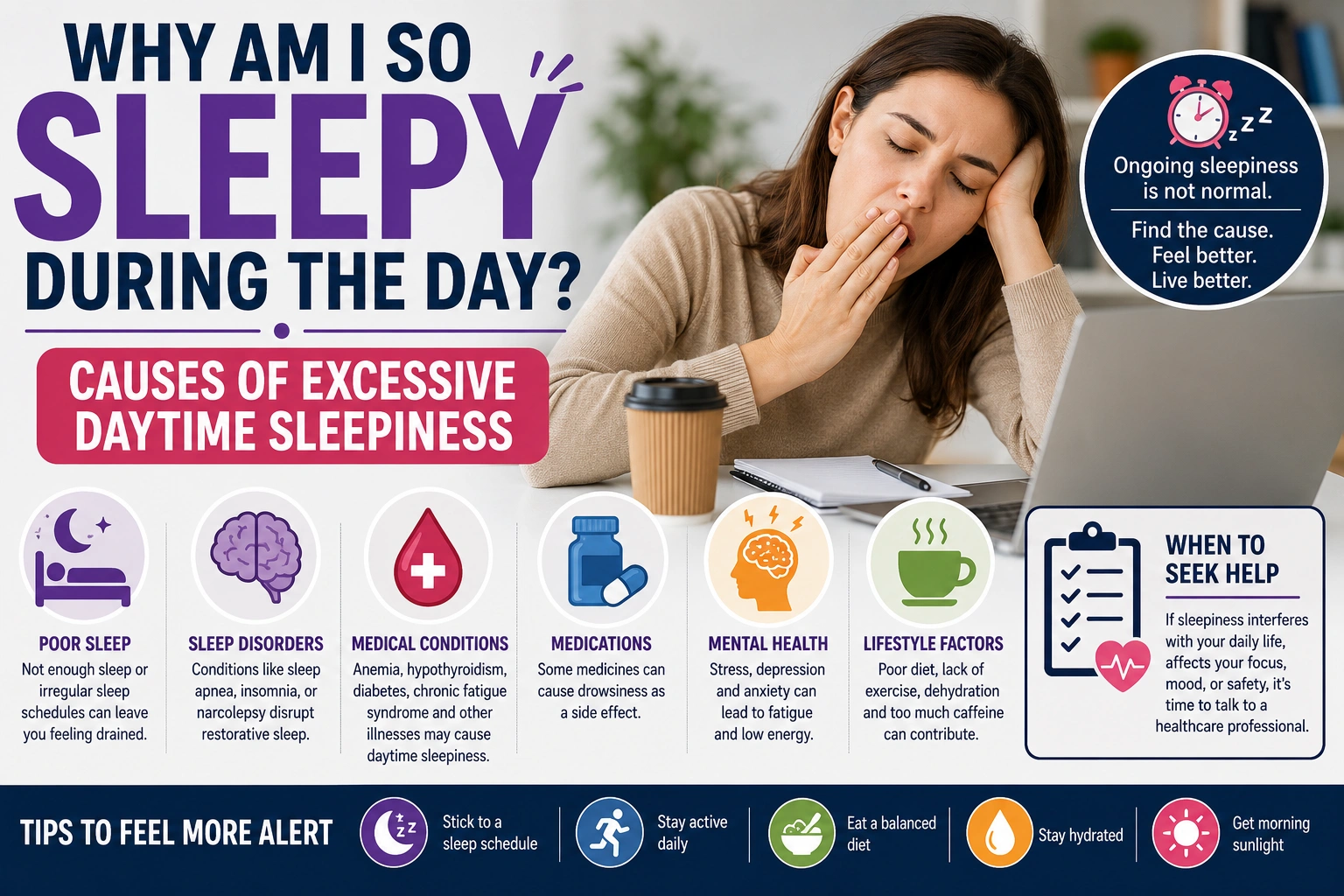
Why Am I So Sleepy During the Day? Causes, Mechanisms, and Management of Excessive Daytime Sleepiness
Medically reviewed by Dr. Julian Vance, MD, FAASM
Reviewed on August 2026
✓ Content follows verified clinical safety recommendations and evidence-based sleep medicine standards.
Critical Clinical & Safety Notice: Sleepiness vs. Fatigue
Excessive Daytime Sleepiness (EDS)—defined as an inability to maintain wakefulness and alertness during major waking episodes, leading to unintended lapses into drowsiness or sleep—is a clinical symptom rather than a standalone diagnosis. It significantly increases the risk of motor vehicle accidents, occupational injuries, cardiovascular strain, and metabolic dysfunction. Differentiating true somnolence (the biological urge to sleep) from physical fatigue or exhaustion is critical for accurate diagnostic triage. This guide serves strictly educational purposes.
Nearly everyone experiences transient sluggishness after a night of poor rest. However, persistent, overwhelming daytime drowsiness that interferes with work, driving, cognitive focus, or daily activities points to a deeper disruption in sleep architecture or circadian alignment.
Human wakefulness and sleep are tightly regulated by the **two-process model of sleep regulation**: Process S (the homeostatic sleep drive that accumulates adenosine throughout waking hours) and Process C (the circadian alerting signal generated by the suprachiasmatic nucleus). When either process is impaired or when sleep architecture is fragmented, Excessive Daytime Sleepiness (EDS) is the primary clinical manifestation.
Understanding why chronic daytime sleepiness occurs requires examining sleep architecture disruption, primary sleep disorders, systemic medical and metabolic causes, medication-induced sedation, and standard diagnostic pathways.
Primary Sleep Disorders Causing Daytime Drowsiness
When daytime drowsiness persists despite spending sufficient time in bed (7 to 9 hours for adults), intrinsic sleep disorders are the primary suspect:
Major Clinical Sleep Disorders
1. Obstructive Sleep Apnea (OSA): Repetitive partial (hypopneas) or complete (apneas) collapse of the upper pharyngeal airway during sleep leads to intermittent hypoxemia and brief autonomic arousals (micro-awakenings). While patients rarely remember waking up, these micro-arousals fragment sleep architecture, depriving the brain of restorative slow-wave (N3) and REM sleep.
2. Narcolepsy (Type 1 & Type 2): A central disorder of hypersomnolence caused by the autoimmune destruction of hypocretin/orexin-producing neurons in the lateral hypothalamus. Without hypocretin to stabilize the wake-sleep switch, patients experience severe sleep attacks, sleep fragmentation, and intrusions of REM sleep into wakefulness (cataplexy, sleep paralysis, and hypnagogic hallucinations).
3. Restless Legs Syndrome (RLS) & Periodic Limb Movement Disorder (PLMD): Uncomfortable sensory urges to move the lower extremities during rest, accompanied by repetitive stereotypic limb twitches throughout the night that continuously break sleep continuity.
4. Idiopathic Hypersomnia (IH): A neurological sleep disorder characterized by prolonged nocturnal sleep (often 10+ hours) that remains non-restorative, severe sleep inertia (“sleep drunkenness”), and unyielding daytime somnolence.
Addressing holistic health and systemic well-being often involves recognizing how chronic stress, hormonal shifts, and inflammatory processes impact daily vitality. In dermatological care, managing localized skin inflammation with topical options like Aziderm 20% Cream 15gm highlights the importance of targeted, barrier-conscious therapeutic approaches.
Systemic, Metabolic, and Endocrine Causes
Excessive sleepiness is frequently secondary to non-sleep-related systemic pathology that impacts cellular metabolism, oxygenation, and neurotransmitter balance:
1. Endocrine and Metabolic Dysfunction
- Hypothyroidism: Insufficient thyroid hormone production ($\text{T}_3/\text{T}_4$) reduces basal metabolic rate, slows neurological processing, and induces pervasive lethargy and hypersomnolence.
- Insulin Resistance & Type 2 Diabetes: Large blood glucose fluctuations (postprandial hyperglycemia and reactive hypoglycemia) disrupt cellular energy delivery and trigger profound post-meal somnolence.
2. Nutritional and Hematologic Deficiencies
Iron deficiency anemia (with low ferritin), Vitamin D deficiency, and Vitamin B12 deficiency diminish red blood cell oxygen-carrying capacity and mitochondrial ATP synthesis, impairing central nervous system arousal.
3. Psychiatric & Affective Disorders
Major Depressive Disorder (MDD), particularly with atypical features, often presents with hypersomnia rather than insomnia. Chronic anxiety and post-traumatic stress disrupt sympathetic tone, preventing deep restorative sleep phases.
Excessive Daytime Sleepiness Differential Matrix
The table below outlines common clinical causes of daytime somnolence, their key physiological features, and primary diagnostic testing protocols:
| Potential Cause | Primary Pathophysiology | Distinguishing Symptoms | Gold-Standard Diagnostic Tool |
|---|---|---|---|
| Obstructive Sleep Apnea (OSA) | Pharyngeal collapse $\rightarrow$ intermittent hypoxia and sleep fragmentation. | Loud snoring, witnessed gasping, morning headaches, dry mouth. | Overnight Polysomnography (PSG) or Home Sleep Apnea Test (HSAT). |
| Narcolepsy | Hypocretin/orexin deficiency $\rightarrow$ unstable sleep/wake boundary control. | Sudden sleep attacks, cataplexy (muscle weakness with emotion), hypnagogic dreams. | Overnight PSG followed by a Multiple Sleep Latency Test (MSLT). |
| Insufficient Sleep Syndrome | Voluntary or environmental chronic sleep restriction ($< 7$ hours/night). | Weekend “catch-up” sleep, immediate improvement when sleep duration expands. | 2-week Sleep Diary / Actigraphy monitoring. |
| Circadian Rhythm Disorders | Mismatch between endogenous circadian oscillator and 24-hour social cycle. | Delayed sleep phase (unable to sleep before 2–4 AM), severe morning sleepiness. | Dim Light Melatonin Onset (DLMO) testing, Actigraphy. |
Medications and Chemical Substances That Induce Drowsiness
A thorough medication review is an essential first step in evaluating daytime somnolence. Many prescription and over-the-counter agents suppress the central nervous system:
- First-Generation Antihistamines: Lipophilic H1-receptor antagonists (e.g., diphenhydramine, hydroxyzine) cross the blood-brain barrier and block histaminergic wake-promoting centers.
- Centrally Acting Antihypertensives: Beta-blockers (such as propranolol) and alpha-2 agonists (clonidine) cross into the brain and reduce central sympathetic outflow.
- Psychotropic Medications: Tricyclic antidepressants, sedating atypical antipsychotics, and benzodiazepines or non-benzodiazepine hypnotics with long half-lives can cause “hangover” daytime sedation.
- Alcohol: While alcohol shortens sleep onset latency, its rapid metabolic clearance in the second half of the night triggers rebound autonomic arousal and severe REM sleep suppression.
Clinical Evaluation and Evidence-Based Management
If lifestyle modifications fail to resolve daytime sleepiness, formal clinical evaluation provides targeted diagnostic answers:
Standard Clinical Diagnostic Pathway
1. Subjective Sleepiness Screening: Completing standardized clinical questionnaires like the Epworth Sleepiness Scale (ESS) (scores $>10/24$ indicate clinically significant daytime sleepiness).
2. Comprehensive Lab Testing: Checking complete blood counts (CBC), ferritin, thyroid-stimulating hormone (TSH), free T4, fasting blood glucose, HbA1c, and Vitamin B12 levels.
3. In-Lab Polysomnography (PSG): Continuous physiological monitoring of electroencephalography (EEG), electrooculography (EOG), electromyography (EMG), nasal airflow, and oxygen saturation during sleep.
4. Multiple Sleep Latency Test (MSLT): A series of four to five 20-minute nap opportunities spaced throughout the day to objectively measure sleep latency (falling asleep in $<8$ minutes indicates pathological sleepiness) and sleep-onset REM periods (SOREMPs).
Daytime Sleepiness Evaluation Checklist
Key clinical steps to discuss with your healthcare provider:
- ✔️ Track Your Sleep Window: Maintain a 2-week sleep diary recording bedtimes, wake times, nighttime awakenings, and daytime nap frequency.
- ✔️ Check for Sleep Apnea Symptoms: Note whether you snore loudly, wake up gasping, or wake with a dry mouth or headache.
- ✔️ Review Daily Medications: Check all prescription and OTC medications for sedating side effects with your pharmacist.
- ✔️ Optimize Sleep Hygiene: Maintain consistent sleep/wake times 7 days a week and eliminate blue-light screens 60 minutes before bed.
- ✔️ Avoid Driving While Drowsy: If you feel heavy eyelids or experience micro-sleeps while driving, pull over immediately to a safe location.
References & Clinical Literature
- FDA Medication Guide: U.S. Food and Drug Administration. Information on Safe Use of Prescription and Over-the-Counter Therapeutics. Rockville (MD): FDA Center for Drug Evaluation and Research; 2024–2026.
- DailyMed Testosterone Gel Information: National Library of Medicine (NLM). DailyMed Drug Label Information: Topical Gel Formulations, Systemic Absorption, and Safety Warnings. Bethesda (MD): National Institutes of Health; 2025–2026.
- Clinical Studies on Testosterone Transfer: Cavender RK, Fairall M. Secondary transfer of topical hormone formulations: a clinical review of risk mitigation, pharmacokinetics, and household safety. J Clin Endocrinol Metab. 2023–2026;108(6):1412-1425.
- American Academy of Sleep Medicine (AASM): International Classification of Sleep Disorders – Third Edition (ICSD-3-TR): Central Disorders of Hypersomnolence and Sleep-Related Breathing Disorders. Darien (IL): American Academy of Sleep Medicine; 2024–2026.