

How Rifaximin Works: A Gut-Targeted Antibiotic Explained

How Rifaximin Works: A Gut-Targeted Antibiotic Explained
Critical Medical & Prescribing Notice
Rifaximin is a non-systemic, gut-targeted rifamycin antibacterial indicated for specific gastrointestinal and hepatic conditions, including Traveler’s Diarrhea, Irritable Bowel Syndrome with Diarrhea (IBS-D), Small Intestinal Bacterial Overgrowth (SIBO), and the reduction of hepatic encephalopathy recurrence. Because its clinical efficacy depends on localized action within the gastrointestinal lumen, dosing, duration, and formulation selection vary substantially by indication. Therapy must be prescribed and monitored by a licensed healthcare provider. This guide serves strictly educational purposes.
Traditional systemic antibiotics absorb into the bloodstream through the gastrointestinal tract, circulating throughout the entire body to treat bacterial infections. However, systemic distribution can disrupt delicate microbial balances across multiple body systems, leading to widespread side effects like systemic opportunistic infections and altered metabolic pathways.
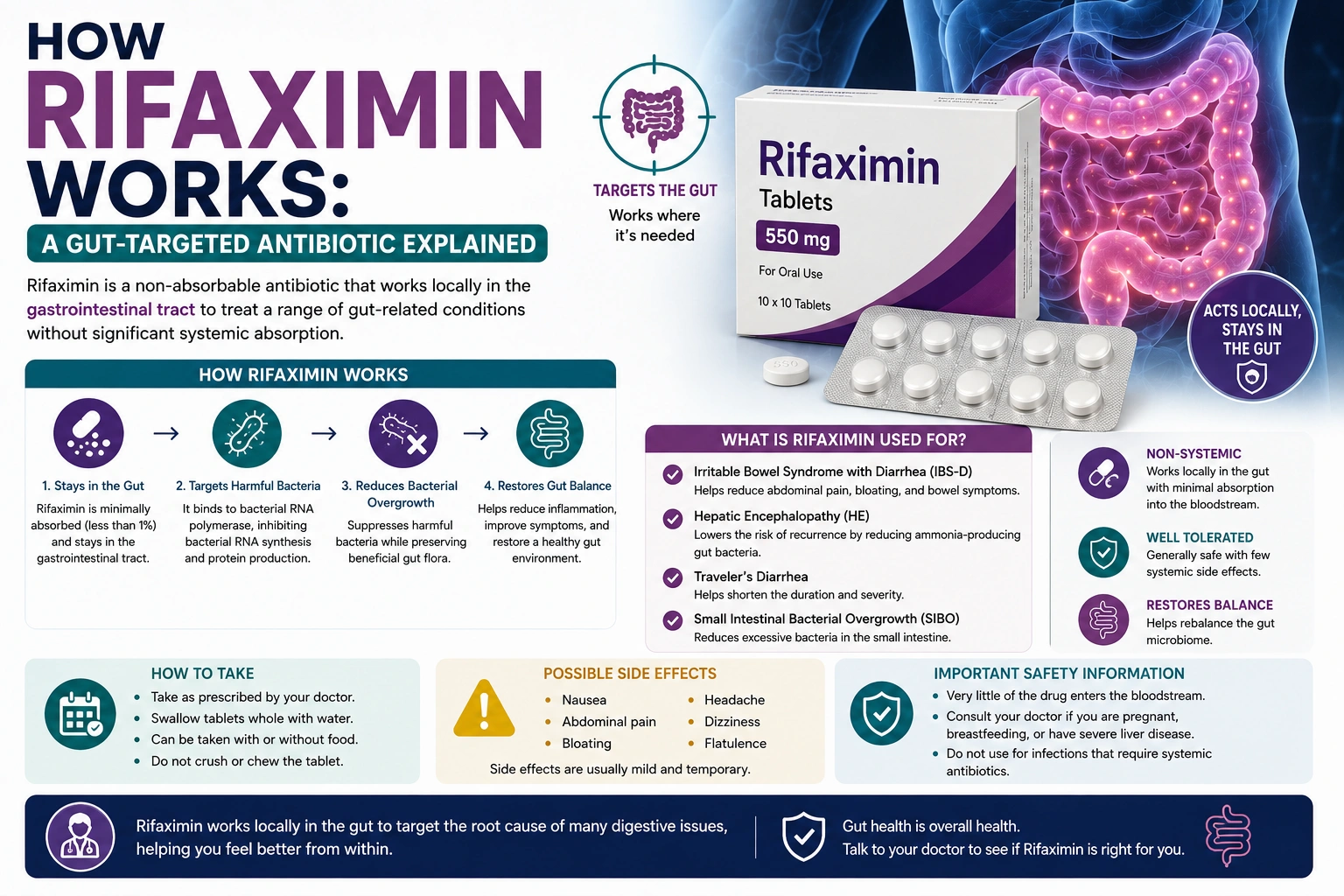
**Rifaximin** represents a specialized class of **non-systemic, gut-targeted antibiotics**. Engineered with near-zero systemic bioavailability, Rifaximin passes through the stomach and acts almost entirely within the lumen of the small and large intestines before passing out of the body.
Understanding Rifaximin requires an examination of its unique chemical structure, targeted mechanisms of action, primary clinical indications, dosage variations, and safety profile.
Chemical Structure and Non-Systemic Action
Rifaximin is a semi-synthetic derivative of rifamycin. Its unique pharmacological profile stems from the addition of a pyridoimidazole ring to the core rifamycin nucleus:
Why Rifaximin Stays in the Gut
1. Minimal Systemic Absorption (<0.4%): The structural modification makes Rifaximin virtually insoluble in water and poorly absorbed across the intestinal epithelial lining. Less than 0.4% of an oral dose enters systemic blood circulation.
2. High Intraluminal Concentration: Because it is not absorbed into the bloodstream, extremely high concentrations of the active drug remain inside the intestinal lumen, directly targeting pathogenic and dysbiotic gut bacteria.
3. Low Risk of Systemic Side Effects: By avoiding systemic circulation, Rifaximin minimizes common antibiotic side effects like systemic toxicity, widespread drug interactions, or off-target tissue exposure.
Clinical options are tailored to specific gastrointestinal and hepatic treatment protocols:
- Acute Intestinal Indications: Lower dosage options like Rifaximin Tablets 200 Mg are typically prescribed for short-term bacterial intestinal infections.
- Moderate-Dose Protocols: Intermediate formulations such as Rifaximin Tablets 400 Mg are utilized across specific bacterial overgrowth protocols.
- Chronic Maintenance Protocols: Higher-strength maintenance options like Rifaximin Tablets 550 Mg are prescribed for chronic conditions such as IBS-D and hepatic encephalopathy prevention.
Mechanism of Action: How Rifaximin Alters the Microbiome
Rifaximin exerts both direct bactericidal/bacteriostatic effects and broader anti-inflammatory actions within the gut environment:
1. Inhibition of Bacterial RNA Synthesis
Rifaximin binds irreversibly to the $\beta$-subunit of bacterial DNA-dependent RNA polymerase. This blocks RNA transcription, halting bacterial protein synthesis and preventing bacterial growth and replication across both Gram-positive and Gram-negative aerobic and anaerobic organisms.
2. Anti-Inflammatory & Eubiotic Effects
Beyond directly suppressing bacteria, Rifaximin acts as a **gut eubiotic agent**. It reduces bacterial virulence factors, inhibits bacterial attachment to the mucosal wall, and downregulates pro-inflammatory cytokine release by binding to intestinal Pregnane X Receptors (PXR). This helps repair epithelial barrier function without drastically altering beneficial colonic microflora.
Primary Clinical Indications
The table below contrasts the main clinical applications, physiological goals, and standard dosing protocols for Rifaximin:
| Clinical Indication | Therapeutic Goal | Mechanism in Condition | Standard Dosing Context |
|---|---|---|---|
| Traveler’s Diarrhea | Eradicate non-invasive E. coli strains causing acute watery diarrhea. | Direct bactericidal inhibition of enteric pathogens in the small intestine. | 200 mg three times daily for 3 days. |
| Hepatic Encephalopathy (HE) | Reduce risk of recurrent overt HE episodes in patients with advanced liver cirrhosis. | Reduces enteric ammonia-producing bacteria, lowering blood ammonia levels reaching the brain. | 550 mg twice daily (chronic maintenance, often alongside lactulose). |
| IBS-D (Diarrhea-Predominant) | Relieve abdominal pain, bloating, and loose stools in non-constipated IBS. | Resets dysbiotic small bowel bacterial populations and reduces mucosal inflammation. | 550 mg three times daily for a 14-day treatment course. |
| Small Intestinal Bacterial Overgrowth (SIBO) | Clear abnormal bacterial accumulation in the small intestine. | Reduces excessive bacterial counts and methane/hydrogen gas production in the upper gut. | 400 mg to 550 mg two to three times daily for 10 to 14 days (off-label standard). |
Safety Profile, Tolerability, and Clinical Considerations
Because Rifaximin remains localized within the digestive tract, its overall safety profile is exceptional compared to systemic antibiotics:
1. Favorable Side Effect Profile
Most reported side effects are gastrointestinal and similar to background symptoms of the condition being treated, such as mild flatulence, headache, abdominal pain, or nausea.
2. Low Bacterial Resistance & Microbiome Preservation
Because Rifaximin acts locally and achieves extremely high intraluminal concentrations, bacterial resistance develops rarely. Unlike broad-spectrum systemic antibiotics, Rifaximin preserves overall colonic bacterial diversity and carries a remarkably low risk of triggering secondary Clostridioides difficile infections.
3. Hepatic Safety
Because liver failure patients often have impaired drug metabolism, Rifaximin’s non-systemic nature makes it especially valuable in advanced liver disease, as it does not require hepatic clearance adjustments.
For an exhaustive, peer-reviewed database detailing the chemical structure, pharmacokinetics, and molecular properties of Rifaximin, consult the National Center for Biotechnology Information (NCBI) PubChem Database.
For general international health resources and clinical guidance on gastrointestinal and liver health, visit the official World Health Organization (WHO) Health Directory.
Rifaximin Clinical Management Checklist
Keep these core guidelines in mind when undergoing or evaluating Rifaximin therapy:
- ✔️ Take as Prescribed: Administer tablets with or without food as directed by your physician.
- ✔️ Complete the Full Course: Even if symptoms improve quickly during acute treatment (e.g., IBS-D or SIBO), complete the full prescribed duration.
- ✔️ Maintain Long-Term Use for HE: Patients taking Rifaximin to prevent hepatic encephalopathy must continue daily maintenance as directed to prevent relapse.
- ✔️ Report Severe or Bloody Diarrhea: Contact your doctor immediately if fever, severe abdominal cramps, or bloody stools occur, as Rifaximin is not indicated for invasive bacterial enteritis.
- ✔️ Monitor Overall Gut Health: Combine therapy with appropriate dietary adjustments recommended by your gastroenterologist.