


Careprost Application Mistakes: Bimatoprost Eyelash Safety, Contact Lenses and Hygiene

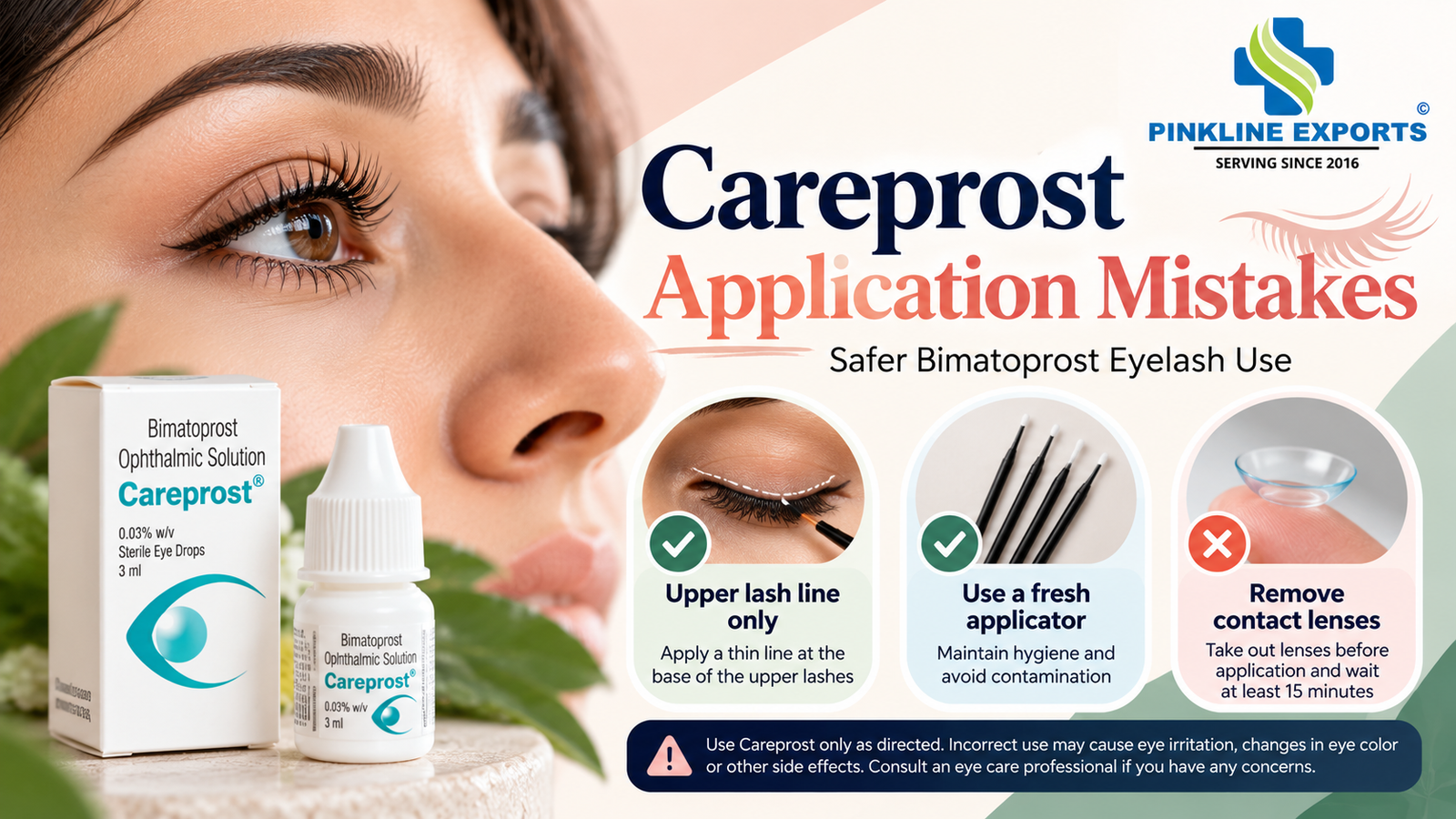
Careprost and bimatoprost application: Applying an eyelash treatment correctly is as important as understanding what it can and cannot do. This guide explains common errors around the upper lash line, contact lenses and hygiene. Follow your own product leaflet and prescriber’s directions; the FDA-approved instructions described here refer specifically to LATISSE (bimatoprost 0.03%) for eyelash hypotrichosis, not necessarily every Careprost formulation or regulatory market.
Quick answer: For FDA-approved eyelash use, bimatoprost is applied once nightly with a new sterile applicator along the skin of the upper lash margin. Avoid the lower lid and excessive runoff. Remove contact lenses first and follow the instructed waiting period before reinserting them. Different ophthalmic indications and product labels may require a different method.
On this page
- What bimatoprost is used for
- Seven application mistakes
- General label-based application sequence
- Possible side effects
- Careprost product information
- FAQs
What is Careprost, and why does application matter?
Careprost contains bimatoprost 0.03%, a prostaglandin analogue. Bimatoprost also appears in prescription products used for ocular conditions. In the United States, the specific product LATISSE is approved for inadequate eyelashes (hypotrichosis), with instructions for placement along the upper eyelid margin. Brand names, approvals and device supplies vary by country; do not assume Careprost carries identical regulatory approval or applicators.
Seven mistakes people make with eyelash bimatoprost
1. Applying it to the lower eyelashes
The FDA-approved eyelash-use label specifies the upper lash line only; it warns not to apply to the lower lid. Excess solution can migrate to unintended areas and promote unwanted hair growth.
2. Reusing or sharing an applicator
The approved label calls for a new sterile applicator for each eye. Reuse, sharing, or touching the bottle tip to skin can introduce contamination and increase infection risk.
3. Applying more than directed
Applying more frequently or using excess fluid does not make the approved eyelash regimen more effective. Wipe away unintended runoff rather than saturating the lid.
4. Applying over cosmetics or contact lenses
FDA-approved guidance says the face should be clean and eye makeup removed before use. Soft contact lenses should be removed because the solution contains benzalkonium chloride; they may be reinserted after 15 minutes, per that label.
5. Confusing an eyelash regimen with glaucoma eye drops
Bimatoprost is used in different products for different purposes. The directions for reducing eye pressure and the directions for treating inadequate eyelashes are not interchangeable. If prescribed for glaucoma or ocular hypertension, follow your ophthalmologist’s instructions.
6. Ignoring eye irritation or pigment changes
Possible effects include eye redness or itching, eyelid skin darkening and iris pigmentation changes. The eye-color change may be permanent. Discuss new or concerning symptoms with an eye-care professional.
7. Continuing despite an eye condition without clinical advice
People with active eye inflammation, previous eye surgery, pressure-related eye conditions or risk factors for macular edema may need specialist assessment. Never apply a product around the eyes simply because it is described online as a cosmetic serum.
What does the official eyelash-use label recommend?
For LATISSE specifically, the US prescribing information describes the following sequence:
- Begin with clean skin; remove makeup and contact lenses.
- Use the supplied sterile, single-use applicator as instructed.
- Place the prescribed amount on the applicator and apply along the upper eyelid margin at the base of the eyelashes.
- Keep the area lightly moist, not dripping; gently blot excess runoff.
- Discard the applicator and use a separate sterile applicator for the second eye.
- Follow the labelled frequency and contact-lens reinsertion instructions; do not double up after a missed dose.
These steps illustrate a label-specific method, not a recommendation to improvise with unapproved applicators or use an ophthalmic eye-drop product off-label without medical guidance. See the official DailyMed LATISSE prescribing information for complete precautions.
When should you stop and seek medical assessment?
Contact a clinician or eye-care professional for persistent redness, pain, light sensitivity, discharge, eyelid swelling, or concerns about pigmentation. Sudden vision changes or severe eye pain require urgent evaluation. Never attempt to treat a suspected eye infection by changing the dose yourself.
If bimatoprost was prescribed to control intraocular pressure, stopping it without medical guidance could allow pressure to rise. If using it for eyelashes, stopping generally allows eyelashes gradually to return toward their previous appearance.
Careprost: product details and related articles
Related product information

Careprost 0.03% – Bimatoprost
Review the ingredient, formulation and manufacturer’s product information. Eyelash-use licensing and supply rules vary by location.
Product information only. Not a substitute for a prescription, product-specific instructions or an eye-care consultation.
Related Pinkline guides
Frequently asked questions
Should Careprost be put directly into the eye for eyelash growth?
Do not assume the technique for an ophthalmic drop is the same as the approved LATISSE eyelash application. Ask the prescribing eye-care professional for the correct directions for your exact product and indication.
Can I use bimatoprost twice daily to grow lashes faster?
More frequent application has not been shown to increase eyelash growth for the FDA-approved once-nightly LATISSE regimen.
Why must I remove contact lenses?
Preservative in the approved solution may be absorbed by soft lenses. The LATISSE label says to remove them and wait 15 minutes before reinsertion.
Can bimatoprost darken my eyelids?
Yes. Eyelid pigmentation changes can occur. Iris pigmentation changes have also been reported, and may be permanent.
Can I share a single applicator between eyes?
No. For the approved eyelash regimen, use a separate sterile disposable applicator for each eye to reduce contamination.
What happens if I miss a day?
Do not double the following application; resume the usual labelled schedule and ask a clinician about any uncertainty.
Can I use it during pregnancy?
Discuss pregnancy or breastfeeding with your healthcare professional before using prescription bimatoprost.
Source: DailyMed: LATISSE prescribing information and patient guidance. This is an educational article and not a substitute for advice from an ophthalmologist or pharmacist. It has not been independently signed off by a named medical reviewer.

