


Bleeding After a Bowel Movement: How to Tell if the Blood Is Vaginal or Rectal

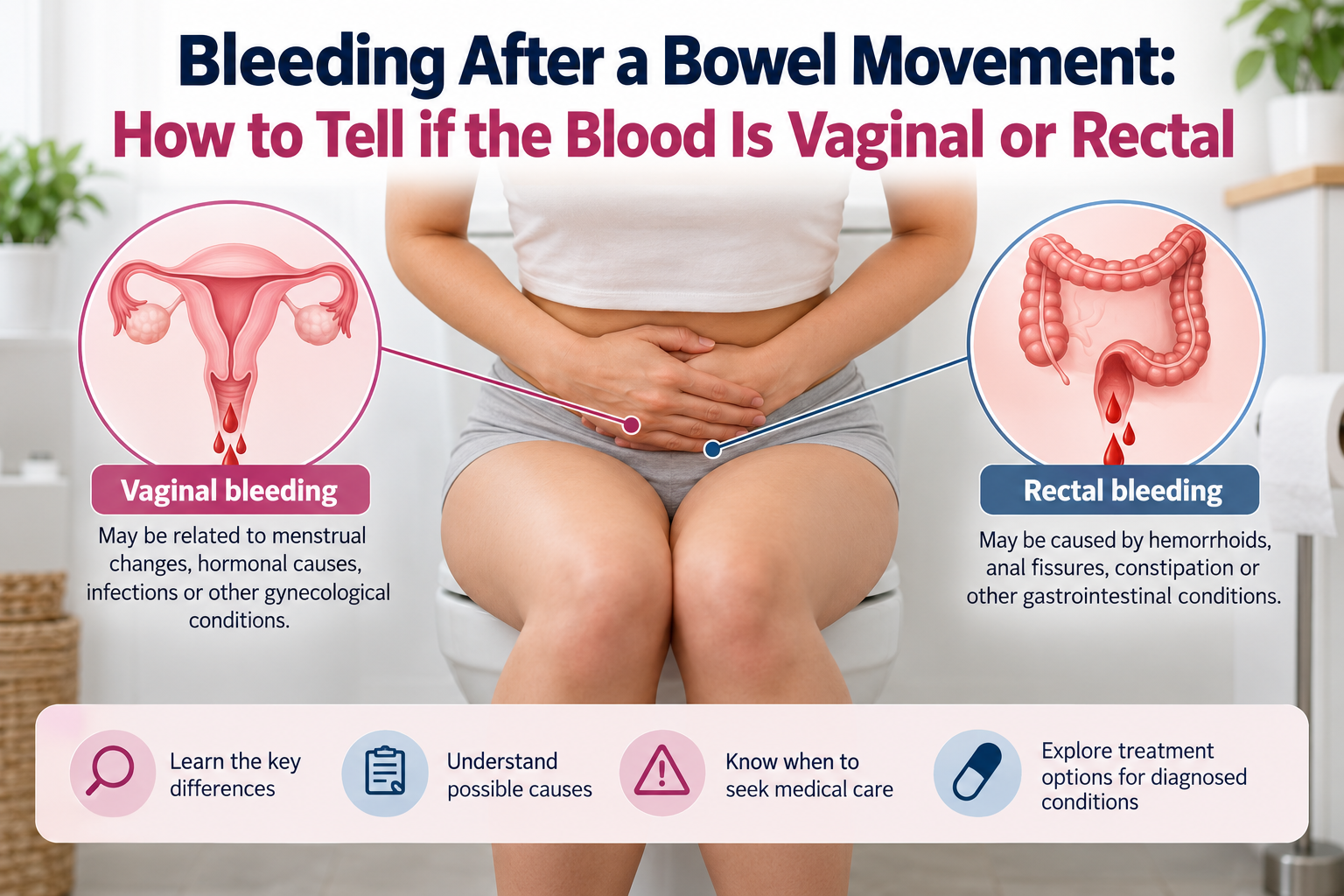
Noticing blood after a bowel movement can be alarming, particularly when it is difficult to tell where the bleeding came from. Blood seen on toilet paper, underwear or in the toilet may originate from the anus or rectum, but in some cases it may be vaginal bleeding that becomes noticeable while using the bathroom.
Identifying the likely source is an important first step because rectal and vaginal bleeding have different possible causes and may require different medical evaluation.
Why Can It Be Difficult to Tell Where the Blood Is Coming From?
The vagina, urethra and anus are located close together. When a small amount of blood is noticed only after wiping, it may be difficult to determine its source immediately. Bleeding may also become noticeable during a bowel movement even when the bowel movement itself did not cause it.
If the bleeding appears specifically after passing stool but seems vaginal, read our detailed guide to vaginal bleeding after a bowel movement.
Signs the Bleeding May Be Rectal
Rectal bleeding may appear on toilet paper, as bright-red streaks on stool, in toilet water, or mixed with stool or mucus. Hemorrhoids and anal fissures are common causes of bright-red rectal bleeding, but persistent or unexplained bleeding should be medically assessed.
Signs the Bleeding May Be Vaginal
Bleeding may be more likely to originate from the vagina when it is also present on underwear or a pad, continues away from bowel movements, occurs between periods or after sex, or is accompanied by pelvic pain, cramping or unusual discharge.
Does the Color of the Blood Tell You Where It Came From?
Blood color can provide clues but cannot reliably determine the source. Bright-red blood can occur with rectal conditions, while vaginal blood may range from bright red to dark red or brown. Very dark or black stool can indicate gastrointestinal bleeding and requires prompt medical assessment.
Why Can Bleeding Appear After Straining or a Bowel Movement?
Constipation and hard stools can contribute to hemorrhoids and anal fissures. If the blood appears vaginal, the relationship is more complicated. Read Can Constipation Cause Vaginal Bleeding? for a deeper explanation.
What if Bleeding Happens With Pelvic Pain?
Pelvic pain during bowel movements may have gastrointestinal or gynecological causes. See our guide to pelvic pain during bowel movements. Severe or worsening pain with bleeding should be medically evaluated.
How Can You Work Out Whether the Blood Is Vaginal or Rectal?
- Notice whether blood is on stool, toilet paper, underwear or a pad.
- Note whether bleeding occurs only after passing stool or continues afterward.
- Consider whether blood is coating or mixed with stool.
- Note menstrual timing and whether bleeding occurs between periods.
- Record accompanying symptoms such as constipation, anal pain, pelvic pain, discharge or changes in bowel habits.
Treatment Depends on the Underlying Cause
There is no single medicine that should be used simply because blood appears after a bowel movement. Treatment depends on whether the bleeding is rectal or vaginal and on the condition responsible for it.
If Endometriosis Is Diagnosed
Endometriosis can cause pelvic symptoms that may become more noticeable around bowel movements. Treatment is individualized and can include pain management, hormonal therapy and, in selected cases, surgery.
Related Pinkline Treatment Option: Danazol Capsules
Pinkline Exports lists Danazol capsules in multiple strengths for endometriosis treatment. Danazol is a prescription hormonal medicine and is not a treatment for unexplained vaginal bleeding. It should only be considered for an appropriate diagnosed condition under clinician guidance.
When Should Vaginal Bleeding After a Bowel Movement Be Evaluated?
Evaluation is particularly important when vaginal bleeding is recurrent, occurs between periods or after sex, is associated with pelvic pain, becomes heavier, occurs during pregnancy or happens after menopause. For more detail, see Vaginal Bleeding After a Bowel Movement: Possible Causes and When to Seek Care.
When Is Bleeding After a Bowel Movement Urgent?
Seek urgent medical attention for substantial or continuous bleeding, large blood clots, black or very dark-red stool, bloody diarrhea, severe abdominal or pelvic pain, marked dizziness or fainting. Vaginal bleeding during pregnancy requires medical advice, and any postmenopausal vaginal bleeding should be evaluated.
Frequently Asked Questions
Can hemorrhoids look like vaginal bleeding?
Yes. Bright-red hemorrhoidal bleeding on toilet paper can make the source initially unclear.
Why is there blood when I wipe but not in the stool?
Possible causes include hemorrhoids, an anal fissure or vaginal spotting. Recurrent unexplained bleeding should be evaluated.
Can straining cause spotting?
Straining commonly contributes to rectal bleeding from hemorrhoids or fissures. Vaginal bleeding that repeatedly occurs with straining should not automatically be attributed to constipation.
Is vaginal bleeding after menopause normal?
Any vaginal bleeding after menopause should be medically evaluated, even if it happens only once.
Related Women’s Health Reading
- Vaginal Bleeding After a Bowel Movement
- Can Constipation Cause Vaginal Bleeding?
- Why Do I Have Pelvic Pain During Bowel Movements?
Medical Review Note: This article is intended for general health education and does not replace diagnosis or individualized medical advice from a qualified healthcare professional.