

Viral Load vs CD4 Count: What Do Your HIV Test Results Mean?

Viral Load vs. CD4 Count: What Do Your HIV Test Results Mean?
Critical Clinical & Diagnostic Notice
Understanding HIV monitoring metrics—specifically Viral Load and CD4 T-cell counts—is vital for tracking immune health and evaluating Antiretroviral Therapy (ART) efficacy. These laboratory values work in tandem to inform clinical decision-making. Treatment regimens must be initiated, monitored, and adjusted under the direct guidance of a licensed infectious disease specialist. This document serves strictly educational purposes.
Navigating an HIV diagnosis and long-term care management centers largely around understanding two primary laboratory markers: Viral Load and CD4 Cell Count. For individuals living with HIV, receiving routine lab work can sometimes feel overwhelming due to the complex numerical values, percentages, and clinical jargon involved.
However, once you understand what these two key indicators measure, they serve as an empowering dashboard for your health. While one number reflects the strength and recovery of your immune system, the other measures the activity and suppression of the virus itself. Together, they provide a clear, real-time picture of treatment success and overall immune resilience.
This comprehensive guide breaks down the crucial differences between CD4 counts and viral load, explains how antiretroviral medications work to optimize these markers, and provides actionable insights on interpreting your laboratory reports.
What Is a CD4 Cell Count? (The Immune System Defender)
CD4 cells—often called CD4 T-lymphocytes or helper T-cells—are specialized white blood cells that play a central role in coordinating your immune response. They act as the “general managers” of the immune system, identifying pathogens like bacteria, viruses, and fungi, and signaling other immune cells to destroy them.
Because Human Immunodeficiency Virus specifically targets and infects CD4 cells to replicate itself, untreated HIV gradually reduces the overall number of healthy CD4 cells in the body.
Interpreting Your CD4 Count Ranges
A CD4 count is reported as the number of cells per cubic millimeter (cells/mm³) of blood:
- Normal Range (500 to 1,500 cells/mm³): Indicates a robust, fully functioning immune system capable of fighting off common and opportunistic infections.
- Vulnerable Range (200 to 499 cells/mm³): Reflects a weakened immune system. While the body can still manage many everyday pathogens, the risk for secondary infections gradually increases.
- Advanced Range (Below 200 cells/mm³): Indicates severe immune impairment, clinically classified as Stage 3 HIV (AIDS). At this level, prophylactic medications are typically prescribed to prevent opportunistic infections like Pneumocystis pneumonia (PCP).
What Is Viral Load? (The Speed of Viral Replication)
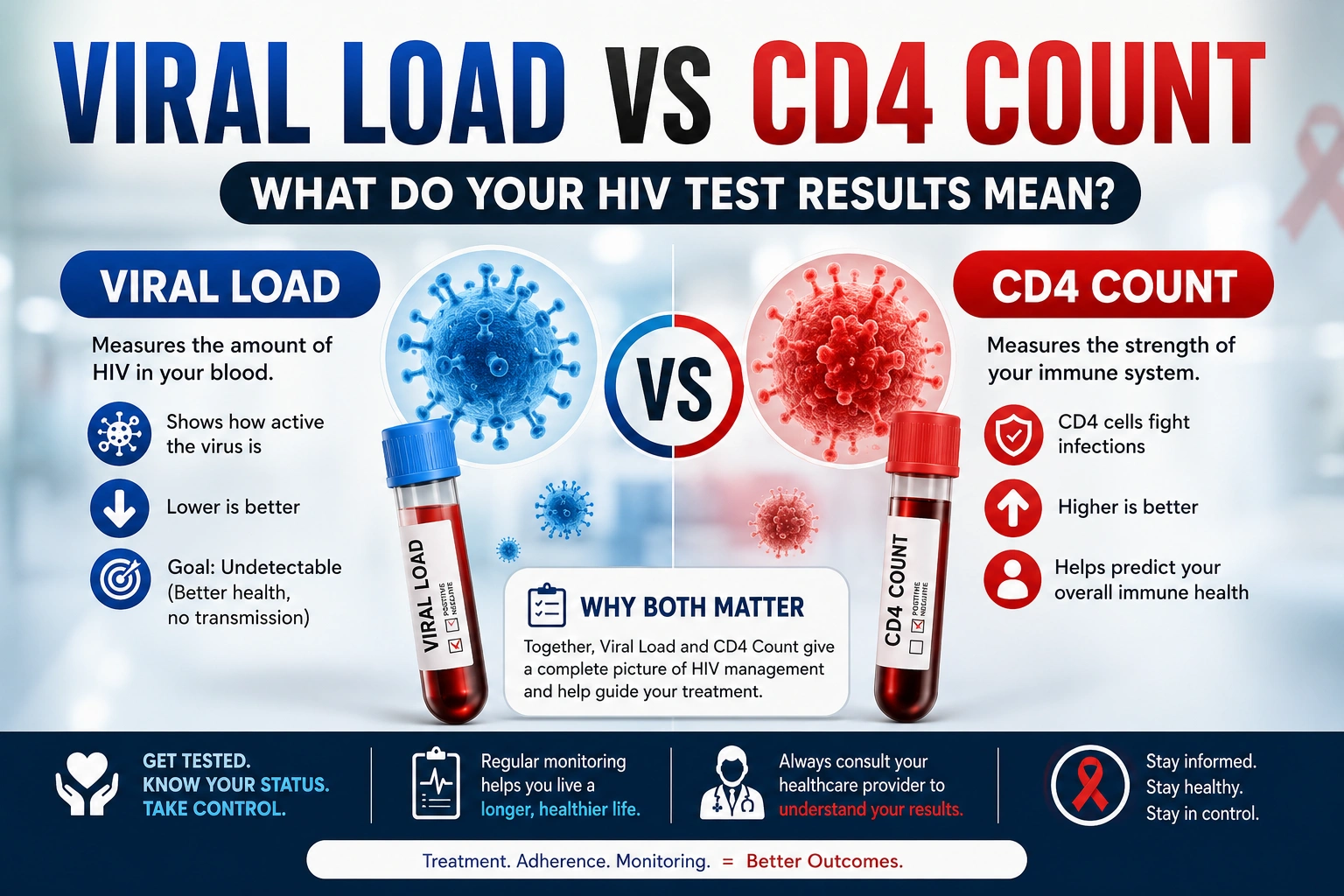
While your CD4 count measures immune strength, your Viral Load measures the exact amount of HIV genetic material (RNA) present in a single milliliter of your blood. It reflects how actively the virus is replicating within your body.
The Goal: Undetectable Viral Load
Modern Antiretroviral Therapy (ART) is engineered to suppress viral replication as low as possible. In clinical medicine, achieving an undetectable viral load (typically defined as fewer than 20 to 50 copies/mL, depending on the specific lab assay used) represents the primary goal of HIV care.
Key Takeaway: U=U (Undetectable = Untransmittable)
Treatment as Prevention: Extensive global clinical trials have definitively established that an individual who maintains an undetectable viral load for at least six consecutive months cannot transmit HIV to sexual partners. Achieving undetectable status preserves your long-term health while eliminating the risk of forward transmission.
To explore official, peer-reviewed clinical data and global health consensus statements surrounding U=U and viral suppression, consult the CDC HIV Treatment as Prevention Clinical Summary.
Viral Load vs. CD4 Count: Side-by-Side Comparison
Understanding how these two values contrast and influence one another helps clarify your lab trends over time:
| Metric Parameter | CD4 Cell Count | Viral Load |
|---|---|---|
| What It Measures | Total CD4 helper T-cells per mm³ of blood (Immune System Health). | Number of HIV RNA copies per mL of blood (Viral Replication Activity). |
| Treatment Goal | High & Rising (Ideally above 500 cells/mm³). | Low & Undetectable (Fewer than 20–50 copies/mL). |
| Rate of Change | Changes slowly over months or years as the immune system rebuilds. | Can drop rapidly within weeks of starting effective ART. |
| Primary Role in Care | Evaluates overall immune damage and need for infection prophylaxis. | Primary benchmark for measuring medication effectiveness and viral suppression. |
How Modern Regimens Rebuild Immune Health
The relationship between viral load and CD4 count works like a seesaw: when viral replication is high, CD4 counts steadily decline. Conversely, when modern medication shuts down viral replication, the immune system is granted the environment it needs to recover, allowing CD4 counts to rebuild naturally over time.
Achieving complete viral suppression requires consistent adherence to single-tablet daily regimens. Modern complete single-tablet treatments—such as Taffic Tablets – Generic Biktarvy—combine an integrase strand transfer inhibitor (INSTI) with potent nucleoside reverse transcriptase inhibitors (NRTIs). This combination rapidly halts viral replication at multiple stages without requiring complex multi-pill schedules.
For a deep dive into the pharmacological profiles and molecular guidelines surrounding modern complete regimens, refer to the peer-reviewed NIH Clinical Info Adult Antiretroviral Guidelines.
Understanding Lab Variations and Temporary “Blips”
It is completely normal for both CD4 counts and viral loads to fluctuate slightly between blood tests. Understanding what causes these variations can help reduce anxiety when reviewing your lab work:
- Viral “Blips”: Occasionally, a patient with a stable undetectable status may register a temporary, minor spike in viral load (e.g., 50 to 150 copies/mL) that returns to undetectable on the next test. These brief “blips” are common and are often caused by minor illnesses (like a cold), recent vaccinations, or minor lab assay variations rather than treatment failure.
- CD4 Fluctuations: CD4 counts naturally vary throughout the day based on stress, exercise, time of blood draw, or minor seasonal infections. Healthcare providers focus on long-term trends over several months rather than a single isolated number.
Laboratory Monitoring Checklist
Keep these core guidelines in mind for managing your routine HIV care:
- ✔️ Maintain Daily Adherence: Take your antiretroviral medication consistently every day to keep your viral load suppressed.
- ✔️ Focus on the Trend: Look at long-term CD4 and viral load patterns over 6 to 12 months rather than day-to-day changes.
- ✔️ Schedule Regular Labs: Complete routine blood tests every 3 to 6 months as recommended by your specialist.
- ✔️ Aim for Undetectable: Remember that reaching and maintaining an undetectable viral load protects your health and prevents sexual transmission (U=U).
- ✔️ Discuss Questions with Your Doctor: Always review unusual lab changes or medication concerns with your infectious disease physician.