

Minoxidil + Dutasteride Tablets vs Topical Minoxidil: Which Treatment May Suit Different Patients?

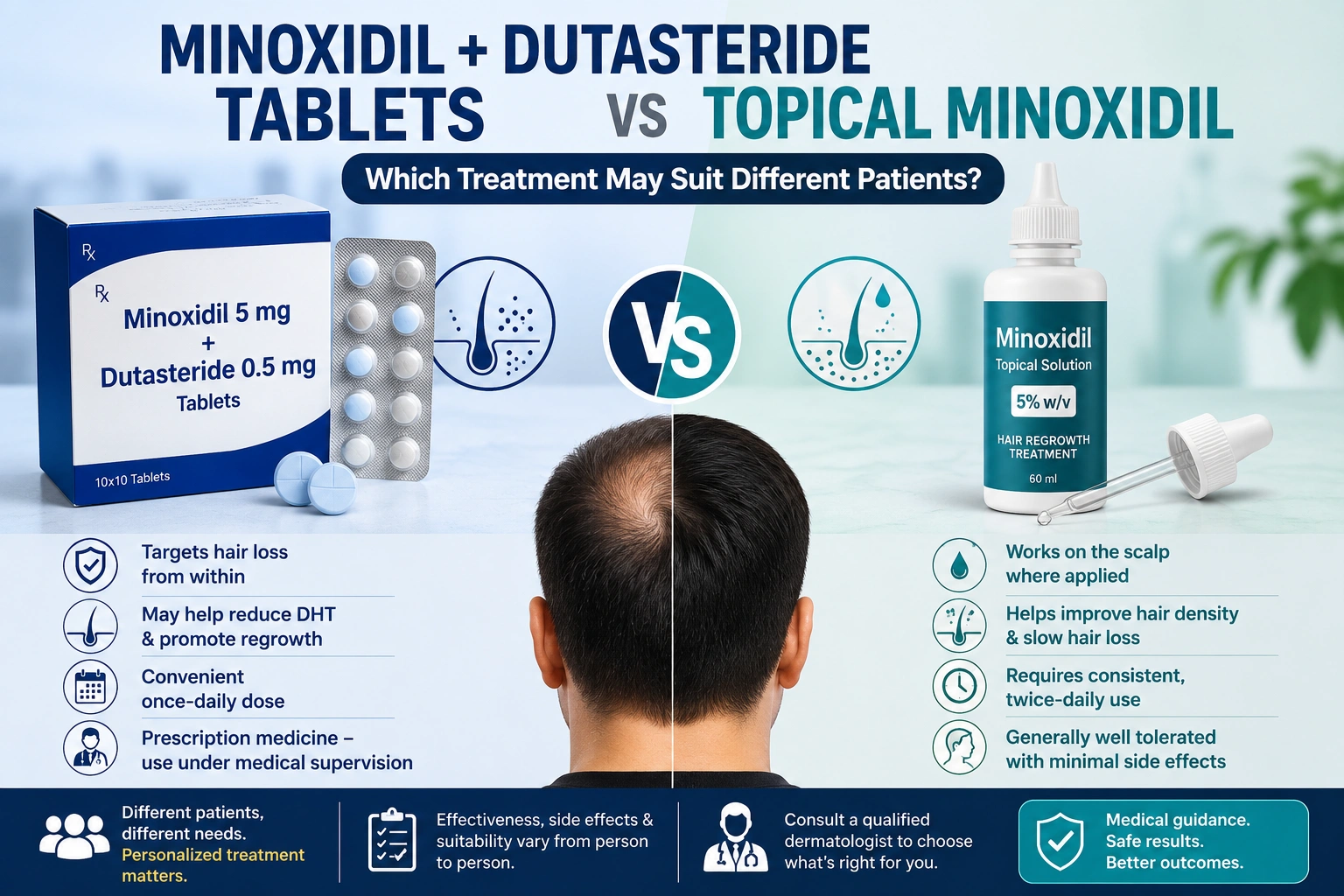
Minoxidil + Dutasteride Tablets vs. Topical Minoxidil: Which Treatment Suits Different Patients?
Critical Medical & Safety Notice
Choosing between oral combination therapy (Minoxidil + Dutasteride) and localized topical Minoxidil requires a comprehensive evaluation by a licensed dermatologist or trichologist. Oral combination tablets alter systemic cardiovascular vasodilatory pathways and suppress dihydrotestosterone (DHT) levels body-wide. Patients must undergo baseline health evaluations—including blood pressure checks and liver function assessments—before initiating oral combination therapies. This guide serves strictly educational purposes.
Androgenetic Alopecia (AGA), commonly known as pattern hair loss, affects millions of men and women seeking reliable hair restoration strategies. For decades, traditional topical Minoxidil solutions served as the primary over-the-counter standard for stimulating scalp blood flow. However, as medical understanding of follicle miniaturization has deepened, many patients find that localized topical growth stimulants alone are insufficient to stop aggressive, genetically driven hair loss.
To address both the microvascular restriction and the underlying hormonal damage (driven by dihydrotestosterone, or DHT), modern clinical trichology increasingly turns to oral systemic combinations. Deciding whether to maintain a topical routine or transition to an oral dual-action combination tablet depends heavily on an individual’s specific enzymatic profile, lifestyle preferences, cardiovascular baseline, and hair loss severity.
This clinical comparison guide explores the mechanisms, patient suitability criteria, efficacy timelines, and safety profiles of oral Minoxidil + Dutasteride tablets versus standard topical Minoxidil treatments.
Mechanistic Comparison: Localized Stimulation vs. Dual-Systemic Defense
To understand which therapy suits a specific patient profile, one must examine how these treatment modalities interact with human physiology:
1. Topical Minoxidil Solution (Single-Action Localized)
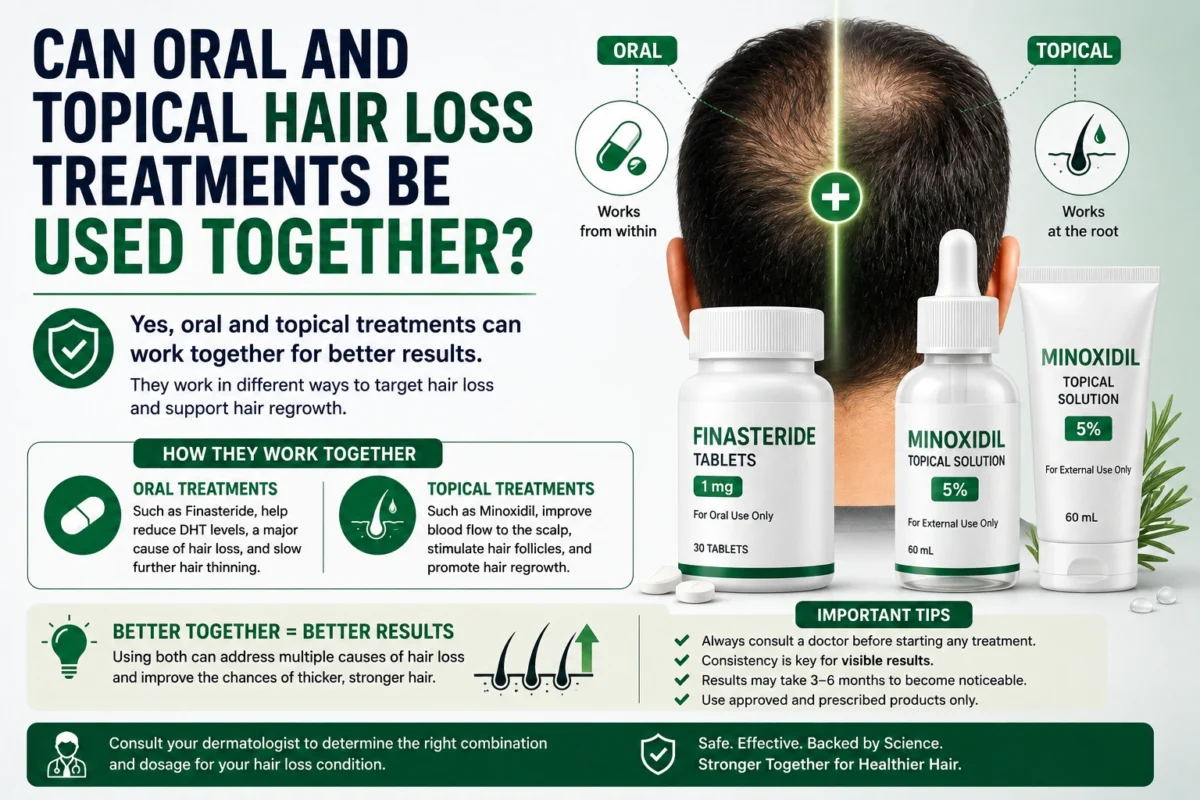
Topical Minoxidil acts locally as a potassium channel opener and direct vascular vasodilator. When applied to the scalp, it relaxes microvascular walls, increasing the flow of oxygen and nutrients to resting hair follicles to prolong the anagen (growth) phase.
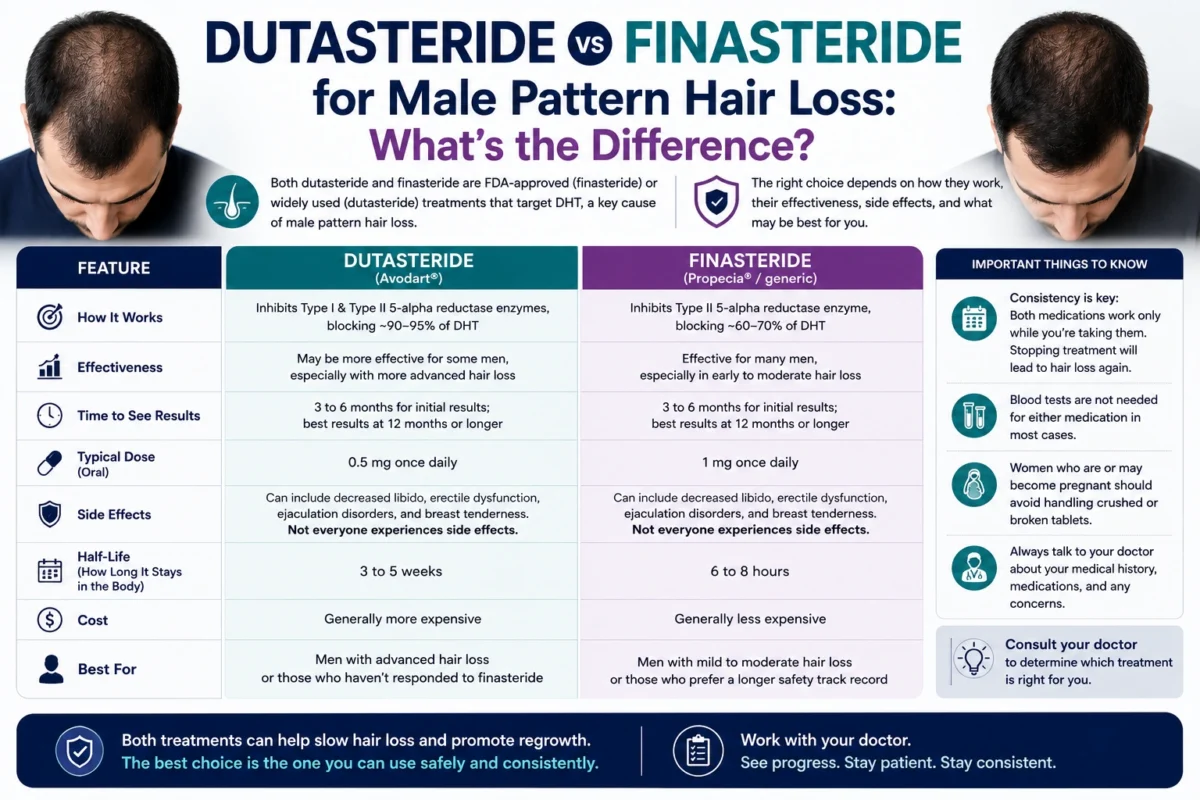
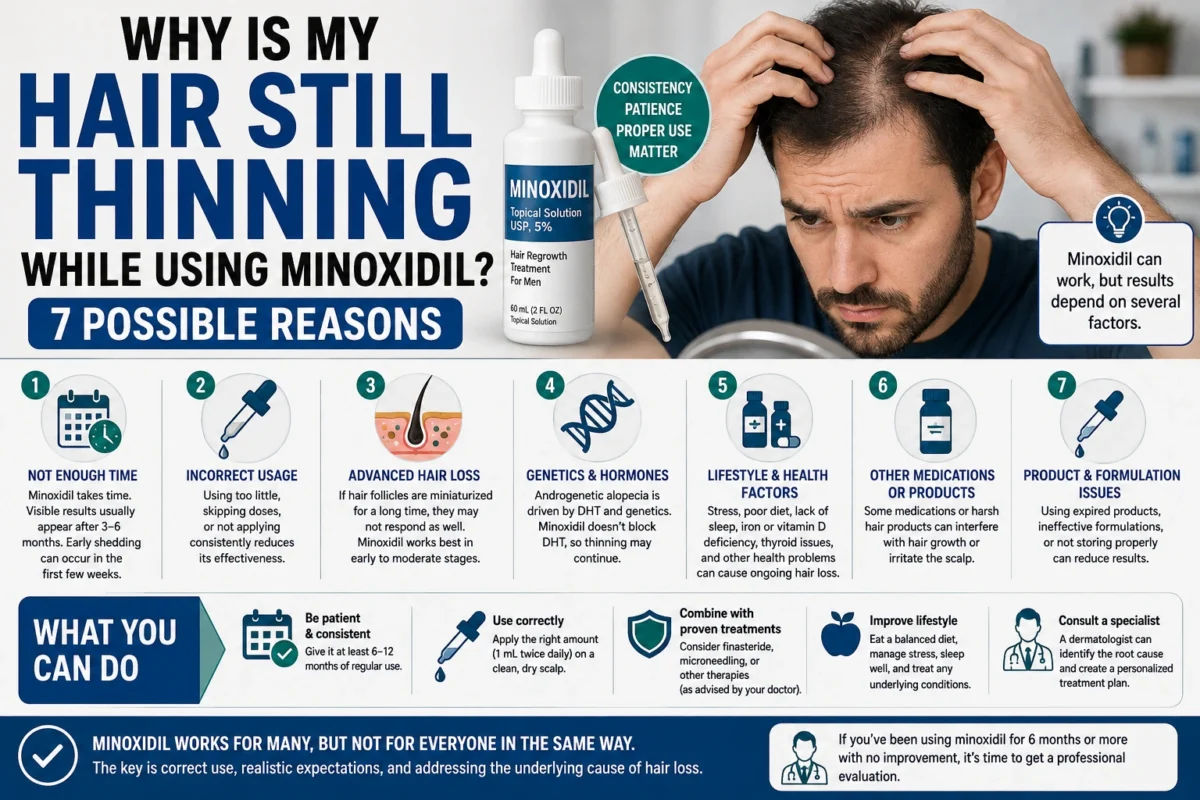
However, topical Minoxidil relies entirely on a specific enzyme in the scalp—sulfotransferase (SULT1A1)—to convert the drug into its active form (minoxidil sulfate). Patients with naturally low levels of SULT1A1 in their scalp skin often show minimal to no clinical response to topical applications. Furthermore, topical Minoxidil does not block DHT, leaving hair follicles vulnerable to ongoing hormonal miniaturization.
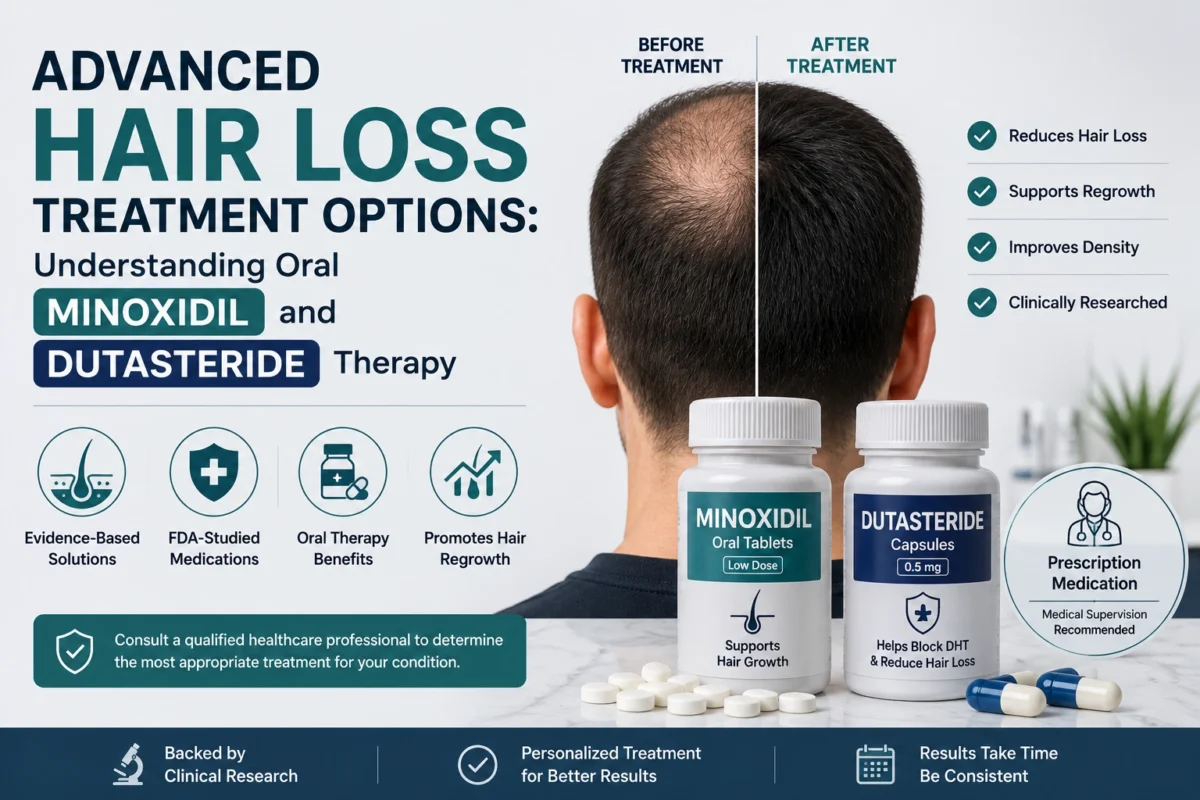
2. Oral Minoxidil + Dutasteride Combination Tablets (Dual-Systemic Action)
Oral combination therapies eliminate the reliance on scalp sulfotransferase enzymes. When taken orally, Minoxidil is rapidly converted by high concentrations of sulfotransferase enzymes in the liver, ensuring predictable, systemic vascular stimulation across all hair follicles.
Simultaneously, the Dutasteride component provides a powerful hormonal shield by inhibiting both Type I and Type II 5-alpha-reductase enzymes—reducing serum DHT levels by over 90%. By delivering both a potent vascular growth stimulant and a comprehensive DHT blocker in a single daily dose, options like Minwin D – Minoxidil + Dutasteride Tablets target both primary causes of pattern hair loss at once.
Patient Profile Matching: Which Treatment Suits You?
Dermatologists evaluate several key patient factors when determining whether a topical approach or an oral combination tablet is appropriate:
| Clinical Parameter | Topical Minoxidil Candidate | Oral Minoxidil + Dutasteride Candidate |
|---|---|---|
| Hair Loss Severity | Early-stage or mild thinning (Norwood Scale II–III); localized crown maintenance. | Moderate-to-advanced hair loss (Norwood III Vertex or higher); rapidly progressing thinning. |
| Topical Enzyme Response | Patients with high scalp sulfotransferase activity who respond well to liquid solutions. | Non-responders to topical liquid after 6+ months of consistent use. |
| Scalp Sensitivity | Intact scalp skin with no history of contact dermatitis or eczema. | Patients prone to severe scalp irritation, itching, or flaking from propylene glycol in liquids. |
| Cardiovascular Baseline | Standard or unmonitored cardiovascular health. | Normal, stable blood pressure and heart rate cleared by a doctor for low-dose systemic vasodilators. |
| Treatment Compliance | Comfortable with applying liquid/foam twice daily and styling around damp hair. | Prefers a single, once-daily oral tablet for a cleaner, more convenient routine. |
What Peer-Reviewed Research Demonstrates
Comparative clinical trials consistently show that oral combination therapies yield higher overall response rates and greater increases in hair density than topical applications alone. Because Dutasteride blocks both 5-alpha-reductase isoenzymes, it stops ongoing follicle miniaturization far more effectively than single-action topical growth stimulants.
For a comprehensive review of head-to-head clinical trials evaluating oral versus topical minoxidil and 5-alpha-reductase inhibitors, consult the official NIH NCBI Clinical Review on Systemic Hair Loss Therapies.
Managing Safety Profiles and Potential Side Effects
Understanding the different side effect profiles of topical versus systemic options is crucial when making an informed choice:
Safety Considerations by Modality
Topical Minoxidil Side Effects: Primarily localized to the scalp. Common complaints include contact dermatitis, dry skin, scaling, and localized itching (often caused by alcohol or propylene glycol in liquid solutions). Systemic side effects are exceptionally rare with topical use.
Oral Minoxidil + Dutasteride Side Effects: Act throughout the whole body. Oral Minoxidil can occasionally cause mild fluid retention, a slight drop in blood pressure, or hypertrichosis (increased hair growth on the arms or face). Dutasteride can, in rare instances, lead to mild changes in libido or mood shifts. Regular checkups with your doctor ensure these metrics remain well-balanced.
For official clinical guidelines on managing patient baselines and safety monitoring during systemic hair restoration therapies, refer to the American Academy of Dermatology (AAD) Clinical Resource Directory.
Patient Selection Summary Checklist
Use this quick guide to discuss your options with a dermatologist:
- ✔️ Assess Your Scalp Response: If topical Minoxidil hasn’t yielded results after 6 months, ask your doctor about oral alternatives.
- ✔️ Target the Root Cause: Consider oral combination options if you need to block DHT while stimulating growth.
- ✔️ Check Your Health Baseline: Ensure your blood pressure and heart rate are evaluated before starting oral vasodilators.
- ✔️ Factor In Convenience: Choose a routine—whether topical liquid or a once-daily tablet—that you can stick to consistently over time.
- ✔️ Maintain Medical Oversight: Always consult a licensed dermatologist before switching or combining hair loss medications.