Persol Gel 5% (20 gm) – Topical Benzoyl Peroxide Acne Therapy
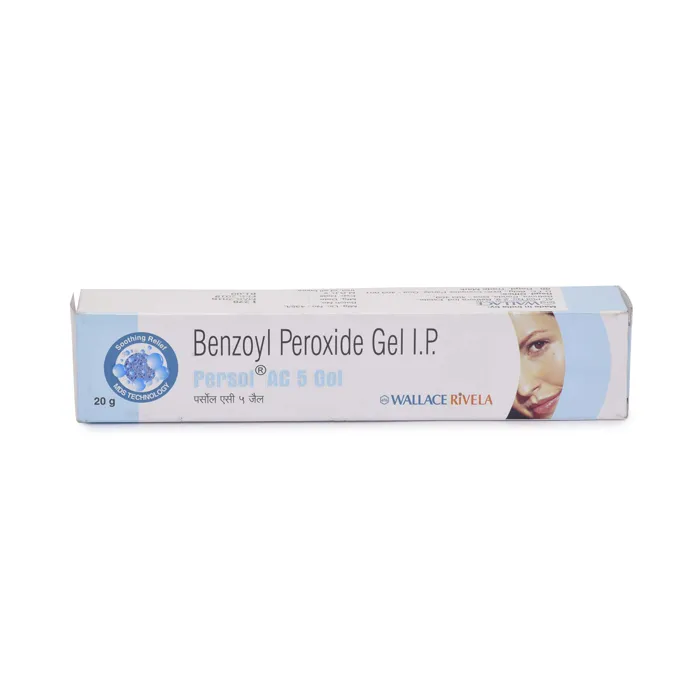
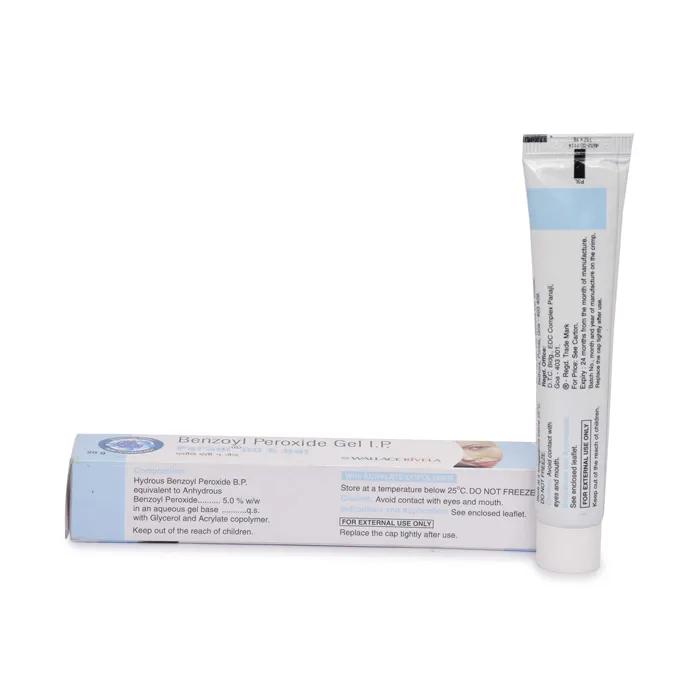
Persol Gel 5% (20 gm) is an antibacterial and keratolytic topical formulation containing benzoyl peroxide (5% w/w), indicated for the acute and maintenance treatment of mild to moderate acne vulgaris. By generating reactive oxygen species within the pilosebaceous unit, it rapidly reduces Cutibacterium acnes populations without inducing bacterial antibiotic resistance, while promoting mild desquamation to clear blocked follicular ducts.
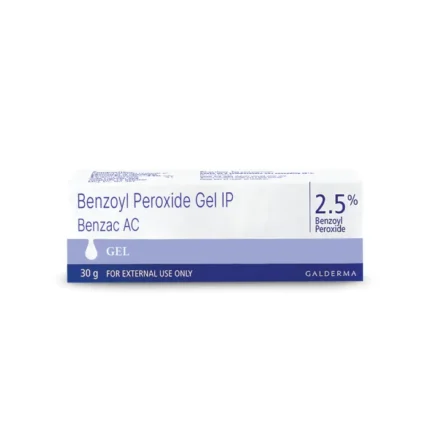
Benzoyl Peroxide 5%
20 gm Tube
Bactericidal Oxidizing Agent
Topical Gel
Active Ingredient
Benzoyl Peroxide
Concentration & Pack
5% w/w (20 gm)
Therapeutic Class
Antiacne Oxidizing & Keratolytic Agent
Dosage Form
Topical Aqueous Gel
What Is Persol Gel 5%?
Persol Gel 5% is a topical dermatological medication containing benzoyl peroxide in an aqueous gel base. It represents a cornerstone of first-line anti-acne therapy across global clinical guidelines for the management of inflammatory papules, pustules, and mixed comedonal acne.
Unlike topical antibiotics such as clindamycin or erythromycin, benzoyl peroxide exerts its antimicrobial actions through an oxidative chemical mechanism rather than by interfering with ribosomal protein synthesis. As a consequence, Cutibacterium acnes cannot develop biological resistance to benzoyl peroxide, making Persol Gel suitable for long-term monotherapy or combination treatment protocols.
The 5% concentration provides a standard balance of bactericidal efficacy and keratolytic activity, delivering clinical clearing comparable to higher 10% formulations while causing less dryness and skin peeling.
([dailymed.nlm.nih.gov](https://dailymed.nlm.nih.gov/dailymed/drugInfo.cfm?setid=7441981a-654d-4f18-be21-66c863ee6d6f))
How Does Persol Gel 5% Work?
Benzoyl peroxide targets multiple aspects of acne pathogenesis through distinct pharmacological actions:
- Rapid Bactericidal Oxidation: Upon contact with the skin, benzoyl peroxide decomposes to release free-radical reactive oxygen species (ROS). These free radicals oxidize bacterial cellular proteins, killing anaerobic Cutibacterium acnes within the pilosebaceous duct within hours of application.
- Keratolytic & Comedolytic Action: It promotes mild desquamation of the outer stratum corneum, helping shed impacted dead skin cells and clearing plugged sebaceous orifices.
- Sebum Suppression & Anti-Inflammatory Effects: By reducing bacterial proliferation, it suppresses the hydrolysis of sebum triglycerides into irritant free fatty acids, reducing local chemotaxis of neutrophils and easing inflammatory erythema.
Because its antimicrobial effect is non-specific and physical-chemical in nature, it continues to work over extended durations without diminishing clinical sensitivity.
What Is Persol Gel 5% Used For?
Persol Gel 5% is indicated for the topical treatment and prevention of acne lesions on the face, chest, shoulders, and back:
- Inflammatory Acne Vulgaris: Rapid reduction of inflammatory papules and pustules.
- Comedonal Acne: Supporting the extrusion of open and closed comedones (blackheads and whiteheads).
- Combination Acne Regimens: Co-prescribed alongside topical retinoids or oral therapies to prevent antibiotic-resistant bacterial overgrowth.
- Truncal Acne: Management of extensive follicular acne breakouts on the upper back and chest.
Persol Gel is not indicated for treating severe nodulocystic acne without concurrent systemic medication, nor is it formulated for managing rosacea or perioral dermatitis.
([dailymed.nlm.nih.gov](https://dailymed.nlm.nih.gov/dailymed/drugInfo.cfm?setid=7441981a-654d-4f18-be21-66c863ee6d6f))
Related Topical Retinoid Therapy
While benzoyl peroxide targets bacterial colonization and acute inflammation, topical retinoids normalize follicular cell turnover to prevent microcomedone formation. Explore our clinical review of adapalene:
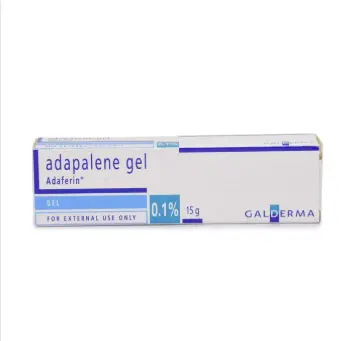
Adaferin Gel 0.1% (15 gm)
Persol Gel 5% Dosage and Application Guidelines
Proper technique ensures optimal bacterial suppression while protecting the skin barrier from excessive dryness:
- Initial Patch Test: For new users, apply a small amount to one or two small affected areas for 3 consecutive days to rule out severe hypersensitivity before full-face use.
- Application Routine: Cleanse the skin thoroughly with a mild, soap-free cleanser and pat dry. Apply a thin layer across the entire affected area once daily to start, gradually increasing to twice daily if tolerated and directed by a physician.
- Area Treatment: Smooth a thin layer over the whole acne-prone field rather than treating individual pimples only, as benzoyl peroxide helps prevent new blemishes from emerging.
- Moisturization: Follow application with a non-comedogenic, oil-free moisturizer if dry flaking or peeling occurs.
Wash hands thoroughly with soap and water immediately following application to prevent bleaching of household items.
([dailymed.nlm.nih.gov](https://dailymed.nlm.nih.gov/dailymed/drugInfo.cfm?setid=7441981a-654d-4f18-be21-66c863ee6d6f))
Important Fabric Warning:
Benzoyl peroxide is a potent oxidizing agent that will bleach colored fabrics, clothing, towels, pillowcases, and hair. Allow the gel to dry completely before coming into contact with textiles, or use white towels and bedding during therapy.
Persol Gel 5% vs Adaferin Gel 0.1% (Adapalene)
Comparing an oxidizing antibacterial agent with a selective retinoid outlines their complementary roles in acne management:
| Clinical Parameter |
Persol Gel 5% (Benzoyl Peroxide) |
Adaferin Gel 0.1% (Adapalene) |
| Pharmacological Class |
Oxidizing antibacterial / Keratolytic |
Third-generation topical retinoid (RAR agonist) |
| Primary Target |
Bacterial eradication (C. acnes) & inflammation |
Keratinocyte desquamation & microcomedone prevention |
| Bacterial Resistance Risk |
Zero (Bactericidal via non-specific free radicals) |
None (Non-antimicrobial mechanism) |
| Onset of Action |
Rapid (Reduces bacterial counts within 48 hours) |
Gradual (Optimal clearance over 8 to 12 weeks) |
| Fabric Bleaching |
Yes (Bleaches dyed fabrics, towels, and hair) |
No bleaching effect |
Persol Gel provides rapid bactericidal control over active red breakouts, whereas Adaferin Gel normalizes pore shedding to prevent future microcomedones from developing.
Who Should Not Use Persol Gel 5%?
Persol Gel is contraindicated or requires caution under the following conditions:
- Known hypersensitivity or contact allergy to benzoyl peroxide or any excipients in the gel base
- Individuals with severely compromised, broken, or actively eczematous skin barriers
- Application to open wounds, cuts, severe sunburns, or denuded tissue
- Application close to sensitive mucous membranes (eyes, lips, mouth, inside of nose)
- Children under 12 years of age without explicit pediatric or dermatological evaluation
True allergic contact dermatitis to benzoyl peroxide occurs in roughly 1% to 2% of users, characterized by severe itching, vesicular eruption, or marked facial edema.
([dailymed.nlm.nih.gov](https://dailymed.nlm.nih.gov/dailymed/drugInfo.cfm?setid=7441981a-654d-4f18-be21-66c863ee6d6f))
Possible Side Effects of Persol Gel 5%
Adverse reactions are predominantly localized to the site of cutaneous application and are usually mild and concentration-dependent:
- Dryness & Desquamation: Flaking, superficial skin peeling, and tightness of the skin.
- Erythema & Warmth: Localized redness, stinging, or mild burning sensations upon application.
- Pruritus: Itching or mild cutaneous discomfort during initial adaptation.
- Photosensitivity: Heightened skin reactivity to solar ultraviolet radiation.
- Allergic Contact Dermatitis (Rare): Marked swelling, intense itching, crusting, or blister formation.
If severe facial swelling, blistering, or difficulty breathing develops, discontinue use immediately and seek emergency medical evaluation.
([dailymed.nlm.nih.gov](https://dailymed.nlm.nih.gov/dailymed/drugInfo.cfm?setid=7441981a-654d-4f18-be21-66c863ee6d6f))
Topical Drug Interactions and Product Staggering
Systemic absorption of benzoyl peroxide is minimal as it is rapidly metabolized to benzoic acid in the skin; interactions involve concurrent topical agents:
Topical Retinoids (Tretinoin vs Adapalene): Unencapsulated conventional tretinoin is unstable and degraded when exposed to benzoyl peroxide. However, third-generation retinoids like adapalene (Adaferin Gel) are chemically stable in the presence of benzoyl peroxide. When combining them, applying Persol Gel in the morning and Adaferin Gel at night helps minimize cumulative skin dryness.
Topical Dapsone: Concomitant use of benzoyl peroxide with topical dapsone can cause temporary yellow-orange staining of the skin and facial hair.
Abrasive Skincare: Avoid using abrasive exfoliants, high-alcohol astringents, or harsh soaps simultaneously, as they can cause excessive barrier disruption and contact dermatitis.
([dailymed.nlm.nih.gov](https://dailymed.nlm.nih.gov/dailymed/drugInfo.cfm?setid=7441981a-654d-4f18-be21-66c863ee6d6f))
Photoprotection & Skin Barrier Maintenance
Because benzoyl peroxide exerts keratolytic exfoliation on the outer epidermal layers, skin becomes more susceptible to solar damage:
Incorporate a daily broad-spectrum, oil-free sunscreen (SPF 30 or higher) every morning. To reduce peeling and tightness, introduce Persol Gel gradually—every other day for the first week—and apply an oil-free, ceramide-rich moisturizer to support skin barrier hydration.
Treatment Timeline & Expected Results
Clinical improvement follows a well-characterized timeline:
Days 1–7 (Antimicrobial Action): Significant reductions in follicular C. acnes counts occur rapidly. Mild surface dryness or flaking is common as the stratum corneum adapts.
Weeks 2–4 (Inflammatory Clearance): Active inflammatory red bumps and pustules decrease in size and redness.
Weeks 6–12 (Sustained Control): Substantial overall clearance of acne lesions. Continuous daily or alternate-day maintenance helps prevent new breakout flares.
([dailymed.nlm.nih.gov](https://dailymed.nlm.nih.gov/dailymed/drugInfo.cfm?setid=7441981a-654d-4f18-be21-66c863ee6d6f))
Official Medical Reference
For authoritative pharmacology monographs, clinical safety warnings, drug interaction data, and approved labeling for benzoyl peroxide topical formulations, consult the FDA DailyMed database:
DailyMed – Benzoyl Peroxide 5% Gel Information
Frequently Asked Questions About Persol Gel 5%
1. How long does it take for Persol Gel 5% to work on acne?
Persol Gel begins killing acne-causing bacteria within hours of application, and inflammatory pimples typically show noticeable improvement within 1 to 3 weeks. Full therapeutic clearing and prevention of new breakouts usually take 6 to 12 weeks of consistent daily use.
([dailymed.nlm.nih.gov](https://dailymed.nlm.nih.gov/dailymed/drugInfo.cfm?setid=7441981a-654d-4f18-be21-66c863ee6d6f))
2. Can Persol Gel 5% bleach colored clothes and towels?
Yes. Benzoyl peroxide is a potent oxidizing agent that will permanently bleach colored fabrics, clothes, towels, pillowcases, and hair. Ensure the gel is completely dry before coming into contact with textiles, wash hands thoroughly after use, or use white linens during treatment.
3. Can I use Persol Gel 5% together with Adaferin Gel 0.1%?
Yes. Unlike traditional tretinoin, adapalene (Adaferin) is chemically stable when used alongside benzoyl peroxide. To minimize skin dryness and peeling, dermatologists often recommend applying Persol Gel in the morning and Adaferin Gel at bedtime.
4. Do acne bacteria become resistant to Benzoyl Peroxide?
No. Benzoyl peroxide kills bacteria by releasing oxygen free radicals that physically disrupt bacterial proteins. Because this is a broad oxidative mechanism rather than an enzymatic one, Cutibacterium acnes cannot build resistance to it.
5. Should Persol Gel 5% be applied as a spot treatment or all over the face?
While it can be used on individual active blemishes, applying a thin layer over the entire acne-prone area is recommended. Benzoyl peroxide works proactively by clearing follicular bacteria and preventing new clogged pores and pimples from forming.
([dailymed.nlm.nih.gov](https://dailymed.nlm.nih.gov/dailymed/drugInfo.cfm?setid=7441981a-654d-4f18-be21-66c863ee6d6f))
Medical Disclaimer
This product overview is provided strictly for educational and informational purposes. Persol Gel 5% (benzoyl peroxide) is a dermatological treatment requiring appropriate skin assessment and guidance by a qualified healthcare professional or dermatologist. Individual skin tolerance, therapeutic response, and treatment duration depend on individual skin type and clinical presentation. This document does not replace clinical medical evaluation, diagnosis, or personalized dermatological care.






Reviews
There are no reviews yet.