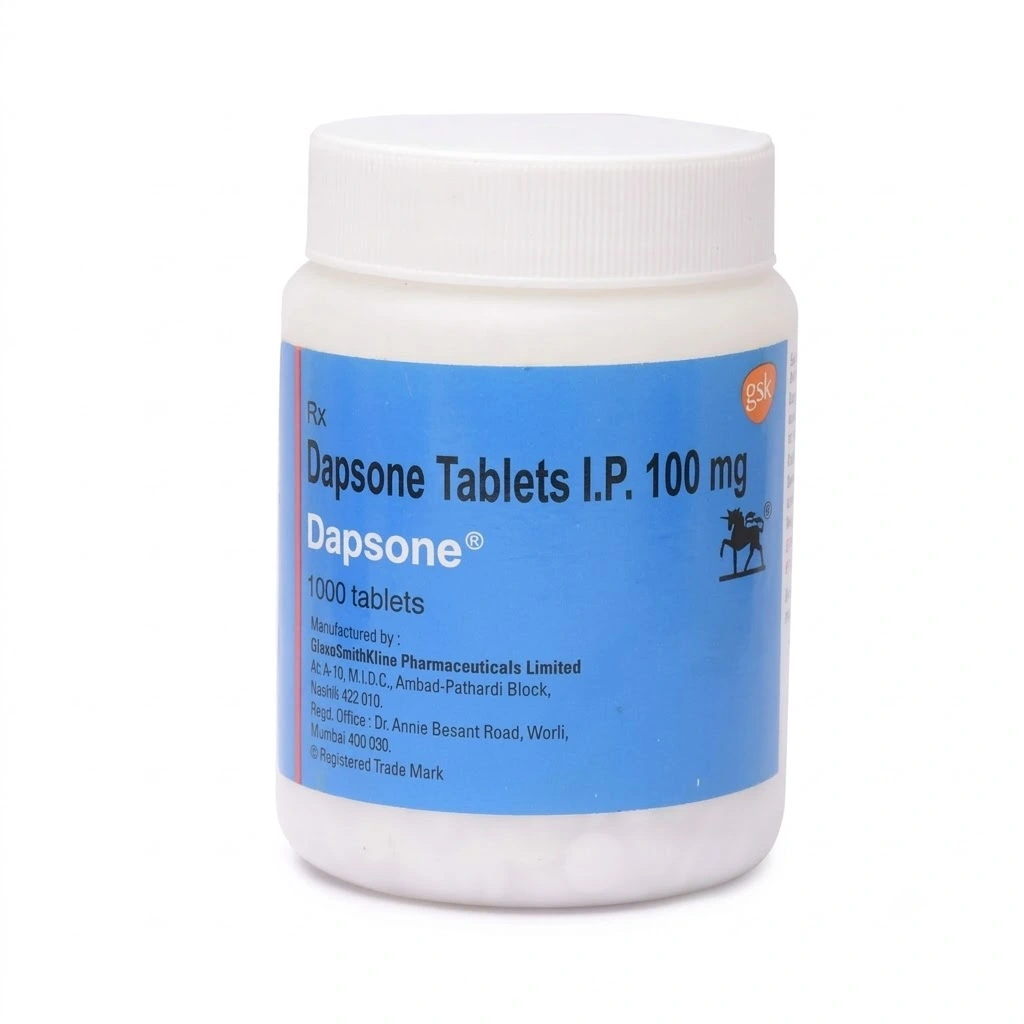
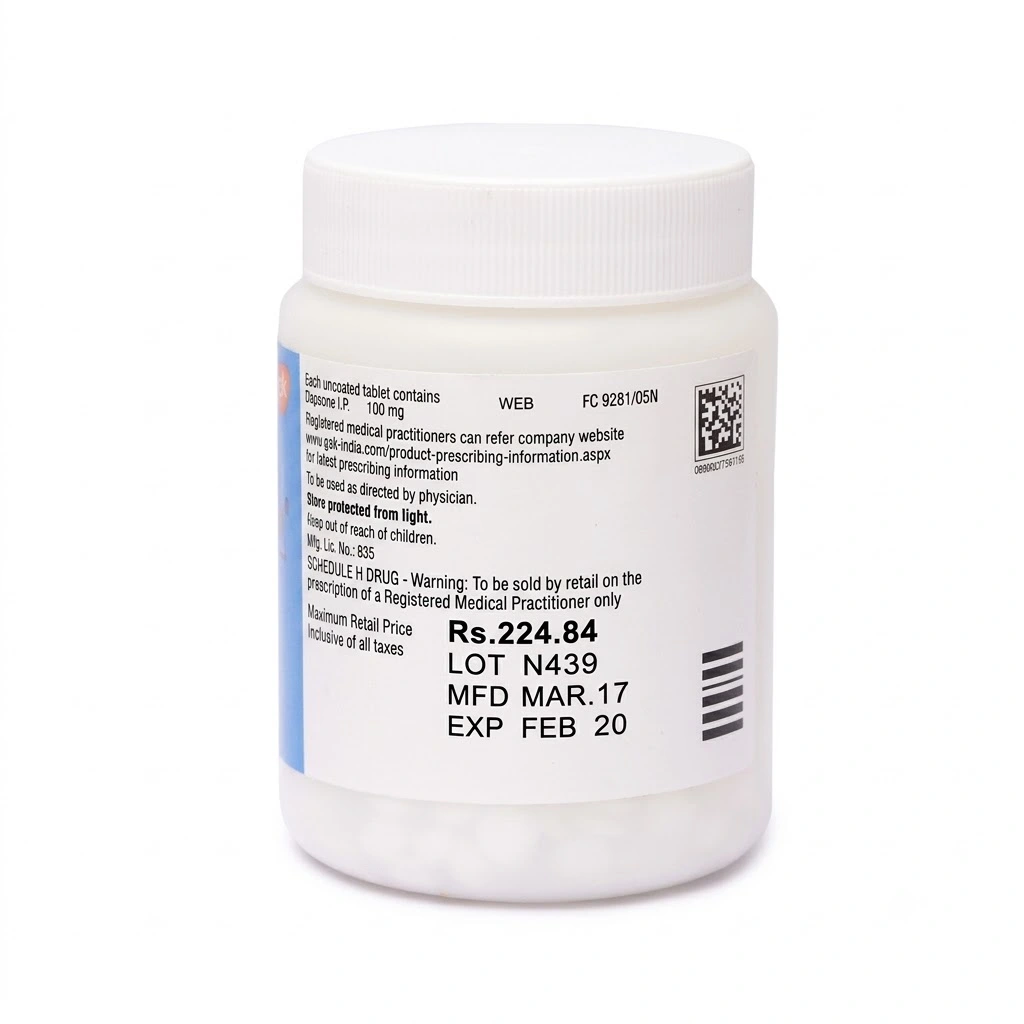
Dapsone 100 Mg Tablet – Sulfone Antimicrobial & Anti-Inflammatory Therapy
Dapsone 100 Mg Tablet (diaminodiphenyl sulfone, DDS) is an oral synthetic sulfone medication with dual antimicrobial and potent immunomodulatory anti-inflammatory properties. It is clinically indicated for the management of dermatitis herpetiformis (Duhring’s disease), multidrug regimens for all forms of leprosy (Hansen’s disease), and treatment-resistant neutrophilic dermatoses, including severe inflammatory and nodulocystic acne vulgaris.
Dapsone
100 Mg
Sulfone / Anti-Inflammatory
Prescription Medicine
Active Ingredient
Dapsone (DDS)
Drug Class
Synthetic Sulfone / Dihydropteroate Synthase Inhibitor
Dosage Form
Oral Scored Tablet
What Is Dapsone 100 Mg?
Dapsone (4,4′-diaminodiphenyl sulfone) is a synthetic sulfone compound with a long clinical history in both infectious diseases and clinical dermatology. It provides antibacterial and antiparasitic activity while suppressing chronic neutrophilic inflammatory pathways.
The 100 Mg strength is the standard therapeutic dose for adults. In dermatological practice, dapsone provides rapid control over intense burning, itching, and blistering in autoimmune skin conditions such as dermatitis herpetiformis, often producing dramatic relief within 48 to 72 hours.
Because dapsone is metabolized by hepatic N-acetylation and cytochrome P450-dependent N-hydroxylation into metabolites that cause oxidative stress on erythrocytes, patient screening for glucose-6-phosphate dehydrogenase (G6PD) deficiency and routine baseline hematologic testing are mandatory before starting treatment.
([dailymed.nlm.nih.gov](https://dailymed.nlm.nih.gov/dailymed/lookup.cfm?setid=2557e1bb-8dfd-4a11-b4f7-bf8ef2882be1))
How Does Dapsone 100 Mg Work?
Dapsone acts via two distinct pharmacological mechanisms depending on the pathology being treated:
- Antimicrobial Folate Synthesis Inhibition: Similar to sulfonamides, dapsone competitively inhibits the enzyme dihydropteroate synthase (DHPS) in susceptible microorganisms. This halts the conversion of para-aminobenzoic acid (PABA) to dihydrofolate, stopping bacterial synthesis of folic acid and nucleic acids necessary for replication in Mycobacterium leprae and Pneumocystis jirovecii.
- Neutrophil & Immunomodulatory Suppression: In non-infectious inflammatory dermatoses, dapsone inhibits neutrophil myeloperoxidase (MPO) activity, blocks respiratory burst, downregulates tissue-destructive lysosomal enzyme release, and prevents neutrophil chemotaxis and integrin-mediated adhesion to vascular endothelial cells.
This selective suppression of neutrophil-mediated tissue damage resolves inflammatory papules, sterile microabscesses, and itchy subepidermal blisters without broadly suppressing systemic lymphocyte defenses.
What Is Dapsone 100 Mg Used For?
Dapsone 100 Mg is indicated for the treatment of multiple dermatological and infectious conditions:
- Dermatitis Herpetiformis (Duhring’s Disease): Primary therapeutic intervention to relieve severe pruritus and clear cutaneous vesicles in conjunction with a gluten-free diet.
- Leprosy (Hansen’s Disease): Essential multidrug therapy (MDT) component alongside rifampicin and clofazimine to eradicate Mycobacterium leprae and prevent secondary bacterial resistance.
- Refractory Severe Inflammatory Acne: Off-label oral therapy for deep, scarring, or nodulocystic acne in patients intolerant to or unresponsive to oral isotretinoin or standard tetracyclines.
- Neutrophilic & Autoimmune Dermatoses: Prescribed for Sweet’s syndrome, pyoderma gangrenosum, linear IgA bullous dermatosis, and cutaneous lupus erythematosus.
- Pneumocystis jirovecii Pneumonia (PCP) Prophylaxis: Alternative prophylactic regimen in immunocompromised individuals intolerant to trimethoprim-sulfamethoxazole.
Dapsone must be dosed under strict medical monitoring with regular laboratory assessments of complete blood counts and liver enzymes.
([dailymed.nlm.nih.gov](https://dailymed.nlm.nih.gov/dailymed/lookup.cfm?setid=2557e1bb-8dfd-4a11-b4f7-bf8ef2882be1))
Related Dermatological Acne Therapy
For non-systemic, localized comedolytic care and follicular cell turnover management, explore our clinical overview of topical third-generation retinoid treatment:
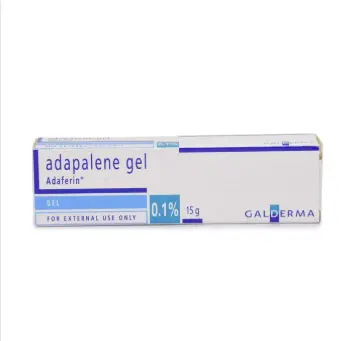
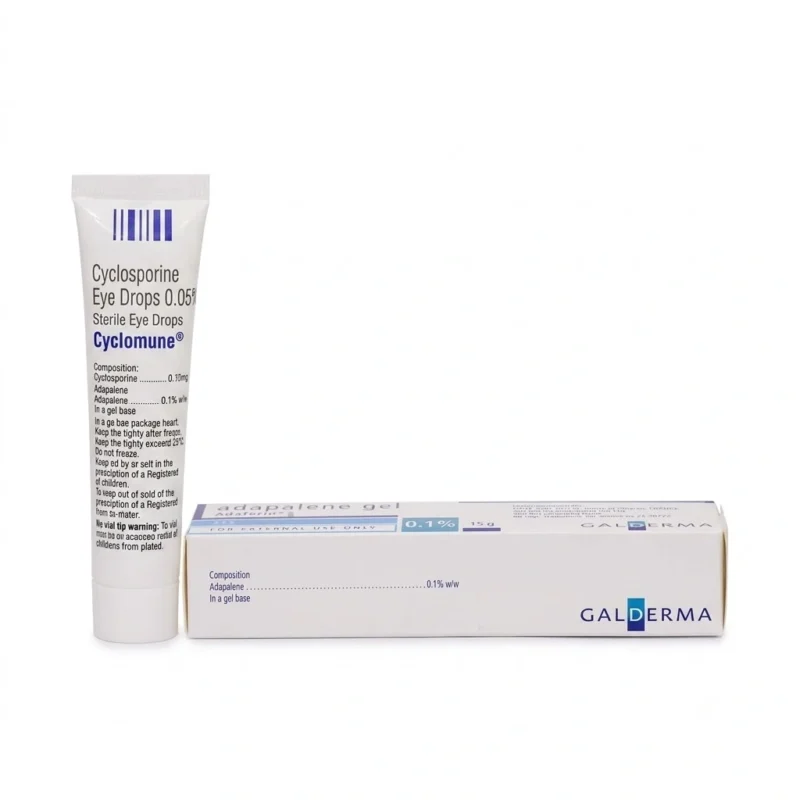
Adaferin Gel 0.1% (15 gm)
Dapsone 100 Mg Dosage and Administration
Dapsone dosage is individualized based on diagnosis, clinical response, and hematologic tolerance:
- Dermatitis Herpetiformis: Standard starting dose is 50 Mg daily in adults. If full relief of burning and blistering is not achieved, the dose may be titrated upward to 100 Mg daily, and occasionally up to 300 Mg daily in severe disease. Once symptoms subside, reduce the dose to the lowest effective maintenance level (typically 50 Mg daily or on alternate days).
- Leprosy (Multidrug Therapy): 100 Mg orally once daily administered concurrently with other antileprotic agents (rifampicin and clofazimine) for 6 to 12 months as guided by WHO protocols.
- PCP Prophylaxis: 100 Mg orally once daily (or 50 Mg twice daily) as an alternative regimen under infectious disease supervision.
Tablets should be swallowed whole with a glass of water. Taking dapsone with meals or a glass of milk helps reduce minor gastrointestinal upset.
([dailymed.nlm.nih.gov](https://dailymed.nlm.nih.gov/dailymed/lookup.cfm?setid=2557e1bb-8dfd-4a11-b4f7-bf8ef2882be1))
Black-Box / Hematologic Warning:
Dapsone causes dose-dependent hemolysis and methemoglobinemia in virtually all patients. In patients with Glucose-6-Phosphate Dehydrogenase (G6PD) deficiency, severe and potentially life-threatening acute hemolytic anemia can occur even at low doses. G6PD testing must precede therapy.
Dapsone 100 Mg vs Adaferin Gel 0.1% (Adapalene)
Comparing systemic sulfone therapy with topical retinoid therapy clarifies their distinct clinical applications in dermatology:
| Parameter |
Dapsone 100 Mg Tablet |
Adaferin Gel 0.1% (Adapalene) |
| Administration Route |
Oral systemic tablet |
Topical cutaneous gel |
| Pharmacological Mechanism |
Neutrophil suppression & DHPS inhibition |
RAR-$\beta$/$\gamma$ agonism & comedolytic desquamation |
| Primary Indications |
Dermatitis herpetiformis, leprosy, severe neutrophilic acne |
Mild to moderate comedonal & papulopustular acne |
| Laboratory Monitoring |
Mandatory (G6PD screen, frequent CBC, reticulocytes, LFTs) |
None required |
| Primary Adverse Reactions |
Hemolytic anemia, methemoglobinemia, peripheral neuropathy |
Localized skin dryness, erythema, mild peeling |
Dapsone provides systemic immunomodulation for inflammatory, neutrophilic, and blistering dermatoses, whereas Adaferin Gel normalizes skin desquamation at the follicle surface.
Who Should Not Take Dapsone 100 Mg?
Dapsone is contraindicated or requires caution under the following clinical conditions:
- Known hypersensitivity to dapsone, sulfones, or any excipients in the tablet
- Severe, uncompensated anemia or baseline hemoglobin < 9 g/dL
- Severe G6PD deficiency: Due to the risk of life-threatening acute intravascular hemolysis
- Significant cardiopulmonary disease where mild methemoglobinemia or reduced oxygen-carrying capacity could trigger ischemia
- Severe hepatic impairment (dapsone is extensively metabolized by the liver)
- Pregnancy and lactation (dapsone crosses the placenta and passes into breast milk; can cause neonatal hemolytic anemia and hyperbilirubinemia)
Patients must be educated regarding the symptoms of acute hemolysis and methemoglobinemia (cyanosis, sudden fatigue, shortness of breath, dark urine).
([dailymed.nlm.nih.gov](https://dailymed.nlm.nih.gov/dailymed/lookup.cfm?setid=2557e1bb-8dfd-4a11-b4f7-bf8ef2882be1))
Possible Side Effects of Dapsone 100 Mg
Adverse reactions associated with dapsone are predominantly hematologic and dermatologic:
- Hemolysis & Anemia: Dose-related reduction in red blood cell survival, reticulocytosis, and hemoglobin drops of 1 to 2 g/dL (more pronounced in G6PD-deficient individuals).
- Methemoglobinemia: Hydroxylamine metabolites oxidize hemoglobin to methemoglobin, causing cyanosis (bluish lips/fingers), dyspnea, fatigue, and headache.
- Dapsone Hypersensitivity Syndrome (DHS): A rare, potentially fatal triad of fever, exfoliative dermatitis, lymphadenopathy, and hepatitis, typically occurring 2 to 6 weeks after starting treatment.
- Agranulocytosis: Severe leukopenia, usually emerging within the first 2 to 3 months of therapy.
- Peripheral Neuropathy: Motor neuropathy manifesting as distal muscle weakness without sensory loss (e.g., foot drop), typically reversible upon discontinuation.
- Gastrointestinal: Nausea, vomiting, anorexia, and abdominal discomfort.
Seek immediate emergency medical evaluation if unexplained fever, sore throat, severe jaundice, dark urine, or bluish skin discoloration develops.
([dailymed.nlm.nih.gov](https://dailymed.nlm.nih.gov/dailymed/lookup.cfm?setid=2557e1bb-8dfd-4a11-b4f7-bf8ef2882be1))
Dapsone 100 Mg Drug Interactions
Dapsone is metabolized by hepatic CYP3A4, CYP2C9, and CYP2C19 pathways, making it vulnerable to enzymatic interactions:
Rifampin: Strongly induces hepatic CYP enzymes, increasing dapsone clearance by up to 7- to 10-fold and lowering systemic dapsone levels (dose adjustments are common in MDT protocols).
Trimethoprim: Inhibits dapsone clearance and metabolism, elevating serum concentrations of both dapsone and trimethoprim, which increases the incidence of methemoglobinemia.
Cimetidine: Inhibits the CYP-mediated N-hydroxylation of dapsone into toxic hydroxylamine metabolites, occasionally utilized clinically to lessen dapsone-induced methemoglobinemia.
Oxidative & Hemolytic Drugs: Co-administration with other oxidant drugs (such as primaquine, nitrofurantoin, or rasburicase) multiplies hemolytic risks.
([dailymed.nlm.nih.gov](https://dailymed.nlm.nih.gov/dailymed/lookup.cfm?setid=2557e1bb-8dfd-4a11-b4f7-bf8ef2882be1))
Mandatory Laboratory Monitoring Protocols
Due to bone marrow suppression, hemolysis, and hepatic toxicity risks, structured clinical monitoring is mandatory:
- Baseline Screening: Quantitative G6PD assay, complete blood count (CBC) with differential, reticulocyte count, baseline methemoglobin level, and liver function tests (LFTs).
- First 3 Months: CBC with differential and reticulocyte counts should be performed weekly for the first 4 weeks, then every 2 weeks through month 3 to detect early agranulocytosis or severe hemolytic crises.
- Long-Term Maintenance: CBC and liver panels should be re-evaluated every 3 to 4 months once patient hematologic counts stabilize.
Therapy must be interrupted if a marked drop in leukocytes, platelets, or red cell counts occurs.
([dailymed.nlm.nih.gov](https://dailymed.nlm.nih.gov/dailymed/lookup.cfm?setid=2557e1bb-8dfd-4a11-b4f7-bf8ef2882be1))
Understanding Methemoglobinemia Management
Dapsone hydroxylamine metabolites oxidize the ferrous iron ($Fe^{2+}$) in hemoglobin into ferric iron ($Fe^{3+}$), producing methemoglobin, which cannot bind oxygen.
Most patients maintain asymptomatic methemoglobin levels between 5% and 15%. If methemoglobin levels exceed 20%, or if cyanosis, fatigue, and tachycardia become symptomatic, dapsone must be discontinued. Severe symptomatic methemoglobinemia (> 30%) is treated with intravenous methylene blue (1 to 2 mg/kg) or ascorbic acid under emergency medical supervision.
Frequently Asked Questions About Dapsone 100 Mg
1. Why is a G6PD blood test required before taking Dapsone 100 Mg?
G6PD is an enzyme that protects red blood cells from oxidative breakdown. Patients lacking sufficient G6PD cannot neutralize the oxidant metabolites produced by dapsone, putting them at high risk for acute, life-threatening hemolytic anemia even with standard doses.
([dailymed.nlm.nih.gov](https://dailymed.nlm.nih.gov/dailymed/lookup.cfm?setid=2557e1bb-8dfd-4a11-b4f7-bf8ef2882be1))
2. How quickly does Dapsone 100 Mg work for dermatitis herpetiformis?
Dapsone produces rapid results in dermatitis herpetiformis. Itching and burning sensations typically improve within 24 to 48 hours, with blistering lesions clearing within several days of starting the effective dose.
3. What is Dapsone Hypersensitivity Syndrome (DHS)?
DHS is a severe idiosyncratic drug reaction that occurs in approximately 0.5% to 3% of patients, usually between the second and sixth week of therapy. It presents with high fever, rash (exfoliative dermatitis), swollen lymph nodes, and hepatitis, requiring immediate drug cessation and corticosteroid treatment.
([dailymed.nlm.nih.gov](https://dailymed.nlm.nih.gov/dailymed/lookup.cfm?setid=2557e1bb-8dfd-4a11-b4f7-bf8ef2882be1))
4. Why do my lips look bluish while taking Dapsone?
A bluish tint on the lips, nailbeds, or skin (cyanosis) is a clinical sign of methemoglobinemia, which occurs when dapsone alters the oxygen-carrying form of hemoglobin. Mild cyanosis is common, but if accompanied by shortness of breath, dizziness, or chest tightness, contact your physician immediately.
5. What is the difference between Dapsone 100 Mg and Adaferin Gel?
Dapsone 100 Mg is an oral systemic sulfone medication used for severe autoimmune and neutrophilic skin conditions (such as dermatitis herpetiformis and leprosy) that requires regular blood monitoring. Adaferin Gel (adapalene 0.1%) is a topical retinoid applied to the skin surface for mild-to-moderate acne without systemic blood side effects.
Medical Disclaimer
This product overview is provided strictly for educational and informational purposes. Dapsone 100 Mg is a prescription sulfone medication requiring baseline enzymatic testing (G6PD), dosage titration, and frequent hematologic monitoring by a licensed physician or dermatologist. Individual tolerance and dosing depend on baseline red blood cell parameters, renal and hepatic health, and concurrent drug regimens. This content does not substitute for clinical medical advice, professional diagnosis, or personalized therapeutic care.







Reviews
There are no reviews yet.