Imiquad Cream (Imiquimod) – Topical Immune Response Modifier
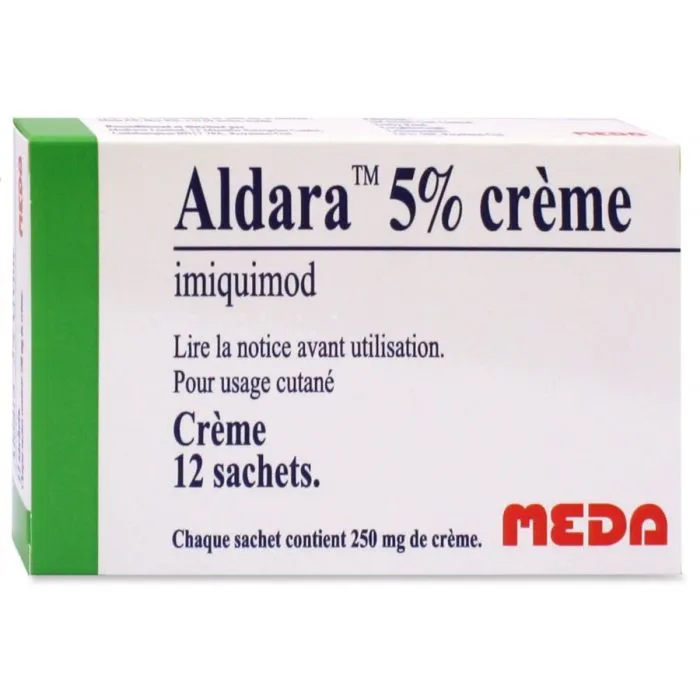
Imiquad Cream (Imiquimod) is a topical immune response modifier indicated for the treatment of external genital and perianal warts (condylomata acuminata), clinically typical actinic keratoses on the face or scalp, and biopsy-confirmed superficial basal cell carcinoma (sBCC). By stimulating innate and cell-mediated immune pathways via toll-like receptor 7 (TLR-7), it activates endogenous cytokine production to target abnormal viral and neoplastic cutaneous lesions.
Imiquimod
Topical Cream
Immune Response Modifier
Prescription Dermatological
Active Ingredient
Imiquimod
Formulation
Topical Emulsion Cream
Therapeutic Class
TLR-7 Agonist / Immunomodulator
Application Route
Cutaneous Topical Use Only
What Is Imiquad Cream?
Imiquad Cream is a topical dermatological medication containing imiquimod, an imidazoquinoline amine derivative. Unlike direct antimitotic or destructive agents (such as podophyllin, cryotherapy, or surgical excision), imiquimod does not possess direct antiviral or cytotoxic activity in vitro.
Instead, Imiquad acts as an immunomodulator that harnesses the body’s own immune system to recognize and attack abnormal cell growth, including human papillomavirus (HPV)-induced condylomata and dysplastic pre-cancerous keratinocytes.
Imiquad Cream is prescribed in specific cycle regimens (typically applied overnight on alternate days or specified days per week) under the direction and supervision of a dermatologist or qualified physician.
([dailymed.nlm.nih.gov](https://dailymed.nlm.nih.gov/dailymed/lookup.cfm?setid=8050965c-6622-4da4-8cb3-162e245a4980))
How Does Imiquad Cream Work?
Imiquimod modifies cutaneous immune responses through targeted receptor agonism:
- Toll-Like Receptor 7 (TLR-7) Agonism: Imiquimod binds selectively to TLR-7 located on plasmacytoid dendritic cells, monocytes, and macrophages in the dermis and epidermis.
- Cytokine Induction: TLR-7 activation stimulates the nuclear factor kappa B (NF-κB) pathway, triggering significant local secretion of interferon-alpha (IFN-α), interleukin-6 (IL-6), interleukin-12 (IL-12), and tumor necrosis factor-alpha (TNF-α).
- Cell-Mediated Cytotoxic Response: These pro-inflammatory cytokines stimulate natural killer (NK) cells, activate CD8+ cytotoxic T-lymphocytes, and induce Langerhans cell migration to local lymph nodes.
This localized immune cascade leads to targeted apoptosis and immune-mediated clearance of viral-infected or dysplastic keratinocytes while leaving normal surrounding skin intact.
What Is Imiquad Cream Used For?
Imiquad Cream is clinically indicated for the management of specific proliferative, viral, and pre-cancerous dermatological lesions in adults:
- External Genital and Perianal Warts: Treatment of external condylomata acuminata caused by human papillomavirus (HPV) in patients 12 years of age and older.
- Actinic Keratosis (AK): Topical treatment of clinically typical, nonhyperkeratotic, nonhypertrophic actinic keratoses on the face or scalp in immunocompetent adults.
- Superficial Basal Cell Carcinoma (sBCC): Treatment of biopsy-confirmed, primary superficial basal cell carcinoma in adults where surgical methods are medically less appropriate.
Imiquad is not indicated for internal viral warts (cervical, intra-vaginal, intra-anal, or intra-urethral lesions) or nodular/morpheaform basal cell carcinomas.
([dailymed.nlm.nih.gov](https://dailymed.nlm.nih.gov/dailymed/lookup.cfm?setid=8050965c-6622-4da4-8cb3-162e245a4980))
Related Dermatological Anti-Inflammatory & Antibacterial Care
While immune modifiers stimulate inflammatory clearance of dysplastic or viral tissue, infected eczema and acute bacterial dermatoses require targeted topical corticosteroids combined with aminoglycoside antibiotics. Explore our clinical profile on combination topical therapy:
Betamethasone 0.1% & Neomycin 0.5% Cream
Imiquad Cream Dosage and Application Guidelines
Application frequency and treatment duration depend on the specific dermatological indication:
- External Genital / Perianal Warts: Apply a thin layer 3 times per week (e.g., Monday, Wednesday, Friday) prior to normal sleeping hours. Leave on the skin for 6 to 10 hours, then wash the area thoroughly with mild soap and water. Treatment continues until total wart clearance or up to 16 weeks.
- Actinic Keratosis: Apply 2 times per week (e.g., Monday and Thursday) before bedtime for a full 16-week treatment course. Leave on for approximately 8 hours before washing off.
- Superficial Basal Cell Carcinoma: Apply 5 consecutive days per week (e.g., Monday through Friday) prior to bedtime for 6 weeks. Leave on the treatment area for approximately 8 hours.
- Application Technique: Wash hands before and after application. Apply a small amount to clean, dry skin and rub in gently until the cream vanishes. Do not cover the treatment area with occlusive bandages or tight dressings.
Local skin reactions (erythema, flaking, scabbing) are a normal manifestation of the induced immune response and usually subside after treatment completion.
([dailymed.nlm.nih.gov](https://dailymed.nlm.nih.gov/dailymed/lookup.cfm?setid=8050965c-6622-4da4-8cb3-162e245a4980))
Important Barrier Warning:
Imiquimod cream can weaken condoms and vaginal diaphragms. Avoid sexual contact while the cream is on the skin, and wash the treatment area thoroughly before engaging in sexual activity.
Imiquad Cream (Imiquimod) vs Betamethasone & Neomycin Cream
Understanding the contrast between an immune response modifier and a steroid-antibiotic combination is critical for accurate clinical application:
| Clinical Parameter |
Imiquad Cream (Imiquimod) |
Betamethasone 0.1% & Neomycin 0.5% Cream |
| Pharmacological Role |
Immune stimulant / TLR-7 agonist |
Immunosuppressive corticosteroid + Aminoglycoside antibiotic |
| Primary Indications |
Genital warts, actinic keratoses, superficial BCC |
Infected eczema, allergic dermatitis with bacterial risk |
| Effect on Inflammation |
Stimulates localized immune inflammation to clear lesions |
Suppresses inflammation, pruritus, and erythema |
| Dosing Schedule |
Intermittent (2, 3, or 5 days per week; overnight) |
1 to 2 times daily for short-term courses |
| Contraindication in Viral Lesions |
Indicated specifically for HPV viral warts |
Contraindicated (Steroids worsen viral skin infections) |
Do not use topical corticosteroids on viral lesions treated with Imiquad; corticosteroids counteract the immune stimulation required for imiquimod to function effectively.
Who Should Not Use Imiquad Cream?
Imiquad Cream is contraindicated or requires caution in patients with the following conditions:
- Known hypersensitivity to imiquimod, benzyl alcohol, parabens, or any inactive ingredients in the cream
- Application on unhealed skin following previous surgical or medical treatment until tissue has completely healed
- Use on open ulcers, deeply abraded lesions, or actively weeping cutaneous surfaces
- Internal mucous membrane lesions (intra-vaginal, intra-cervical, intra-urethral, or intra-rectal tissue)
- Immunocompromised individuals (e.g., organ transplant recipients, advanced HIV), as efficacy and safety are not established
- Pediatric patients under 12 years of age for genital warts, or under 18 years for actinic keratosis and superficial BCC
Pregnant or breastfeeding women should use imiquimod only if clearly indicated and approved by an obstetrician and dermatologist.
([dailymed.nlm.nih.gov](https://dailymed.nlm.nih.gov/dailymed/lookup.cfm?setid=8050965c-6622-4da4-8cb3-162e245a4980))
Possible Side Effects of Imiquad Cream
Local inflammatory reactions are common and indicate that the drug is activating the local immune response:
- Local Skin Reactions: Erythema (redness), edema, flaking, scaling, dryness, scabbing, crusting, and erosion or ulceration at the site of application.
- Local Sensations: Pruritus (itching), burning sensations, tenderness, and localized pain.
- Pigmentary Alterations: Hypopigmentation or hyperpigmentation at treated areas, which is usually reversible but may occasionally persist.
- Systemic “Flu-Like” Symptoms: Fatigue, low-grade fever, headache, myalgia, and malaise resulting from systemic cytokine induction if large areas are treated.
If severe local ulceration, intense pain, or marked systemic flu-like illness develops, a temporary “rest period” of several days may be instituted under physician guidance.
([dailymed.nlm.nih.gov](https://dailymed.nlm.nih.gov/dailymed/lookup.cfm?setid=8050965c-6622-4da4-8cb3-162e245a4980))
Interactions and Precautions
Systemic absorption of imiquimod across intact skin is low, meaning systemic drug interactions are rare. However, local therapeutic interactions require attention:
Topical Immunosuppressants: Concurrent application of topical corticosteroids, tacrolimus, or pimecrolimus directly counteracts imiquimod’s immune-activating mechanism of action and should be avoided.
Photosensitivity & Sun Exposure: Treated skin is more sensitive to ultraviolet light. Minimize exposure to sunlight, sunlamps, and tanning beds. Wear protective clothing and broad-spectrum sunscreen when managing actinic keratosis on the face or scalp.
Occlusive Dressings: Do not wrap treated skin with occlusive bandages or plastic wraps; occlusive coverage increases drug absorption and can cause severe skin ulceration.
([dailymed.nlm.nih.gov](https://dailymed.nlm.nih.gov/dailymed/lookup.cfm?setid=8050965c-6622-4da4-8cb3-162e245a4980))
Managing the Local Immune Response
Unlike other skin treatments where redness and peeling signify an adverse reaction, with Imiquad Cream, moderate erythema and crusting demonstrate that cytotoxic T-cells are clearing the abnormal cells.
However, if the inflammatory reaction becomes painful or produces moist weeping erosions:
- Wash off the medication and withhold treatment for several days until the skin barrier recovers.
- Apply bland emollients (such as white petrolatum) to soothe the irritated margin.
- Resume dosing according to the original prescribed schedule once the acute erosion resolves, without extending total application time unnecessarily.
Treatment Timeline & Expected Milestones
Lesion clearance follows a structured biological trajectory:
Weeks 1–3 (Inflammatory Activation): Redness, mild swelling, and itching develop at the lesion site as cytokines recruit active immune cells.
Weeks 4–8 (Epithelial Breakdown & Clearance): Warts diminish in size, and actinic lesions scab or crust over as dysplastic cells undergo apoptosis.
Weeks 8–16 (Resolution & Healing): Lesions resolve and normal epidermal re-epithelialization occurs. For superficial BCC, a post-treatment clinical biopsy is generally performed at 12 weeks to confirm histological clearance.
([dailymed.nlm.nih.gov](https://dailymed.nlm.nih.gov/dailymed/lookup.cfm?setid=8050965c-6622-4da4-8cb3-162e245a4980))
Official Medical Reference
For authoritative clinical pharmacology data, dosage protocols, histology findings, safety warnings, and full prescribing information on imiquimod cream, consult the FDA DailyMed database:
DailyMed – Imiquimod Cream Prescribing Information
Frequently Asked Questions About Imiquad Cream
1. How long should I leave Imiquad Cream on my skin?
Imiquad Cream should remain on the skin overnight for approximately 6 to 10 hours for genital warts, or about 8 hours for actinic keratosis and superficial BCC. After this contact period, wash the treated area thoroughly with mild soap and water.
([dailymed.nlm.nih.gov](https://dailymed.nlm.nih.gov/dailymed/lookup.cfm?setid=8050965c-6622-4da4-8cb3-162e245a4980))
2. Is severe redness and peeling normal when using Imiquad?
Yes. Mild to moderate redness, flaking, scabbing, and itching are expected signs that the immune system has been activated against the lesion. However, if open sores, severe ulceration, or unbearable pain occur, pause treatment for several days and consult your physician.
3. Does Imiquad Cream cure HPV permanently?
No. While Imiquad clears visible external genital warts, it does not eradicate the underlying human papillomavirus (HPV) infection from the body. New warts may emerge during or following treatment.
([dailymed.nlm.nih.gov](https://dailymed.nlm.nih.gov/dailymed/lookup.cfm?setid=8050965c-6622-4da4-8cb3-162e245a4980))
4. Can I use Imiquad Cream with Betamethasone & Neomycin Cream?
No. Betamethasone is a corticosteroid that suppresses immune inflammation, directly counteracting the immune-activating mechanism of imiquimod. These medications should not be used on the same treatment site.
5. Can I engage in sexual activity while using Imiquad Cream for genital warts?
Sexual contact should be avoided while the cream is on the skin. Imiquimod can weaken latex condoms and diaphragms, reducing contraceptive efficacy and protection against sexually transmitted infections. Wash off the medication before sexual activity.
([dailymed.nlm.nih.gov](https://dailymed.nlm.nih.gov/dailymed/lookup.cfm?setid=8050965c-6622-4da4-8cb3-162e245a4980))
Medical Disclaimer
This product overview is provided strictly for educational and informational purposes. Imiquad Cream (imiquimod) is a prescription dermatological medication that must be initiated, dosed, and monitored under the care of a licensed dermatologist or qualified healthcare practitioner. Clinical diagnosis, lesion confirmation, and evaluation of local skin reactions are required during therapy. This content does not substitute for individualized medical diagnosis, clinical advice, or professional treatment.







Reviews
There are no reviews yet.