

How Long Does Modafinil Last? Duration, Timing and What to Expect

How Long Does Modafinil Last? Duration, Half-Life, and What to Expect
Critical Medical & Regulatory Notice
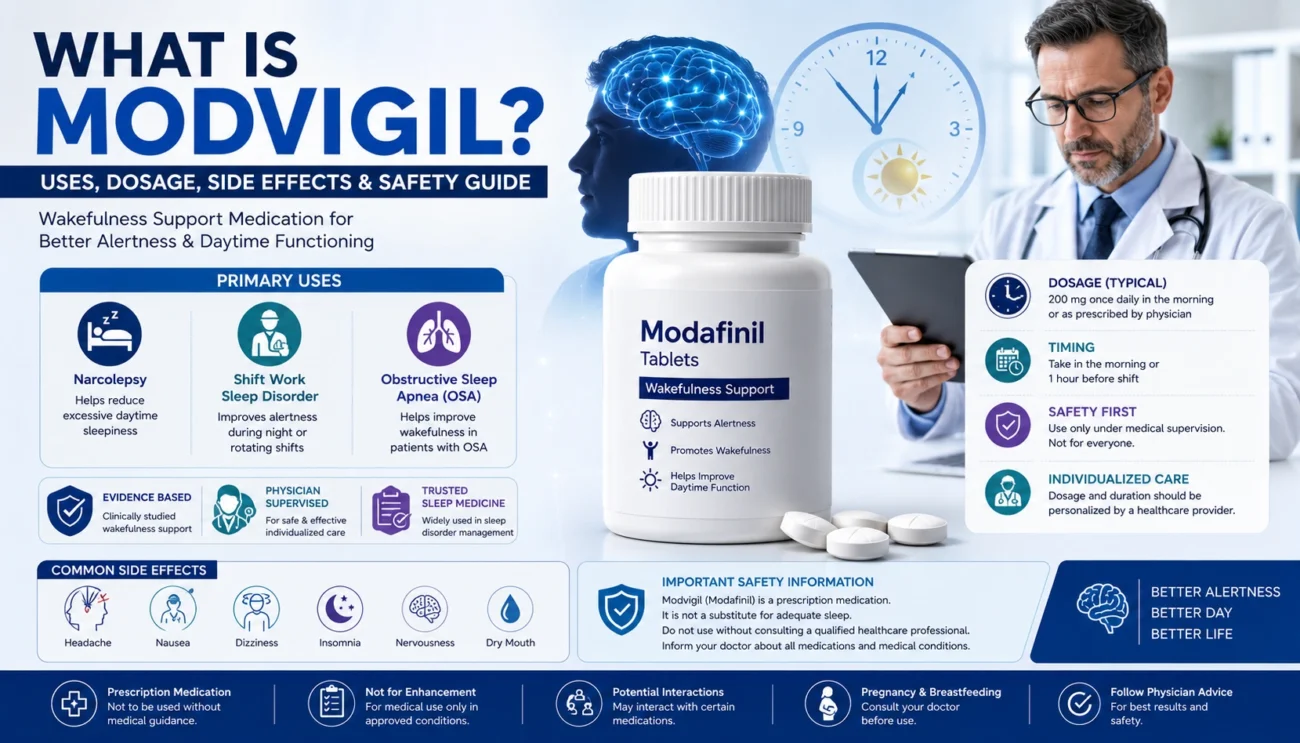
Modafinil is a potent central nervous system wakefulness-promoting agent (eugeroic) indicated for Narcolepsy, Shift Work Sleep Disorder (SWSD), and Obstructive Sleep Apnea (OSA). Due to its long elimination half-life and direct interaction with central neurotransmitter pathways, timing and dosage management are critical to prevent severe sleep architecture disruption or insomnia. Always consult a licensed physician before initiating or adjusting wakefulness therapies.
Whether prescribed for excessive daytime sleepiness or used under clinical guidance to manage non-traditional work schedules, understanding the **duration and pharmacokinetic timeline of Modafinil** is essential for safe and effective use.
Unlike traditional short-acting stimulants that cause rapid spikes and sudden energy crashes, Modafinil provides a sustained, smooth window of wakefulness. However, its prolonged biological clearance means that taking a dose just a few hours too late in the day can significantly disrupt your nighttime sleep quality.
This clinical guide breaks down the elimination half-life of Modafinil, its hour-by-hour timeline, key factors influencing how long it stays in your system, and practical timing strategies to maximize alertness without sacrificing restful sleep.
The Core Metrics: Duration and Half-Life
When evaluating how long Modafinil lasts, two distinct timeframes matter: the duration of **perceivable cognitive wakefulness** and the **elimination half-life**.
1. Active Wakefulness Window (12 to 15 Hours)
For most healthy adults, a standard adult dose delivers **12 to 15 hours of active wakefulness**. During this window, the drug selectively inhibits dopamine transporters (DAT) and stimulates orexin/histamine pathways in the hypothalamus, keeping the brain in an alert state without excessive peripheral stimulation.
2. Elimination Half-Life ($t_{1/2}$)
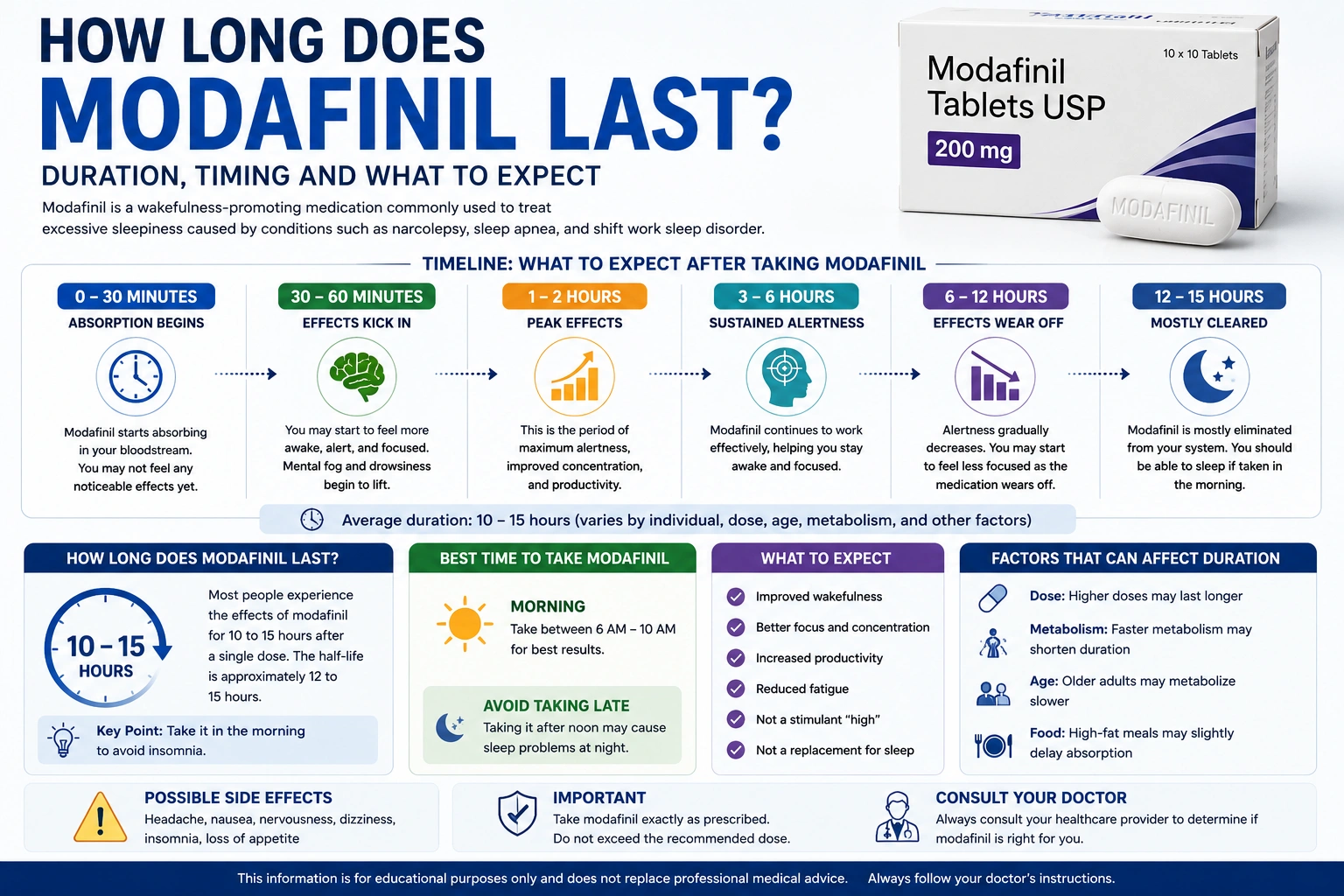
The elimination half-life of Modafinil averages between **12 and 15 hours**. This means that 12 to 15 hours after ingestion, your liver has metabolized roughly half of the active compound, leaving the remaining half circulating in your blood. Complete systemic clearance typically takes 2 to 3 days (roughly 4 to 5 half-lives).
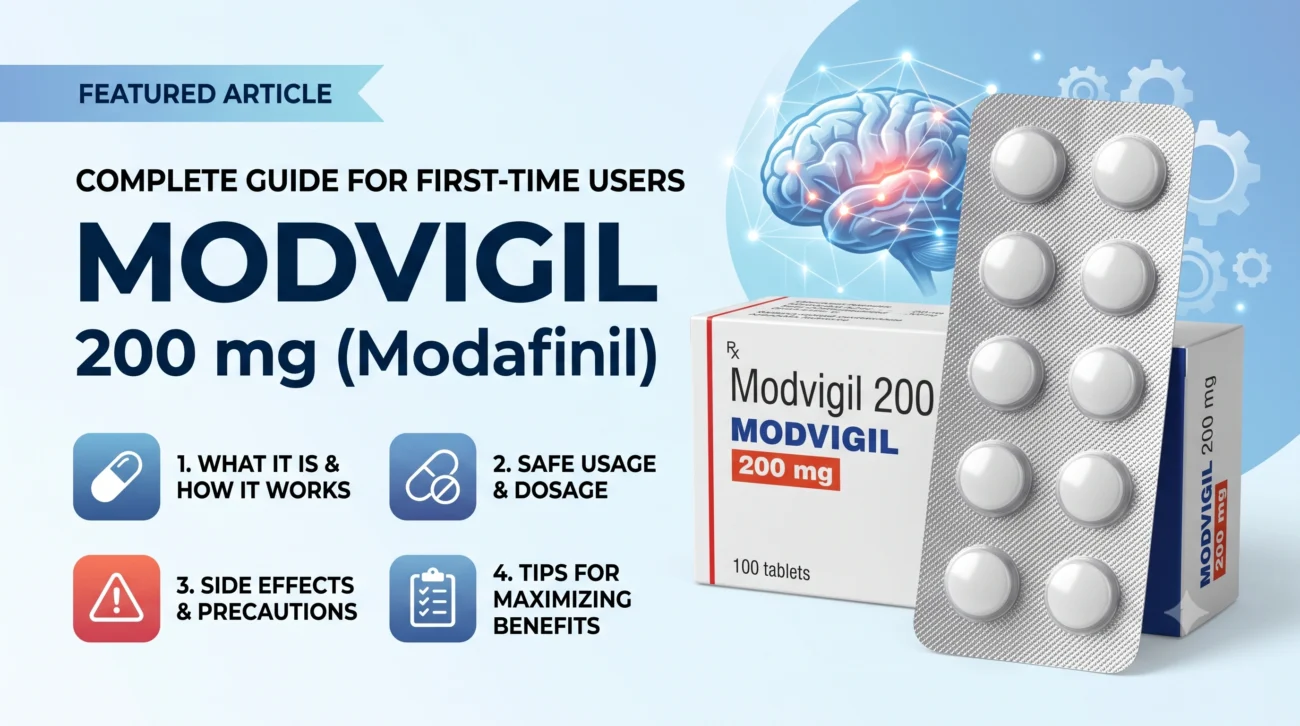
Standard clinical options—such as Modvigil 200 Mg – Modafinil—are formulated to deliver this reliable, long-lasting plasma concentration from a single daily morning dose.
Hour-by-Hour Timeline: What to Expect
Understanding how Modafinil moves through your digestive and central nervous systems helps you plan your workday and evening wind-down routine effectively:
The 24-Hour Modafinil Cycle
Hours 0 to 1 (Onset Phase): Gastrointestinal absorption begins. On an empty stomach, initial subtle increases in baseline alertness emerge within 30 to 60 minutes. Taking the tablet with a heavy or high-fat meal can delay this onset by 1 to 2 hours.
Hours 2 to 4 (Peak Concentration – $C_{max}$): Blood plasma levels reach their absolute peak. This is the period of maximum alertness, sharp executive focus, and complete elimination of daytime fatigue.
Hours 4 to 10 (Sustained Plateau): Active wakefulness remains steady. High-level cognitive processing and resistance to fatigue continue without the sudden jitters associated with classic stimulants.
Hours 11 to 15 (Gradual Taper): As hepatic enzymes metabolize circulating drug molecules, the feeling of heightened alertness gently fades, allowing natural sleepiness to return as evening approaches.
Hours 16+: Plasma levels drop below the threshold for active wakefulness, allowing normal, uninhibited sleep architecture if the dose was taken early in the morning.
Pharmacokinetic Summary Matrix
The table below outlines the core physiological phases, blood status, and recommended user actions throughout a typical Modafinil cycle:
| Time Window | Pharmacokinetic Phase | Expected Experience & Best Practices |
|---|---|---|
| T+0:00 to 1:00 | Absorption & Initial Onset | Take with a full glass of water early in the morning (preferably before 8:00 AM). |
| T+2:00 to 4:00 | Peak Plasma Concentration ($C_{max}$) | Peak cognitive alertness; focus on your most demanding tasks. Maintain hydration. |
| T+4:00 to 10:00 | Sustained Plateau | Continued steady wakefulness. Eat light, planned meals even if appetite feels lower. |
| T+12:00 to 15:00 | Elimination Half-Life Taper | Active effects taper off; begin your relaxing evening wind-down routine. |
Factors That Influence How Long Modafinil Lasts
Individual experiences with Modafinil can vary based on several metabolic and physiological factors:
- Liver Enzyme Activity (CYP3A4 / CYP2C19): Modafinil is heavily metabolized by the liver. Individuals with slower liver metabolism process the drug more slowly, extending its active window up to 18+ hours.
- Dosage Volume: Taking a full 200 mg dose produces a longer active duration than a split 100 mg dose, as higher plasma concentrations take more time to drop below active thresholds.
- Food Interactions: A high-fat breakfast delays the initial peak concentration ($C_{max}$) without reducing total overall absorption, shifting the entire wakefulness curve later into the day.
- Age and Renal Clearance: Elderly patients typically clear the drug more slowly, requiring lower starting doses to avoid compounding effects over consecutive days.
For a deep dive into official peer-reviewed clinical trials, metabolic pathways, and full chemical profiles of Modafinil, consult the National Center for Biotechnology Information (NCBI) PubChem Database.
Optimal Timing Rules to Protect Nighttime Sleep
Because Modafinil remains active in your system for so long, late administration is the single most common cause of treatment-induced insomnia.
To maintain healthy sleep hygiene:
- Day Shift Administration: Take your tablet early in the morning—ideally before 8:00 AM—to ensure the active window tapers off before your target bedtime.
- Shift Work Sleep Disorder (SWSD): Take your dose approximately 30 to 60 minutes prior to the start of your night shift. Avoid taking additional doses midway through your shift.
- Avoid Afternoon Dosing: Taking Modafinil past 11:00 AM dramatically increases the likelihood of middle-of-the-night wakefulness or delayed sleep onset.
For general clinical guidance on sleep disorders and circadian rhythm management, visit the official World Health Organization (WHO) Health Directory.
Modafinil Duration & Timing Checklist
Keep these core guidelines in mind to manage wakefulness safely and effectively:
- ✔️ Plan for a 12 to 15-Hour Window: Expect the active effects to last most of your waking day.
- ✔️ Take it Early: Administer your dose before 8:00 AM to preserve natural nighttime sleep quality.
- ✔️ Hydrate Throughout the Day: Drink plenty of water to prevent dehydration headaches during the peak window.
- ✔️ Account for Food Delays: Remember that high-fat meals delay the initial onset by 1 to 2 hours.
- ✔️ Follow Medical Guidance: Never increase your dosage or take late-afternoon booster doses without consulting your doctor.