

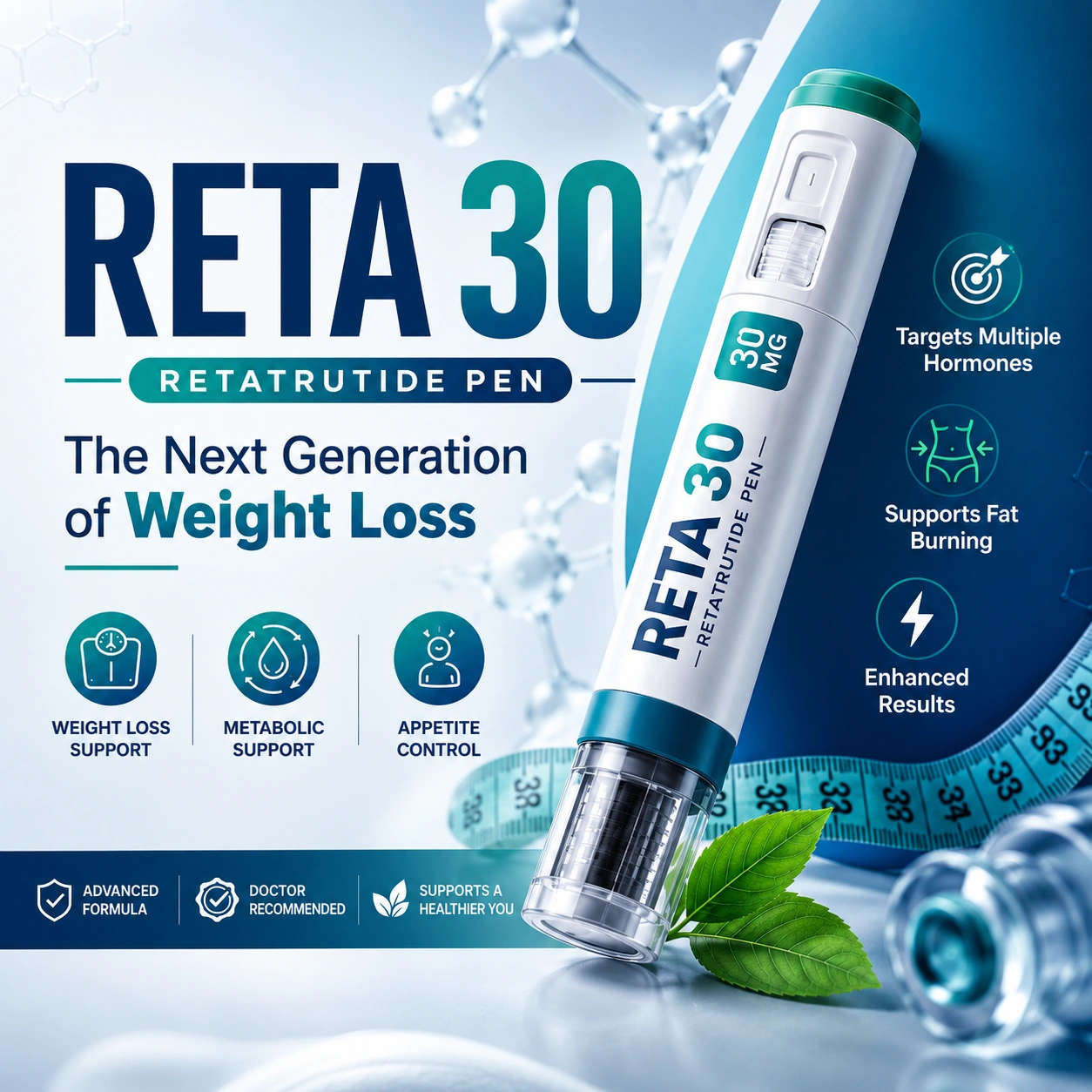
Reta 30 – Retatrutide Pen

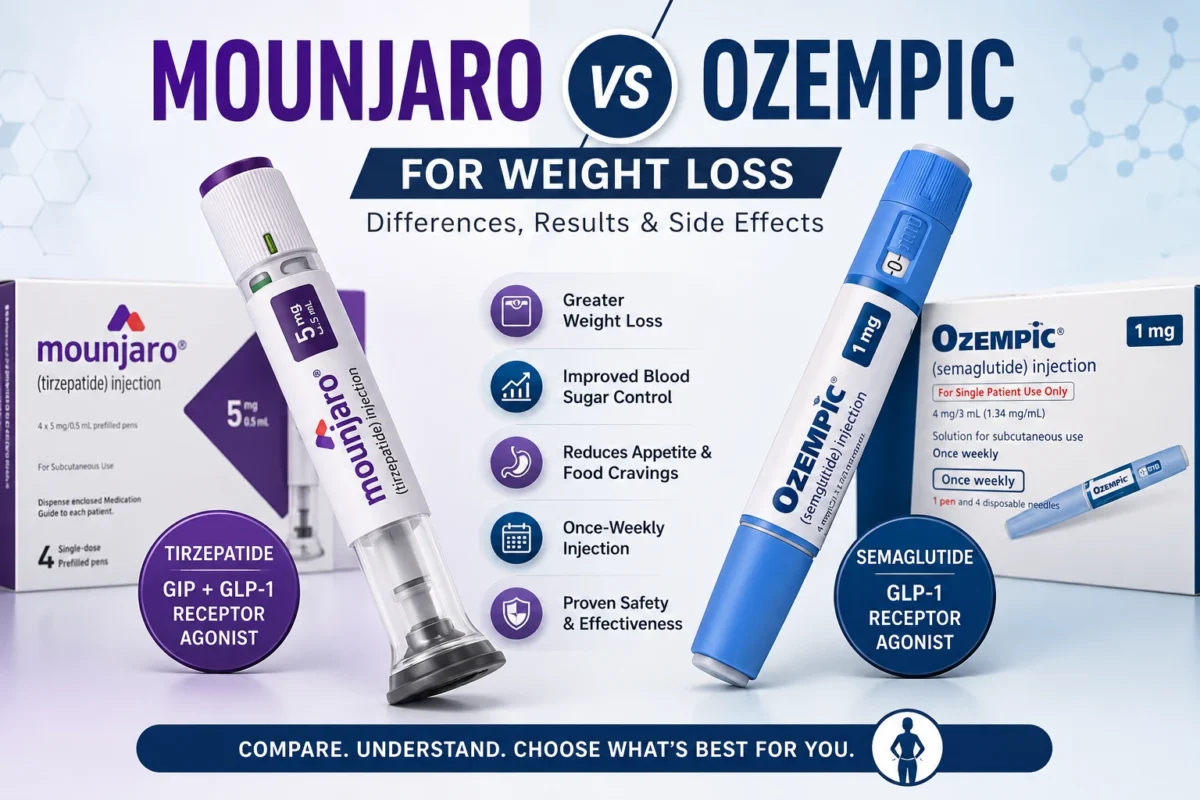
Retatrutide Pen vs Tirzepatide: Which Works Better for Weight Loss?
The landscape of metabolic medicine and chronic weight management has undergone a staggering transformation. Just a few years ago, achieving a 10% reduction in total body weight via pharmacotherapy was considered a monumental success. Today, new generations of multi-receptor agonists are consistently pushing those boundaries, delivering weight reduction outcomes that closely rival bariatric surgery.
At the center of this medical evolution are two powerhouses developed by Eli Lilly: Tirzepatide (commercially known as Mounjaro and Zepbound) and the highly anticipated pipeline drug, Retatrutide. While Tirzepatide currently dominates clinical practice as a dual-agonist masterclass, Retatrutide—often dubbed the “triple G” molecule—is breaking records in late-stage clinical trials.
If you are exploring advanced weight loss therapies, you are likely asking the ultimate question: Which one actually works better? In this comprehensive, data-driven analysis, we will break down the science, the trial results, delivery mechanisms like the Retatrutide pen, and the side-effect profiles to determine which peptide reigns supreme.
Key Takeaway: Tirzepatide targets two metabolic receptors (GLP-1/GIP) to offer up to 20.9% average weight loss, while Retatrutide attacks fat storage via three pathways (GLP-1/GIP/Glucagon), yielding unprecedented weight loss averages near 24.2% in Phase 2 trials.
Understanding the Science: Mechanisms of Action
To understand why one drug might outperform the other, we must examine how they interact with the human endocrine system. Both of these treatments step beyond the boundaries of traditional first-generation GLP-1 medications (like Semaglutide) by binding to multiple metabolic receptors simultaneously.
Tirzepatide: The Dual Agonist (Twincretin)
Tirzepatide is a single molecule that activates two distinct incretin hormone receptors in the body:
- GLP-1 (Glucagon-Like Peptide-1): Slows gastric emptying, signals fullness to the brain, and moderates insulin secretion in response to glucose.
- GIP (Glucose-Dependent Insulinotropic Polypeptide): Acts synergistically with GLP-1. It enhances insulin secretion while uniquely improving lipid (fat) metabolism and buffering the brain against nausea typically triggered by GLP-1 stimulation.
Retatrutide: The Triple Agonist (Triple G)
Retatrutide elevates this science by introducing a third mechanism of action. It targets GLP-1, GIP, and adds the Glucagon Receptor into the mix:
- The Glucagon Element: While GLP-1 and GIP primarily focus on calorie restriction, satiety, and insulin management, glucagon directly influences energy expenditure. It signals the liver to burn stored glycogen and lipids, fundamentally increasing the body’s basal metabolic rate (the number of calories burned at rest).
By pairing the appetite-suppressing traits of GLP-1 and GIP with the calorie-burning force of glucagon, Retatrutide acts as both a brake on calorie intake and an accelerator on fat burning.
Clinical Trial Showdown: Head-to-Head Data
When measuring efficacy, clinical trial percentages tell a definitive story. Let’s compare the landmark phase studies for both molecules.
Tirzepatide Weight Loss Performance (SURMOUNT Trials)
In the pivotal SURMOUNT-1 clinical trials, Tirzepatide was evaluated over 72 weeks in adults with obesity or overweight conditions without type 2 diabetes. The results showcased a clear dose-dependent outcome:
- 5 mg Dose: Resulted in an average of 15.0% body weight loss.
- 10 mg Dose: Resulted in an average of 19.5% body weight loss.
- 15 mg Dose: Resulted in a staggering average of 20.9% body weight loss (amounting to roughly 52 lbs per participant on average).
Retatrutide Weight Loss Performance (Phase 2 Results)
The medical community was stunned by the publication of Retatrutide’s Phase 2 data in the New England Journal of Medicine (NEJM). Over a shorter timeframe of just 48 weeks, participants experienced unprecedented reductions:
- 12 mg Maximum Dose: Achieved an astonishing average of 24.2% total body weight loss in 48 weeks.
- Near-Universal Success: Notably, 100% of participants on the higher doses lost at least 5% of their body weight.
- The Trajectory: Unlike other drugs where weight loss plateaus around the one-year mark, the data curves showed that participants on Retatrutide were still actively losing weight at week 48, suggesting even higher percentages over a longer duration.
| Metric | Tirzepatide (Zepbound/Mounjaro) | Retatrutide (Pipeline) |
|---|---|---|
| Drug Class | Dual Agonist (GLP-1 / GIP) | Triple Agonist (GLP-1 / GIP / Glucagon) |
| Average Weight Loss | ~20.9% at 72 weeks | ~24.2% at 48 weeks (and ongoing) |
| Dosing Schedule | Once weekly injection | Once weekly injection |
| Delivery Device | Single-dose auto-injector pen | Multi-dose or single-dose Retatrutide Pen |
| Primary Metabolic Benefit | Excellent glycemic control & appetite suppression | Unrivaled fat-burning & liver fat reduction |
| FDA Status | Fully Approved (Obesity & T2D) | Late-stage Phase 3 Trials (Fast-tracked) |
The Delivery Device: The Retatrutide Pen Experience
A drug is only as effective as a patient’s ability to seamlessly incorporate it into their weekly routine. This is where user experience and device engineering come into play.
Tirzepatide is delivered via a single-dose autoinjector pen where the needle is entirely hidden. Users simply unlock the device, press it against their skin, and push a button. While highly praised for ease of use, it generates significant plastic waste and lacks dose flexibility.
The Retatrutide pen designs in current trials lean toward a multi-dose dial-in system, similar to the Ozempic design, or an ultra-refined autoinjector. A dial-in Retatrutide pen offers distinct advantages: patients can easily titrate or adjust dosages under medical guidance without needing to switch to entirely new prescription boxes. It allows for a smoother ramp-up phase, which can minimize side effects.
Side Effects and Tolerability: What’s the Catch?
With massive metabolic alterations come potential side effects. Because both medications manipulate gastrointestinal pathways, their primary adverse profiles are similar, though with a few critical distinctions.
Tirzepatide Tolerability
- GIP receptor actively mitigates severe GLP-1 induced nausea.
- Side effects peak during titration steps and subside for most users.
- Longer real-world track record proving long-term safety profiles.
Retatrutide Tolerability
- Mild-to-moderate GI side effects (nausea, vomiting) at high doses.
- Heart Rate Elevation: Glucagon activity can cause a transient increase in resting heart rate.
- Requires careful cardiac monitoring during initial months.
The addition of the glucagon receptor in Retatrutide introduces a unique safety variable: a temporary spike in resting heart rate that peaks around week 24 before gradually declining. While benign for most individuals, patients with pre-existing severe arrhythmias or cardiovascular vulnerabilities may find Tirzepatide to be the more stable profile.
Impact Beyond Scale Weight: Fatty Liver and Metabolic Health
Weight loss is only part of the story; metabolic health is the ultimate goal. When looking beyond the numbers on the scale, both drugs show incredible secondary health benefits, but Retatrutide holds a striking advantage in one particular area: Non-Alcoholic Fatty Liver Disease (NAFLD / MASH).
In Phase 2 substudies, Retatrutide cleared an astonishing amount of excess liver fat. At the highest dose, over 85% of patients with fatty liver disease saw their liver fat return to normal, healthy levels within 48 weeks. The glucagon receptor directly accelerates hepatic lipid oxidation, meaning it literally forces the liver to clear out its own fat stores. Tirzepatide also provides strong fatty liver clearance, but not at the sheer velocity demonstrated by the triple agonist.
The Verdict: Which Works Better?
If your metric for “better” is absolute weight loss velocity, metabolic speed, and rapid resolution of fatty liver tissue, Retatrutide wins definitively. Its unique triple-receptor attack fundamentally changes human energy expenditure.
However, if “better” includes current clinical availability, proven long-term safety data, and a lower impact on resting heart rate, Tirzepatide remains the gold standard of the present day.
For most patients, Tirzepatide is available now and offers transformative weight loss. Retatrutide represents the next frontier—an incredibly potent option for individuals who hit a weight-loss plateau or require aggressive intervention for severe metabolic disease.
Frequently Asked Questions (FAQ)
Is Retatrutide approved by the FDA?
As of mid-2026, Retatrutide is completing its extensive Phase 3 trials (the TRIUMPH program) and is under fast-track clinical evaluation, while Tirzepatide is fully approved for obesity (Zepbound) and Type 2 Diabetes (Mounjaro).
Can I switch from Tirzepatide to Retatrutide in the future?
Yes, under medical supervision. Once Retatrutide secures regulatory approvals, physicians anticipate utilizing it as a secondary line of therapy for patients who do not achieve their target weight or plateau on Tirzepatide or Semaglutide.
How does the Retatrutide pen feel compared to the Zepbound pen?
The Retatrutide pen design focuses on ease-of-use adjustments, mirroring the sleek dial-up architecture of older generation peptide delivery devices, which allows for subtle micro-dose changes that decrease severe nausea episodes.