

Cobra 120 mg vs. Standard Sildenafil: Why Dosage Matters

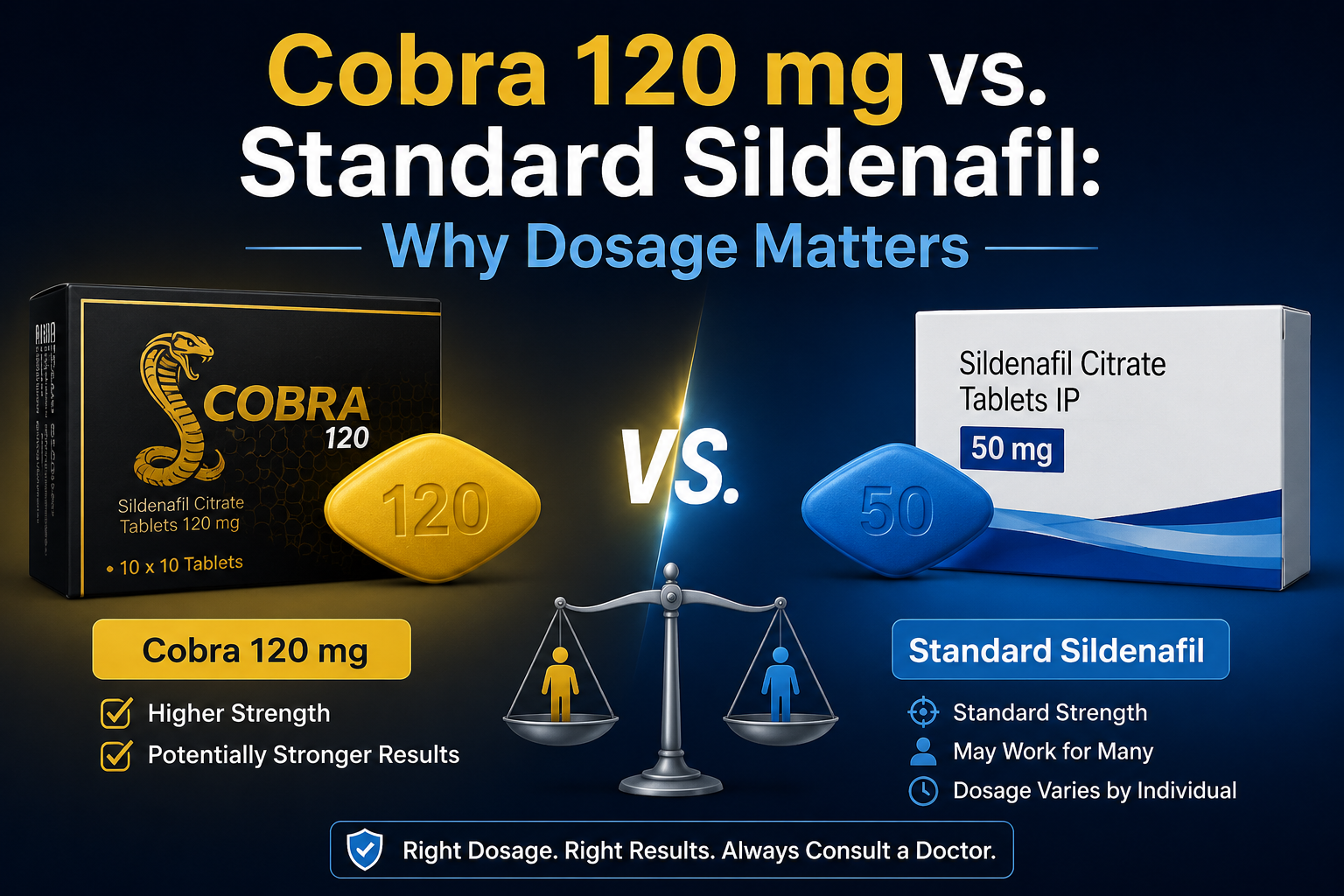
Cobra 120 mg vs. Standard Sildenafil: Why Dosage Matters
An in-depth, evidence-based exploration of high-dose sildenafil, therapeutic thresholds, safety profiles, and optimizing treatment for erectile dysfunction.
Phosphodiesterase type 5 (PDE5) inhibitors have fundamentally transformed the therapeutic landscape for erectile dysfunction (ED) over the past three decades. Among these, sildenafil citrate remains the most widely studied, prescribed, and clinically verified compound. For the vast majority of men, the traditional dosing spectrum ranging from 25 mg to 100 mg provides highly effective, reliable results. However, a significant clinical subset of patients experiences insufficient therapeutic responses to standard regimens, leading to interest in advanced, high-dose alternatives like Cobra 120 mg.
When standard options fall short, understanding the biochemical differences, absorption mechanics, and physiological thresholds of an elevated dosage becomes essential. This comprehensive analysis evaluates the pharmacological transition from standard sildenafil thresholds to the customized 120 mg profile of Cobra. We explore how dose escalation impacts erectile tissues, who can safely benefit from a 120 mg regimen, and the vital safety boundaries required to prevent adverse reactions.
Key Pharmacological Takeaway: Cobra 120 mg is not a distinct chemical molecule; it contains the exact same active pharmaceutical ingredient (API)—sildenafil citrate—found in standard formulations, but delivers an optimized 20% increase in dosage above the standard clinical ceiling of 100 mg.
1. The Core Pharmacology of Sildenafil Citrate
To evaluate why a dosage adjustment from 100 mg to 120 mg alters clinical outcomes, it is necessary to examine the underlying cellular physiology of an erection. Penile tumescence is driven by a precise hemodynamic process regulated by the non-adrenergic, non-cholinergic (NANC) nerve terminals and the vascular endothelium.
During sexual stimulation, the local release of nitric oxide (NO) diffuses into the smooth muscle cells of the corpus cavernosum. This gas activates the enzyme guanylate cyclase, which catalyzes the conversion of guanosine triphosphate (GTP) into cyclic guanosine monophosphate (cGMP). Elevated cGMP acts as a secondary intracellular messenger, triggering protein kinase activation, decreasing intracellular calcium levels, and prompting profound smooth muscle relaxation. This relaxation allows blood to flow into the cavernous sinuses, compressing the emissary veins and trapping blood to maintain rigidity.
The role of sildenafil is to selectively inhibit the phosphodiesterase type 5 (PDE5) enzyme, which is responsible for the degradation and breakdown of cGMP. By blocking PDE5, sildenafil preserves higher concentrations of cGMP within the corpus cavernosum, strengthening and extending the natural erectile response. According to clinical data published via the National Institutes of Health (NIH), sildenafil behaves strictly as an amplifier of an active pathway; without manual or psychological sexual stimulation to initiate the initial release of nitric oxide, the molecular chain reaction remains dormant.
2. Standard Dosing Limits vs. Cobra 120 mg
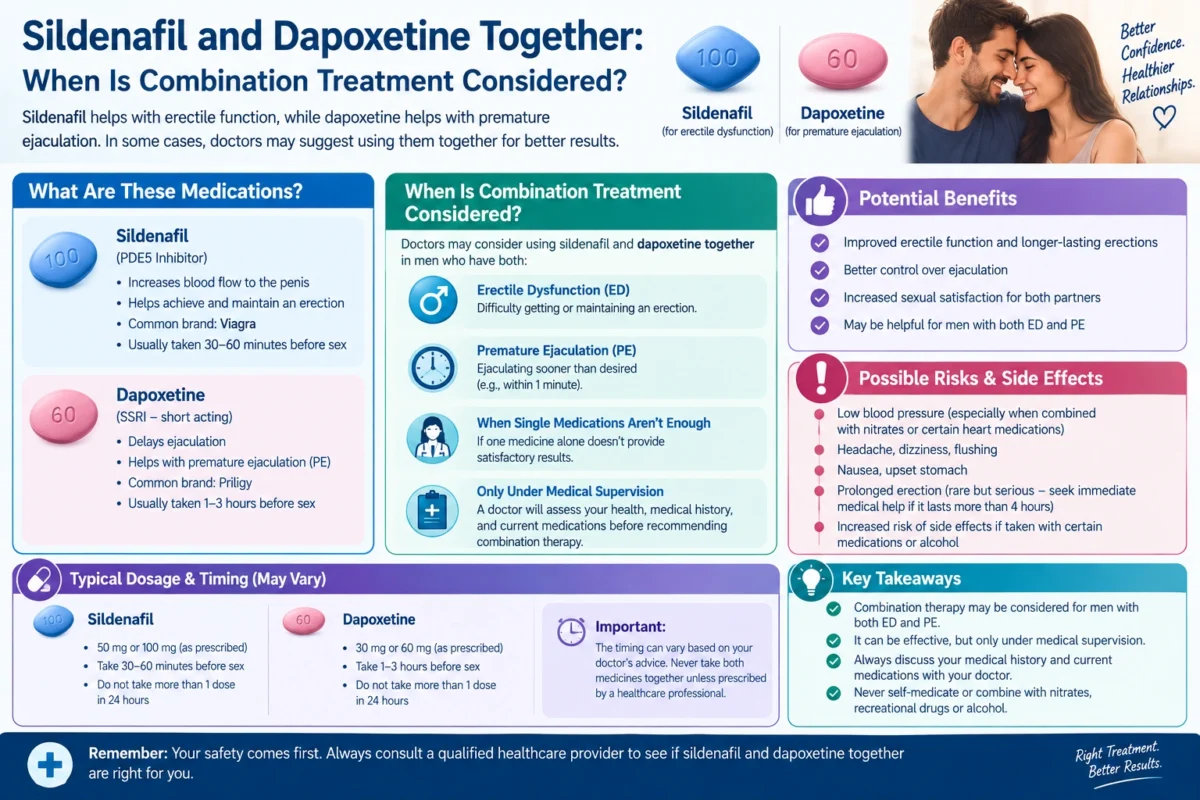
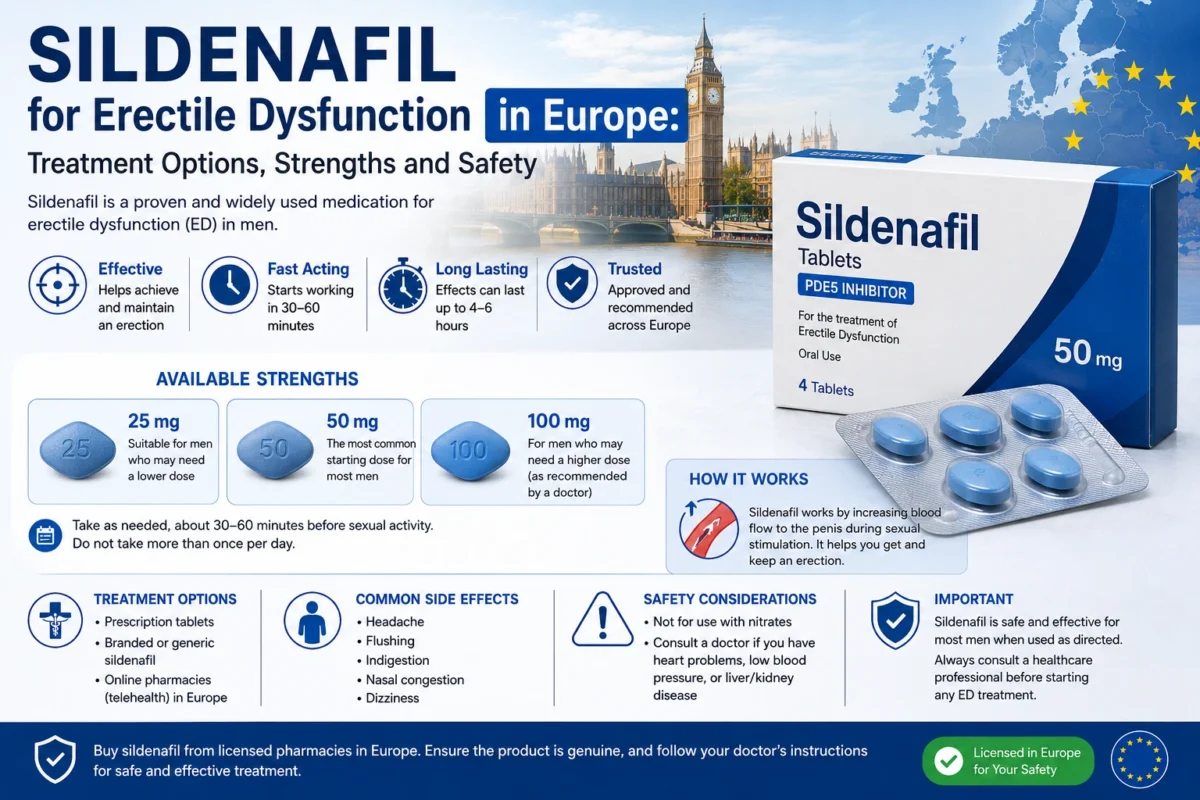
When sildenafil was initially authorized for public use, clinical developers established fixed dose tiers based on broad population averages. These classic options include:
- 25 mg: Typically designated as a conservative starter dose for elderly patients, individuals with mild renal or hepatic impairment, or those taking mild CYP3A4 inhibitors.
- 50 mg: The universally recognized baseline starting dose for the general adult population, balancing initial efficacy against a low incidence of side effects.
- 100 mg: The traditional maximum approved daily cap, utilized when the 50 mg tier yields an incomplete or unsustainable erectile response.
While the 100 mg limit successfully assists up to 80% of patients experiencing mild-to-moderate psychogenic or organic ED, it occasionally proves insufficient for complex, deep-seated vascular or structural issues. This clinical gap led to the development of specialized alternatives like Cobra 120 mg.
Cobra 120 mg steps outside the standard configuration by introducing an extra 20 mg of sildenafil citrate per tablet. This targeted increase aims to overcome receptor resistance, down-regulated nitric oxide pathways, or accelerated enzymatic degradation profiles that render lower options less effective. It is grouped within a broader therapeutic ecosystem designed specifically for advanced erectile dysfunction management, offering a stronger option before transitioning to more invasive therapies like intracavernosal injections or penile implants.
3. Why Dosage Matters: The Mechanics of Dose Responsiveness
The concept of dose responsiveness dictates that as the concentration of an active compound rises within the plasma, the systemic receptor occupancy climbs proportionally until hitting a saturation plateau. Pharmacokinetic assessments show that sildenafil demonstrates a highly predictable, linear dose-proportionality up to and exceeding 100 mg. As a result, moving to a 120 mg dose shifts key metrics like Peak Plasma Concentration ($C_{max}$) and Area Under the Curve ($AUC$), which measures overall systemic exposure.
| Pharmacokinetic Feature | Standard Sildenafil (50mg – 100mg) | Cobra Sildenafil (120mg) | Clinical Implications |
|---|---|---|---|
| Enzymatic Saturation | Partial to high inhibition of local PDE5 receptors. | Maximal saturation of corporate cavernosum PDE5. | Overcomes severe receptor resistance or high degradation rates. |
| Onset Windows | Typically 30 to 60 minutes post-ingestion. | Slightly accelerated onset (25 to 45 minutes). | Higher initial bio-availability speeds up systemic absorption. |
| Therapeutic Rigidity | Sufficient for mild to moderate vascular compromise. | Enhanced baseline firmness for organic ED cases. | Provides necessary support when lower doses produce incomplete results. |
| Duration of Action | 4 to 5 hours standard half-life ($t_{1/2}$). | Extended efficacy window up to 5 to 6 hours. | Maintains active plasma levels above threshold for a longer period. |
The primary advantage of a 120 mg dose lies in its ability to achieve total enzymatic blockade in individuals with impaired vascular systems. In conditions where systemic nitric oxide production is severely diminished—such as advanced metabolic syndrome or endothelial dysfunction—lower doses may leave a fraction of PDE5 active. That remaining enzyme continues to clear cGMP, causing the erection to fade early. The extra 20 mg provided by Cobra 120 mg helps suppress this residual enzymatic activity, keeping intracellular cGMP levels high enough to sustain an erection.
4. Identifying Candidates for Cobra 120 mg
Cobra 120 mg is an advanced formulation developed for specific clinical scenarios. It is not intended as an introductory option for individuals experiencing occasional or mild symptoms. Candidates who may benefit from this higher dosage tier under medical supervision include:
Non-Responders to Standard Limits
Patients who have consistently utilized genuine 100 mg sildenafil formulations across multiple attempts with proper sexual stimulation, yet failed to achieve sufficient penile rigidity for intercourse.
Severe Organic ED Profiles
Men whose ED stems from clear structural or organic origins, including advanced arterial insufficiency, severe nerve damage, or microvascular damage related to long-term type 2 diabetes.
Post-Prostatectomy Patients
Individuals recovering from radical pelvic surgeries where nerve-sparing techniques were incomplete. These cases often require higher systemic drug concentrations to stimulate the remaining neural pathways.
Conversely, specific populations must avoid this elevated dose due to clearance limitations. For example, older adults (aged 65 and above) show a reduced clearance rate for sildenafil, leading to plasma concentrations up to 40% higher than those seen in younger cohorts for the same dose. For these individuals, a 120 mg dose can inadvertently create systemic exposure equivalent to nearly 170 mg, significantly increasing the risk of adverse reactions.
5. Safety Profiles, Adverse Reactions, and Contraindications
While an increased dose can enhance therapeutic efficacy, it also alters the medication’s safety profile. Sildenafil’s selectivity for PDE5 is highly refined, but it still interacts mildly with related isoenzymes located throughout other bodily tissues. Higher systemic concentrations can amplify these off-target interactions, turning minor side effects into more pronounced clinical challenges.
Common Off-Target Interactions
- PDE6 Inhibition (Ocular Tissues): Found in the retina, cross-activation of PDE6 at higher doses can disrupt phototransduction, causing temporary vision changes such as a mild blue tint, increased light sensitivity, or blurred vision.
- PDE1 Inhibition (Cardiovascular System): Present within vascular smooth muscle and myocardium, cross-activation can trigger systemic vasodilation, resulting in facial flushing, nasal congestion, headaches, or mild transient drops in blood pressure.
- PDE11 Inhibition (Skeletal Muscle): Though less common with sildenafil than other PDE5 inhibitors, high doses can occasionally cause mild lower back pain or myalgia.
Absolute Contraindication & Nitrate Warning: Sildenafil directly amplifies the hypotensive properties of organic nitrates. Co-administration of Cobra 120 mg alongside prescription nitrates (such as nitroglycerin, isosorbide mononitrate, or amyl nitrite) is strictly prohibited. According to official treatment guidelines from the American Urological Association (AUA), combining these compounds can cause an unpredictable, severe drop in blood pressure, potentially leading to syncope, myocardial infarction, or stroke.
Evaluating the Risk of Priapism
Priapism is a rare but critical medical emergency defined as a prolonged, painful erection lasting longer than four hours without ongoing sexual stimulation. This condition occurs when oxygen-depleted blood becomes trapped within the cavernous structures, running the risk of causing irreversible tissue necrosis and permanent erectile dysfunction if left untreated. While the absolute incidence rate remains low, the probability increases when utilizing high-potency formulations like Cobra 120 mg. Any patient experiencing a continuous erection approaching the four-hour mark must seek immediate emergency medical care.
6. Practical Guide: Maximizing Treatment Efficacy Safely
To maximize the clinical benefit of Cobra 120 mg while minimizing the risk of adverse events, proper administration protocols are essential. Suboptimal timing or dietary conflicts are common reasons patients experience reduced efficacy, leading them to assume a medication has failed.
- Timing and Absorption Window: Administer the single tablet roughly 45 to 60 minutes prior to intended sexual activity. Peak plasma levels are typically achieved within one hour under fasting conditions, giving the medication its optimal window of activity.
- Dietary Considerations: Take the medication on an empty stomach or after a light meal. Consuming a high-fat meal immediately before ingestion can delay absorption by up to an hour and reduce the peak plasma concentration ($C_{max}$) by approximately 29%, lowering its overall effectiveness.
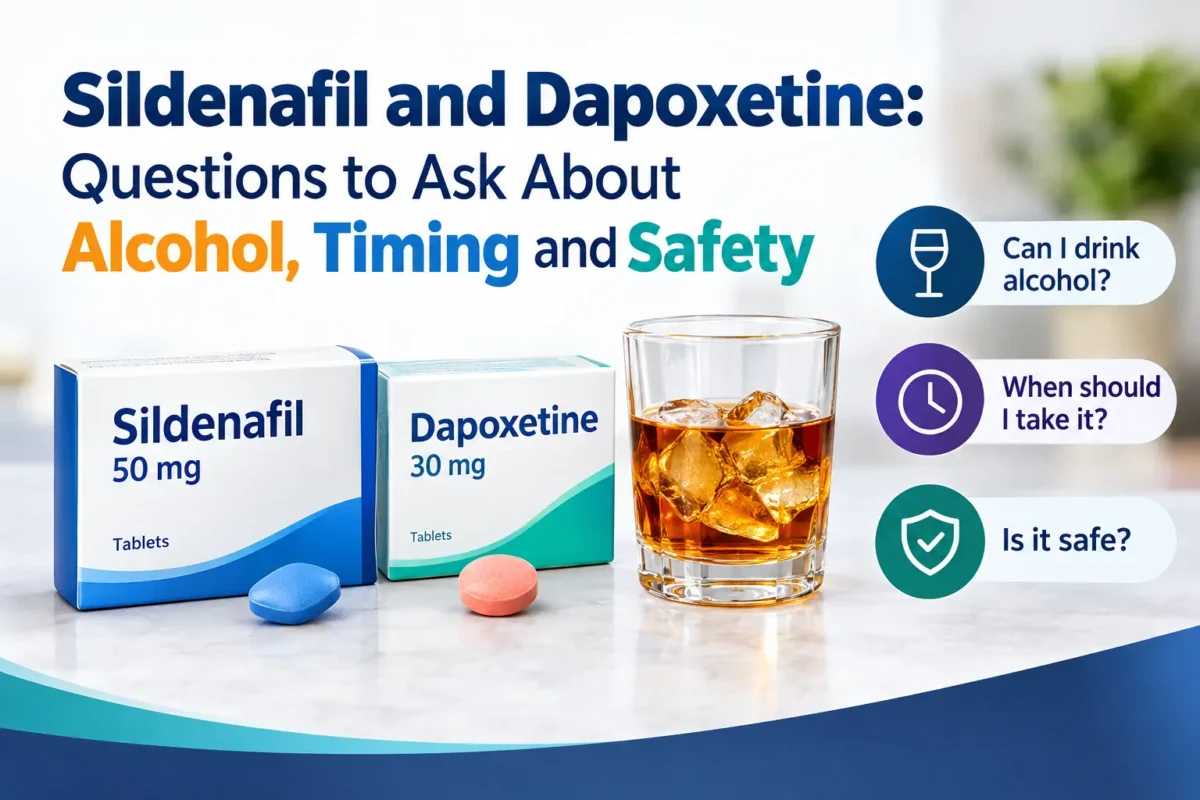
- Avoiding Alcohol Interaction: Minimize or avoid alcohol consumption when planning to take this medication. Alcohol acts as a mild vasodilator and central nervous system depressant; combining it with 120 mg of sildenafil increases the risk of orthostatic hypotension (dizziness upon standing) and can be counterproductive to maintaining an erection.
- Adhering to Frequency Limits: Never exceed a maximum dosing frequency of one tablet per 24 hours. Because the 120 mg formulation delivers an elevated dose, your body requires adequate time to metabolize and clear the compound before another dose is introduced.
7. Conclusion & Summary Matrix
The choice between standard sildenafil options and specialized high-dose formulations like Cobra 120 mg should guide patients toward an optimized, balanced therapeutic outcome. When standard options no longer provide adequate support, step-up dosing can help restore natural function, reduce performance anxiety, and improve overall quality of life.
However, an increased dosage requires careful attention to safety boundaries. Cobra 120 mg represents an effective tool for overcoming partial treatment resistance, but its use should be integrated into a comprehensive health strategy managed alongside a healthcare professional. Ensuring proper timing, monitoring cardiovascular readiness, and respecting contraindications allow patients to navigate advanced ED therapy safely, predictably, and successfully.