Glyburide/Glibenclamide-Metformin 5 Mg/500 Mg Tablets
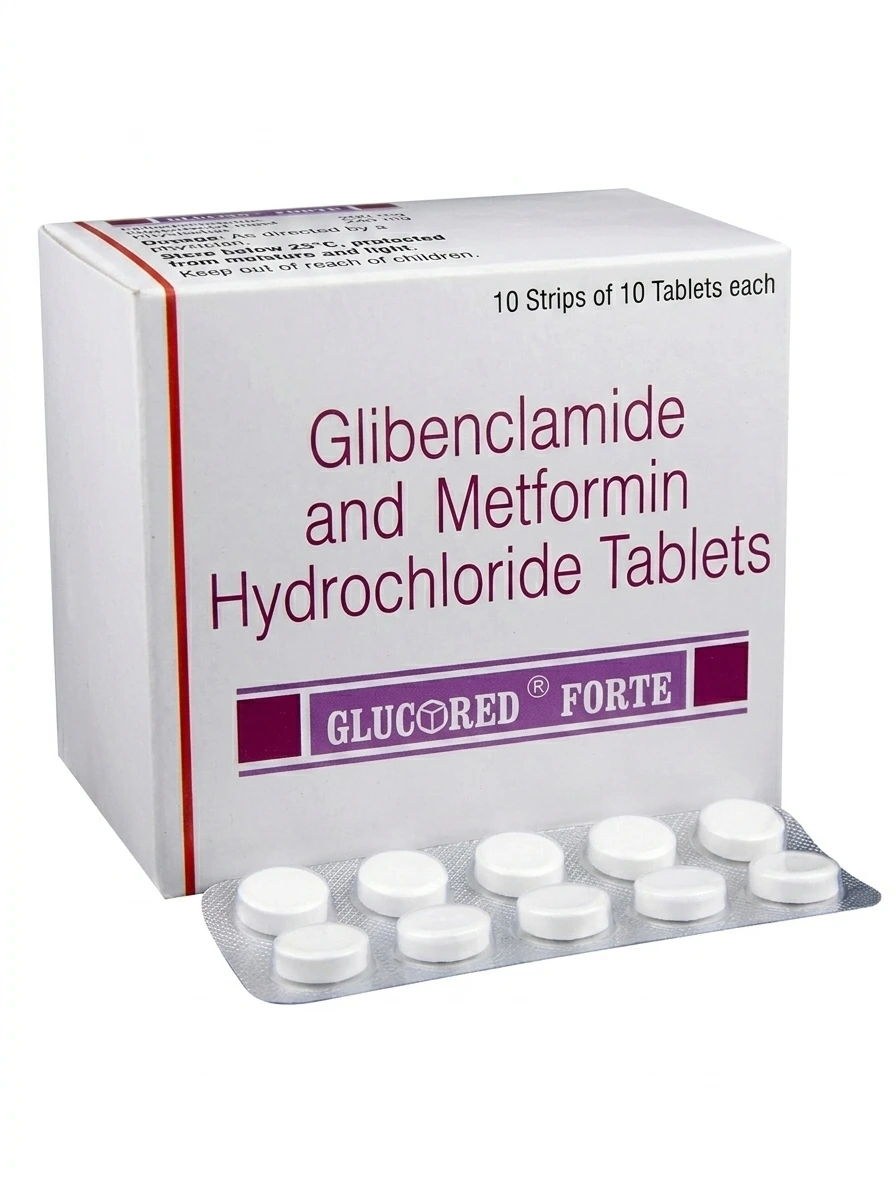
Glyburide/Glibenclamide-Metformin 5 Mg/500 Mg is an oral combination
diabetes medicine containing glyburide (also called glibenclamide) and
metformin hydrochloride. It combines two different glucose-lowering
mechanisms and is used, together with diet and exercise, to improve
glycemic control in adults with type 2 diabetes mellitus when prescribed
by an appropriate healthcare professional.
Glyburide 5 Mg
Metformin 500 Mg
Type 2 Diabetes
Prescription Medicine
Active Ingredients
Glyburide + Metformin
Drug Classes
Sulfonylurea + Biguanide
What Is Glyburide/Glibenclamide-Metformin 5 Mg/500 Mg?
Glyburide/Glibenclamide-Metformin 5 Mg/500 Mg is a
combination oral medicine for adults with type 2 diabetes. Each tablet
contains 5 mg of glyburide and 500 mg of metformin hydrochloride.
Glyburide is a sulfonylurea, while metformin belongs to the biguanide
class.
Current prescribing information lists 5 mg glyburide/500 mg metformin as
one of the available combination strengths. The medicine is intended as
an adjunct to diet and exercise to improve blood glucose control in adults
with type 2 diabetes.
Because this combination contains two glucose-lowering medicines, the
appropriate dose depends on previous treatment, blood glucose control,
kidney function, tolerability, and other individual factors.
How Does Glyburide and Metformin Work?
The two ingredients work through different mechanisms. Glyburide
stimulates pancreatic beta cells to release insulin, helping lower blood
glucose. Because it increases insulin secretion, it can also cause
hypoglycemia if the glucose-lowering effect becomes too strong.
Metformin works primarily by reducing hepatic glucose
production and improving insulin sensitivity. It does not stimulate insulin
secretion in the same way as glyburide.
Combining the two medicines can provide complementary glucose-lowering
effects, but it also means that the safety considerations of both medicines
need to be taken into account.
What Is Glyburide-Metformin Used For?
Glyburide and metformin tablets are indicated as an adjunct to diet and
exercise to improve glycemic control in adults with type 2 diabetes
mellitus.
The combination may be considered when treatment with either glyburide or
metformin alone does not provide adequate blood glucose control, or when
a patient already receiving both medicines is transitioned to a fixed-dose
combination under medical supervision.
Important:
This medicine is not used to treat type 1 diabetes or diabetic
ketoacidosis. It should be used only for the indication and treatment
plan established by a healthcare professional.
Explore Diabetes Medicines
Learn more about medicines and treatments commonly used as part of
diabetes management:
Diabetes
Metformin 500 Mg
Metformin is also available as a single-ingredient tablet. If you are
looking for a formulation containing metformin 500 mg alone, explore:
Metformin Tablets 500 Mg
Glyburide-Metformin vs Metformin Alone
Metformin alone contains one glucose-lowering ingredient, whereas
glyburide-metformin combines metformin with a sulfonylurea. This distinction
is important because glyburide adds an insulin-stimulating effect and can
increase the risk of hypoglycemia.
| Feature |
Glyburide/Metformin |
Metformin Alone |
| Active ingredients |
Glyburide + Metformin |
Metformin |
| Insulin secretion |
Glyburide stimulates insulin release |
Does not directly stimulate insulin secretion |
| Hypoglycemia risk |
Can be significant because of glyburide |
Generally lower when used alone |
| Treatment choice |
Individualized medical decision |
Individualized medical decision |
Dosage and Administration
The exact dose of glyburide-metformin must be individualized. Current
labeling states that combination tablets are given in divided doses
twice daily with meals. For patients inadequately
controlled on glyburide or metformin alone, 2.5 mg/500 mg or 5 mg/500 mg
may be used as starting combination strengths depending on the previous
treatment regimen and clinical circumstances.
The 5 mg/500 mg strength should not be selected simply because it contains
a larger amount of glyburide. Patients who are new to both medicines may
require a different initial formulation and dose to reduce the risk of
hypoglycemia.
Take the medicine exactly as prescribed and with meals as directed. Do not
increase or decrease the dose without medical advice.
Hypoglycemia: An Important Safety Consideration
Because glyburide is a sulfonylurea that stimulates insulin release,
hypoglycemia can occur and may sometimes be severe.
The risk can be higher in older adults, people with impaired kidney
function, people who skip meals, or patients taking other glucose-lowering
medicines.
Symptoms of low blood glucose may include sweating, shakiness, hunger,
dizziness, weakness, confusion, rapid heartbeat, or difficulty concentrating.
Severe hypoglycemia can cause loss of consciousness or seizures.
Patients should follow their healthcare professional’s instructions for
recognizing and managing low blood glucose and should not intentionally
skip meals after taking the medicine.
Metformin and the Risk of Lactic Acidosis
Metformin carries a boxed warning for the rare but serious risk of
metformin-associated lactic acidosis. Risk is increased
in certain situations, including significant kidney impairment, some
hypoxic conditions, hepatic impairment, excessive alcohol intake, and
certain medical procedures or drug interactions.
Current labeling recommends assessing kidney function before treatment
and periodically thereafter. Glyburide-metformin should not be used in
patients with an eGFR below 30 mL/min/1.73 m², and initiation is not
recommended when eGFR is between 30 and 45 mL/min/1.73 m².
Seek urgent medical care:
Unusual weakness, severe breathing difficulty, persistent abdominal
symptoms, unusual sleepiness, or other serious symptoms should receive
prompt medical evaluation.
Kidney Function and Glyburide-Metformin
Kidney function is particularly important when using this combination
because metformin accumulation can increase the risk of lactic acidosis,
while impaired renal function can also increase the risk of prolonged
hypoglycemia from glyburide.
Healthcare professionals should assess kidney function before initiating
treatment and periodically during therapy. Current labeling specifically
advises against use below an eGFR of 30 mL/min/1.73 m².
Possible Side Effects
Gastrointestinal effects associated with metformin can include diarrhea,
nausea, abdominal discomfort, and other digestive symptoms. These effects
may be more noticeable when treatment is initiated.
Glyburide can cause hypoglycemia, which is one of the most important
adverse effects to understand when using this combination. Other reactions
may include weight gain and, less commonly, hypersensitivity reactions or
hematologic abnormalities.
Metformin may also reduce vitamin B12 levels, particularly with prolonged
use, so appropriate clinical monitoring may be considered when indicated.
Precautions and Important Safety Information
- Use glyburide-metformin only under the supervision of a qualified
healthcare professional.
- Tell your doctor if you have kidney disease, liver disease, heart
problems, or a history of severe hypoglycemia.
- Avoid excessive alcohol because alcohol can increase the risk associated
with metformin’s effects on lactate metabolism.
- Inform your healthcare professional about all prescription medicines,
over-the-counter products, and supplements you take.
- Tell your healthcare professional before an imaging procedure involving
iodinated contrast because metformin-containing therapy may need to be
temporarily discontinued.
- Older adults may require closer monitoring of kidney function.
- Patients with hepatic impairment should discuss alternative treatment
options with their healthcare professional because current labeling
advises avoiding glyburide-metformin in hepatic impairment.
Role of Diet, Exercise and Blood Glucose Monitoring
Glyburide-metformin is intended to be used alongside diet and exercise,
not as a replacement for diabetes self-management. Regular blood glucose
monitoring may help the healthcare professional determine whether the
treatment is providing adequate control and whether adjustments are needed.
Maintaining regular meals is particularly important when taking a medicine
containing glyburide because skipping meals can contribute to low blood
glucose.
For detailed prescribing information covering indications, dosage,
contraindications, warnings, renal considerations, hypoglycemia, lactic
acidosis, and drug interactions, consult the current official
glyburide/metformin labeling.
DailyMed – Glyburide and Metformin Hydrochloride Tablets
Frequently Asked Questions About Glyburide/Metformin 5 Mg/500 Mg
1. What is Glyburide/Metformin 5 Mg/500 Mg used for?
Glyburide/Metformin 5 Mg/500 Mg is an oral combination medicine used,
together with diet and exercise, to improve blood glucose control in
adults with type 2 diabetes mellitus. It combines glyburide, a
sulfonylurea, with metformin, a biguanide.
2. Is Glyburide/Metformin 5 Mg/500 Mg the same as taking both medicines separately?
The combination tablet contains the same two active ingredients,
glyburide and metformin, in a fixed strength. However, treatment
decisions should account for the patient’s previous doses, blood glucose
control, kidney function, and tolerability. A fixed-dose combination
should not be substituted for separately prescribed medicines without
professional guidance.
3. Can Glyburide/Metformin cause low blood sugar?
Yes. Glyburide increases insulin secretion and can cause hypoglycemia,
which may sometimes be severe. The risk can be greater when meals are
skipped, kidney function is impaired, or other glucose-lowering medicines
are taken at the same time.
4. Why is kidney function important with Glyburide/Metformin?
Kidney function affects the safety of both components. Metformin
accumulation can increase the risk of lactic acidosis, while impaired
kidney function can increase exposure to glyburide and contribute to
prolonged hypoglycemia. Current labeling says not to use the combination
when eGFR is below 30 mL/min/1.73 m².
5. Should Glyburide/Metformin 5 Mg/500 Mg be taken with food?
Yes. Current prescribing information directs glyburide/metformin tablets
to be given in divided doses with meals. Taking the medicine as prescribed
with meals can also help reduce gastrointestinal effects associated with
metformin and is important because glyburide can cause low blood glucose.
Medical Disclaimer
This product description is provided for general educational and
informational purposes only. It does not replace professional medical
advice, diagnosis, or treatment. Glyburide/metformin is a prescription
diabetes medicine and should be used only according to an individualized
treatment plan. Do not change the dose, skip prescribed monitoring, or
combine this medicine with other glucose-lowering treatments without
consulting a qualified healthcare professional.










Reviews
There are no reviews yet.