Description
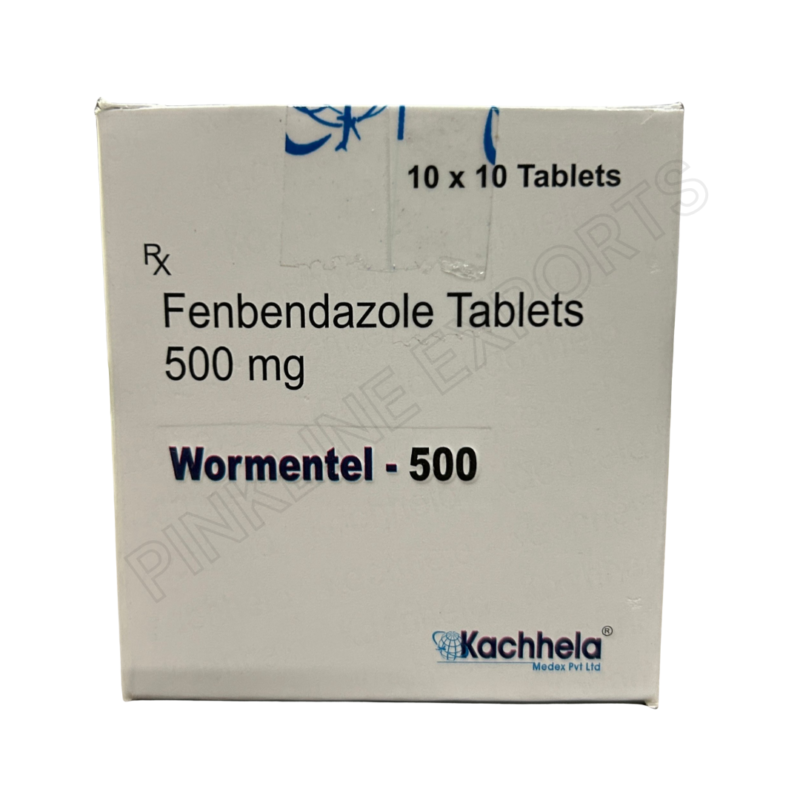
Fenbendazole 1000 Mg – Wormentel
Overview
Wormentel (Fenbendazole 1000 mg) contains fenbendazole, a benzimidazole-class anthelmintic (anti-parasitic) compound originally developed and approved for veterinary use against gastrointestinal worms. In recent years it has drawn attention outside its approved use as researchers investigate its effects on cancer cells in laboratory and animal studies. This page is intended for buyers researching fenbendazole’s approved use, its mechanism, and the current state of off-label cancer research — not as medical advice or a treatment recommendation. Buyers researching lower-strength options can also see Fenbendazole 444 mg Tablets and Fenbendazole 222 mg Tablets elsewhere on the site.
Why Fenbendazole
Fenbendazole is a broad-spectrum benzimidazole anthelmintic that works by binding to beta-tubulin in parasite cells, blocking microtubule formation and disrupting the parasite’s ability to absorb nutrients, which leads to its death. It is FDA-approved for veterinary use and is well characterized for its safety profile in animals across decades of use. Its low cost, off-patent status, and long safety record are the main reasons it has been picked up by researchers looking to repurpose existing drugs for new applications, including oncology, where large-scale funding for a molecule with no patent life is hard to secure. It is not approved for human use in most jurisdictions, and pharmacokinetic data specific to humans remains limited. For a side-by-side look at fenbendazole against a related benzimidazole, see our article on Mebendazole vs Fenbendazole for Cancer.
How It Works (Mechanism of Action)
Fenbendazole’s core mechanism is disruption of microtubules — the structural scaffolding cells use to divide and transport material internally — by binding to beta-tubulin, a protein subunit these microtubules are built from. In parasites, this stops cell division and starves the organism. Researchers studying fenbendazole in cancer cell lines have proposed that a similar disruption of microtubule dynamics, combined with other reported effects — including inhibition of glycolysis, down-regulation of glucose uptake, induction of oxidative stress, and enhanced apoptosis, as described in a 2024 pharmacokinetic and mechanistic review published in Anticancer Research (Nguyen et al., 2024) — may interfere with rapidly dividing cancer cells in a comparable way. A 2025 study in the International Journal of Molecular Sciences (MDPI) frames the underlying hypothesis as resting on shared biological traits between tumors and parasites, including reliance on glycolysis for energy and comparable immune-evasion strategies. This overlap in cell biology is the basis for ongoing preclinical research, not a confirmed clinical mechanism in humans.
Evidence & Current Research Standing
It’s important to be direct about where the science actually stands:
What has been studied: Multiple in vitro (cell line) and in vivo (animal model) studies published between 2024–2025 have examined fenbendazole’s anti-tumor activity. Yang et al., writing in BMC Cancer (2024), reported transcriptome-level anticancer effects of fenbendazole in ovarian cancer models. A separate 2025 paper in Frontiers in Pharmacology reported that fenbendazole induced pyroptosis and inhibited glycolysis via HK2 downregulation in breast cancer cells. And a 2025 study in Translational Lung Cancer Research (Nguyen et al.) found a synergistic anti-tumor effect when fenbendazole was combined with diisopropylamine dichloroacetate in a lung cancer mouse model, with the treatment reported as safe and showing no adverse effects on body weight, blood sugar, or liver and kidney function in that study.
What has not been studied: The 2024 Anticancer Research review by Nguyen, Nguyen, Han, and Hoang notes that fenbendazole’s human pharmacokinetic profile remains poorly characterized, and because it is not approved for human use, available pharmacokinetic data in people is limited — current understanding is based largely on animal studies. A separate 2025 review published via SciQST concluded that most supporting evidence still comes from in vitro and animal models, and that clinical trials are needed to determine safety, efficacy, and dosing in humans.
What’s anecdotal: Human-use reports exist primarily as informal case series and self-reported accounts rather than controlled studies. A 2025 compilation published by OneDayMD reviewed roughly 170 such anecdotal case reports, but its own editors caution that most supporting evidence comes from preclinical studies rather than randomized controlled trials, and that mainstream oncologists are likely to view the material skeptically for that reason. There are no completed randomized controlled clinical trials in humans establishing fenbendazole as a safe or effective cancer treatment. Older research, published in PMC (National Institutes of Health), found no evidence that fenbendazole altered tumor growth or added to the effects of radiation in the specific mouse model tested — a reminder that preclinical results are mixed and model-dependent, not uniformly positive.
In short: laboratory and animal-model interest is real and active, human clinical evidence is not yet established, and anecdotal reports should not be read as proof of efficacy.
Who It’s For / Who Should Avoid It
- Researchers and institutions conducting legitimate preclinical or veterinary research
- Veterinary use in accordance with approved labeling and dosing for the target species
- Not intended for self-directed human cancer treatment outside a clinical trial or physician supervision
- Should be avoided by pregnant or breastfeeding individuals unless directed by a qualified professional
- Should be avoided by anyone with known hypersensitivity to benzimidazole compounds
- Individuals with pre-existing liver disease should exercise caution, as benzimidazoles are hepatically metabolized
- Anyone currently taking other hepatically metabolized medications should consult a doctor or pharmacist first, given the potential for drug interactions
- Not a substitute for professional medical or veterinary diagnosis
- Consult a physician before combining with any existing prescription regimen, including chemotherapy
Can It Replace Standard Treatment?
No. Fenbendazole is not an approved cancer therapy in humans and should not be used as a replacement for conventional, evidence-based cancer treatment such as chemotherapy, radiation, surgery, or physician-directed protocols. Where it appears in ongoing research, it is being explored as a potential adjunct or a candidate for further study — not as a validated alternative. Readers interested in how a related benzimidazole is discussed in integrative protocols can see Mebendazole for Cancer Treatment: Human Protocol, Dosage Cycles, and Detox Binders. Anyone considering fenbendazole alongside an existing treatment plan should discuss this with their treating physician first, given the possibility of drug interactions and the absence of human dosing data.
Product Highlights
- 1000 mg tablet format for consistent, measurable dosing
- Manufactured under standard quality-controlled production processes
- Sealed packaging for product integrity during international shipping
- Batch-tested for identity and purity
- Available for bulk and wholesale export order quantities
- Backed by responsive customer support for order and documentation queries
- Competitive export pricing for international buyers
- Documentation available to support customs and import compliance
FAQ
Is fenbendazole FDA-approved for human use? No. Fenbendazole is FDA-approved for veterinary use only. Any human use, including for cancer research purposes, is off-label and not currently backed by completed human clinical trials.
How does fenbendazole compare to mebendazole for cancer research? Both are benzimidazole anthelmintics with a similar proposed mechanism — disrupting microtubule formation in target cells. They are often discussed together in the same body of preclinical cancer research; see our comparison article for more detail.
Can I take fenbendazole instead of chemotherapy? No. There is no completed human clinical trial establishing fenbendazole as an effective substitute for standard cancer treatment. It should not be used to replace a physician-directed treatment plan.
What is the proposed mechanism behind fenbendazole’s anticancer research interest? Researchers point to its ability to bind beta-tubulin and disrupt microtubule dynamics, along with reported effects on glucose metabolism and cell death pathways in cancer cell lines, though these findings are largely from lab and animal studies rather than humans.
Are there human clinical trials underway? Multiple review papers published in 2024–2025, including the Anticancer Research review by Nguyen et al., call for clinical trials but note that few, if any, completed randomized controlled trials in humans currently exist. Researchers cite funding challenges as a key barrier, since fenbendazole is off-patent and low-cost.
Is fenbendazole safe? In animals, fenbendazole has a well-established veterinary safety profile at approved doses. Human safety data at doses and durations relevant to off-label use is limited, which is why medical supervision is recommended for anyone considering it outside its approved veterinary use.
Does fenbendazole interact with other medications? It may interact with other hepatically metabolized drugs. Anyone on an existing medication regimen should consult a doctor or pharmacist before combining fenbendazole with other treatments.
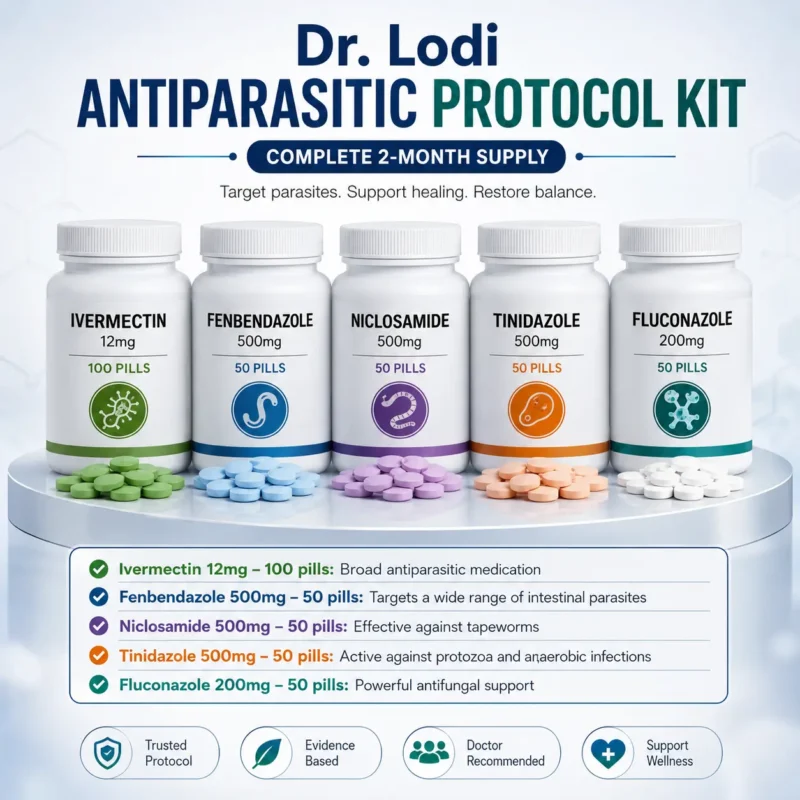
How does the 1000 mg strength differ from lower-strength tablets? The 1000 mg tablet is a higher-strength format of the same active ingredient available in our 222 mg and 444 mg tablets, and in combination form within the Dr. Lodi Antiparasitic Protocol Kit. Strength selection should be guided by a healthcare provider or the intended research protocol.
Storage Instructions
Store in a cool, dry place away from direct sunlight, at room temperature (below 30°C / 86°F). Keep tablets in their original sealed packaging until use. Keep out of reach of children. Do not use after the expiration date printed on the packaging.
Related Products & Reading
Disclaimer
Fenbendazole 1000 Mg (Wormentel) is not approved by the FDA or equivalent regulatory bodies for the treatment, cure, or prevention of cancer or any human disease. The research referenced on this page reflects preclinical (in vitro and animal model) findings and anecdotal reports; it does not constitute clinical proof of safety or efficacy in humans, and no completed randomized controlled human trials currently support cancer-related use. This product is sold for research, veterinary, and export purposes in accordance with applicable regulations in the buyer’s jurisdiction. It is not intended to diagnose, treat, cure, or prevent any disease, and should not be used as a substitute for consultation with a licensed physician or oncologist. Buyers are responsible for ensuring compliance with the import, sale, and use regulations of their own country.







Reviews
There are no reviews yet.