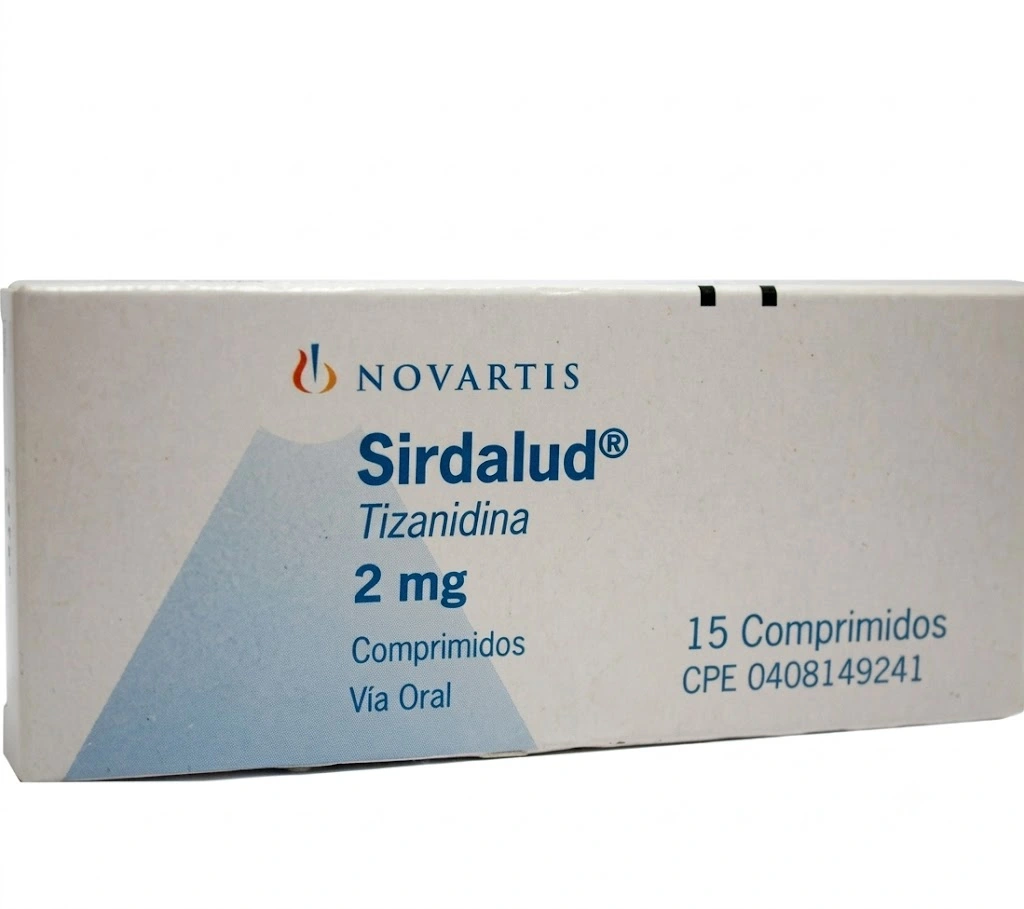
Sirdalud 2 Mg Tablet (Tizanidine) – Central Alpha-2 Adrenergic Skeletal Muscle Relaxant
Sirdalud 2 Mg Tablet (Tizanidine) is an oral centrally acting skeletal muscle relaxant indicated for the acute and intermittent management of spasticity associated with neurological conditions, such as multiple sclerosis and spinal cord injury, as well as painful acute musculoskeletal spasms. By selectively agonizing central presynaptic alpha-2 adrenergic receptors, it enhances presynaptic inhibition of motor neurons without causing significant generalized muscle weakness.
Tizanidine Hydrochloride
2 Mg
Central Alpha-2 Agonist
Prescription Medicine
Active Ingredient
Tizanidine Hydrochloride
Drug Class
Central Alpha-2 Adrenergic Agonist
Dosage Form
Oral Scored Tablet
What Is Sirdalud 2 Mg?
Sirdalud 2 Mg contains tizanidine hydrochloride, a centrally acting imidazoline-derivative muscle relaxant. It is prescribed for the management of muscle hypertonia, involuntary spasms, and clonus arising from central nervous system disorders or acute painful spinal disorders.
The 2 Mg tablet serves as the standard clinical starting dose. Tizanidine possesses a relatively short elimination half-life (~2.5 hours), with peak therapeutic muscle relaxation occurring within 1 to 2 hours post-dose. This short duration allows clinicians and patients to tailor dosing to specific times of the day when spasm relief and functional mobility are most critical.
Because abrupt discontinuation can precipitate severe rebound hypertension, tachycardia, and hypertonia, Sirdalud therapy must always be tapered slowly under physician supervision when discontinuing treatment.
([dailymed.nlm.nih.gov](https://dailymed.nlm.nih.gov/dailymed/drugInfo.cfm?setid=72f25135-1333-4e52-83f5-7df7d90e68bb))
How Does Sirdalud 2 Mg Work?
Sirdalud acts directly on spinal and supraspinal pathways to modulate excessive motor reflex excitability:
- Alpha-2 Adrenergic Agonism: Tizanidine selectively stimulates presynaptic alpha-2 adrenergic receptors located in the spinal cord dorsal horn and brainstem.
- Inhibition of Excitatory Amino Acids: Agonism of these presynaptic receptors inhibits the vesicular release of excitatory neurotransmitters, specifically glutamate and aspartate, from spinal interneurons.
- Polysynaptic Pathway Suppression: By dampening polysynaptic reflex arcs, it suppresses excessive facilitatory transmission to spinal alpha motor neurons.
This targeted central inhibition reduces spasticity, rigidity, and painful muscle twitches while minimizing the loss of voluntary muscle power and tone essential for postural support.
What Is Sirdalud 2 Mg Used For?
Sirdalud 2 Mg is clinically indicated for the symptomatic control of spasticity and painful muscular contractures in adults:
- Chronic Neurological Spasticity: Relieving muscle stiffness, spasms, and clonus caused by multiple sclerosis (MS) or spinal cord injuries/lesions.
- Post-Stroke Hypertonia: Management of spastic hemiplegia and upper motor neuron syndrome following cerebrovascular accidents.
- Painful Musculoskeletal Spasms: Short-term symptomatic relief of acute muscular spasms associated with spinal syndromes (cervicalgia, lumbago, herniated intervertebral discs).
- Postoperative Musculoskeletal Pain: Adjunctive relief following spinal or orthopedic surgeries under specialist supervision.
Sirdalud is not indicated for treating spasticity in pediatric patients, nor should it be used as a routine sedative-hypnotic.
([dailymed.nlm.nih.gov](https://dailymed.nlm.nih.gov/dailymed/drugInfo.cfm?setid=72f25135-1333-4e52-83f5-7df7d90e68bb))
Related Skeletal Muscle Relaxant
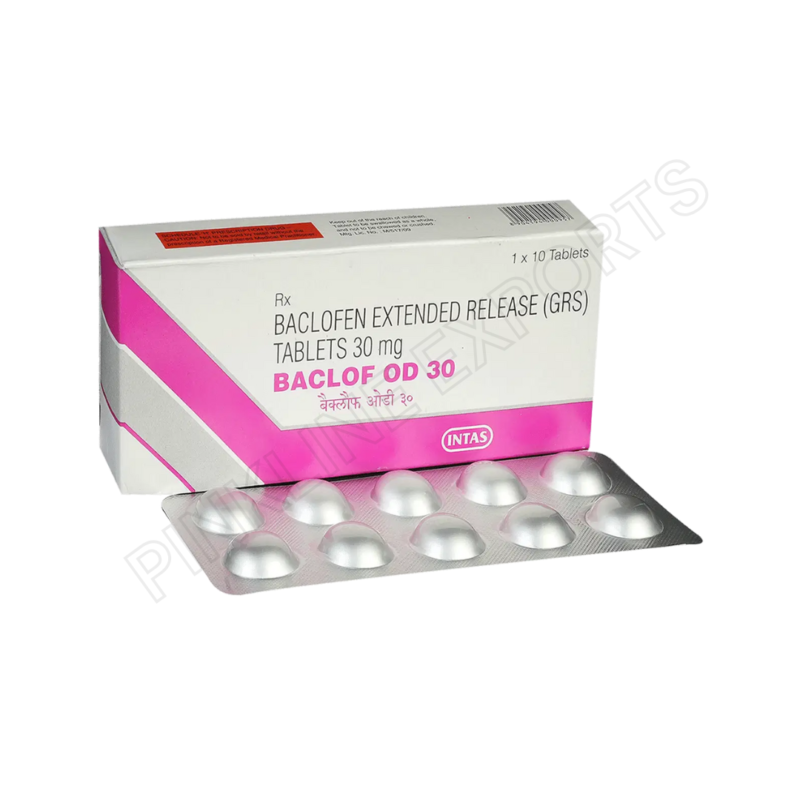
For conditions requiring continuous, around-the-clock GABA-B receptor mediated antispasticity control for chronic neurological conditions, explore our detailed clinical profile on generic baclofen:
Baclofen Tablets 10 Mg – Generic Lioresal
Sirdalud 2 Mg Dosage and Administration
Because tizanidine has a short duration of effect, dosing must be tailored to the timing of activities when spasm relief is most needed:
- Initial Dose: A single oral dose of 2 Mg is recommended as a starting dose to gauge individual sensitivity and minimize hypotensive or sedative reactions.
- Titration Schedule: Dosage may be increased gradually by 2 Mg to 4 Mg per dose every 1 to 4 days, administered at 6- to 8-hour intervals, up to a maximum of 3 doses in 24 hours.
- Maximum Daily Dose: The total daily dose should not exceed 36 Mg per 24 hours.
- Food Consistency: Tizanidine bioavailability differs significantly when taken with food versus in a fasting state. Patients should maintain consistent administration with respect to meals.
Tablets are scored and can be divided if a 1 Mg starting dose is indicated in sensitive or elderly patients.
([dailymed.nlm.nih.gov](https://dailymed.nlm.nih.gov/dailymed/drugInfo.cfm?setid=72f25135-1333-4e52-83f5-7df7d90e68bb))
Important Safety Warning:
Sirdalud can cause significant hypotension, bradycardia, and somnolence. Concomitant use with potent CYP1A2 inhibitors (such as fluvoxamine or ciprofloxacin) is strictly contraindicated due to dramatic increases in drug exposure.
Sirdalud 2 Mg (Tizanidine) vs Baclofen 10 Mg (Generic Lioresal)
Both agents are foundational oral antispasticity medications, but they act on distinct neurochemical receptors and exhibit different clinical features:
| Clinical Parameter |
Sirdalud 2 Mg (Tizanidine) |
Baclofen 10 Mg (Generic Lioresal) |
| Primary Mechanism |
Central Alpha-2 Adrenergic Receptor Agonist |
GABA-B Receptor Agonist |
| Elimination Half-Life |
Short (~2.5 hours; targeted intermittent relief) |
Moderate (~3 to 4 hours; steady daily control) |
| Impact on Muscle Strength |
Less reduction in functional muscle power |
Can produce noticeable generalized muscle weakness |
| Primary Elimination Pathway |
Hepatic (CYP1A2 metabolism) |
Renal (70–80% unchanged in urine) |
| Key Monitoring Parameter |
Blood pressure & Liver Function Tests (ALT/AST) |
Renal function & seizure threshold |
Tizanidine is often preferred when patients rely on baseline muscle tone to stand or transfer, as it preserves voluntary motor strength better than baclofen.
Who Should Not Take Sirdalud 2 Mg?
Sirdalud is contraindicated in patients with specific enzymatic, cardiovascular, or organ-related risk factors:
- Concomitant use of potent CYP1A2 inhibitors: Absolute contraindication with fluvoxamine or ciprofloxacin due to marked drug accumulation and profound hypotension.
- Known hypersensitivity to tizanidine or any tablet excipients (can trigger anaphylaxis or angioedema).
- Severe hepatic impairment or significantly elevated baseline serum transaminases.
- Concurrent therapy with other alpha-2 adrenergic agonists (e.g., clonidine) due to additive cardiovascular depressant effects.
- Pediatric patients under 18 years of age (safety and efficacy have not been established).
Caution is required in elderly patients, patients with pre-existing orthostatic hypotension, and those taking antihypertensive agents.
([dailymed.nlm.nih.gov](https://dailymed.nlm.nih.gov/dailymed/drugInfo.cfm?setid=72f25135-1333-4e52-83f5-7df7d90e68bb))
Possible Side Effects of Sirdalud 2 Mg
The most frequent adverse reactions associated with tizanidine are dose-dependent and relate to its central nervous and cardiovascular actions:
- Common: Somnolence (drowsiness), dry mouth (xerostomia), asthenia (weakness), and dizziness.
- Cardiovascular: Dose-dependent hypotension, orthostatic drops, bradycardia, and syncope.
- Gastrointestinal: Constipation, nausea, and vomiting.
- Hepatic Effects: Asymptomatic, reversible elevations in serum aminotransferases (ALT/AST); rare hepatocellular liver injury.
- Neuropsychiatric (rare): Visual hallucinations, vivid dreams, or psychotic-like symptoms.
Patients should avoid driving or operating machinery until their individual response to Sirdalud’s sedative effects has been established.
([dailymed.nlm.nih.gov](https://dailymed.nlm.nih.gov/dailymed/drugInfo.cfm?setid=72f25135-1333-4e52-83f5-7df7d90e68bb))
Sirdalud 2 Mg Drug Interactions
Tizanidine is extensively cleared via the hepatic cytochrome P450 CYP1A2 metabolic pathway:
Strong CYP1A2 Inhibitors (Contraindicated): Co-administration with fluvoxamine increases tizanidine AUC by 33-fold and peak concentrations by 12-fold. Co-administration with ciprofloxacin increases AUC by 10-fold. These combinations cause severe, prolonged hypotension and somnolence.
Moderate / Weak CYP1A2 Inhibitors: Caution is warranted when combining with oral contraceptives, acyclovir, mexiletine, propafenone, zileuton, or famotidine, as these can increase tizanidine blood levels.
Antihypertensives: Concomitant use with diuretics, ACE inhibitors, or beta-blockers increases the risk of symptomatic orthostatic hypotension and syncope.
CNS Depressants & Alcohol: Alcohol, benzodiazepines, opioids, and sedating antihistamines produce additive sedative and motor-impairing effects.
([dailymed.nlm.nih.gov](https://dailymed.nlm.nih.gov/dailymed/drugInfo.cfm?setid=72f25135-1333-4e52-83f5-7df7d90e68bb))
Hepatic and Renal Monitoring Requirements
Because tizanidine is metabolized hepatically and excreted renally, appropriate organ monitoring is clinically warranted:
Liver Function Tests (LFTs): Baseline serum transaminase (ALT) monitoring is recommended prior to starting therapy, repeated 1 to 3 months after reaching the maintenance dose, or if symptoms suggestive of liver dysfunction (fatigue, anorexia, jaundice, dark urine) develop. Discontinue therapy if persistent transaminase elevations occur.
Renal Impairment: In patients with severe renal insufficiency ($\text{creatinine clearance} < 25\text{ mL/min}$), clearance is reduced by over 50%. Individual doses should be reduced and titrated carefully while monitoring for signs of overexposure (excessive dry mouth, dizziness, or profound sedation).
([dailymed.nlm.nih.gov](https://dailymed.nlm.nih.gov/dailymed/drugInfo.cfm?setid=72f25135-1333-4e52-83f5-7df7d90e68bb))
Discontinuation and Withdrawal Prevention
Sirdalud must never be stopped suddenly, especially in patients who have been taking high doses (20 Mg to 36 Mg daily) or receiving long-term treatment.
Abrupt cessation can trigger autonomic rebound reactions, including acute rebound hypertension, reflex tachycardia, tremor, hypertonia, and anxiety. To avoid withdrawal symptoms, taper the daily dose slowly by 2 Mg to 4 Mg per day under direct medical guidance.
([dailymed.nlm.nih.gov](https://dailymed.nlm.nih.gov/dailymed/drugInfo.cfm?setid=72f25135-1333-4e52-83f5-7df7d90e68bb))
Frequently Asked Questions About Sirdalud 2 Mg
1. How quickly does Sirdalud 2 Mg start working?
Sirdalud is rapidly absorbed, with muscle relaxation and spasm reduction peaking between 1 and 2 hours after administration. Its duration of action is relatively short, usually wearing off after 3 to 6 hours.
([dailymed.nlm.nih.gov](https://dailymed.nlm.nih.gov/dailymed/drugInfo.cfm?setid=72f25135-1333-4e52-83f5-7df7d90e68bb))
2. Can Sirdalud 2 Mg cause low blood pressure?
Yes. As an alpha-2 adrenergic agonist related to clonidine, tizanidine can cause dose-related decreases in systolic and diastolic blood pressure, occasionally leading to dizziness, lightheadedness, or fainting upon standing up.
([dailymed.nlm.nih.gov](https://dailymed.nlm.nih.gov/dailymed/drugInfo.cfm?setid=72f25135-1333-4e52-83f5-7df7d90e68bb))
3. Why is Ciprofloxacin strictly contraindicated with Sirdalud?
Ciprofloxacin is a potent inhibitor of the liver enzyme CYP1A2, which metabolizes tizanidine. Taking them together causes tizanidine blood levels to surge by up to 10-fold, triggering dangerous drops in blood pressure and excessive sedation.
4. What is the key difference between Sirdalud and Baclofen?
Sirdalud (tizanidine) acts via alpha-2 adrenergic receptors and provides short-acting relief that helps preserve voluntary muscle strength, whereas baclofen acts via GABA-B receptors, has a longer half-life, and is eliminated mainly by the kidneys.
5. Can I stop taking Sirdalud 2 Mg suddenly?
No. Stopping Sirdalud suddenly can cause rebound high blood pressure, rapid heart rate (tachycardia), tremor, and worsening muscle spasms. Always taper the medication gradually under your doctor’s supervision.
([dailymed.nlm.nih.gov](https://dailymed.nlm.nih.gov/dailymed/drugInfo.cfm?setid=72f25135-1333-4e52-83f5-7df7d90e68bb))
Medical Disclaimer
This product summary is provided strictly for educational and informational purposes. Sirdalud 2 Mg (tizanidine hydrochloride) is a prescription muscle relaxant requiring diagnostic evaluation, dosing titration, and regular monitoring by a licensed healthcare professional. Prescribing decisions must account for hepatic function, renal clearance, baseline blood pressure, and potential CYP1A2 drug-drug interactions. This content does not substitute for clinical medical advice, diagnosis, or personalized treatment.









Reviews
There are no reviews yet.