Rizatriptan 10 Mg Tablet (Rizatop) – Rapid Acute Migraine Relief
Rizatriptan 10 Mg Tablet (Rizatop) is a fast-acting oral prescription medicine from the second-generation triptan class indicated for the acute treatment of migraine attacks with or without aura in adults and pediatric patients aged 6 years and older. It acts selectively as a 5-HT1B/1D serotonin receptor agonist to relieve pulsating migraine pain and associated neurovascular symptoms.
Rizatriptan Benzoate (Rizatop)
10 Mg
Second-Generation Triptan
Prescription Medicine
Active Ingredient
Rizatriptan Benzoate
Drug Class
Selective 5-HT1B/1D Receptor Agonist
What Is Rizatriptan 10 Mg (Rizatop)?
Rizatriptan benzoate (available as Rizatop) is a potent, selective 5-hydroxytryptamine1 (5-HT1) receptor agonist specifically formulated for the acute abortive management of migraine episodes.
The 10 Mg tablet is the standard recommended single dose for most adults. Compared to first-generation triptans, rizatriptan is known for its rapid oral absorption, achieving peak plasma concentration rapidly to provide fast clinical relief from debilitating migraine symptoms.
Rizatriptan is strictly an acute intervention intended to treat active migraine episodes. It is not indicated for the prophylaxis or prevention of future migraine attacks.
([dailymed.nlm.nih.gov](https://dailymed.nlm.nih.gov/dailymed/lookup.cfm?setid=29a8a65f-46e3-4c91-9dc5-468bfbdf8a14))
How Does Rizatriptan 10 Mg Work?
Migraine attacks involve intracranial arterial vasodilation and the activation of sensory trigeminal nerve fibers that release inflammatory neuropeptides (such as calcitonin gene-related peptide, or CGRP).
Rizatriptan exerts its therapeutic activity by selectively binding with high affinity to 5-HT1B and 5-HT1D receptors:
- 5-HT1B receptor activation: Leads to selective vasoconstriction of excessively dilated extracerebral and intracranial vessels.
- 5-HT1D receptor stimulation: Inhibits peripheral trigeminal neurogenic inflammation and prevents the transmission of nociceptive pain signals to the brainstem.
This dual mechanism helps resolve migraine headache pain while significantly reducing associated symptoms such as nausea, vomiting, photophobia (sensitivity to light), and phonophobia (sensitivity to sound).
What Is Rizatriptan 10 Mg Used For?
Rizatriptan 10 Mg is clinically indicated for the acute treatment of migraine attacks with or without aura.
- Acute relief of moderate-to-severe migraine pain
- Migraines presenting with typical aura symptoms (visual, sensory, speech)
- Migraines without aura
- Alleviation of migraine-associated nausea, vomiting, photophobia, and phonophobia
Rizatriptan is not indicated for the prevention of migraines, nor is it indicated for the treatment of cluster headaches, hemiplegic migraines, or basilar migraines.
([dailymed.nlm.nih.gov](https://dailymed.nlm.nih.gov/dailymed/lookup.cfm?setid=29a8a65f-46e3-4c91-9dc5-468bfbdf8a14))
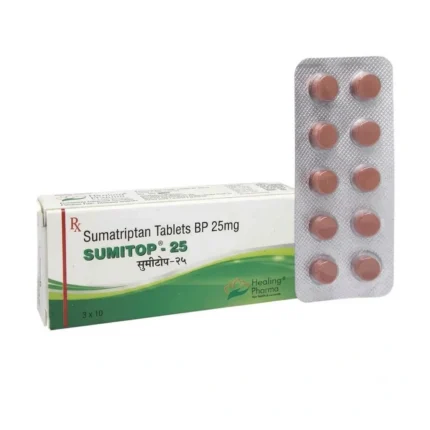
Explore Related Triptan Medications
Different triptan options are available to match individual patient responses, symptom onset times, and tolerability profiles. If you are comparing triptan options or adjusting therapies under clinical guidance, explore other standard migraine medications:
Rizatriptan 10 Mg Dosage and Administration
In adult patients, the standard single oral dose is 5 Mg or 10 Mg. Clinical trials have demonstrated that the 10 Mg dose generally provides superior pain relief and complete pain freedom compared to the 5 Mg dose.
If the migraine headache improves after the first dose but subsequently recurs, a second dose may be administered at least 2 hours following the initial dose. No more than 30 Mg of rizatriptan should be taken within any 24-hour period.
Rizatriptan tablets can be taken with or without food. However, taking the dose on an empty stomach may result in a faster onset of action, as food can slightly delay absorption.
([dailymed.nlm.nih.gov](https://dailymed.nlm.nih.gov/dailymed/lookup.cfm?setid=29a8a65f-46e3-4c91-9dc5-468bfbdf8a14))
Important:
Patients taking Propranolol must only use a 5 Mg single dose of rizatriptan (up to a maximum of 15 Mg in 24 hours), as propranolol increases rizatriptan plasma concentrations significantly.
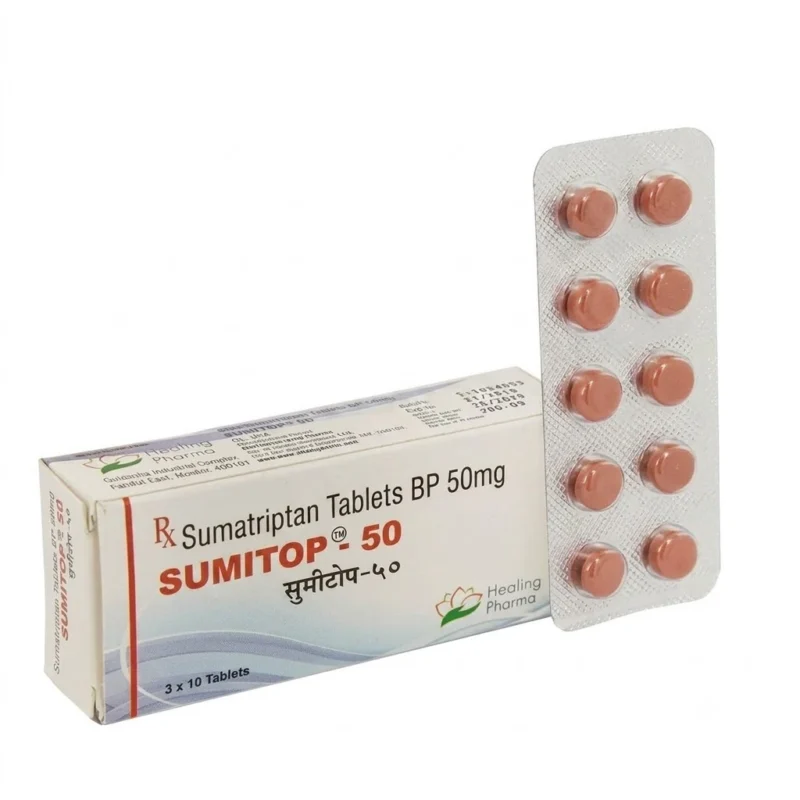
Rizatriptan 10 Mg vs Sumatriptan (50 Mg / 100 Mg)
Both rizatriptan and sumatriptan are selective 5-HT1B/1D receptor agonists, but they differ in pharmacokinetics, onset of action, and dosing parameters.
| Parameter |
Rizatriptan 10 Mg (Rizatop) |
Sumatriptan (50 / 100 Mg) |
| Triptan Generation |
Second-generation |
First-generation |
| Time to Peak (Tmax) |
Approx. 1 to 1.5 hours (Rapid onset) |
Approx. 2 to 2.5 hours |
| Oral Bioavailability |
~40–45% |
~14–15% |
| Max Daily Dose |
30 Mg per 24 hours |
200 Mg per 24 hours |
| Repeat Dose Interval |
Minimum 2 hours |
Minimum 2 hours |
Selection between rizatriptan and sumatriptan depends on individual clinical response, speed of headache onset, tolerability, and physician recommendation.
Who Should Not Take Rizatriptan 10 Mg?
Rizatriptan is contraindicated in patients with underlying cardiovascular conditions, uncontrolled hypertension, or specific vascular and neurological disorders:
- Ischemic coronary artery disease, angina pectoris, or previous myocardial infarction
- Coronary artery vasospasm (Prinzmetal’s variant angina)
- History of stroke or transient ischemic attack (TIA)
- Uncontrolled or clinically significant hypertension
- Peripheral vascular disease (PVD) or ischemic bowel disease
- Hemiplegic or basilar migraine syndromes
- Concurrent administration with MAO-A inhibitors or use within 2 weeks of discontinuation
- Administration within 24 hours of another 5-HT1 agonist (triptan) or ergotamine-containing medicine
- Severe hepatic or severe renal impairment
- Known hypersensitivity to rizatriptan or any tablet excipients
Patients with cardiovascular risk factors (including hypertension, hypercholesterolemia, smoking, diabetes, or family history of coronary disease) should undergo cardiovascular screening before initiation.
([dailymed.nlm.nih.gov](https://dailymed.nlm.nih.gov/dailymed/lookup.cfm?setid=29a8a65f-46e3-4c91-9dc5-468bfbdf8a14))
Possible Side Effects of Rizatriptan 10 Mg
Like all prescription triptans, rizatriptan may cause adverse reactions, which are generally mild to moderate and transient:
- Dizziness, somnolence (sleepiness), and fatigue
- Paresthesia (tingling, numbness, or altered skin sensation)
- Flushing or feeling unusually warm
- Dry mouth, nausea, or abdominal discomfort
- Transient sensations of tightness, pressure, or heaviness in the chest, throat, or neck
Although mild throat and chest tightness are recognized triptan-related sensations, any severe, persisting chest pain, difficulty breathing, or symptoms mimicking acute coronary syndrome demand urgent medical intervention.
([dailymed.nlm.nih.gov](https://dailymed.nlm.nih.gov/dailymed/lookup.cfm?setid=29a8a65f-46e3-4c91-9dc5-468bfbdf8a14))
Rizatriptan 10 Mg Drug Interactions
Provide your medical provider with a complete list of all medications you take, including prescription drugs, over-the-counter formulas, and botanical supplements:
Propranolol: Co-administration of propranolol increases rizatriptan AUC and peak concentration by approximately 70-80%. Patients on propranolol should only receive a 5 Mg single dose of rizatriptan, up to a maximum of 15 Mg per 24 hours.
MAO-A Inhibitors: Monoamine oxidase-A inhibitors substantially reduce the metabolic clearance of rizatriptan. Concurrent use or use within 14 days of MAOI therapy is strictly contraindicated.
Ergot Derivatives & Other Triptans: Combining rizatriptan with ergotamine, dihydroergotamine, or other triptans (such as sumatriptan or zolmitriptan) within 24 hours can trigger severe, prolonged vasospastic reactions.
SSRIs and SNRIs: Co-administration with selective serotonin reuptake inhibitors or SNRIs increases the risk of Serotonin Syndrome, characterized by mental status changes, autonomic instability, and neuromuscular hyperactivity.
([dailymed.nlm.nih.gov](https://dailymed.nlm.nih.gov/dailymed/lookup.cfm?setid=29a8a65f-46e3-4c91-9dc5-468bfbdf8a14))
Rizatriptan, Hepatic, and Renal Function
Rizatriptan is cleared through both hepatic metabolism (oxidative deamination by MAO-A) and renal excretion of unchanged drug and metabolites.
In patients with moderate hepatic impairment or moderate-to-severe renal impairment, plasma concentrations of rizatriptan may be elevated. A lower starting dose of 5 Mg is recommended in these populations. Rizatriptan is contraindicated in patients with severe hepatic impairment.
([dailymed.nlm.nih.gov](https://dailymed.nlm.nih.gov/dailymed/lookup.cfm?setid=29a8a65f-46e3-4c91-9dc5-468bfbdf8a14))
Frequency of Use and Rebound Headaches
Rizatriptan is formulated solely for episodic acute migraine management. The safety of treating more than four headache episodes in a 30-day period has not been clinically established.
Frequent or daily use of acute antimigraine medications (10 or more days per month) can lead to Medication-Overuse Headache (MOH), often described as daily rebound headaches. Patients requiring frequent acute treatment should be evaluated for preventive (prophylactic) migraine therapies.
([dailymed.nlm.nih.gov](https://dailymed.nlm.nih.gov/dailymed/lookup.cfm?setid=29a8a65f-46e3-4c91-9dc5-468bfbdf8a14))
Frequently Asked Questions About Rizatriptan 10 Mg
1. How quickly does Rizatriptan 10 Mg work for migraines?
Rizatriptan is rapidly absorbed, with noticeable pain relief often starting within 30 to 60 minutes after administration. Peak plasma concentrations are typically reached within 1 to 1.5 hours.
([dailymed.nlm.nih.gov](https://dailymed.nlm.nih.gov/dailymed/lookup.cfm?setid=29a8a65f-46e3-4c91-9dc5-468bfbdf8a14))
2. How many Rizatriptan 10 Mg tablets can I take in 24 hours?
If your migraine returns after initial relief, a second tablet may be taken at least 2 hours after the first. You must not exceed a maximum total dose of 30 Mg (three 10 Mg tablets) within a 24-hour window.
([dailymed.nlm.nih.gov](https://dailymed.nlm.nih.gov/dailymed/lookup.cfm?setid=29a8a65f-46e3-4c91-9dc5-468bfbdf8a14))
3. Can I take Rizatriptan if I am already taking Propranolol?
Yes, but at a reduced dose. Propranolol increases rizatriptan blood levels by up to 80%. Patients on propranolol should take only a 5 Mg dose of rizatriptan, with a maximum limit of 15 Mg in 24 hours.
([dailymed.nlm.nih.gov](https://dailymed.nlm.nih.gov/dailymed/lookup.cfm?setid=29a8a65f-46e3-4c91-9dc5-468bfbdf8a14))
4. What is the difference between Rizatriptan and Sumatriptan?
Rizatriptan is a second-generation triptan with higher oral bioavailability (~45% vs ~15%) and generally faster time to peak absorption compared to oral sumatriptan. Both target the same serotonin receptors (5-HT1B/1D) to stop acute migraines.
5. Does Rizatriptan treat regular headaches or prevent migraines?
No. Rizatriptan is not an everyday painkiller and is not effective for tension headaches or sinus headaches. It does not prevent future migraine attacks and must only be taken once a migraine has started.
([dailymed.nlm.nih.gov](https://dailymed.nlm.nih.gov/dailymed/lookup.cfm?setid=29a8a65f-46e3-4c91-9dc5-468bfbdf8a14))
Medical Disclaimer
This product overview is provided solely for educational and informational purposes. Rizatriptan (Rizatop) is a prescription-only medication and must be taken under the supervision and diagnosis of a qualified healthcare practitioner. Individual dosing, safety, and suitability depend on individual cardiovascular health, liver and kidney function, and potential drug interactions. This document does not constitute clinical medical advice.