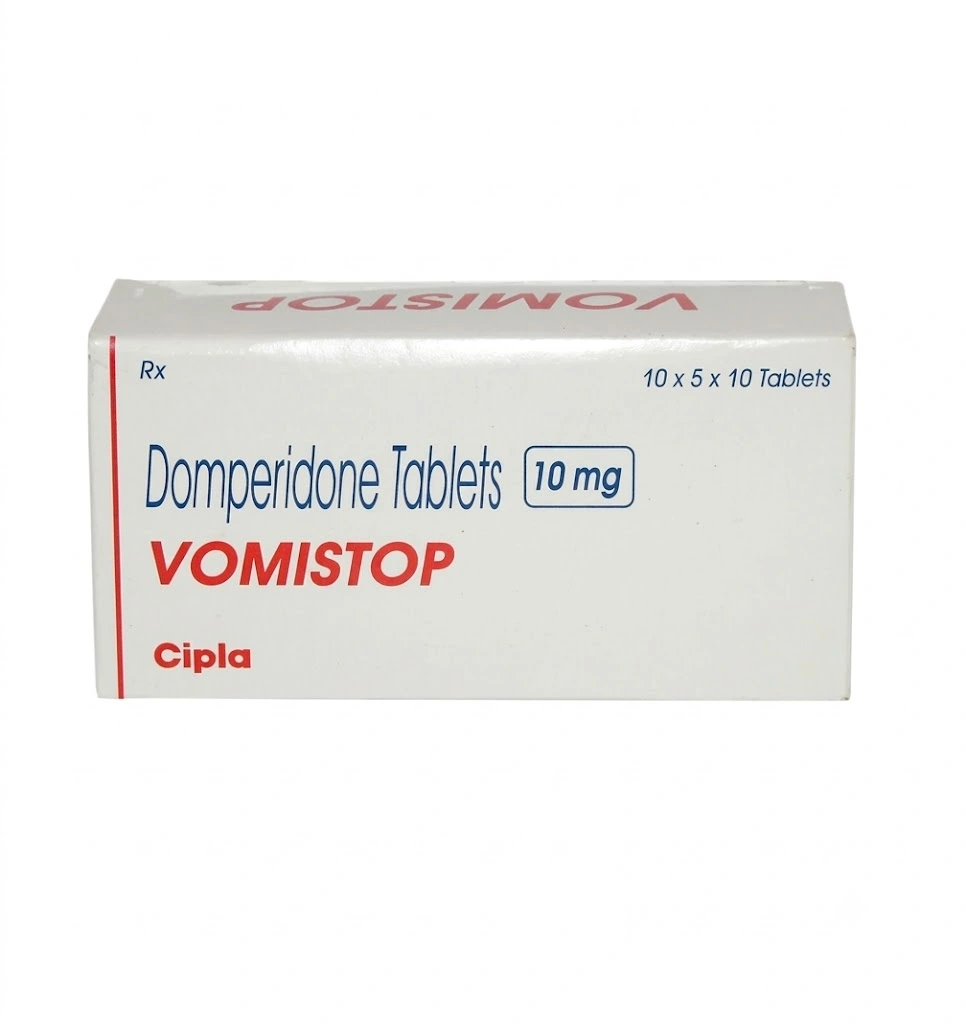
Vomistop 10 Mg Tablet (Domperidone) – Antiemetic & Gastroprokinetic Therapy
Vomistop 10 Mg Tablet (Domperidone) is a peripheral dopamine D2-receptor antagonist and prokinetic agent indicated for the symptomatic relief of acute nausea and vomiting, as well as upper gastrointestinal discomfort associated with delayed gastric emptying. By blocking dopamine receptors in the chemoreceptor trigger zone (CTZ) and enhancing gastric peristalsis, it facilitates stomach emptying without causing significant central nervous system sedative effects.
Domperidone
10 Mg
Dopamine D2 Antagonist
Prescription Medicine
Active Ingredient
Domperidone
Drug Class
Peripheral D2 Antagonist / Prokinetic
Dosage Form
Oral Film-Coated Tablet
What Is Vomistop 10 Mg?
Vomistop 10 Mg contains domperidone, a synthetic benzimidazole derivative with dual antiemetic and gastroprokinetic actions. It is primarily formulated to control acute episodes of nausea and vomiting induced by food, systemic illness, or certain medical treatments, as well as to relieve functional dyspeptic symptoms like postprandial fullness, bloating, and early satiety.
Unlike older dopamine antagonists such as metoclopramide, domperidone does not readily cross the blood-brain barrier into the central nervous system in meaningful concentrations. This substantially lowers the likelihood of central neurological adverse effects, such as extrapyramidal movement disorders, acute dystonic reactions, or profound sedation.
Regulatory authorities and international health agencies recommend that domperidone be prescribed at the lowest effective dose for the shortest possible time (typically not exceeding one week) due to cardiac safety considerations.
How Does Vomistop 10 Mg Work?
Domperidone exerts its clinical benefits through two distinct peripheral pharmacological pathways:
- Antiemetic Action in the Chemoreceptor Trigger Zone (CTZ): The area postrema in the medulla oblongata lies outside the blood-brain barrier. Domperidone blocks dopamine D2 receptors in this region, preventing emetic signaling from reaching the vomiting center in the brainstem.
- Prokinetic Gastrointestinal Motility: By blocking dopamine D2 receptors in the enteric nervous system, domperidone removes dopamine’s inhibitory effect on gastrointestinal smooth muscle, leading to enhanced acetylcholine release. This increases lower esophageal sphincter pressure, accelerates gastric emptying, and improves antroduodenal coordination.
This combined mechanism helps prevent retrograde reflux and nausea while actively moving gastric contents through the pylorus into the small intestine.
What Is Vomistop 10 Mg Used For?
Vomistop 10 Mg is clinically indicated for the management of the following gastrointestinal conditions in adults and adolescents aged 12 years and older (weighing 35 kg or more):
- Acute Nausea and Vomiting: Rapid symptomatic relief of vomiting triggered by acute gastroenteritis, migraine attacks, or post-infectious gastric distress.
- Delayed Gastric Emptying: Treatment of gastric hypomotility and functional dyspeptic symptoms, including epigastric bloating, fullness, and belching.
- Diabetic Gastroparesis (Under Specialist Care): Off-label use to promote stomach emptying in patients with impaired autonomic gastric motility.
- Dopamine Agonist-Induced Nausea: Off-label prevention of peripheral gastrointestinal intolerance in patients taking dopaminergic medications for Parkinson’s disease.
Vomistop is not approved for long-term chronic gastrointestinal therapy and should not be used for routine acid reflux when acid suppressants are indicated.
Related Antiemetic Medication
For acute nausea and severe vomiting associated with chemotherapy, radiation therapy, or surgical procedures, explore our product profile on the selective 5-HT3 receptor antagonist:
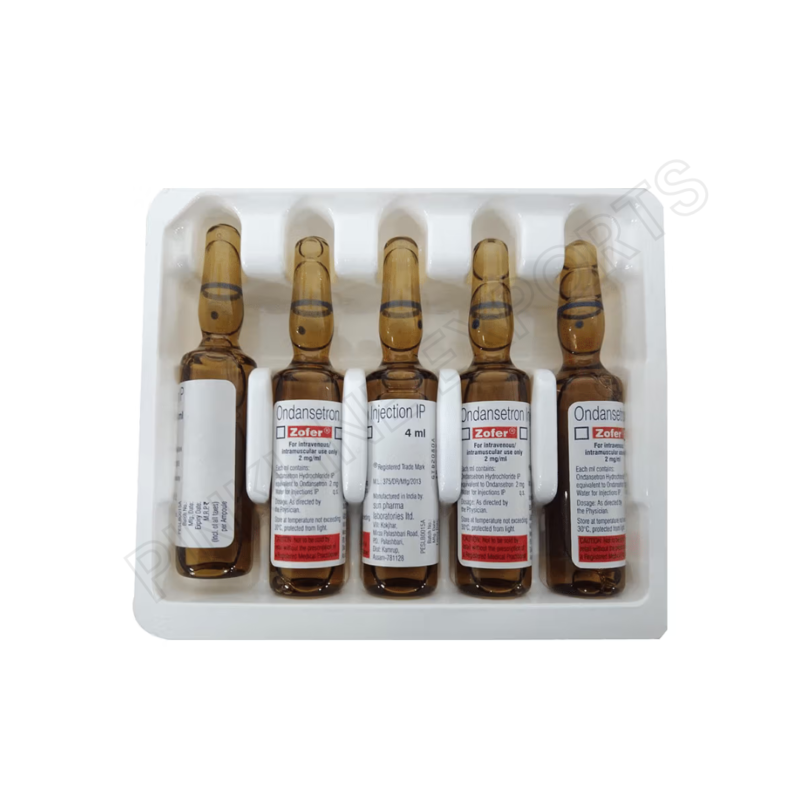
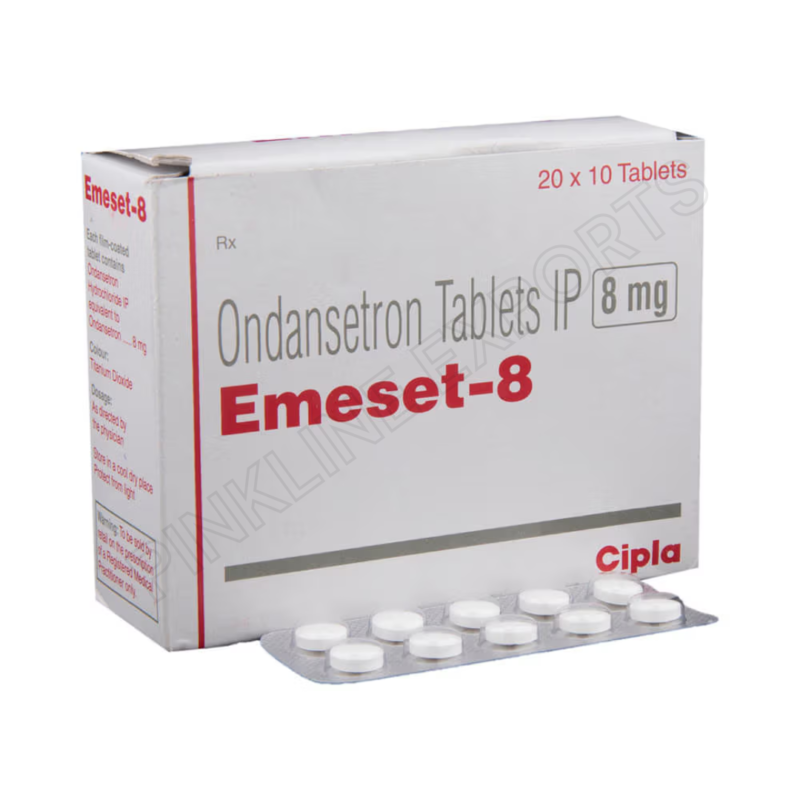
Ondansetron Tablets 4 Mg – Generic Zofran
Vomistop 10 Mg Dosage and Administration
For optimal efficacy, Vomistop 10 Mg should be taken 15 to 30 minutes before meals and, if needed, at bedtime. Taking the medication after meals can slightly delay its gastrointestinal absorption.
- Standard Adult Dose: One 10 Mg tablet taken up to three times daily.
- Maximum Daily Limit: Do not exceed 30 Mg per 24 hours (three 10 Mg tablets).
- Recommended Duration: Limit therapy to the shortest duration necessary, typically not exceeding 7 days.
Tablets should be swallowed whole with a glass of water. Do not crush, chew, or divide the tablets. Leave an interval of at least 6 to 8 hours between consecutive doses.
Cardiovascular Warning:
Domperidone has been associated with prolongation of the QT interval and serious ventricular arrhythmias. The risk is significantly elevated in patients over 60 years of age, at daily doses greater than 30 Mg, or when co-administered with QT-prolonging medicines or potent CYP3A4 inhibitors.
Vomistop 10 Mg (Domperidone) vs Ondansetron 4 Mg
Both agents are commonly utilized for antiemetic control, but their primary cellular targets, indications, and gastrointestinal effects differ substantially:
| Parameter |
Vomistop 10 Mg (Domperidone) |
Ondansetron Tablets 4 Mg |
| Pharmacological Class |
Dopamine D2 Receptor Antagonist |
Serotonin 5-HT3 Receptor Antagonist |
| Prokinetic Effect |
Yes (Stimulates gastric motility & emptying) |
No (May cause or worsen constipation) |
| Primary Indications |
Acute nausea, vomiting, delayed gastric emptying |
Chemotherapy-, radiation-, & post-op-induced emesis |
| Administration Timing |
15–30 minutes before meals |
30–60 minutes before emetogenic event |
| Maximum Daily Dose |
30 Mg per 24 hours |
Up to 24–32 Mg per 24 hours (indication-based) |
Vomistop is preferred when nausea is accompanied by gastric fullness or gastroparesis, whereas ondansetron is the standard choice for potent vagal-mediated emesis, such as chemotherapy or surgical interventions.
Who Should Not Take Vomistop 10 Mg?
Vomistop is strictly contraindicated in patients with the following clinical conditions:
- Known hypersensitivity or allergic reaction to domperidone or any tablet ingredients
- Prolactin-releasing pituitary tumor (prolactinoma)
- Known prolongation of cardiac conduction intervals, particularly the corrected QT (QTc) interval
- Underlying cardiac disease such as congestive heart failure, recent myocardial infarction, or severe arrhythmias
- Significant electrolyte disturbances (hypokalemia, hyperkalemia, or hypomagnesemia)
- Moderate to severe hepatic impairment
- Conditions where gastrointestinal stimulation could be harmful (mechanical bowel obstruction, gastrointestinal perforation, or active gastrointestinal hemorrhage)
- Co-administration with potent CYP3A4 inhibitors (e.g., ketoconazole, clarithromycin, ritonavir) or other QT-prolonging medicines
Vomistop is generally not recommended in children under 12 years of age or weighing less than 35 kg due to safety and efficacy constraints.
Possible Side Effects of Vomistop 10 Mg
Most side effects of domperidone are mild and transient, but serious adverse cardiac events require immediate medical attention:
- Common Reactions: Dry mouth, mild headache, diarrhea, abdominal cramps, and drowsiness.
- Endocrine / Hormonal Effects: Hyperprolactinemia, which may manifest as breast enlargement (gynecomastia), breast tenderness, galactorrhea (unusual milk secretion), and menstrual irregularities.
- Central Nervous System (rare): Mild dizziness, fatigue, or transient restlessness.
- Cardiovascular Reactions: Ventricular arrhythmias, palpitations, syncope, and QT prolongation.
Patients experiencing sudden dizziness, palpitations, difficulty breathing, or loss of consciousness should discontinue Vomistop immediately and seek emergency medical evaluation.
Vomistop 10 Mg Drug Interactions
Domperidone is extensively metabolized by the hepatic cytochrome P450 isoenzyme CYP3A4. Co-administration with certain medications can markedly elevate domperidone blood levels or compound cardiac risks:
Potent CYP3A4 Inhibitors: Concomitant use with systemic azole antifungals (ketoconazole, itraconazole), macrolide antibiotics (clarithromycin, erythromycin), HIV protease inhibitors, or diltiazem/verapamil significantly raises domperidone plasma concentrations and is contraindicated.
QT-Prolonging Medications: Combining domperidone with antiarrhythmics (amiodarone, sotalol), certain antipsychotics (haloperidol, pimozide), or specific antidepressants increases the risk of torsades de pointes and ventricular fibrillation.
Anticholinergic Agents: Drugs with antimuscarinic actions (e.g., dicyclomine, hyoscyamine) directly counteract the prokinetic gastrointestinal effects of domperidone.
Antacids & Acid Reducers: Taking antacids, H2 blockers, or proton pump inhibitors concurrently may reduce domperidone bioavailability; space administration appropriately.
Cardiac Safety and Hepatic Considerations
Extensive safety reviews by health authorities confirm that domperidone is associated with a small increased risk of QT interval prolongation, serious ventricular arrhythmias, and sudden cardiac death.
This risk is greatest in patients aged 60 years and older, individuals taking daily doses above 30 Mg, or those with underlying heart conditions. Because domperidone is metabolized by the liver, it is contraindicated in patients with moderate or severe hepatic impairment. In patients with renal insufficiency, the dosing frequency should be reduced due to prolonged elimination half-life.
Treatment Duration Guidelines
Vomistop 10 Mg is formulated solely for short-term, acute symptom control:
Duration Limit: The usual duration of treatment should not exceed one week (7 days). If symptoms of nausea and vomiting persist beyond 48 to 72 hours, patients should be re-evaluated by their healthcare provider to identify the underlying etiology.
Routine, long-term self-administration for chronic indigestion is strongly discouraged.
Frequently Asked Questions About Vomistop 10 Mg
1. When is the best time to take Vomistop 10 Mg?
Vomistop 10 Mg is most effective when taken 15 to 30 minutes before meals. Taking it before eating allows the active drug to stimulate gastric motility and suppress nausea right as food enters the stomach.
2. What is the maximum daily dose of Vomistop 10 Mg?
The maximum recommended daily oral dose for adults and adolescents weighing 35 kg or more is 30 Mg per day (one 10 Mg tablet up to three times daily). Do not exceed this limit due to the risk of cardiac arrhythmias.
3. Why is Domperidone restricted to short-term use?
Regulatory health agencies recommend limiting domperidone use to a maximum of one week because higher doses and prolonged use increase the risk of QT interval prolongation, ventricular arrhythmias, and sudden cardiac death.
4. Does Vomistop cause sleepiness like other nausea medicines?
Because domperidone does not readily cross the blood-brain barrier into the central nervous system, it causes significantly less drowsiness, sedation, or movement side effects compared to older antiemetics like metoclopramide or promethazine.
5. Can Vomistop 10 Mg be taken during pregnancy or breastfeeding?
Vomistop should only be used during pregnancy if clearly needed and advised by a physician. While it passes into breast milk in small amounts, it can increase prolactin levels and must only be used under maternal healthcare supervision.
Medical Disclaimer
This product overview is provided strictly for educational and informational purposes. Vomistop 10 Mg (domperidone) is a prescription-only medication that must be initiated, dosed, and monitored under the care of a licensed healthcare practitioner. Dosage, duration of therapy, and safety depend on individual cardiac status, hepatic and renal health, age, and concurrent drug therapies. This content does not substitute for personalized medical diagnosis, advice, or treatment.











Reviews
There are no reviews yet.