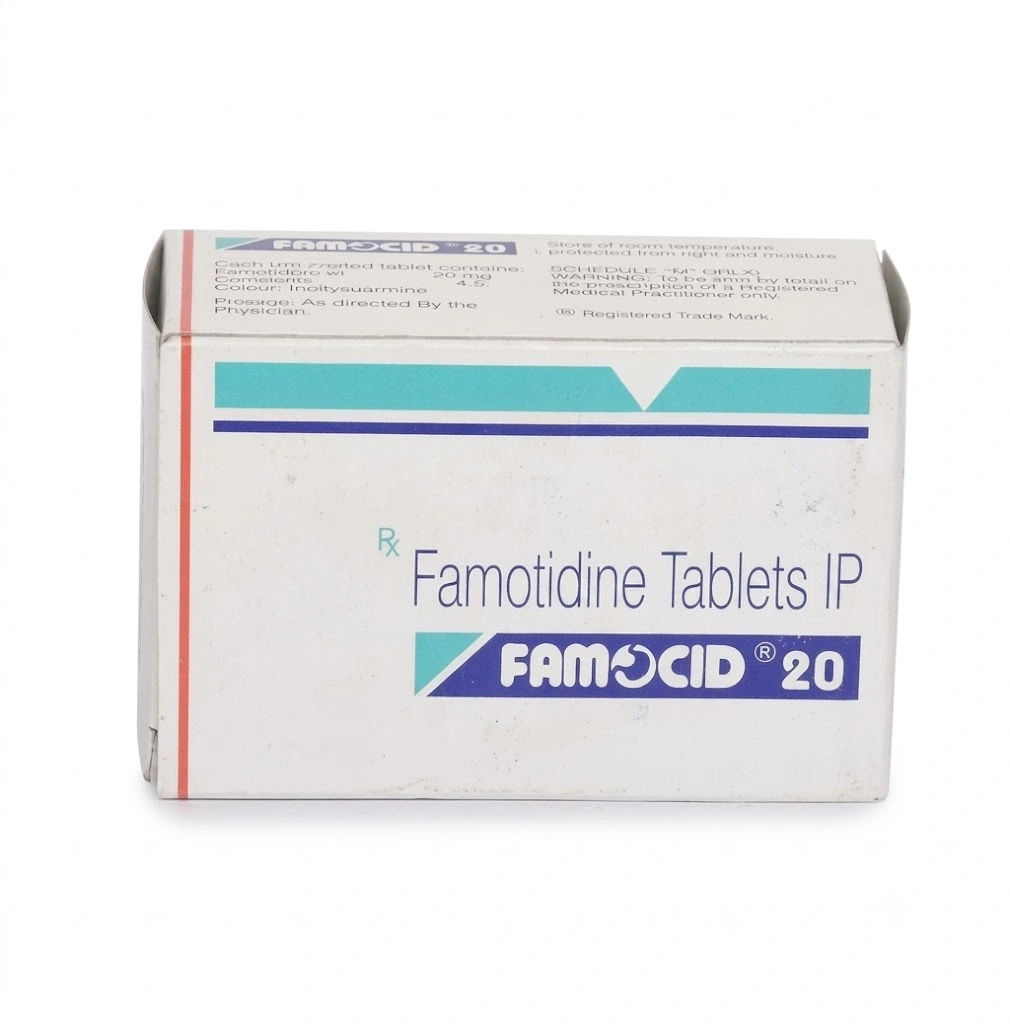
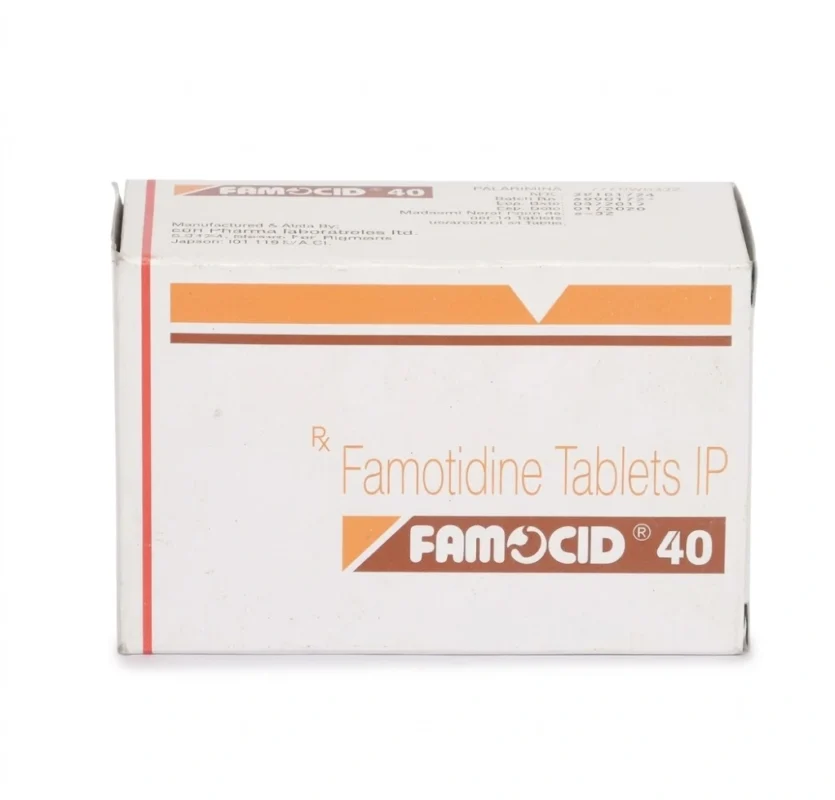
Famocid 20 Mg Tablet (Famotidine) – Targeted Gastric Acid Reducer
Famocid 20 Mg Tablet (Famotidine) is an oral histamine H2-receptor antagonist (H2RA) indicated for the short-term treatment and maintenance of duodenal and active benign gastric ulcers, gastroesophageal reflux disease (GERD), and pathological hypersecretory conditions. By competitively inhibiting H2 receptors on gastric parietal cells, it significantly decreases basal, nocturnal, and food-stimulated gastric acid secretion.
Famotidine
20 Mg
H2-Receptor Antagonist
Prescription / Gastrointestinal
Active Ingredient
Famotidine
Drug Class
Histamine H2-Receptor Antagonist (H2RA)
Dosage Form
Oral Film-Coated Tablet
What Is Famocid 20 Mg?
Famocid 20 Mg contains famotidine, a potent and competitive inhibitor of histamine H2 receptors. Unlike first-generation H2 blockers such as cimetidine, famotidine provides stronger acid suppression at lower therapeutic concentrations without exhibiting antiandrogenic properties or significantly interfering with the hepatic cytochrome P450 enzyme system.
The 20 Mg tablet serves as a versatile clinical strength used for initial therapy of mild to moderate acid-related disorders, symptomatic relief of GERD, and long-term maintenance dosing to prevent ulcer recurrence following acute healing phases.
Famocid 20 Mg begins suppressing gastric acidity within 1 hour of oral ingestion, providing a rapid onset of relief for heartburn, pyrosis, and dyspeptic discomfort.
([dailymed.nlm.nih.gov](https://dailymed.nlm.nih.gov/dailymed/lookup.cfm?setid=2938a164-8fe4-4cb4-b903-51829e1d528d))
How Does Famocid 20 Mg Work?
Gastric parietal cells produce hydrochloric acid via the H+/K+ ATPase enzyme system (“proton pump”), which is stimulated primarily through three pathways: gastrin, acetylcholine, and histamine.
Famotidine works by selectively and competitively binding to histamine H2 receptors located on the basolateral membrane of gastric parietal cells:
- Blocks Histamine Signaling: Prevents histamine released from enterochromaffin-like (ECL) cells from activating adenylate cyclase.
- Reduces Intracellular cAMP: Lowers cyclic adenosine monophosphate (cAMP) concentrations, which diminishes activation of the downstream proton pump.
- Suppresses Acid and Pepsin: Decreases total acid output, hydrochloric acid concentration, and pepsin content under basal (fasting), nocturnal, and meal-stimulated conditions.
This allows mucosal tissue in the esophagus, stomach, and duodenum to heal from acid-mediated erosion while substantially reducing acute heartburn symptoms.
What Is Famocid 20 Mg Used For?
Famocid 20 Mg is clinically approved for the treatment and prophylaxis of several acid-peptic disorders in adults:
- Duodenal Ulcers: Acute short-term healing and low-dose maintenance therapy to prevent relapse.
- Active Benign Gastric Ulcer: Short-term treatment of active non-malignant stomach ulcers.
- Gastroesophageal Reflux Disease (GERD): Relief of acid regurgitation, pyrosis (heartburn), and irritation of the esophageal lining.
- Erosive Esophagitis: Symptomatic management and post-healing maintenance.
- Pathological Hypersecretory Conditions: Adjunctive management of Zollinger-Ellison syndrome and systemic mastocytosis.
Before starting long-term treatment, clinical response to famotidine does not preclude the presence of gastric malignancy; appropriate diagnostic evaluation should be considered.
([dailymed.nlm.nih.gov](https://dailymed.nlm.nih.gov/dailymed/lookup.cfm?setid=2938a164-8fe4-4cb4-b903-51829e1d528d))
Alternative Acid Suppression Therapy
For severe erosive esophagitis, refractory GERD, or conditions requiring complete 24-hour blockade of the gastric acid pump, proton pump inhibitors (PPIs) offer a different mechanism of action:
Pantoprazole Tablets 40 Mg
Famocid 20 Mg Dosage and Administration
Dosage guidelines for Famocid 20 Mg depend on the condition being treated and renal clearance status:
- Duodenal Ulcer (Maintenance): 20 Mg once daily at bedtime.
- Active Duodenal or Gastric Ulcers: 40 Mg once daily at bedtime, or 20 Mg taken twice daily for 4 to 8 weeks.
- Gastroesophageal Reflux Disease (GERD): 20 Mg taken twice daily for up to 6 weeks.
- Erosive Esophagitis: 20 Mg to 40 Mg taken twice daily for up to 12 weeks.
Tablets can be taken with or without food. When dosed once daily, taking the tablet at bedtime helps control nocturnal acid breakthrough, which is largely driven by basal histamine release.
([dailymed.nlm.nih.gov](https://dailymed.nlm.nih.gov/dailymed/lookup.cfm?setid=2938a164-8fe4-4cb4-b903-51829e1d528d))
Important Note:
Dosage adjustments are essential in moderate to severe renal impairment (creatinine clearance < 50 mL/min). The dose should be reduced to 20 Mg once every 36 to 48 hours or adjusted by clinical response.
Famocid 20 Mg (Famotidine) vs Pantoprazole 40 Mg
Famotidine and pantoprazole both reduce stomach acid, but they belong to different therapeutic classes and exhibit distinct pharmacodynamic features:
| Feature |
Famocid 20 Mg (Famotidine) |
Pantoprazole Tablets 40 Mg |
| Drug Class |
H2-Receptor Antagonist (H2RA) |
Proton Pump Inhibitor (PPI) |
| Primary Target |
Histamine H2 Receptors |
H+/K+ ATPase Enzyme (“Proton Pump”) |
| Onset of Action |
Rapid (Within 1 hour) |
Gradual (Peak efficacy in 2 to 3 days) |
| Tolerance / Tachyphylaxis |
Possible with daily long-term use |
Rare (Sustained pump suppression) |
| Optimal Role |
Mild-moderate GERD, nocturnal acid, as-needed relief |
Severe erosive esophagitis, regular long-term healing |
Famotidine provides quick relief on demand or targeted control of nighttime acidity, whereas PPIs such as pantoprazole offer deeper, continuous 24-hour suppression for extensive tissue healing.
Who Should Not Take Famocid 20 Mg?
Famocid is contraindicated or requires caution in individuals with specific medical conditions:
- Known hypersensitivity to famotidine or other histamine H2-receptor antagonists
- History of anaphylaxis or severe allergic reactions to any components of the tablet
- Unadjusted use in moderate-to-severe renal disease without dosage modification
- Elderly patients with underlying renal or hepatic compromise (higher risk of CNS side effects)
- Pregnancy and breastfeeding (use only if clearly needed and advised by a physician)
Symptomatic relief of acid indigestion does not rule out serious underlying gastrointestinal disorders, such as peptic ulcer bleeding or gastric carcinoma.
([dailymed.nlm.nih.gov](https://dailymed.nlm.nih.gov/dailymed/lookup.cfm?setid=2938a164-8fe4-4cb4-b903-51829e1d528d))
Possible Side Effects of Famocid 20 Mg
Famotidine is generally well tolerated, with most adverse effects being mild and transient:
- Headache
- Dizziness
- Constipation or diarrhea
- Fatigue and dry mouth
- Central nervous system effects (confusion, disorientation, agitation, or hallucinations, occurring primarily in elderly or renally impaired patients)
Rare, serious side effects include severe hypersensitivity reactions (anaphylaxis, angioedema), blood dyscrasias (thrombocytopenia, leukopenia), and QT-interval prolongation in patients with severe renal compromise.
([dailymed.nlm.nih.gov](https://dailymed.nlm.nih.gov/dailymed/lookup.cfm?setid=2938a164-8fe4-4cb4-b903-51829e1d528d))
Famocid 20 Mg Drug Interactions
Unlike cimetidine, famotidine does not significantly inhibit the cytochrome P450 enzyme system, which substantially lowers the risk of hepatic metabolic interactions. However, interactions secondary to altered gastric pH can occur:
pH-Dependent Medications: By raising intragastric pH, famotidine can decrease the solubility and systemic absorption of antifungal agents (such as ketoconazole and itraconazole), certain antiretrovirals (atazanavir), and oral iron supplements.
Tizanidine: Concomitant use of H2 blockers may increase plasma concentrations of tizanidine, increasing the risk of clinically significant hypotension and bradycardia.
Antacids: Concurrent intake of high-dose antacids may slightly diminish famotidine absorption; spacing administration by 1 to 2 hours is advised.
([dailymed.nlm.nih.gov](https://dailymed.nlm.nih.gov/dailymed/lookup.cfm?setid=2938a164-8fe4-4cb4-b903-51829e1d528d))
Famotidine and Renal Clearance
Famotidine is primarily eliminated by the kidneys via glomerular filtration and active tubular secretion, with 65% to 70% of an oral dose excreted unchanged in the urine.
In patients with moderate to severe renal impairment ($\text{creatinine clearance} < 50\text{ mL/min}$), the elimination half-life of famotidine increases significantly, exceeding 20 hours. To prevent central nervous system toxicities (such as mental status changes and seizures), the dosing interval must be prolonged or the dose reduced under medical supervision.
([dailymed.nlm.nih.gov](https://dailymed.nlm.nih.gov/dailymed/lookup.cfm?setid=2938a164-8fe4-4cb4-b903-51829e1d528d))
Treatment Duration and Tachyphylaxis
While Famocid 20 Mg provides rapid acid reduction, daily uninterrupted therapy with H2-receptor antagonists can lead to tachyphylaxis (tolerance) within 1 to 2 weeks, reducing its acid-suppressive effect over time.
For intermittent reflux or episodic post-meal heartburn, as-needed use or short courses help maintain optimal efficacy. Patients requiring sustained, unbroken acid reduction for months are frequently transitioned to proton pump inhibitors.
([dailymed.nlm.nih.gov](https://dailymed.nlm.nih.gov/dailymed/lookup.cfm?setid=2938a164-8fe4-4cb4-b903-51829e1d528d))
Frequently Asked Questions About Famocid 20 Mg
1. How fast does Famocid 20 Mg start working for heartburn?
Famocid 20 Mg begins providing acid suppression within 1 hour after oral administration, reaching peak therapeutic effect in 1 to 3 hours, with acid inhibition lasting up to 10 to 12 hours.
([dailymed.nlm.nih.gov](https://dailymed.nlm.nih.gov/dailymed/lookup.cfm?setid=2938a164-8fe4-4cb4-b903-51829e1d528d))
2. Can Famocid 20 Mg be taken with food?
Yes, Famocid can be taken with or without food. To prevent meal-induced heartburn, it is often taken 15 to 60 minutes before eating food or drinking beverages that trigger indigestion.
3. What is the difference between Famotidine and Pantoprazole?
Famotidine is an H2-receptor antagonist that works quickly to reduce acid production and is suitable for intermittent use. Pantoprazole is a proton pump inhibitor that provides deeper, around-the-clock acid suppression better suited for healing erosive tissue damage.
4. Can I take Famocid 20 Mg every day?
Famocid can be taken daily for specific treatment windows prescribed by a physician (such as 4 to 8 weeks for ulcer treatment or GERD). Continuous daily use over long periods may lead to tolerance, reducing its effectiveness over time.
([dailymed.nlm.nih.gov](https://dailymed.nlm.nih.gov/dailymed/lookup.cfm?setid=2938a164-8fe4-4cb4-b903-51829e1d528d))
5. Why is bedtime dosing often recommended for Famocid?
Nocturnal acid secretion is largely driven by baseline histamine activity. Administering a 20 Mg dose at bedtime suppresses nighttime acid production, protecting the gastric and esophageal lining while lying flat.
([dailymed.nlm.nih.gov](https://dailymed.nlm.nih.gov/dailymed/lookup.cfm?setid=2938a164-8fe4-4cb4-b903-51829e1d528d))
Medical Disclaimer
This product overview is provided strictly for educational and informational purposes. Famocid 20 Mg (famotidine) is an acid-suppressive medication requiring appropriate clinical assessment by a qualified healthcare professional. Individual dosage, safety, and suitability depend on kidney function, age, underlying gastrointestinal pathology, and concurrent medications. This content does not substitute for professional medical diagnosis, advice, or treatment.







Reviews
There are no reviews yet.