

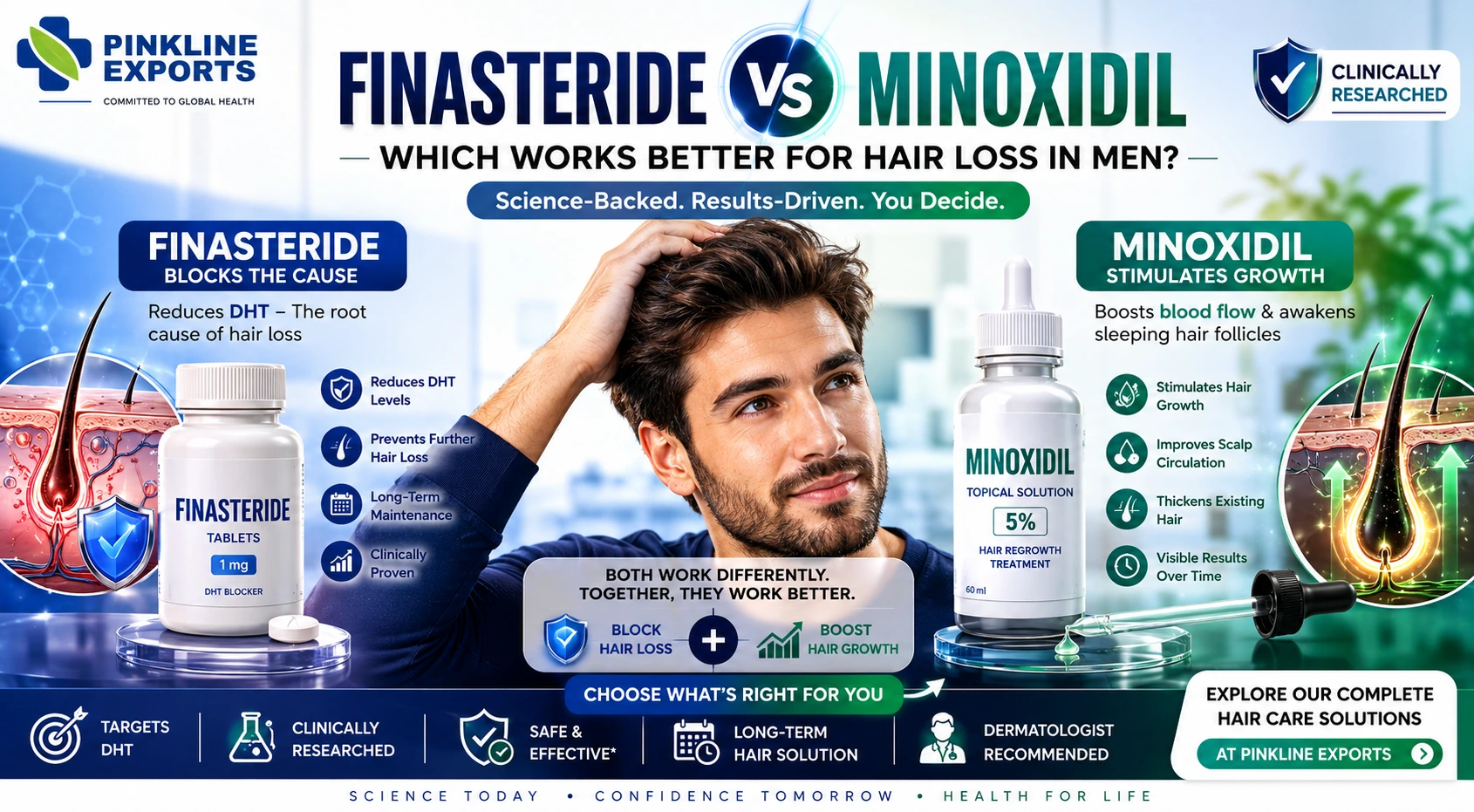
Finasteride vs Minoxidil: Which Works Better for Hair Loss in Men?

Hair loss is one of the most common concerns affecting men worldwide, especially those experiencing male pattern baldness, medically known as androgenetic alopecia. For many men, hair thinning begins gradually in their 20s or 30s and can progressively worsen over time.
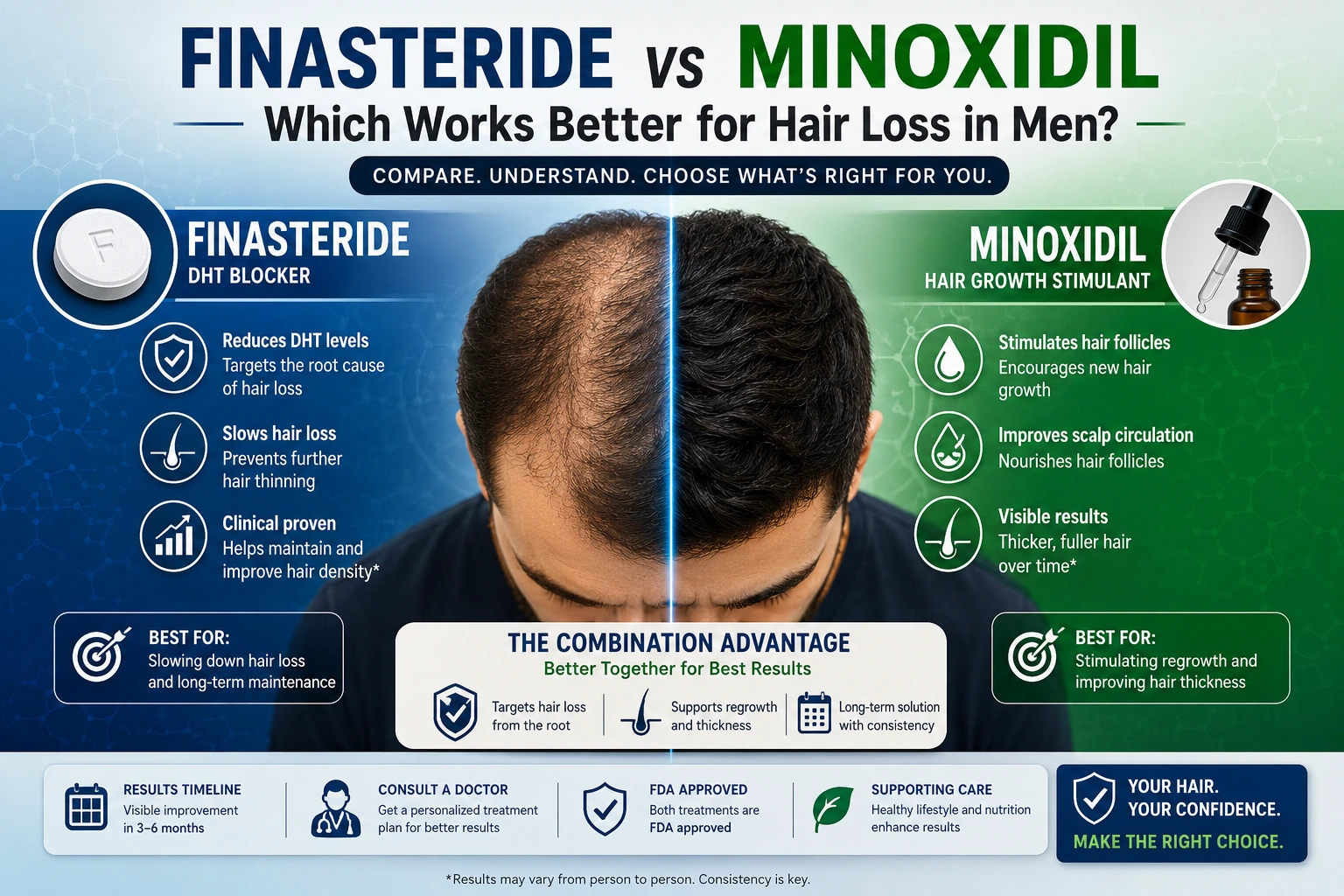
Finasteride vs Minoxidil: Which Works Better for Hair Loss in Men?
Hair loss is one of the most common concerns affecting men worldwide, especially those experiencing male pattern baldness, medically known as androgenetic alopecia. For many men, hair thinning begins gradually in their 20s or 30s and can progressively worsen over time. As awareness around modern hair restoration treatments grows, one question continues to dominate online searches: finasteride vs minoxidil — which works better for hair loss in men?
Both Finasteride and Minoxidil are among the most researched and widely used hair loss treatments available today. They work differently, target different aspects of hair loss, and are often used together in combination therapy. Understanding the differences between these two medications is essential before choosing the best treatment approach.
Men researching hair loss treatment for men are often overwhelmed by conflicting advice online. Some sources recommend oral DHT blockers, while others focus on topical hair regrowth stimulants. In reality, both medications can play an important role depending on the severity of hair loss, treatment goals, genetics, and overall scalp health.
Explore clinically discussed Hair Care treatments and hair loss management solutions including Finasteride, Minoxidil, topical solutions, DHT blockers, and supportive hair wellness options commonly discussed in modern hair restoration programs.
Understanding Male Pattern Baldness
Male pattern baldness is primarily driven by genetics and hormonal sensitivity. Specifically, the hormone dihydrotestosterone (DHT) plays a major role in shrinking hair follicles over time.
DHT is a derivative of testosterone created through the action of the enzyme 5-alpha reductase. In genetically susceptible individuals, DHT gradually miniaturizes scalp hair follicles, leading to:
- Hair thinning
- Receding hairline
- Crown balding
- Reduced hair density
- Shorter hair growth cycles
This is where the difference between Finasteride vs Minoxidil becomes important. Finasteride targets the hormonal cause of hair loss, while Minoxidil primarily stimulates hair growth and improves follicle activity.
What Is Finasteride?
Finasteride is an oral prescription medication commonly used for male pattern baldness. It works by inhibiting the enzyme 5-alpha reductase, reducing DHT levels within the body.
Because DHT is one of the main drivers of androgenetic alopecia, lowering DHT levels can help slow hair loss progression and preserve existing hair follicles.
Many men researching best treatment for male pattern baldness eventually explore oral DHT-blocking therapies because they target the underlying hormonal mechanism responsible for hair follicle miniaturization.
How Finasteride Works
• Reduces scalp and serum DHT levels
• Slows progression of male pattern baldness
• Helps preserve existing hair
• May improve hair density over time
• Often used for long-term hair maintenance
• Reduces scalp and serum DHT levels
• Slows progression of male pattern baldness
• Helps preserve existing hair
• May improve hair density over time
• Often used for long-term hair maintenance
Men comparing oral hair loss treatments often browse Finasteride / Proscar treatment options when exploring DHT-focused hair restoration strategies.
What Is Minoxidil?
Minoxidil is a topical hair growth stimulant available in liquid and foam formulations, although oral forms are also discussed in some treatment programs. Unlike Finasteride, Minoxidil does not block DHT directly.
Instead, it improves blood flow around hair follicles and may prolong the hair growth phase known as the anagen phase.
Men researching minoxidil vs finasteride results often notice that Minoxidil may produce faster visible regrowth in some cases, especially in the crown area. However, results vary considerably depending on genetics, consistency, and treatment duration.
How Minoxidil Works
• Stimulates inactive hair follicles
• Supports longer growth cycles
• May improve scalp blood circulation
• Encourages thicker hair growth
• Commonly used as a topical solution
• Stimulates inactive hair follicles
• Supports longer growth cycles
• May improve scalp blood circulation
• Encourages thicker hair growth
• Commonly used as a topical solution
Patients comparing Minoxidil / Rogaine products and topical hair regrowth solutions often evaluate convenience, scalp sensitivity, and long-term maintenance needs before choosing treatment.
Finasteride vs Minoxidil: Key Differences
| Feature | Finasteride | Minoxidil |
|---|---|---|
| Main Function | Blocks DHT | Stimulates hair growth |
| Administration | Usually oral tablet | Usually topical liquid or foam |
| Best For | Preventing progression | Stimulating regrowth |
| FDA Approved | Yes | Yes |
| Works on Hormonal Cause | Yes | No |
| Common Use | Long-term maintenance | Hair thickening support |
Which Works Better for Hair Loss in Men?
The answer depends on what aspect of hair loss treatment is being evaluated.
For slowing or preventing progression of androgenetic alopecia, Finasteride is often considered more effective because it directly targets DHT, the hormonal driver of male pattern baldness.
For visible hair thickening and follicle stimulation, Minoxidil can provide noticeable improvements, especially in early-stage hair thinning.
However, many dermatologists and hair restoration specialists increasingly recommend combination therapy rather than choosing only one option.
Modern hair restoration programs often combine oral Finasteride therapies,
Minoxidil-based regrowth treatments,
and supportive Hair Care solutions to create a broader long-term approach toward male pattern baldness management.
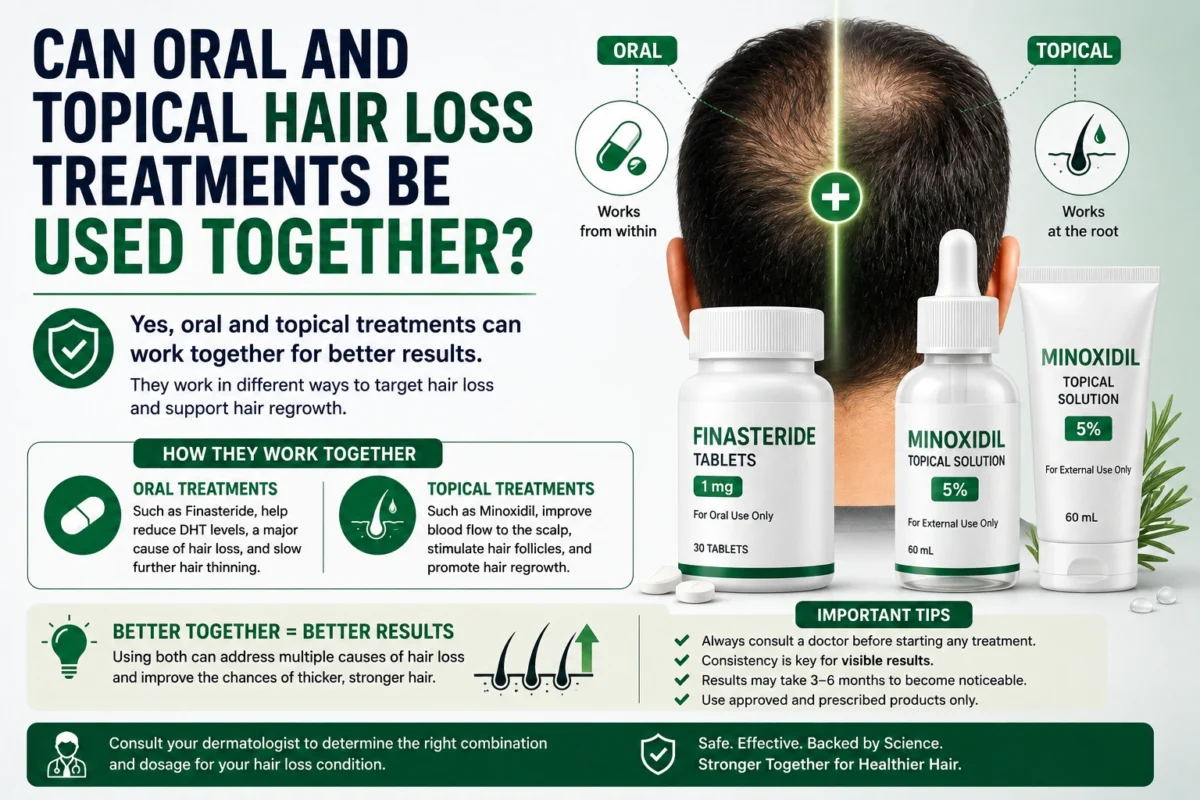
Combination Therapy: Why Many Men Use Both
One of the most important discussions surrounding finasteride or minoxidil for hair loss is whether both medications should be used together.
Combination therapy has become increasingly popular because the medications work through different mechanisms:
- Finasteride helps reduce ongoing follicle miniaturization
- Minoxidil helps stimulate hair growth activity
Because they target different aspects of hair loss biology, many men experience better overall outcomes when both therapies are used consistently under medical guidance.
Some hair restoration programs may also incorporate Dutasteride / Avodart therapies, topical solutions, and supportive hair nutraceutical support options depending on individual hair loss severity.
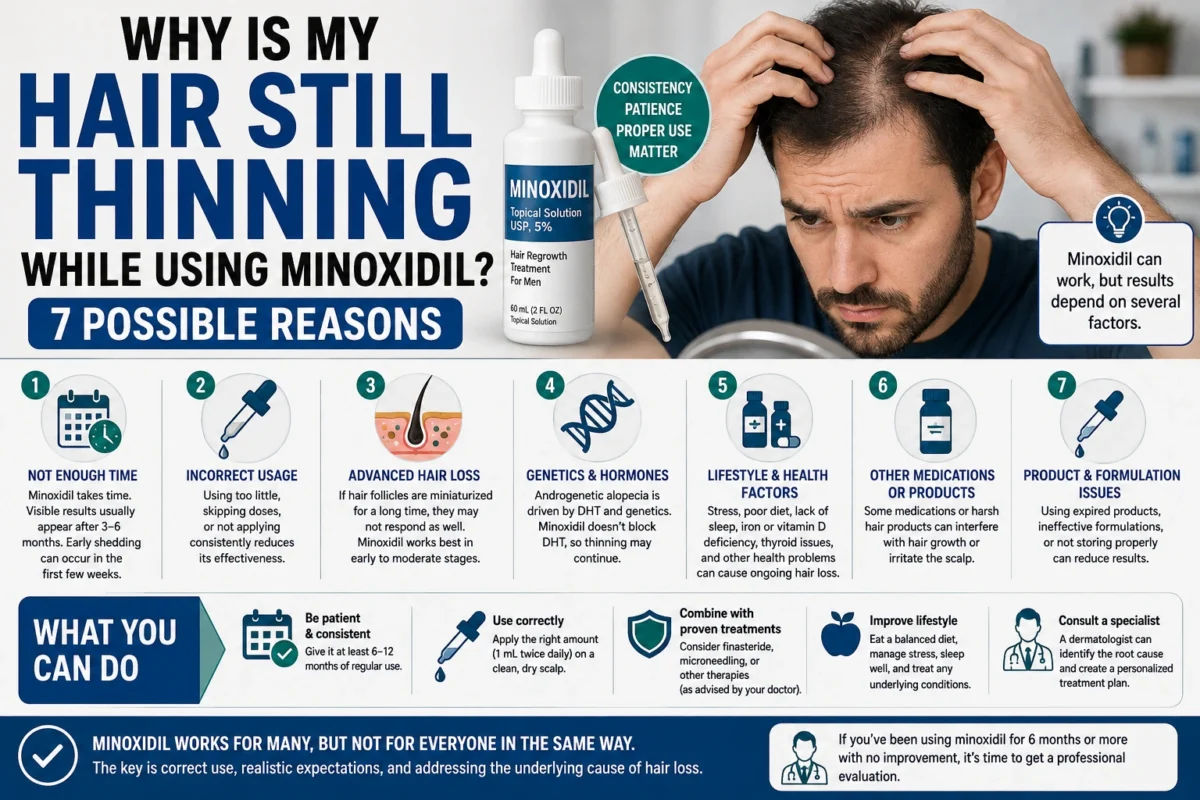
How Long Does It Take to See Results?
Hair restoration is a gradual process requiring patience and consistency.
Typical Hair Regrowth Timeline
• 1–3 months: Early shedding phase may occur
• 3–6 months: Initial improvement in density may appear
• 6–12 months: More noticeable thickening and stabilization
• 12+ months: Long-term maintenance and continued evaluation
• 1–3 months: Early shedding phase may occur
• 3–6 months: Initial improvement in density may appear
• 6–12 months: More noticeable thickening and stabilization
• 12+ months: Long-term maintenance and continued evaluation
Men searching for minoxidil vs finasteride results should understand that stopping treatment may eventually reverse gains achieved during therapy.
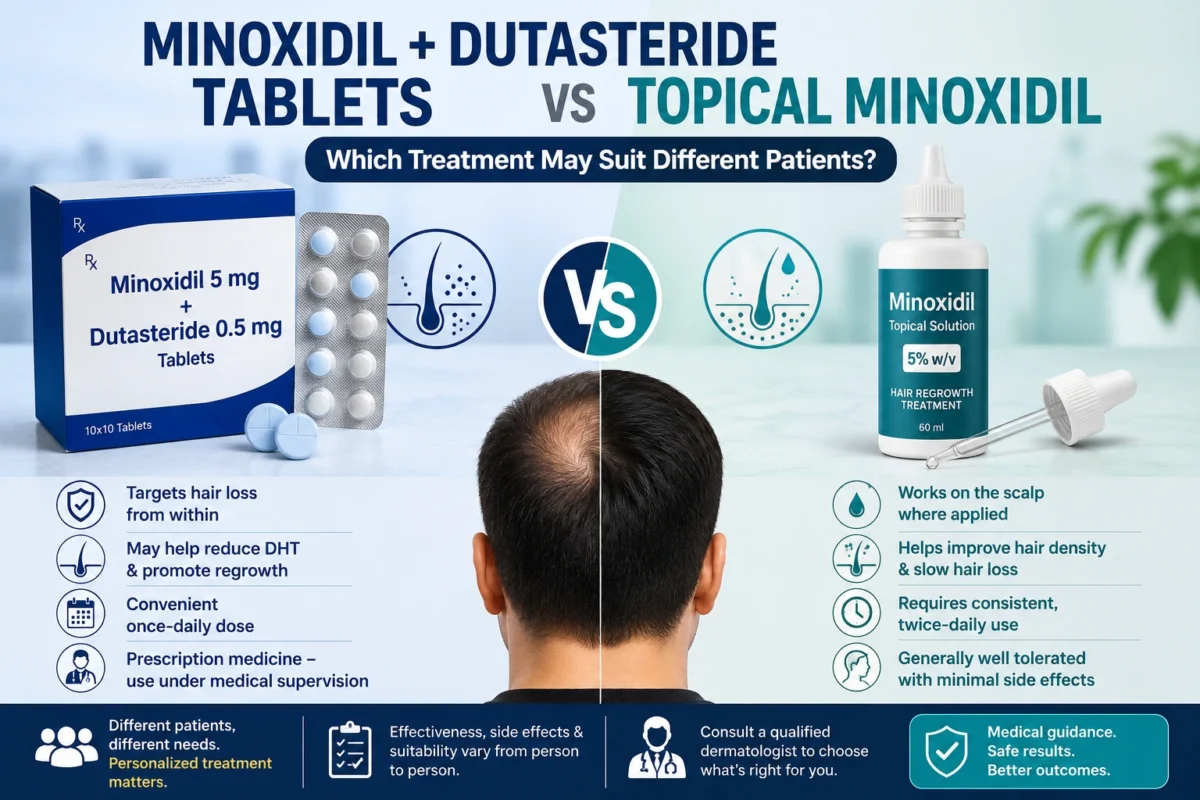
Topical vs Oral Hair Loss Treatment
The debate surrounding topical vs oral hair loss treatment has become increasingly popular in online hair restoration communities.
Topical treatments such as Minoxidil are often preferred by men wanting localized scalp treatment without systemic hormonal effects. Oral medications like Finasteride may provide stronger DHT reduction but involve systemic absorption.
The ideal approach depends on:
- Severity of hair loss
- Tolerance preferences
- Scalp sensitivity
- Medical history
- Long-term goals
Patients exploring topical hair loss solutions, oral Finasteride therapies, and supportive Hair Care nutraceutical products often compare convenience, adherence, and maintenance requirements before selecting treatment.
Finasteride Side Effects
Like all medications, Finasteride may cause side effects in some individuals.
Potential side effects discussed in medical literature may include:
- Reduced libido
- Erectile dysfunction
- Changes in ejaculation
- Breast tenderness
- Mood-related symptoms in rare cases
It is important to understand that many men tolerate Finasteride without significant issues, but treatment decisions should always involve physician guidance.
Minoxidil Side Effects
Minoxidil side effects are generally localized to the scalp area, especially with topical formulations.
- Scalp irritation
- Dryness
- Flaking
- Itching
- Temporary shedding
Some individuals may also experience unwanted facial hair growth if the product spreads beyond the scalp.
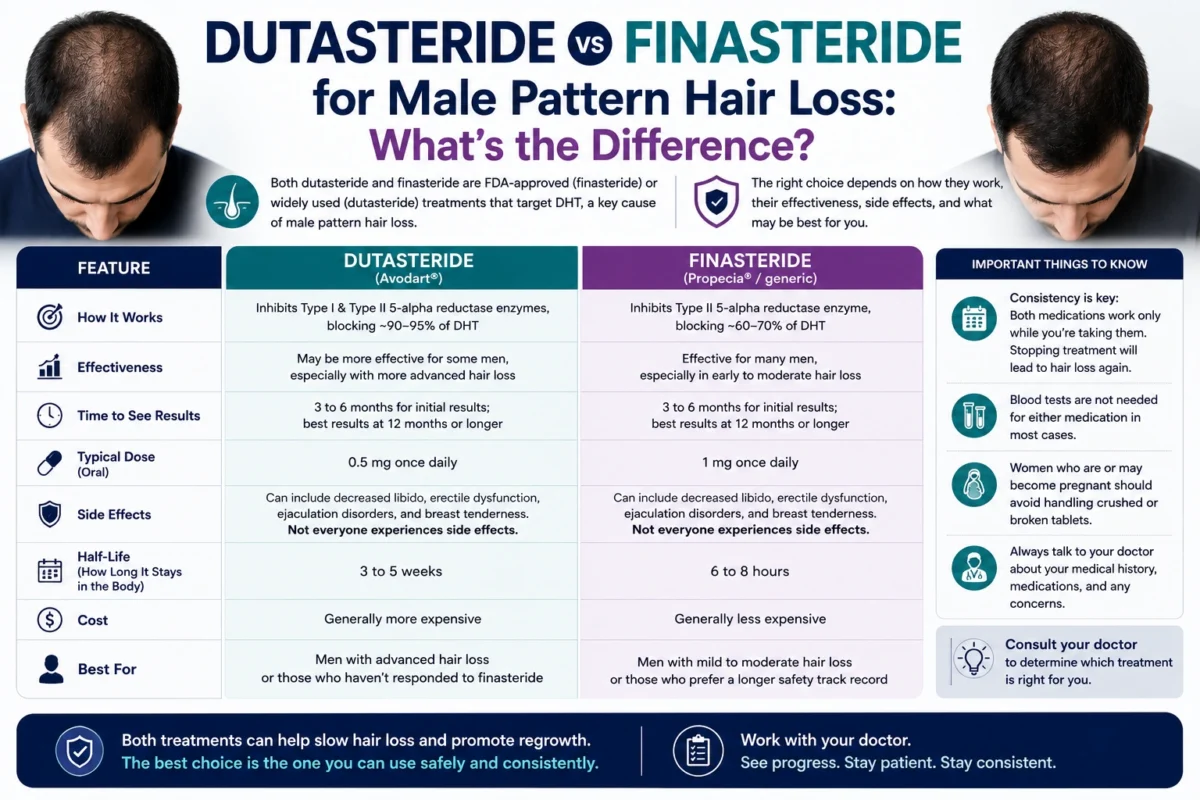
What About Dutasteride?
Dutasteride is another DHT-blocking medication sometimes discussed in advanced hair loss management programs. Compared to Finasteride, Dutasteride inhibits multiple forms of the 5-alpha reductase enzyme and may produce stronger DHT suppression.
Men researching advanced hair restoration options often eventually compare Finasteride therapies, Dutasteride / Avodart options, Minoxidil regrowth treatments, and supportive Hair Care solutions when evaluating long-term strategies.
Can Herbal Alternatives Help?
Some men prefer exploring herbal or supportive nutraceutical approaches alongside traditional therapies.
Popular supportive ingredients commonly discussed in hair wellness programs include:
- Saw palmetto
- Biotin
- Pumpkin seed oil
- Marine collagen
- Zinc and vitamin support
Although these supplements may support overall hair wellness, current evidence suggests that Finasteride and Minoxidil remain among the most evidence-supported treatments for androgenetic alopecia.
Patients exploring supportive wellness strategies often browse Hair Care nutraceutical products alongside clinically researched hair restoration therapies.
Clinical Evidence and Research
Several respected organizations and studies support the effectiveness of Finasteride and Minoxidil for male pattern baldness.
Additional educational information regarding androgenetic alopecia is available through the American Academy of Dermatology.
Clinical research discussing Finasteride effectiveness is also available through PubMed and NIH literature.
General medical guidance regarding hair loss management can additionally be reviewed through the Mayo Clinic.
Final Thoughts
When comparing Finasteride vs Minoxidil, the best option depends on individual hair loss patterns, goals, medical history, and long-term expectations.
Finasteride primarily helps slow hormonal hair loss progression by reducing DHT activity, while Minoxidil stimulates follicle activity and supports visible regrowth. Because the medications work differently, many men eventually explore combination therapy for broader hair restoration support.
Patients researching best treatment for male pattern baldness should focus on consistency, realistic expectations, and professional medical guidance rather than quick-fix marketing claims.
Modern hair restoration often involves a personalized combination of DHT management, topical stimulation, scalp care, and supportive nutritional approaches tailored to the individual.
Frequently Asked Questions
1. Which works better for hair loss: Finasteride or Minoxidil?
Finasteride is often considered more effective for slowing male pattern baldness progression because it targets DHT, while Minoxidil primarily stimulates hair growth.
2. Can Finasteride and Minoxidil be used together?
Yes. Many dermatologists recommend combination therapy because the medications work through different mechanisms and may provide broader hair restoration support.
3. How long does Finasteride take to work?
Many men begin noticing stabilization or improvement within 3–6 months, although full evaluation often requires 12 months or longer.
4. Does Minoxidil regrow hair permanently?
Minoxidil typically requires continued use to maintain results. Stopping treatment may gradually reverse hair regrowth improvements.
5. What are the side effects of Finasteride?
Potential side effects may include reduced libido, erectile dysfunction, and ejaculation changes, although many men tolerate treatment well.
6. Is topical or oral hair loss treatment better?
The best option depends on hair loss severity, personal preference, medical history, and treatment goals. Some men use both approaches together.
7. What is the best treatment for male pattern baldness?
Evidence-supported treatments commonly include Finasteride, Minoxidil, combination therapy, and individualized scalp and hair wellness strategies.
8. Can herbal supplements help with hair loss?
Some supplements may support general hair wellness, but Finasteride and Minoxidil remain among the most clinically researched treatments for androgenetic alopecia.
Medical Disclaimer:
This article is intended for educational and informational purposes only and should not replace professional medical advice, diagnosis, or treatment. Individuals experiencing hair loss should consult a qualified healthcare professional before starting or changing any hair restoration therapy.
This article is intended for educational and informational purposes only and should not replace professional medical advice, diagnosis, or treatment. Individuals experiencing hair loss should consult a qualified healthcare professional before starting or changing any hair restoration therapy.
Medically Reviewed By: Dr Anvesh P
Reviewed Date: June 1, 2026
Reviewed Date: June 1, 2026