


Rogaine + Propecia Topical Hair Loss Solution in USA

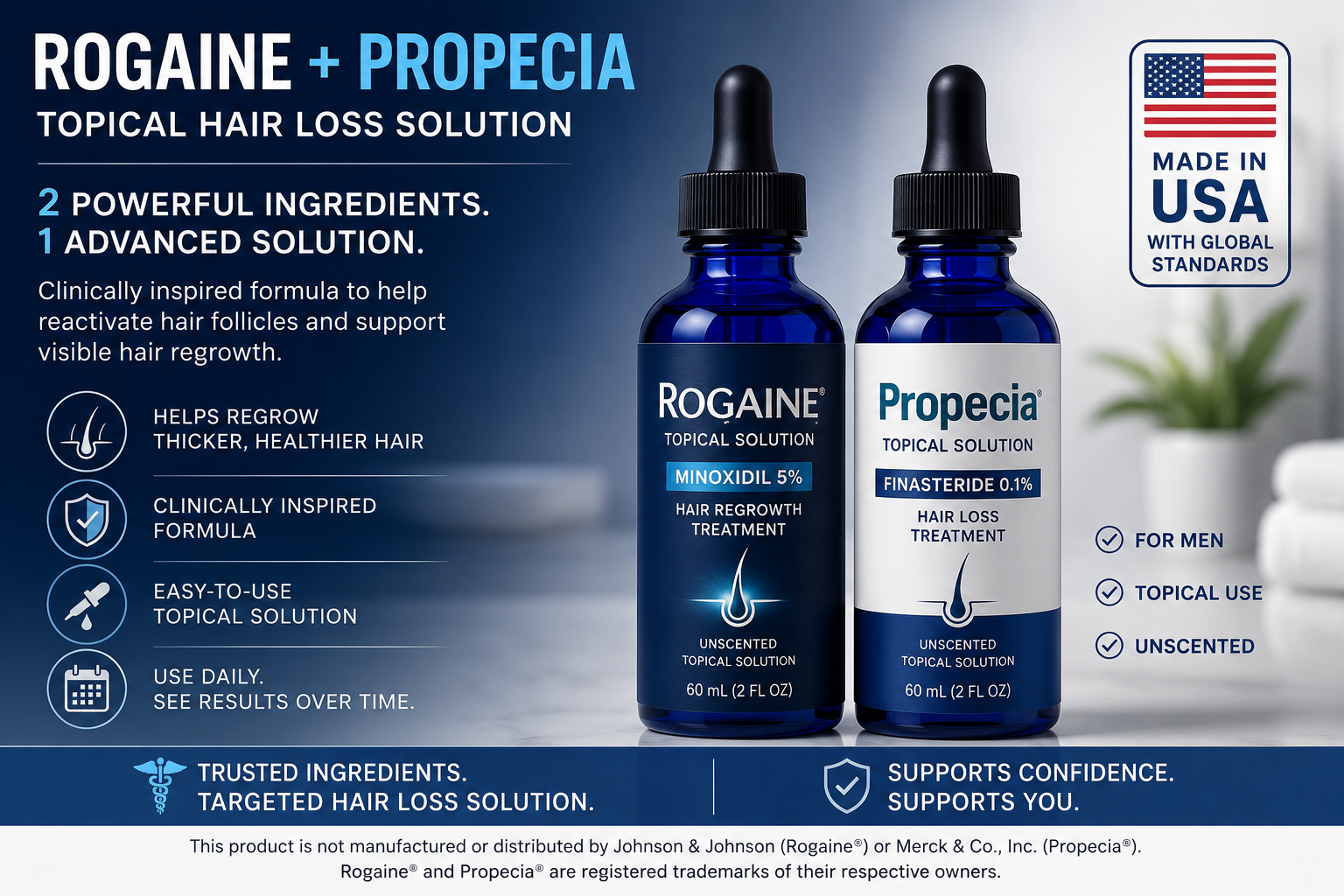
Men and women of all ages in recent days suffer with hair loss, which is one of the most prevalent dermatological issues in the world. The prevalent cause of progressive thinning in the United States is androgenetic alopecia, also known as male or female pattern hair loss. The psychological and emotional effects of hair loss are well documented in the literature, despite the fact that it is not a life-threatening illness.
Treatment strategies have changed over the few decades, moving from cosmetic concealment techniques to pharmaceutical therapies with scientific validation. Among these, Propecia and Rogaine have continuously led the way in evidence-based treatments. Clinical interest in combining these medications into a topical solution for improved efficacy and decreased systemic exposure is developing. These agents are traditionally provided separately in topical and oral formulations.
Comprehending the Science of Hair Loss
The anagen (growth), catagen (transition), and telogen (resting) phases make up the cyclical pattern of hair growth. Dihydrotestosterone (DHT), a hormone generated from testosterone, disrupts this cycle in androgenetic alopecia.
Follicular shrinkage results from DHT’s binding to androgen receptors in genetically vulnerable hair follicles. Affected follicles gradually generate shorter, thinner hairs until growth may stop completely. The gradual nature of pattern hair loss is supported by this biological process.
Therefore, effective treatment approaches concentrate on either inhibiting DHT activity, promoting hair growth, or preferably treating both pathways at the same time. The combination of Propecia and Rogaine relies heavily on this dual mechanism approach.
How Does Rogaine Operate?
The FDA has approved rogaine, also known by its generic name, minoxidil, as a topical vasodilator to treat hair loss. It mainly prolongs the anagen phase of the hair development cycle and increases blood flow to hair follicles.
Over time, minoxidil is thought to increase hair density and follicular size. Clinical experiments have repeatedly shown that it can decrease hair loss and encourage regeneration in both men and women, even if its precise mechanism is still unclear. One of the most accessible first-line treatments for androgenetic alopecia is rogaine, which is widely available over-the-counter in the US at dosages like 2% and 5%.
What Is Propecia and How Does It Help Treat Hair Loss?
Finasteride, also known by its brand name Propecia, is an oral drug that inhibits the 5-alpha reductase enzyme. The hormone that causes follicular shrinkage, DHT, is produced from testosterone by this enzyme.
Finasteride helps maintain existing hair and may encourage regeneration in certain people by reducing scalp and serum DHT levels. It is usually prescribed under medical supervision and has FDA approval for male pattern hair loss.
Oral finasteride has been linked to possible systemic side effects, such as hormonal abnormalities and sexual dysfunction, despite its effectiveness. Despite the rarity of side effects, there is now more interest in topical formulations and other alternate administration routes.
The New Idea of Combining Topical Rogaine and Propecia
A complimentary mechanism of action underpins the concept of mixing finasteride and minoxidil into a single topical solution. Finasteride lowers DHT levels in the scalp, whereas minoxidil promotes hair growth.
The goal of topical finasteride is to minimize systemic absorption while delivering the medication directly to hair follicles. Combining topical minoxidil with other medications may have a synergistic impact, treating hair loss’s root cause as well as its symptoms.
Under the supervision of a doctor, these combinations are frequently accessible in the US through telehealth platforms or compounding pharmacies. The use of these formulations should always be accompanied by medical consultation because they are not globally standardized.
USA Safety and Regulatory Aspects
The FDA has approved finasteride for oral administration in men and minoxidil for topical use in the US. Finasteride topical preparations are classified as compounded or off-label therapies. For patients looking for therapy, this distinction is crucial. Every Patient have to make sure that they receive these treatments under the guidance of a licensed healthcare professional and from reliable sources and risks may arise from self-medication or obtaining from unreliable sources.
Who Could Use a Topical Propecia & Rogaine Solution?
Combination therapy may be most beneficial for people with early to moderate androgenetic alopecia and because dormant follicles are more likely to respond to treatment than those that have been inactive for long, early intervention is frequently linked to better results.
Under physician supervision, men who are worried about systemic adverse effects from oral finasteride may think considering topical options. Although this is still a more specialized area of practice, some clinicians now assess its usage in postmenopausal women. The eligibility of each patient is determined by their medical history, hair loss pattern, and personal risk factors, which emphasizes the significance of seeking expert advice.
Possible Adverse Reactions and Risk Control of Rogarine
Finasteride and minoxidil can also have negative effects, just like any other medicine. In the USA, access to hair loss treatments has greatly increased because to tele health platforms. All the people can receive tailored prescriptions, including compounded topical remedies, and consult with licensed healthcare specialists virtually and this change has increased accessibility and convenience, but it also emphasizes how crucial it is to select reliable, regulated providers and patients should confirm the credentials of their providers and make sure that state medical regulations are being followed. Some users of topical minoxidil may experience dryness, or irritation of the scalp and consistency is very essential and before discernible changes are shown, the majority of patients must use the solution every day for several months.
What are prospects for treating Hair Loss
With new treatments like a platelet rich plasma, stem cell therapies, and innovative pharmaceutical drugs that target various pathways, research into hair restoration is still developing. Combination topical treatments are a welcome development, but they are only one aspect of a larger field of innovation that aims to enhance patient outcomes and experience. Long-term safety, comparative efficacy among treatment alternatives, and ideal dosage strategies will all be clarified by further research.
In the USA, a growing tendency toward patient centered, customized therapy is seen in the topical hair loss solution that combines Rogaine and Propecia. This strategy provides a potentially useful alternative for people with androgenetic alopecia by addressing both hormonal influence and hair growth stimulation. Nonetheless, it is crucial to approach these medications cautiously and to understand the difference between approved and compounded therapies. The foundation of safe and efficient treatment is still consultation with a licensed healthcare professional. Patients now have more alternatives than ever thanks to advancements in medical technology, but evaluating these options still requires reliable information and expert advice.
Frequently Asked Questions
- How much time does it take to see results?
After three to six months of regular use, the majority of patients start to see noticeable benefits, however complete results may take up to a year.
- Does topical application have any negative effects?
Although the risks are usually smaller than with oral use, side effects can include scalp irritation from minoxidil and mild systemic effects from finasteride.
- Can this combination therapy be used by women?
In certain situations, some medical professionals may recommend topical formulations for women, however because of hormonal concerns, this should always be done under a doctor’s supervision.
- What distinguishes oral finasteride from topical finasteride?
While oral finasteride acts systemically by lowering total DHT levels in the body, topical finasteride is administered topically to the scalp with the goal of reducing DHT locally.
- Does the FDA approve the topical combo of Rogaine and Propecia?
Finasteride is exclusively authorized for oral usage, however minoxidil has FDA approval for topical application.