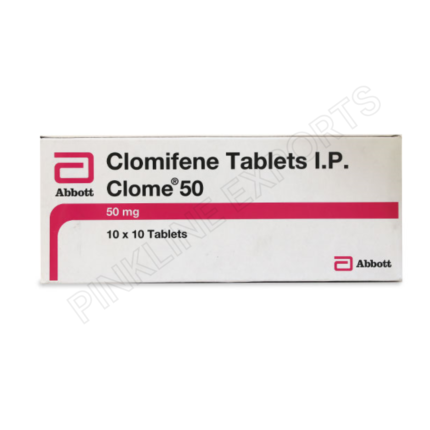
What Are Clomifene Tablets 25 Mg?
Clomifene Tablets 25 Mg contain clomifene citrate, a medication commonly used in fertility treatments to stimulate ovulation. Ovulation disorders are among the leading causes of female infertility. When the ovaries do not release eggs regularly, natural conception becomes difficult.
Clomifene helps address this issue by stimulating the hormonal pathways that control ovulation. The medication influences the endocrine system, encouraging the body to produce the hormones needed for follicle development and egg release.
Clomifene has been widely used for several decades and remains one of the most commonly prescribed medications for ovulation induction.
How Clomifene Tablets 25 Mg Work
Clomifene works by interacting with estrogen receptors in the hypothalamus, a region of the brain responsible for controlling reproductive hormone signals.
Under normal circumstances, estrogen sends feedback signals to the brain indicating that hormone levels are sufficient. Clomifene blocks these estrogen signals, creating the perception that estrogen levels are low.
As a result, the brain increases the production of reproductive hormones such as:
• Follicle-stimulating hormone (FSH)
• Luteinizing hormone (LH)
These hormones stimulate the ovaries to develop mature follicles and trigger ovulation. Once ovulation occurs, the released egg can be fertilized naturally or through assisted reproductive techniques.
This mechanism makes Clomifene Tablets 25 Mg an important medication in infertility management and ovulation induction therapy.
Medical Uses of Clomifene Tablets 25 Mg
Clomifene is widely used in reproductive medicine and fertility clinics.
Ovulation Induction
The most common use of Clomifene Tablets 25 Mg is to induce ovulation in women who experience irregular or absent ovulation.
Ovulation problems may occur due to hormonal imbalances, metabolic conditions, or endocrine disorders. By stimulating the release of FSH and LH, clomifene helps trigger ovulation and improves the chances of conception.
Treatment of PCOS-Related Infertility
Women with polycystic ovary syndrome (PCOS) often experience irregular menstrual cycles and difficulty ovulating. Clomifene is frequently prescribed as a first-line treatment for infertility associated with PCOS.
The medication helps restore ovulation in many patients, allowing the ovaries to release eggs more consistently.
Fertility Treatment Programs
Clomifene may also be used as part of fertility treatment protocols designed to improve the chances of conception. In some cases, it may be combined with assisted reproductive technologies such as intrauterine insemination (IUI).
Clinical guidance published by the National Institutes of Health (NIH) supports the use of ovulation-inducing medications like clomifene in the management of infertility related to ovulatory dysfunction.
Role in Hormonal and Fertility Treatment Plans
Fertility treatments often involve multiple medications designed to regulate different aspects of the reproductive cycle.
For example, medications such as Cetrorelix Injection may be used in assisted reproductive technology to prevent premature ovulation during ovarian stimulation cycles.
Similarly, endocrine medications such as Cabergoline Tablets 0.5 Mg may be prescribed in cases where elevated prolactin hormone levels interfere with ovulation and fertility.
Reproductive specialists develop individualized treatment plans based on hormone testing, reproductive history, and patient health factors.
Dosage and Administration
Clomifene Tablets 25 Mg should only be taken according to the instructions provided by a healthcare professional.
Typical dosage guidelines include:
• Oral tablets taken with water
• Usually started early in the menstrual cycle
• Taken for several days during each treatment cycle
Doctors may adjust dosage depending on ovulation response and patient tolerance. Monitoring through ultrasound or hormone testing may be recommended to track follicle development.
Patients should never increase or modify dosage without medical advice.
Safety Information
Before using Clomifene Tablets 25 Mg, patients should inform their healthcare provider about their complete medical history and any medications they are currently taking.
This medication may not be suitable for individuals with:
• Liver disease
• Ovarian cysts not related to PCOS
• Hormone-dependent tumors
• Unexplained vaginal bleeding
Medical supervision is essential to ensure safe and effective fertility treatment.
Possible Side Effects
Some individuals may experience side effects while taking Clomifene Tablets 25 Mg.
Common side effects may include:
• Hot flashes
• Headache
• Nausea
• Mood changes
• Abdominal discomfort
In rare cases, patients may develop ovarian enlargement or visual disturbances. If severe symptoms occur, medical attention should be sought immediately.
Storage Instructions
To maintain the effectiveness of Clomifene Tablets, proper storage is recommended.
Storage guidelines include:
• Store at room temperature
• Keep away from moisture and excessive heat
• Protect from direct sunlight
• Keep out of reach of children
FAQ’s













Reviews
There are no reviews yet.