


Low Testosterone Treatment in Canada: From Diagnosis to Choosing a TRT Formulation

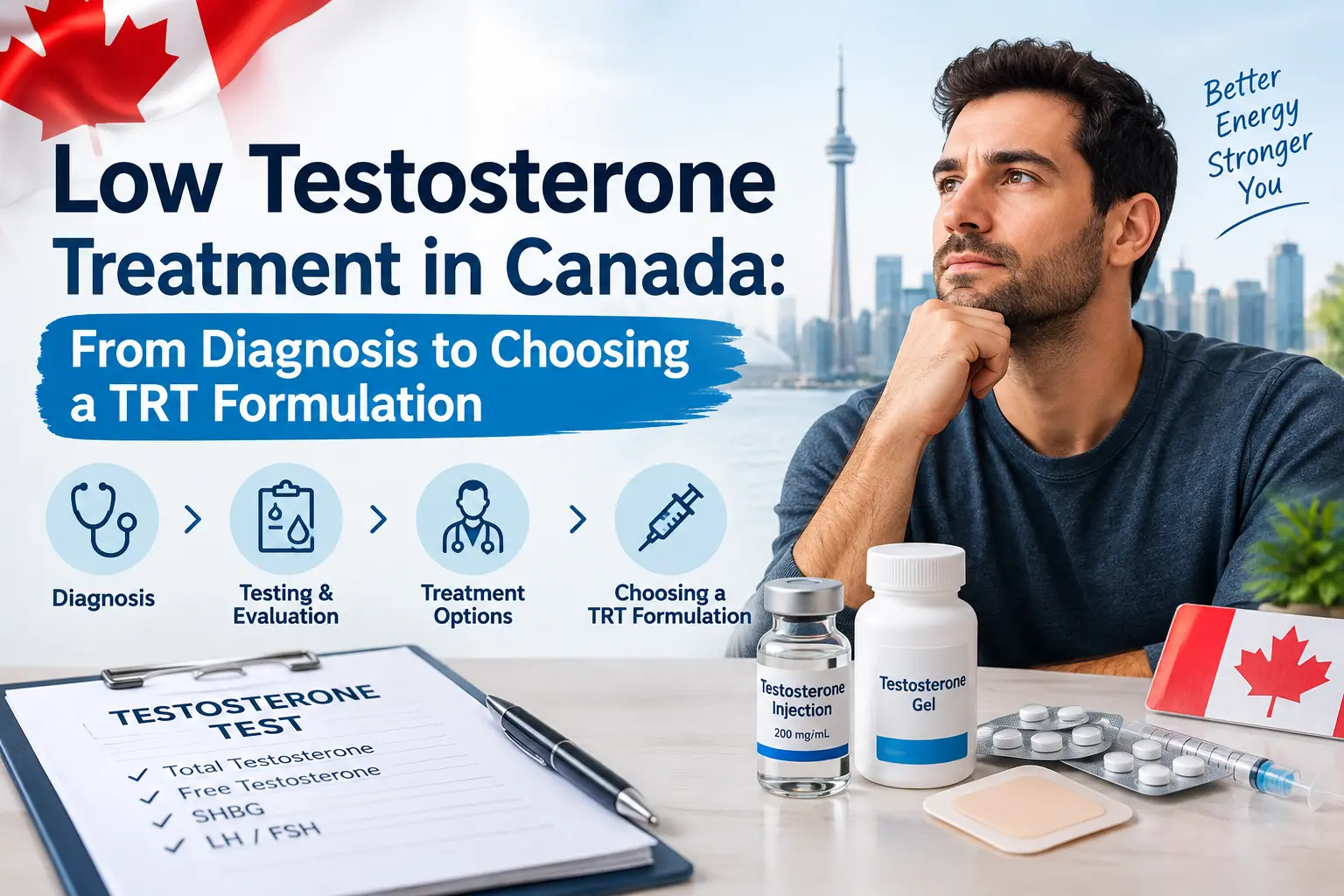
Low Testosterone Treatment in Canada: From Diagnosis to Choosing a TRT Formulation
A comprehensive clinical guide to Canadian biochemical diagnostic thresholds, provincial access pathways, safety monitoring protocols, and comparing transdermal gels with injectable therapies.
Testosterone deficiency (TD), historically termed male hypogonadism, is a clinical and biochemical syndrome affecting an estimated 20% to 30% of adult Canadian men over the age of 50. Characterized by inadequate endogenous androgen production, low testosterone presents with diverse physical, metabolic, and sexual symptoms, including chronic fatigue, sarcopenia (loss of lean muscle mass), increased visceral adiposity, mood disturbances, and erectile dysfunction. While awareness surrounding men’s endocrine health has expanded rapidly across Canadian provinces, obtaining an evidence-based diagnosis and navigating available therapy requires a structured understanding of Canadian medical practice.
From primary care clinics in Ontario and British Columbia to specialized telehealth platforms in Alberta, treating testosterone deficiency involves specific biochemical criteria, pre-treatment safety screenings, and customized formulation selection. Because testosterone replacement therapy (TRT) is an ongoing, long-term therapeutic commitment, patients must evaluate the lifestyle logistics, hormonal stability, and biological profile of various delivery options. This guide walks through the complete treatment pathway in Canada—from initial blood work and clinical diagnostic benchmarks to selecting the appropriate medical formulation and managing lifelong monitoring.
Key Canadian Diagnostic Standard: According to clinical practice guidelines from the Canadian Urological Association (CUA), low testosterone cannot be diagnosed from symptoms alone. Diagnosis requires at least two separate, fasting morning blood samples (drawn between 7:00 AM and 10:30 AM) demonstrating a total serum testosterone level below 8 to 10 nmol/L, paired with verifiable clinical signs.
1. Establishing a Clinical Diagnosis: Canadian Testing Protocols
In Canadian clinical practice, distinguishing between temporary lifestyle-induced dips in hormone levels and genuine testosterone deficiency is essential. Endogenous testosterone production follows a distinct circadian rhythm, peaking in the early morning hours and gradually declining throughout the day. Consequently, Canadian clinical guidelines require morning venous blood draws to establish an accurate baseline.
To confirm hypogonadism, Canadian physicians rely on a structured diagnostic panel:
Total Serum Testosterone
Measures both bound and circulating hormone. Levels consistently measuring below 8 to 10 nmol/L indicate hypogonadism, while readings between 10 and 12 nmol/L represent a borderline zone requiring further evaluation.
Free & Bioavailable Testosterone
Because roughly 60% of testosterone is bound tightly to Sex Hormone-Binding Globulin (SHBG) and 38% loosely to albumin, measuring or calculating free testosterone is crucial for men with obesity, liver changes, or metabolic syndrome where total levels appear falsely normal.
LH, FSH & Prolactin Testing
Differentiates between primary hypogonadism (testicular origin, indicated by elevated LH/FSH) and secondary hypogonadism (pituitary or hypothalamic origin, indicated by low or inappropriately normal gonadotropins).
Additionally, clinicians cross-reference standard medical history against international diagnostic frameworks. Diagnostic recommendations hosted by Cleveland Clinic Consult QD emphasize screening for common confounding comorbidities—such as obstructive sleep apnea, uncontrolled type 2 diabetes, or chronic opioid analgesic use—which can independently suppress the hypothalamic-pituitary-gonadal (HPG) axis.
2. Access Pathways: Public Provincial Healthcare vs. Private Care
Canadian patients typically access TRT through one of two clinical pathways: the public provincial healthcare system or the private medical sector.
The Public Healthcare Route (OHIP, MSP, AHS)
Under provincial health programs (such as the Ontario Health Insurance Plan, British Columbia MSP, or Alberta Health Services), initial consultations with a family physician and subsequent referrals to an endocrinologist or urologist are fully covered. Diagnostic blood work conducted at community laboratories (like LifeLabs or Dynacare) is also covered by public plans.
However, wait times for specialist consultations can range from 3 to 12 months depending on regional demand. Furthermore, while the doctor’s visit is publicly funded, the prescribed medication is generally not covered by provincial drug formularies (e.g., the Ontario Drug Benefit) for non-seniors unless specific prior-authorization exceptional criteria are met.
The Private & Telehealth Route
To circumvent extended specialist wait times, an increasing number of Canadian men turn to specialized private men’s health and telehealth clinics. These private services provide rapid diagnostic intake, organized laboratory requisitioning, and physician consultations within one to two weeks. While consultation and clinic retainer fees must be paid out-of-pocket, patients can take their private prescriptions to any licensed pharmacy or utilize home-delivery pharmacy services, often seeking partial reimbursement through private employer-sponsored health insurance.
3. Evaluating TRT Delivery Methods: Transdermal Gels vs. Injections
Once a definitive biochemical diagnosis of hypogonadism is established, the clinician and patient select the appropriate treatment vehicle. Health Canada has approved several testosterone delivery formulations, each presenting distinct pharmacokinetic and lifestyle profiles.
| Formulation Type | Common Administration Route | Pharmacokinetic Profile | Primary Clinical Considerations |
|---|---|---|---|
| Transdermal Gels (1% / 1.62%) | Applied daily to shoulders or upper arms | Smooth, steady daily levels; closely mirrors natural circadian rhythm | No needles required; requires caution to avoid skin-to-skin transfer to others |
| Intramuscular Injections (Cypionate / Enanthate) | Deep injection weekly or bi-weekly | Higher peaks followed by gradual troughs; can cause hormonal fluctuations | Cost-effective per dose; requires injection supplies and may elevate hematocrit |
| Long-Acting Undecanoate (Nebido) | Deep in-clinic injection every 10 to 14 weeks | Stable, prolonged release over several months | Administered by a healthcare provider; large injection volume (4 ml) |
| Oral Testosterone Undecanoate | Twice daily oral capsule taken with meals | Short half-life; bypasses first-pass liver breakdown via lymphatic absorption | Convenient; requires consistent dietary fat intake for reliable absorption |
The ideal formulation depends on individual lifestyle, convenience, needle comfort, and target hormone levels. Patients sensitive to mood swings often prefer daily topical options because they avoid the hormonal peaks and troughs associated with bi-weekly injections.
4. Focus on Transdermal Gels: Absorption & Convenience
Transdermal testosterone gels remain one of the most widely prescribed treatment formats across Canada. By delivering a micro-dose of bioidentical testosterone across the stratum corneum into the cutaneous capillary bed each morning, gels provide steady blood levels that mimic the body’s natural morning testosterone peak.
Standard branded transdermal options (such as AndroGel or Testim) are well-established in Canadian pharmacies, but brand-name dispensing can carry substantial monthly retail costs for self-funding patients without comprehensive private drug insurance. In response, many patients explore generic transdermal alternatives that deliver equivalent clinical concentrations.
Patients seeking continuity of care and cost-effective transdermal treatment frequently discuss options like Cernos Gel – Testosterone Gel | Generic AndroGel / Testim with their prescribers. Formulated with a standard 1% bioidentical testosterone base in an easy-to-absorb hydroalcoholic matrix, generic transdermal options provide reliable hormonal support without the high pricing of proprietary brands.
Secondary Transference Warning: Transdermal gels dry quickly on the skin, but unabsorbed hormone can remain on the surface. Direct skin-to-skin contact with women, partners, or children must be strictly avoided while the medication is on the skin. Patients should cover the application site with loose clothing once dry and wash the area thoroughly with soap and water before engaging in close physical contact.
5. Ongoing Safety Protocols & Mandatory Laboratory Panels
Testosterone replacement therapy is an active endocrine intervention that downregulates the body’s endogenous luteinizing hormone (LH) and follicle-stimulating hormone (FSH) via negative feedback. Because exogenous androgens affect multiple organ systems, routine laboratory monitoring is a non-negotiable requirement of responsible medical management.
Essential Biomarkers Evaluated During Follow-Ups
- Complete Blood Count & Hematocrit: Exogenous testosterone stimulates erythropoietin production in the kidneys, increasing red blood cell production. If hematocrit levels exceed 0.54 (54%), blood viscosity increases, raising the risk of hypertension, deep vein thrombosis, and cardiovascular strain. Elevated levels may require dosage adjustment or therapeutic phlebotomy.
- Prostate-Specific Antigen (PSA): While modern evidence indicates that TRT does not cause de novo prostate cancer, testosterone can promote growth in pre-existing androgen-sensitive lesions. Regular PSA checks and digital rectal exams are standard screening protocols for men over 40.
- Serum Estradiol ($E_2$): A portion of circulating testosterone naturally aromatizes into estrogen. Elevated estradiol can lead to fluid retention, mood changes, and breast tissue tenderness (gynecomastia), requiring careful monitoring.
- Liver Enzymes & Lipid Panels: Transdermal applications bypass initial liver metabolism, helping to maintain stable lipid profiles. However, routine monitoring of HDL, LDL, and liver enzymes ensures long-term cardiovascular and metabolic safety.
Follow-up blood work is typically scheduled at 3 months, 6 months, and 12 months after beginning therapy. Once hormone levels stabilize, comprehensive testing is generally conducted once or twice per year.
6. Practical Guide: Best Practices for Transdermal Gel Application
Proper application is essential for maximizing transdermal absorption, maintaining consistent daily hormone levels, and preventing accidental medication transfer to others:
- Apply in the Morning to Clean Skin: Apply your daily dose in the morning after showering. Clean, warm, dry skin absorbs the transdermal matrix most effectively. Make sure your skin is completely dry before dispensing the gel.
- Target Approved Application Sites: Spread the gel across the shoulders, upper arms, or abdomen, following your specific formulation’s directions. Avoid applying gel to the scrotum, as the high concentration of 5-alpha reductase enzymes in scrotal tissue can cause disproportionate spikes in dihydrotestosterone (DHT).
- Spread Thinly Without Aggressive Rubbing: Smooth the gel over the skin in a thin, even layer. Avoid rubbing it in forcefully, as excessive friction can trap the medication under your fingernails and reduce absorption.
- Wash Hands Thoroughly: Immediately wash your hands with warm water and soap after application to remove any residual hormone from your fingers and palms.
- Allow to Dry Before Dressing: Wait three to five minutes for the hydroalcoholic base to dry completely before putting on a shirt. Covering the application site with clothing creates a protective barrier against accidental skin-to-skin transfer.
- Avoid Water Exposure: Do not swim, shower, or engage in heavy workouts that cause intense sweating for at least two to four hours after application to give the medication sufficient time to absorb into the dermal capillaries.
7. Conclusion & Clinical Decision Framework
Managing low testosterone in Canada requires a careful, evidence-based approach. Because the signs of hypogonadism often overlap with other lifestyle and medical conditions, securing a verifiable biochemical diagnosis through repeated morning blood tests is the essential first step before considering therapy.
For men diagnosed with clinical hypogonadism, selecting between transdermal gels and injectable protocols comes down to balancing personal convenience, needle preference, and hormonal stability. Transdermal gels like Cernos Gel offer a steady, needle-free way to restore healthy physiological hormone levels without the steep peaks and troughs common with injections. Working closely with a qualified physician and keeping up with regular monitoring ensures that testosterone replacement therapy remains safe, balanced, and effective over the long term.