

Eyelash Growth Treatments in Canada: Bimatoprost, Cosmetic Serums and Expected Costs

Eyelash Growth Treatments in Canada: Bimatoprost, Cosmetic Serums, and Expected Costs
A clinical, regulatory, and cost breakdown evaluating prescription prostaglandin analogues, over-the-counter peptide enhancers, and real-world budgeting across Canada.
From micro-salons in Vancouver and Toronto to medical dermatology clinics in Montreal and Calgary, the demand for longer, denser, and darker eyelashes continues to drive Canadian aesthetic medicine. While temporary enhancements like synthetic lash extensions and perms remain popular, consumers increasingly seek long-term biological solutions that stimulate endogenous lash growth from the follicle itself.
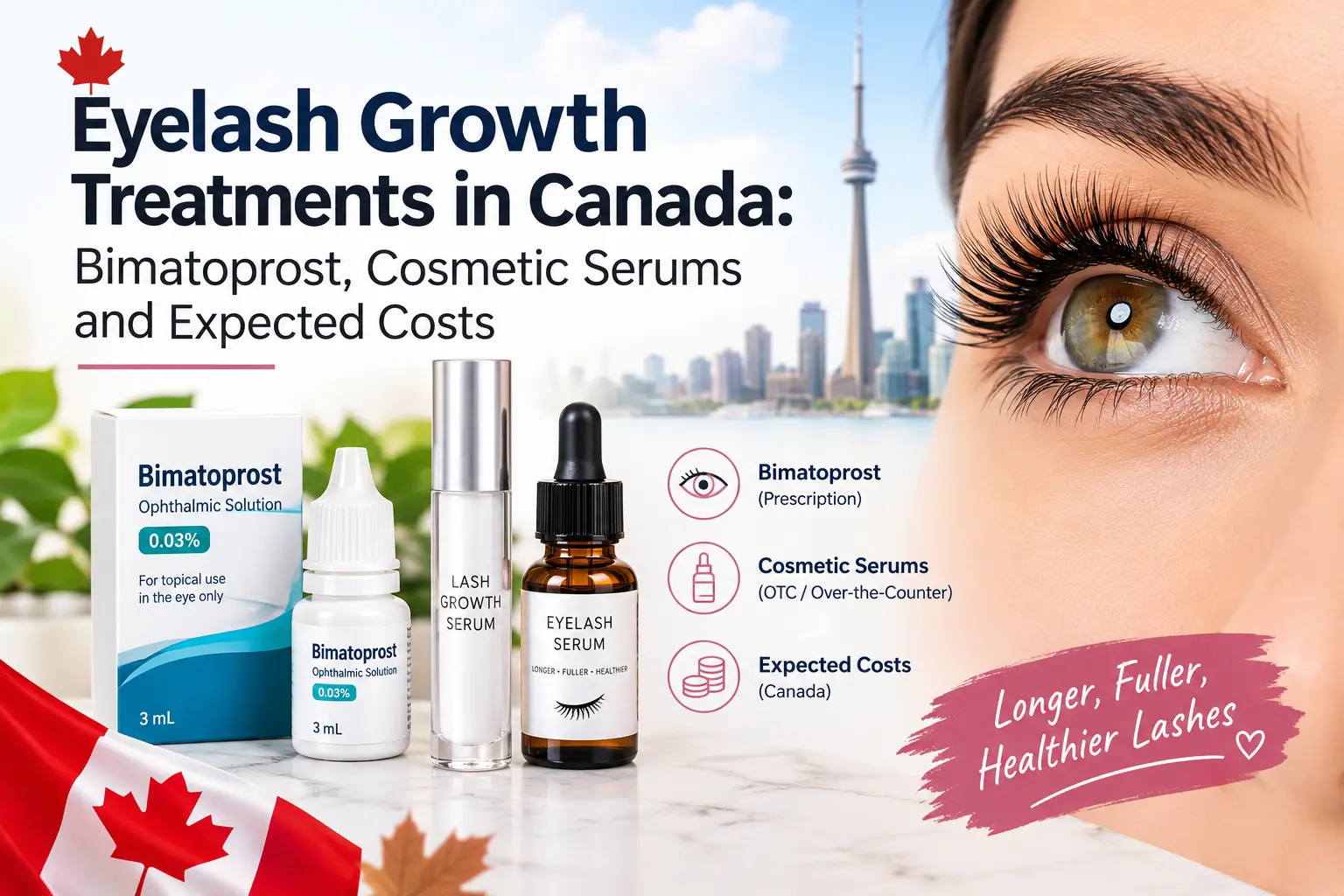
The Canadian marketplace offers two primary treatment categories: prescription prostaglandin analogues (such as Bimatoprost 0.03%) and over-the-counter (OTC) cosmetic conditioning serums. Navigating this landscape requires understanding both the scientific mechanisms that stimulate hair follicles and the distinct Canadian regulatory boundaries enforced by Health Canada. This guide examines how genuine lash-growth therapeutics operate, evaluates the safety and side-effect profiles across formulations, and breaks down the real-world costs of maintaining results in Canada.
Key Regulatory Difference in Canada: In Canada, authentic prostaglandin analogues such as bimatoprost are classified under the official Prescription Drug List. They require medical authorization from a licensed physician, nurse practitioner, or optometrist. Over-the-counter cosmetic serums sold at department stores and pharmacies do not contain active bimatoprost; they rely on peptides, panthenol, and conditioning botanicals to reduce hair breakage.
1. The Biological Lash Cycle & How Bimatoprost Works
To understand why most cosmetic serums struggle to create dramatic length compared to medical therapies, one must examine the trichological growth cycle of human eyelashes. Unlike scalp hair, which remains in an active growing phase for two to seven years, cilia (eyelashes) have an exceptionally compressed lifecycle comprising three distinct phases:
- Anagen (Active Growth Phase): Lasts roughly 30 to 45 days. Only about 40% of upper eyelashes are actively growing at any given moment, which is why eyelashes naturally remain short.
- Catagen (Transition Phase): Lasts approximately two to three weeks. The hair follicle shrinks, the hair stops growing, and cellular anchoring begins to loosen.
- Telogen (Resting & Shedding Phase): Lasts roughly 100 days before the lash falls out naturally, making room for a new hair shaft to emerge from the follicle.
Bimatoprost is a synthetic prostamide (a prostaglandin $\text{F}_{2\alpha}$ analogue) originally developed as an ophthalmic solution to reduce elevated intraocular pressure in glaucoma patients. During clinical trials, ophthalmologists noticed that patients treated with the drops developed noticeably longer, thicker, and darker lashes. Pharmacological investigations confirmed that bimatoprost alters the lash cycle in two specific ways: it prolongs the duration of the anagen growth phase (allowing lashes to grow longer before stopping) and recruits a higher percentage of dormant follicles into active production.
Furthermore, bimatoprost stimulates melanogenesis—the enzymatic production of melanin within follicular melanocytes. This process deepens the natural pigment of the lash shaft, making eyelashes look naturally darker without requiring cosmetic dye.
2. Prescription Bimatoprost vs. Over-the-Counter Cosmetic Serums
Consumers evaluating eyelash products encounter two distinct classes of formulations. The key difference lies in whether the product contains a pharmacologically active medication or a topical conditioning blend:
Medical Formulations (Bimatoprost 0.03%)
Clinically proven to lengthen the anagen phase and increase eyelash volume. Formulations like Careprost 0.03% 3ml – Bimatoprost Eye Drops deliver the exact active molecule approved by regulatory authorities for the treatment of hypotrichosis (inadequate eyelashes).
Peptide-Based Enhancers
Products containing amino-acid chains such as Myristoyl Pentapeptide-17 and Biotinoyl Tripeptide-1. These encourage keratin synthesis at the base of the hair shaft, reinforcing structural tensile strength to minimize premature breakage.
Botanical & Conditioning Blends
Formulated with castor oil, panthenol (provitamin B5), and sodium hyaluronate. These act primarily as hair conditioners, hydrating the lash shaft to create a shinier, plumper appearance without altering follicle biology.
Health Canada enforces strict boundaries regarding what can be sold over the counter. In official regulatory advisories published on the Recalls and Safety Alerts Database, Health Canada routinely monitors and seizes unauthorized imported cosmetic serums that secretly contain synthetic prostaglandin analogues (such as isopropyl cloprostenate or dechloro dihydroxy difluoro ethylcloprostenolamide) without a prescription DIN (Drug Identification Number).
3. Growth Timelines and Long-Term Maintenance Protocols
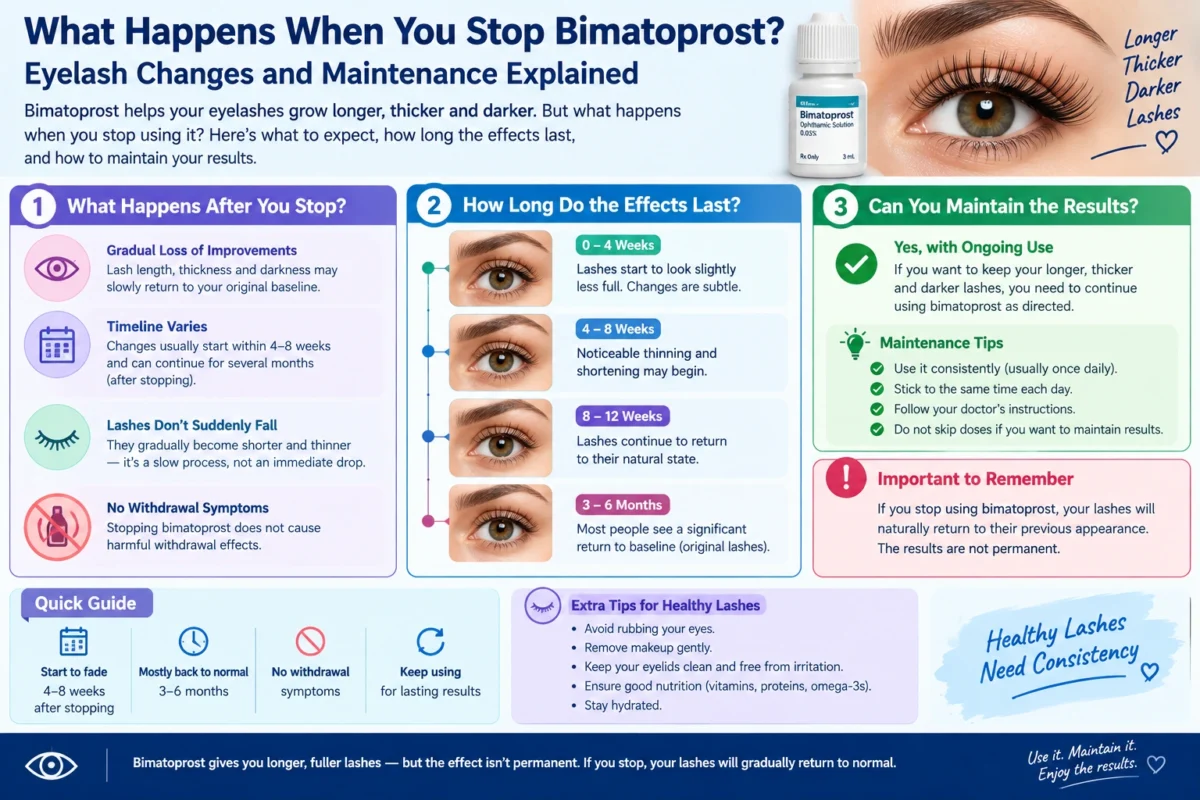
Unlike rapid salon services such as extensions, biological lash growth is a progressive process that requires consistent daily application. The active ingredient must interact with hair follicles as they enter their natural anagen cycles.
| Treatment Phase | Visible Lash Changes | Follicular Mechanism | Application Cadence |
|---|---|---|---|
| Weeks 1 to 4 | Minimal change in visible length; subtle reduction in lash shedding. | Follicles transition from telogen rest to active anagen growth. | Once nightly, applied directly along the upper lash margin. |
| Weeks 5 to 8 | Noticeable initial increase in length, fine new lash emergence. | Extended anagen phase prevents premature cellular detachment. | Once nightly without interruption. |
| Weeks 9 to 12 | Significant thickening, enhanced density, and visible darkening. | Stimulated melanogenesis increases melanin content in the hair shaft. | Once nightly. |
| Weeks 13 to 16 | Peak clinical results; maximum length, fullness, and volume achieved. | Full cohort of eyelashes completes an uninterrupted active cycle. | Peak baseline reached. |
| Maintenance Phase | Sustained lash length and volume without further expansion. | Maintains active anagen support across ongoing shedding cycles. | Tapered to 2 to 3 applications per week. |
For an expanded clinical breakdown of cellular milestones, shedding cycles, and real-world clinical benchmarks, explore our detailed analysis on how long it takes to grow longer eyelashes.
4. Side Effects: Iris Pigmentation, Hyperpigmentation & Fat Atrophy
Because bimatoprost is an active ophthalmic medication, it requires careful application to avoid unnecessary contact with surrounding ocular tissues. Clinical trials and ongoing post-market surveillance document several well-characterized side effects:
Common and Transient Side Effects
- Conjunctival Hyperemia: Mild redness of the eye surface, reported by approximately 3% to 4% of users. It typically resolves as the ocular surface adjusts to the formula.
- Erythema & Pruritus: Localized itching or redness along the upper eyelid skin where the product is applied, often caused by applying excess liquid.
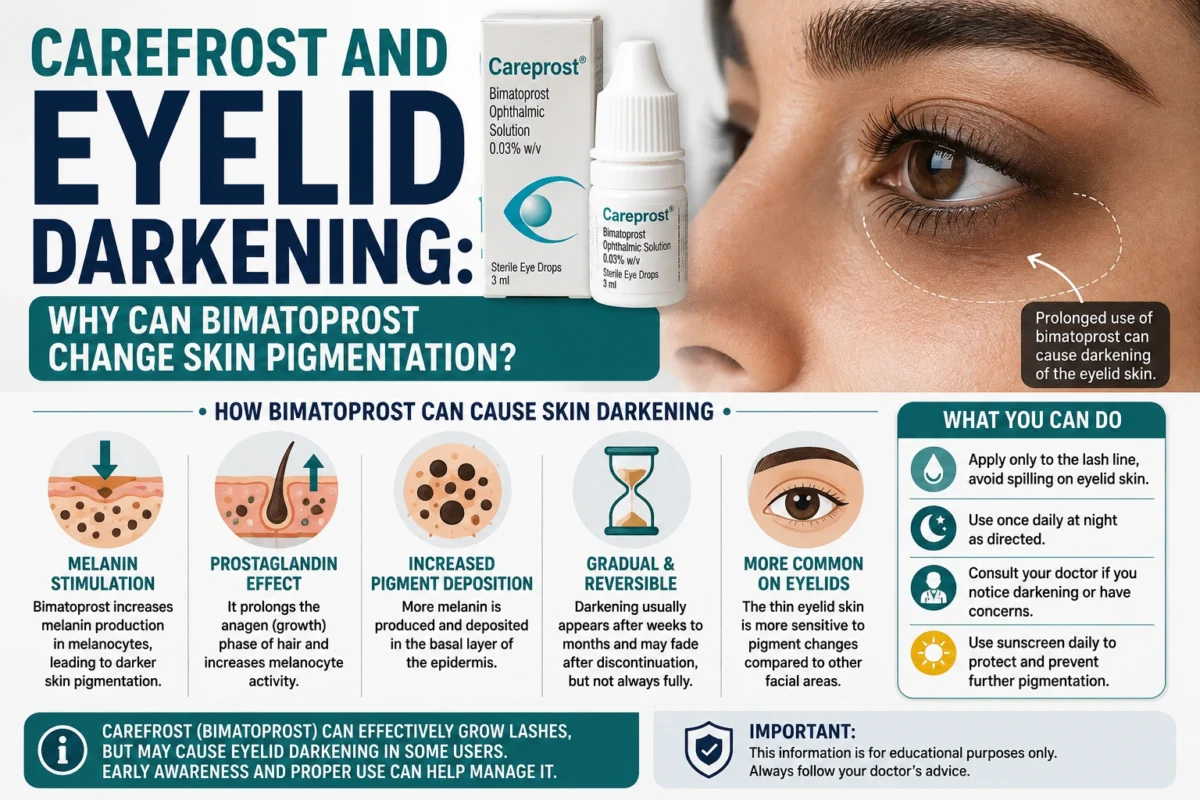
- Reversible Periocular Hyperpigmentation: A darkening of the skin along the lash margin. This is caused by increased melanin production in dermal cells and generally fades within three to six months after discontinuing use.
Critical Ophthalmic Warning (Iris Pigmentation & Fat Atrophy): When bimatoprost enters the eye directly (as with glaucoma drops), it can cause a permanent increase in brown iris pigment, particularly in individuals with hazel, green, or light-brown eyes. When applied properly along the upper eyelid margin with a fine brush, this risk is very low, but patients must remain aware of it. Additionally, prolonged seepage into the eye socket can cause periorbital fat atrophy (Prostaglandin-Associated Periorbitopathy), leading to a mild hollowed look around the upper lid crease that typically reverses after stopping treatment.
Detailed pharmacological safety information and consumer prescribing guidelines are cataloged through the clinical drug monographs hosted on WebMD’s Bimatoprost Directory.
5. Canadian Cost Analysis: Latisse, Generics, and Annual Budgets
Because eyelash hypotrichosis is classified as a cosmetic concern rather than a medical disease, provincial health insurance plans (such as OHIP in Ontario, MSP in British Columbia, or AHS in Alberta) do not cover bimatoprost prescriptions or consultations. Patients fund their treatments entirely out-of-pocket.
| Product Category | Average Canadian Unit Price | Supply Lifespan | Estimated Annual Cost (CAD) |
|---|---|---|---|
| Branded Latisse (3ml / 5ml kit) | $130 – $185 per bottle | 1 to 2 months (daily use) | $800 – $1,300 |
| Generic Bimatoprost 0.03% (e.g., Careprost) | $25 – $45 per 3ml bottle | 1 to 2 months | $150 – $350 |
| High-End Peptide Serums (e.g., GrandeLASH) | $85 – $120 per tube | 3 months | $340 – $480 |
| Salon Lash Extensions (Refills every 3 weeks) | $70 – $100 per refill session | Ongoing appointments | $1,200 – $1,800+ |
As the pricing matrix highlights, branded prescription therapies and salon extensions represent substantial ongoing investments. Consequently, many Canadian patients transition to authorized generic equivalents like Careprost 0.03% once they have completed their initial medical consultation, allowing them to maintain active follicular growth at a lower recurring cost.
6. Step-by-Step Guide: Proper Clinical Application Around the Eyes
Proper application is essential for maximizing eyelash length while preventing medication runoff, ocular irritation, and skin hyperpigmentation.
- Cleanse the Face Thoroughly: Remove all traces of eye makeup, mascara, and face oils. Wash the face with a gentle, non-stripping cleanser. Ensure the skin around the eyes is completely dry before application.
- Remove Contact Lenses: Bimatoprost solutions contain benzalkonium chloride, a preservative that can be absorbed by soft contact lenses and cause clouding or irritation. Remove contact lenses prior to application and wait at least 15 minutes before reinserting them.
- Dispense a Single Drop on an Applicator: Place one single drop of the 0.03% solution onto the tip of a fine, sterile eyeliner applicator brush. Do not apply the bottle tip directly to your eyelids to avoid bacterial contamination.
- Apply Along the Upper Lash Margin: Carefully draw the brush across the base of the eyelashes on the upper eyelid, moving from the inner corner outwards, right where the lashes meet the skin (like applying liquid eyeliner).
- Never Apply to the Lower Eyelash Line: Do not apply bimatoprost to the lower eyelid. Blinking naturally transfers a trace amount of the medication to the lower lashes. Applying product directly to the lower lid dramatically increases the risk of under-eye dark circles and drug runoff into the eye.
- Blot Excess Solution Immediately: Use a clean tissue or cotton pad to blot away any excess liquid that spreads beyond the upper lash margin. This prevents hair growth on surrounding facial skin and reduces localized pigmentation changes.
7. Conclusion & Summary Matrix
Choosing an eyelash growth treatment in Canada comes down to balancing scientific efficacy, personal safety, and recurring costs. Over-the-counter peptide and conditioning serums can strengthen existing lashes and reduce breakage, but they do not alter the biological hair cycle.
Prescription prostaglandin analogues like bimatoprost 0.03% remain the gold standard for adding real length, thickness, and pigment by directly extending the active anagen growth phase. By understanding how the formula works, applying it carefully along the upper lash line, and budgeting for long-term maintenance, patients can achieve fuller, healthier lashes safely and consistently.