

Molnupiravir for FIP in Cats: Uses, Dosage, Success Rates & Treatment Guide (2026)

FelineCare Journal
Reviewed against peer-reviewed veterinary literature
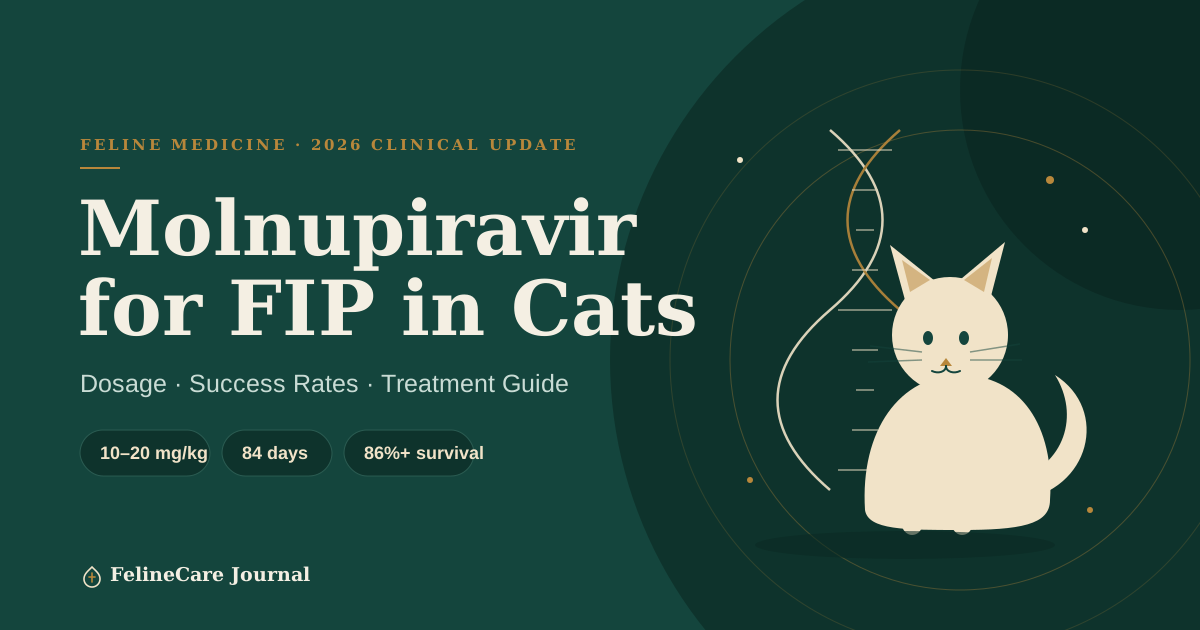
Feline Medicine · 2026 Clinical Update
Molnupiravir for FIP in Cats: Uses, Dosage, and Real Success Rates
A practical, evidence-based guide to using molnupiravir against feline infectious peritonitis — how it works, what the dosing studies actually show, and what to expect over a full course of treatment.
10–20
mg/kg typical dose range, by FIP presentation
84
days — the standard treatment course length
86%+
survival reported in multi-cat clinical case series
01 What Is Molnupiravir?
Molnupiravir, also known by its research code EIDD-2801, is an oral antiviral drug originally developed to treat COVID-19 in people. Because the human coronavirus and the feline coronavirus that causes FIP belong to the same broad viral family, researchers and veterinarians began investigating whether the drug’s mechanism could also disrupt the mutated feline coronavirus responsible for feline infectious peritonitis.
Molnupiravir is not FDA-approved or licensed for use in cats. Every prescription is off-label and typically dispensed as a compounded capsule or oral suspension prepared by a compounding pharmacy at a veterinarian’s direction. This matters for pet owners: dosing, purity, and formulation can vary between pharmacies, so sourcing through a veterinarian who is actively monitoring the case is a meaningful safety step, not a formality.
In practice, molnupiravir has moved from being a niche “rescue” option — used only after another antiviral, GS-441524, failed to fully resolve a cat’s symptoms — to a legitimate first-line therapy in many clinics, particularly for cats with neurological or ocular FIP, where it appears to distribute well across the blood-brain and blood-eye barriers.
02 How Molnupiravir Fights FIP
FIP develops when feline enteric coronavirus, normally a mild gut infection, mutates within an individual cat into a form that invades white blood cells and spreads systemically. Molnupiravir works as a ribonucleoside analogue: once metabolized inside the body, it gets mistaken for a natural building block of RNA and incorporated into the virus’s genetic material as it replicates.
This deliberately introduces a high rate of copying errors into new viral particles — a process researchers call lethal mutagenesis. Instead of directly blocking viral replication the way some antivirals do, molnupiravir lets the virus keep copying itself, but so inaccurately that the resulting particles can no longer function or infect new cells. Over repeated replication cycles, the viral population collapses.
🔬 Why this matters for dosing
Because the drug’s effect depends on sustained exposure during active viral replication, missed doses or inconsistent timing can meaningfully undercut treatment — which is why twice-daily dosing on a strict schedule is emphasized throughout the clinical literature.
03 Molnupiravir Dosage for Cats, by FIP Type
Dosing is not one-size-fits-all. Published case series consistently scale the dose to how aggressively the disease has presented — cats with effusive (wet) FIP are generally started lower than cats with neurological or ocular involvement, where higher concentrations are needed to control disease behind the blood-brain barrier. The ranges below reflect what has been reported across several clinical case series and rescue-therapy cohorts.
Effusive (Wet) FIP
Standard starting dose
10 mg/kg
Given orally, twice daily (q12h)
Non-Effusive (Dry) FIP
Standard starting dose
12–15 mg/kg
Given orally, twice daily (q12h)
Neurological / Ocular FIP
Higher starting dose
15–20 mg/kg
Given orally, twice daily (q12h)
Across studies, reported doses range as low as 4.5 mg/kg twice daily at the conservative end for uncomplicated cases, up to 20 mg/kg twice daily for cats with severe neurological signs, with some treating veterinarians raising the dose further if a cat shows breakthrough symptoms, such as a new seizure, partway through treatment. The dose is a starting point, not a fixed number — attending veterinarians routinely adjust it based on bloodwork, weight changes, and clinical response.
⚠️ Never dose from an article
These figures summarize published clinical case series so you can have an informed conversation with your veterinarian — they are not a prescription. Compounded concentrations vary between pharmacies, and a cat’s optimal dose depends on weight, disease stage, kidney and liver values, and how they respond over the first two weeks. Dosing should always be set and adjusted by the prescribing veterinarian.
04 The Treatment Course: What 12 Weeks Looks Like
Most clinical protocols run molnupiravir for 84 days (12 weeks), though some 2026 clinical guidance suggests a shorter 42-day course may work as well for mild, early-caught cases — with the longer course still reserved for neurological, ocular, or slow-responding disease. Consistency and monitoring matter more than the exact calendar length.
Days 1–14
Induction & stabilization
Appetite, energy, and fever typically begin improving within the first one to two weeks. This is also the highest-risk window — case series show that cats who don’t survive treatment most often decline within the first 7–10 days, underscoring the need for close veterinary follow-up early on.
Weeks 3–8
Consolidation
Bloodwork (albumin:globulin ratio, hematocrit, globulins) is typically rechecked every 2–4 weeks to confirm the cat is trending toward normal values and to catch any need for a dose adjustment.
Weeks 9–12
Completion
If clinical signs and bloodwork have normalized, the full course is completed rather than stopped early, even once the cat looks and acts healthy — early discontinuation is a recognized risk factor for relapse.
Weeks 13–24+
Post-treatment observation
Most protocols recommend at least a 12-week observation period after the last dose, with rechecks, since relapses (when they occur) tend to appear during this window.
05 Success Rates: What the Data Actually Shows
FIP was considered almost universally fatal before effective antivirals became available, so the outcome data on molnupiravir is genuinely striking — though it’s worth looking at real cohort numbers rather than headline percentages.
86.4%
Survival in a 59-cat molnupiravir cohort (8 deaths, mostly within 10 days of starting)
Comparative FIP antiviral study, 2024
98%
Of cats who completed the full course achieved clinical remission (51 of 52)
Same 59-cat cohort
92%
Disease-free at follow-up in a rescue-therapy cohort after GS-441524 failure (24 of 26)
Rescue therapy case series
A smaller Japanese case series of 18 cats treated early in molnupiravir’s veterinary use reported four deaths, all within the first week, all in cats with severe effusive disease already advanced at diagnosis — a pattern echoed in later, larger cohorts. In other words, the drug’s biggest limitation isn’t its effectiveness against the virus itself, but the fact that some cats are simply too critically ill by the time treatment starts. This is the clearest argument in the literature for early diagnosis and early treatment initiation.
Encouragingly, even cats presenting with pyogranulomatous lesions, seizures, uveitis, or severe anemia have gone on to reach full remission once the dose was appropriately escalated — remission is not limited to mild cases.
06 Molnupiravir vs. GS-441524
GS-441524 remains the most extensively studied FIP antiviral and is still considered by many specialists as the default first-line choice, largely because it has the longest track record. Molnupiravir’s key practical advantage is that it’s given as a pill or liquid by mouth, rather than a daily subcutaneous injection — a meaningful difference for owners of fractious cats or those who struggle with needles.
| Factor | Molnupiravir | GS-441524 |
|---|---|---|
| Route | Oral (capsule / liquid) | Injectable (or compounded oral) |
| Typical course | 84 days | 84 days |
| Reported survival (comparative cohort) | ~86% | ~80% |
| Common use case | First-line or rescue; strong for neuro/ocular FIP | First-line; longest-established evidence base |
| Regulatory status | Off-label, compounded | Off-label, compounded |
| Owner administration burden | Lower (oral dosing) | Higher (daily injections, unless oral form used) |
In a direct comparative study of 118 cats split roughly evenly between the two drugs, outcomes were statistically similar — the difference in death rates between groups did not reach statistical significance. In practice, many veterinarians now choose between them based on the cat’s temperament, the owner’s ability to give injections, disease severity, and drug availability, rather than one drug being categorically superior.
07 Side Effects & Safety Considerations
Reported adverse effects have generally been mild relative to the severity of untreated FIP. The most frequently documented issues include:
- Mild gastrointestinal upset — occasional vomiting or reduced appetite, especially early in treatment.
- Cosmetic changes — some case reports describe curling or folding of the ear tips and increased whisker breakage at higher cumulative doses.
- Leukopenia (low white blood cell count) — reported at doses above roughly 23 mg/kg twice daily, reinforcing the importance of routine bloodwork during treatment.
- Growth-plate concerns in kittens — because molnupiravir affects rapidly dividing cells, its use in very young, still-growing kittens is approached cautiously and discussed individually with a veterinarian.
Overall, the drug has been described across multiple case series as well tolerated, with side effects that resolve after dose reduction or course completion. As with any off-label antiviral, ongoing veterinary supervision — not just at the start of treatment, but through scheduled rechecks — is the main safeguard against complications going unnoticed.
08 Cost Considerations
Because molnupiravir is compounded rather than manufactured as a licensed veterinary product, pricing varies significantly by pharmacy, region, and the cat’s body weight (larger cats need more drug per dose). Oral dosing generally carries lower ancillary costs than injectable protocols, since it doesn’t require needles, syringes, or the same refrigerated handling. Across a full 12-week course, most owners should budget for the cost of the medication itself, plus recurring veterinary visits for bloodwork to confirm the treatment is working and to catch any needed dose adjustments — the monitoring is not optional overhead, it’s part of what makes the treatment safe and effective.
09 Frequently Asked Questions
Can I buy molnupiravir for my cat without a vet prescription?
Reputable compounding pharmacies require a veterinary prescription, and for good reason: dosing needs to be tailored to your cat’s weight, FIP presentation, and bloodwork, and needs to be adjusted if the cat isn’t responding as expected. Sourcing outside veterinary oversight removes the monitoring that the published success rates were actually built on.
How quickly should I see improvement?
Many cats show improved appetite and energy within the first 3–7 days. However, the first 7–10 days are also the highest-risk window in case series data, so early improvement is encouraging but shouldn’t replace scheduled veterinary rechecks.
What happens if I miss a dose?
Because molnupiravir works by disrupting the virus during active replication, consistency matters. Contact your prescribing veterinarian for guidance on a missed dose rather than doubling up on your own — timing adjustments depend on how long it’s been since the missed dose.
Can molnupiravir be used if GS-441524 didn’t work?
Yes — this is actually how molnupiravir first gained traction in feline medicine. Rescue-therapy case series report strong outcomes, with roughly 90%+ of cats going on to live disease-free after switching following a GS-441524 relapse or non-response.
Is FIP considered curable now?
“Cure” is used cautiously in veterinary medicine, but cats who complete a full antiviral course, achieve normal bloodwork, and remain relapse-free through the post-treatment observation period are generally considered to be in sustained remission — a dramatic shift from FIP’s historical near-100% fatality rate.
⚠️ Medical disclaimer
This article is for general educational purposes and summarizes findings from published veterinary case series. It is not veterinary advice and cannot account for your individual cat’s health history, weight, organ function, or disease stage. FIP is a serious, life-threatening condition — any cat with suspected FIP should be evaluated and treated under the direct care of a licensed veterinarian, ideally one experienced with antiviral FIP protocols.
Editorial standard
Content on this page is drawn directly from peer-reviewed veterinary case series and comparative clinical studies (see References below), and is periodically updated as new FIP treatment data is published. It should be discussed with, and confirmed by, your own veterinarian before making any treatment decisions.
10 References
- Cook S, et al. Molnupiravir treatment of 18 cats with feline infectious peritonitis: a case series. J Feline Med Surg. PMC10472991.
- Roy M, et al. GS-441524 and molnupiravir are similarly effective for the treatment of cats with feline infectious peritonitis. PMC11291256.
- Katayama M, et al. Evaluation of the course of improvement with molnupiravir treatment for feline infectious peritonitis. PubMed / PMC.
- Coggins SJ, et al. Unlicensed molnupiravir is an effective rescue treatment following failure of unlicensed GS-441524-like therapy for cats with suspected feline infectious peritonitis. PMC9612227.
- Cats.com Veterinary Review Team. Molnupiravir for Cats: Overview, Dosage & Side Effects. 2026.
- Veterinary education resource. FIP in 2026: Treatment Guidelines — What Every Vet Needs to Know. 2026.