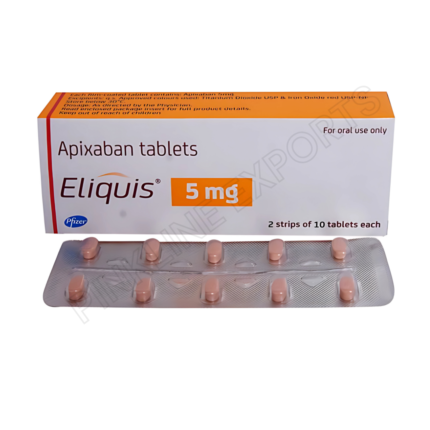
What Is Eliquis 2.5 Mg – Apixaban?
Eliquis 2.5 Mg – Apixaban is an oral prescription anticoagulant (blood thinner) medication. It is indicated to help reduce the risk of:
Stroke and systemic embolism in adults with non-valvular atrial fibrillation
Recurrence of deep vein thrombosis (DVT) and pulmonary embolism (PE)
DVT and PE following hip or knee replacement surgery
Apixaban belongs to a class of medicines called direct oral anticoagulants (DOACs). It works by selectively inhibiting Factor Xa, a key enzyme in the blood coagulation cascade that leads to clot formation.
This prescription medicine should be used under the direction of a qualified healthcare provider.
How Eliquis (Apixaban) Works
1. Direct Factor Xa Inhibition
Apixaban selectively blocks Factor Xa, an essential enzyme in the coagulation cascade responsible for converting prothrombin into thrombin, which subsequently forms fibrin clots.
2. Reduces Thrombin Generation
By inhibiting Factor Xa, apixaban decreases thrombin production and limits clot formation.
3. Predictable Anticoagulant Effect
Unlike older anticoagulants such as warfarin, apixaban has more predictable effects and usually does not require routine blood monitoring of INR in most patients, unless clinically indicated.
Mineralocorticoid receptor–based cardiovascular strategies may include Eplerenone Tablets 25 Mg within long-term care planning.
Indications
A qualified clinician may prescribe Eliquis 2.5 Mg for:
Prevention of stroke and systemic embolism in non-valvular atrial fibrillation
Treatment of DVT and PE
Prevention of recurrent DVT and PE
Reduction of DVT and PE risk after hip or knee replacement surgery
Indications are determined by medical history and individual risk profiles.
Dosage & Administration
⚠ Always follow your healthcare provider’s prescription.
Usually taken twice daily
May be taken with or without food
Swallow tablets whole with water
Do not crush or chew
Missed dose:
Take as soon as you remember on the same day. Do not double the next dose.
Proper inhaler technique and treatment adherence follow standardized guidance used in national healthcare systems such as the NHS.
Clinical Benefits
When used according to professional guidance:
Helps reduce the risk of stroke associated with atrial fibrillation
Prevents clot recurrence after initial DVT/PE therapy
Supports thrombosis prevention after orthopedic surgery
Offers reliable anticoagulation with predictable pharmacokinetics
Individual benefits vary based on clinical context and concurrent conditions.
Structured cardiovascular therapy models may incorporate Eplerenone Tablets 50 Mg as part of integrated treatment planning.
Safety Information & Precautions
Before using this medication, inform your healthcare provider if you have:
Active bleeding
History of bleeding disorders
Severe liver or kidney disease
Brain hemorrhage history
Recent major surgery
Use of other anticoagulants or antiplatelet drugs
Important Safety Notes
Increased risk of bleeding is the most significant risk
Do not stop therapy without clinician approval — abrupt cessation may increase clot risk
Inform your clinician before surgeries or dental procedures
Possible Side Effects
Common side effects may include:
Bruising more easily than normal
Nosebleeds
Minor bleeding from gums
Prolonged bleeding from cuts
Gastrointestinal discomfort
Seek urgent medical attention for:
This list is not exhaustive — always consult a healthcare professional.
Drug Interactions
Inform your clinician about all medications and supplements you are taking, including:
Other anticoagulants or antiplatelet drugs
NSAIDs
Certain antifungals and antibiotics
Herbal supplements such as St. John’s Wort
Interactions may increase bleeding risk or affect drug efficacy.
Use in Special Populations
Pregnancy and Breastfeeding
Discuss with your healthcare provider before use. Use during pregnancy should be considered only if clearly needed.
Elderly Patients
Older adults may have increased sensitivity to bleeding risks — close clinical monitoring may be advised.
Renal or Hepatic Impairment
Dosage adjustments and evaluation of kidney and liver function may be needed.
Monitoring and Follow-Up
Although routine INR monitoring is usually not required, a clinician may:
Check kidney and liver function
Monitor for signs of bleeding
Adjust dosage based on clinical response
Regular follow-up improves treatment safety and effectiveness.
Storage Instructions
Store tablets in a cool, dry place below 25 °C
Keep in the original container
Protect from moisture and direct sunlight
Keep out of reach of children
Do not use past the expiry date
FAQs