Pataday Eye Drops (Olopatadine Hydrochloride) – Dual-Action Ocular Allergy Relief
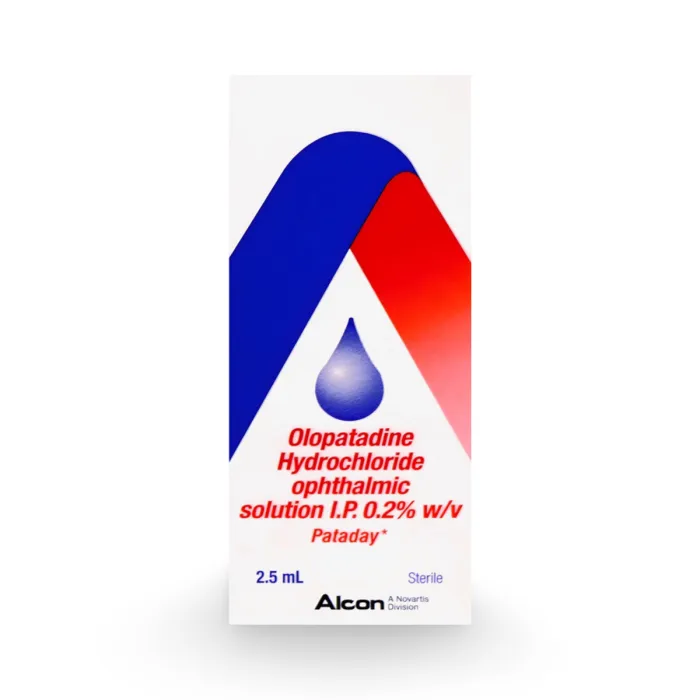
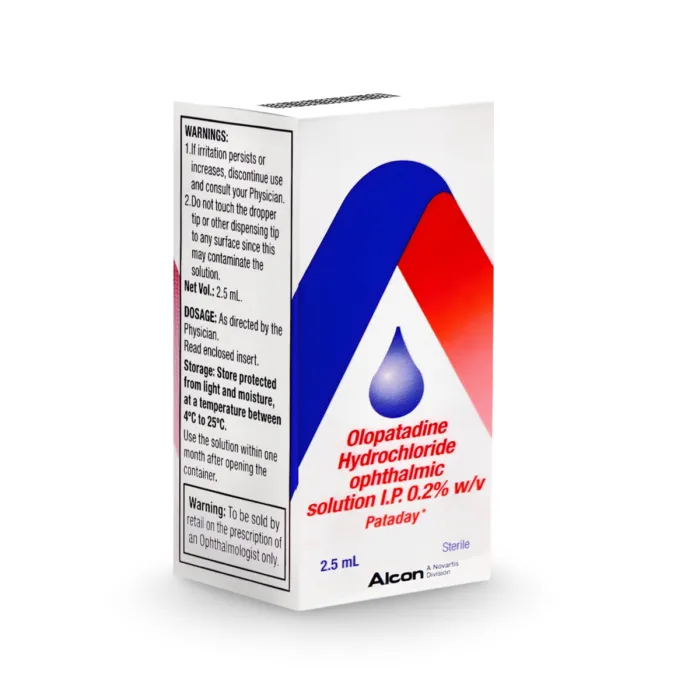
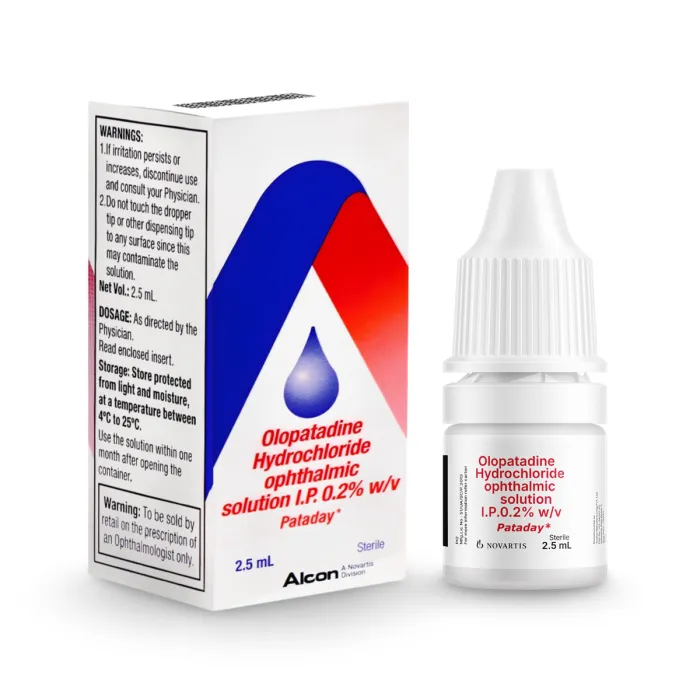
Pataday Eye Drops (Olopatadine Hydrochloride) is a targeted ophthalmic solution indicated for the prevention and symptomatic relief of ocular itching and redness associated with allergic conjunctivitis in adults and children aged 2 years and older. By combining selective histamine H1-receptor antagonism with human conjunctival mast-cell stabilization, it halts allergic ocular cascades at the source to provide rapid, long-lasting comfort.
Olopatadine HCl
Ophthalmic Solution
Mast-Cell Stabilizer & Antihistamine
Allergy Relief
Active Ingredient
Olopatadine Hydrochloride
Primary Strengths
0.1%, 0.2%, 0.7%
Drug Class
Second-Gen H1 Antagonist / Mast-Cell Stabilizer
Dosage Form
Sterile Ophthalmic Solution
What Is Pataday Eye Drops?
Pataday Eye Drops contains olopatadine hydrochloride, a selective, second-generation antiallergic agent specifically engineered for ocular surface application. It is clinically indicated for temporary relief of ocular pruritus (itching), tearing, and redness caused by seasonal pollen, pet dander, ragweed, grass, and indoor dust mites.
Pataday is recognized for its dual mechanism of action, addressing both immediate histamine-induced symptoms and ongoing mast-cell degranulation. Depending on the concentration prescribed or selected (such as once-daily 0.2% or twice-daily 0.1%), Pataday provides sustained control of allergic conjunctivitis symptoms.
Pataday acts locally on the conjunctiva and ocular mucosal tissues, beginning to relieve allergic itching within minutes of instillation while maintaining a low profile of systemic exposure.
([dailymed.nlm.nih.gov](https://dailymed.nlm.nih.gov/dailymed/lookup.cfm?setid=a00e5ba6-df27-4a00-bebe-8dfda8537b01))
How Does Pataday Eye Drops Work?
Allergic eye irritation occurs when airborne allergens cross-link immunoglobulin E (IgE) antibodies on ocular surface mast cells. Pataday blocks this inflammatory cascade through two distinct mechanisms:
- Selective Histamine H1 Receptor Blockade: Olopatadine binds competitively to histamine H1 receptors located on conjunctival sensory nerve endings and microvascular endothelial cells, halting the transmission of itching sensations and reducing vascular permeability.
- Mast-Cell Membrane Stabilization: It stabilizes human conjunctival mast cells to prevent the release of histamine, leukotrienes, tryptase, and prostaglandin D2 upon allergen re-exposure.
- Inhibition of Pro-inflammatory Cytokines: Olopatadine decreases the production and release of inflammatory cytokines (such as IL-6 and IL-8) from corneal epithelial cells, suppressing the late-phase allergic response.
Unlike older antihistamine formulations, Pataday does not exhibit meaningful anticholinergic effects, helping avoid pupil dilation (mydriasis) and severe dry eye sensations.
What Is Pataday Eye Drops Used For?
Pataday is clinically indicated for the management of ocular signs and symptoms resulting from allergic exposure:
- Seasonal Allergic Conjunctivitis: Rapid and sustained relief of eye itching, redness, and watery discharge provoked by outdoor tree pollens, grasses, and weeds.
- Perennial Allergic Conjunctivitis: Management of persistent ocular irritation triggered by indoor allergens such as dust mites, animal dander, and fungal mold spores.
- Conjunctival Hyperemia & Chemosis: Reduction of ocular surface redness and swelling of the conjunctival tissue.
- Allergic Eyelid Swelling: Relief of periorbital puffiness and eyelid discomfort associated with ocular allergy flare-ups.
Pataday is strictly an antiallergic agent and is not indicated for treating bacterial or viral conjunctivitis (“pink eye”), corneal abrasions, foreign body injuries, or contact-lens-induced non-allergic keratitis.
([dailymed.nlm.nih.gov](https://dailymed.nlm.nih.gov/dailymed/lookup.cfm?setid=a00e5ba6-df27-4a00-bebe-8dfda8537b01))
Related Ophthalmic Formulations
Explore our related clinical profiles for targeted ocular allergy care as well as prostamide-based ophthalmic therapies:
Pataday Dosage and Administration Guidelines
Dosing frequency depends on the specific concentration of olopatadine hydrochloride formulation used:
- Pataday 0.2% (Once Daily): Instill 1 drop in each affected eye once daily.
- Pataday 0.1% (Twice Daily): Instill 1 drop in each affected eye twice daily, spaced 6 to 8 hours apart.
- Pataday 0.7% (Extra Strength): Instill 1 drop in each affected eye once daily for complete 24-hour relief of itching and redness.
- Application Technique: Tilt the head back, pull down the lower eyelid to form a small pocket, look upward, and instill one drop. Gently close the eyes for 1 to 2 minutes without squeezing.
To prevent ocular contamination, never allow the dropper tip to touch the eye, eyelids, surrounding fingers, or any other surface. Keep the container tightly capped when not in use.
([dailymed.nlm.nih.gov](https://dailymed.nlm.nih.gov/dailymed/lookup.cfm?setid=a00e5ba6-df27-4a00-bebe-8dfda8537b01))
Contact Lens Note:
Pataday formulations contain benzalkonium chloride, which can be absorbed by soft contact lenses. Remove contact lenses prior to instillation and wait at least 10 minutes before reinserting. Do not wear contact lenses if your eyes are red or actively irritated.
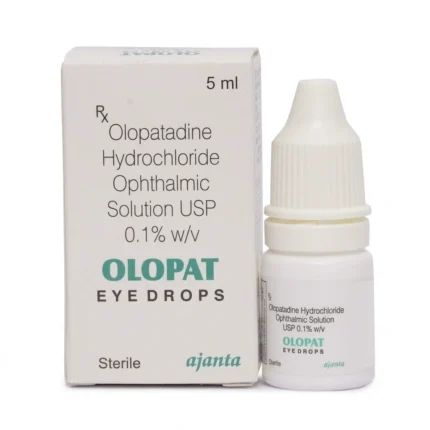
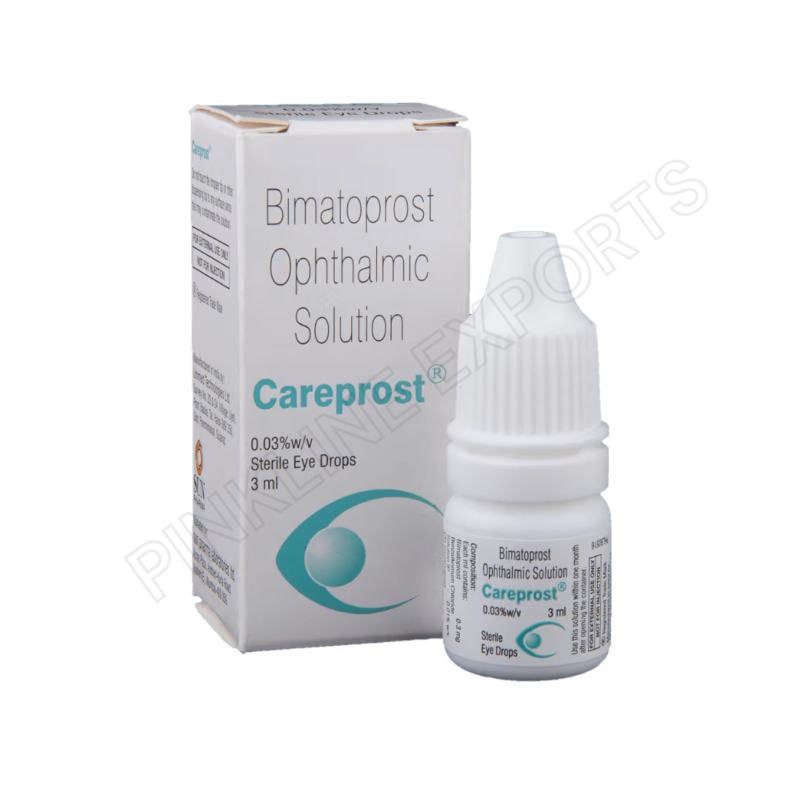
Pataday vs Olopat 0.1% vs Careprost 0.03%
Comparing these ophthalmic solutions outlines their distinct pharmacological classifications, dosing regimens, and therapeutic indications:
| Parameter |
Pataday (Olopatadine) |
Olopat 0.1% (5 ml) |
Careprost 0.03% (Bimatoprost) |
| Active Ingredient |
Olopatadine HCl (0.1%, 0.2%, 0.7%) |
Olopatadine HCl 0.1% |
Bimatoprost 0.03% |
| Pharmacological Class |
H1 Antihistamine / Mast-Cell Stabilizer |
H1 Antihistamine / Mast-Cell Stabilizer |
Prostamide / Prostaglandin Analog |
| Primary Indication |
Allergic conjunctivitis itch & redness |
Ocular allergic itch & conjunctival inflammation |
Elevated IOP (glaucoma) & lash hypotrichosis |
| Dosing Frequency |
Once daily (0.2%/0.7%) or Twice daily (0.1%) |
Twice daily (spaced 6 to 8 hours apart) |
Once daily in the evening |
| Pigmentation Risk |
None |
None |
Potential permanent iris & eyelid hyperpigmentation |
Pataday and Olopat 0.1% both provide dual-action antiallergic mast-cell stabilization, whereas Careprost is formulated exclusively for pressure reduction and follicular lash stimulation.
Who Should Not Use Pataday Eye Drops?
Pataday is contraindicated or requires caution under the following conditions:
- Known hypersensitivity or severe allergic reaction to olopatadine hydrochloride or any formulation excipients (including benzalkonium chloride)
- Children under 2 years of age (safety and clinical effectiveness have not been established)
- Active bacterial, viral, or fungal ocular infections (antihistamines do not resolve microbial pathogens and may mask disease progression)
- Use while wearing contact lenses during active acute conjunctival inflammation
Pregnant or nursing individuals should use Pataday only after consulting with an eye care specialist or obstetrician.
([dailymed.nlm.nih.gov](https://dailymed.nlm.nih.gov/dailymed/lookup.cfm?setid=a00e5ba6-df27-4a00-bebe-8dfda8537b01))
Possible Side Effects of Pataday
Pataday is generally well tolerated. Most adverse effects are mild, transient, and confined to the ocular surface:
- Ocular Effects: Mild transient stinging or burning upon instillation, dry eye sensations, punctate keratitis, foreign body sensation, and eyelid erythema.
- Visual Symptoms: Temporary slight blurring of vision immediately following administration.
- Systemic Reactions: Dysgeusia (unusual or bitter taste in the mouth resulting from nasolacrimal drainage), mild headache, asthenia, pharyngitis, and rhinitis.
If severe eye pain, persistent vision changes, or worsening corneal irritation occur, discontinue use and consult an ophthalmologist immediately.
([dailymed.nlm.nih.gov](https://dailymed.nlm.nih.gov/dailymed/lookup.cfm?setid=a00e5ba6-df27-4a00-bebe-8dfda8537b01))
Drug Interactions and Co-Administration Guidelines
Systemic bioavailability following topical ocular instillation of olopatadine is low, minimizing systemic drug-drug interactions:
Multiple Ophthalmic Products: If using other topical eye medications (such as lubricating artificial tears or glaucoma drops), space instillation times by at least 5 minutes to prevent dilution or washout of active ingredients.
Punctal Occlusion: Gently pressing the inner corner of the eye (nasolacrimal duct) for 1 minute post-instillation decreases systemic drainage into the nasopharynx, reducing both systemic exposure and bitter taste.
([dailymed.nlm.nih.gov](https://dailymed.nlm.nih.gov/dailymed/lookup.cfm?setid=a00e5ba6-df27-4a00-bebe-8dfda8537b01))
Bottle Care and Preservative Considerations
Multi-dose Pataday bottles contain benzalkonium chloride to prevent microbial growth after opening:
Store the container tightly closed at controlled room temperature ($4^\circ\text{C to }25^\circ\text{C}$). Discard the bottle 4 weeks after opening to prevent contamination. Patients with severe dry eye syndrome should be evaluated for potential preservative sensitivity during extended daily use.
Treatment Timeline & Duration of Action
Pataday provides fast, consistent symptom control across exposure periods:
Immediate Relief (Within Minutes): Fast H1-receptor blockade alleviates acute burning and intense ocular itching shortly after instillation.
Sustained Protection (Up to 24 Hours): Mast-cell membrane stabilization maintains barrier suppression, shielding the ocular surface from repeated allergen challenge throughout the day.
Pataday may be used daily throughout the duration of the pollen or allergen season as advised by an eye care specialist.
([dailymed.nlm.nih.gov](https://dailymed.nlm.nih.gov/dailymed/lookup.cfm?setid=a00e5ba6-df27-4a00-bebe-8dfda8537b01))
Frequently Asked Questions About Pataday Eye Drops
1. How often should Pataday Eye Drops be instilled?
Dosing depends on the concentration. Pataday 0.2% and 0.7% are dosed as 1 drop once daily in each affected eye. Pataday 0.1% is typically dosed as 1 drop twice daily, spaced 6 to 8 hours apart.
([dailymed.nlm.nih.gov](https://dailymed.nlm.nih.gov/dailymed/lookup.cfm?setid=a00e5ba6-df27-4a00-bebe-8dfda8537b01))
2. Can I wear contact lenses while using Pataday?
Contact lenses should be removed before instilling Pataday because the preservative benzalkonium chloride can be absorbed by soft lenses. Wait at least 10 minutes after application before reinserting lenses. If eyes are actively inflamed or red, avoid wearing contact lenses altogether.
3. What is the difference between Pataday and Olopat 0.1%?
Both contain olopatadine hydrochloride and work via identical antihistamine and mast-cell stabilizing mechanisms. Olopat 0.1% is specifically a twice-daily 0.1% strength, whereas Pataday is available in once-daily higher-concentration formulations (0.2% and 0.7%) as well as the standard 0.1% twice-daily strength.
4. How quickly does Pataday begin working for eye itching?
Clinical trials indicate that Pataday begins relieving ocular itching within minutes following instillation, with peak antihistamine comfort achieved quickly and lasting up to 16 to 24 hours depending on the concentration used.
([dailymed.nlm.nih.gov](https://dailymed.nlm.nih.gov/dailymed/lookup.cfm?setid=a00e5ba6-df27-4a00-bebe-8dfda8537b01))
5. Does Pataday treat infectious “pink eye”?
No. Pataday is indicated exclusively for allergic conjunctivitis caused by environmental allergens. It does not treat bacterial, viral, or fungal ocular infections. If you experience yellow-green discharge, crusting, or eye pain, seek medical evaluation from an eye care provider.
([dailymed.nlm.nih.gov](https://dailymed.nlm.nih.gov/dailymed/lookup.cfm?setid=a00e5ba6-df27-4a00-bebe-8dfda8537b01))
Medical Disclaimer
This product overview is provided strictly for educational and informational purposes. Pataday Eye Drops (olopatadine hydrochloride) is an ophthalmic medicine that should be used according to professional medical guidance or product labeling. Clinical efficacy and safety depend on accurate diagnosis, aseptic administration, and appropriate evaluation of ocular symptoms. This content does not substitute for clinical medical evaluation, diagnosis, or personalized ophthalmic care.




Reviews
There are no reviews yet.