


Mounjaro vs Ozempic: What Does the Latest Research Say About Weight Loss?
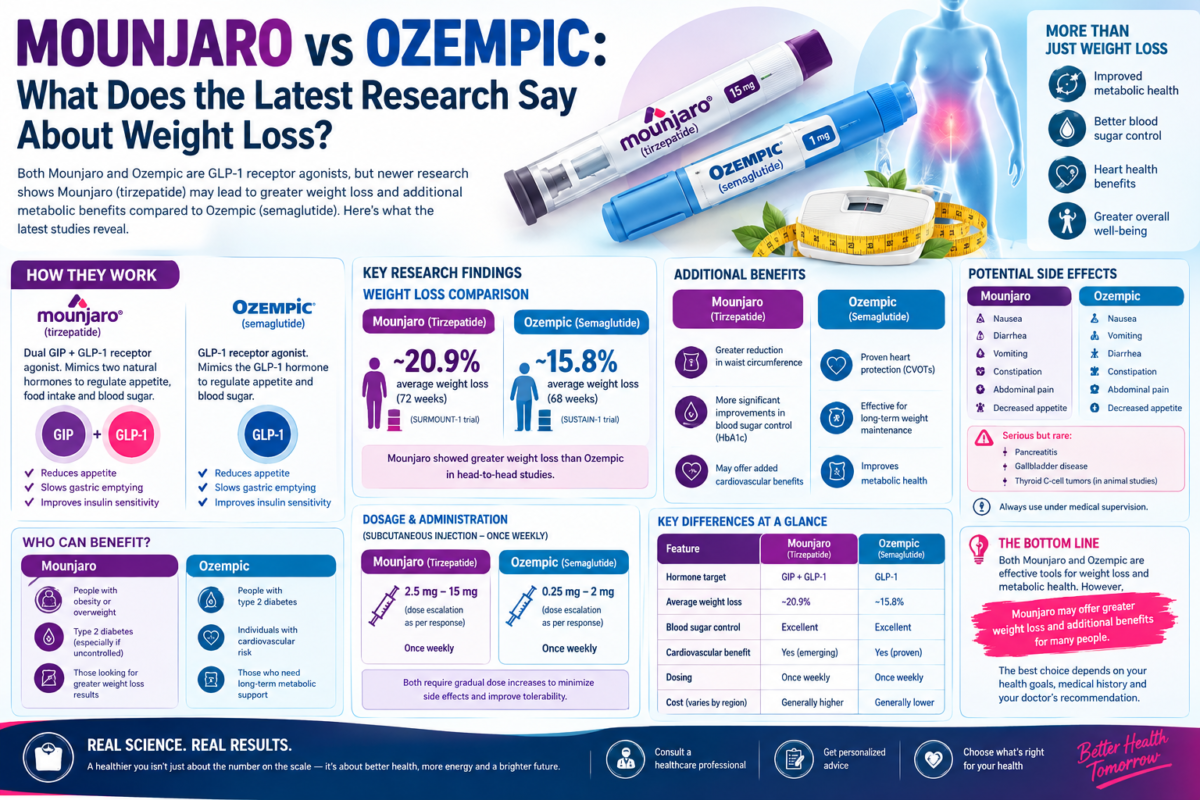
Weight-loss medications have become a major focus of modern obesity management, with Mounjaro and Ozempic among the most discussed options. Both medicines belong to the incretin-based family of treatments and can help regulate blood sugar, reduce appetite, and support weight reduction. But when it comes to weight loss, are they really equal?
Recent clinical research provides an increasingly clear answer. Tirzepatide, the active ingredient in Mounjaro, has demonstrated greater average weight loss than semaglutide, the active ingredient in Ozempic, in a direct head-to-head clinical trial. However, the comparison requires some important context because the two medicines have different mechanisms, approved indications, doses, and clinical uses.
For pharmaceutical buyers and businesses exploring weight loss products, understanding the evidence behind these medications is essential. As a Mounjaro pharmaceutical exporter or Pharmaceutical Exporter in India, it is equally important to communicate product information responsibly and distinguish clinical evidence from marketing claims.
Mounjaro vs Ozempic: What Is the Difference?
Mounjaro contains tirzepatide, while Ozempic contains semaglutide. Although both are injectable medicines administered once weekly, they work somewhat differently.
Semaglutide (Ozempic)
Semaglutide is a GLP-1 receptor agonist. It mimics the action of the naturally occurring hormone GLP-1, which helps regulate blood glucose and appetite.
Tirzepatide (Mounjaro)
Tirzepatide is a dual GIP and GLP-1 receptor agonist. It activates pathways associated with both glucose regulation and appetite control. This dual mechanism is one reason researchers have been interested in whether tirzepatide can produce greater weight reduction than semaglutide.
Importantly, Ozempic is approved primarily for type 2 diabetes and certain cardiovascular-risk indications, while semaglutide is also marketed under the brand Wegovy for chronic weight management in eligible patients. Similarly, Mounjaro is primarily associated with type 2 diabetes, while tirzepatide is marketed as Zepbound for chronic weight management in appropriate patients.
Therefore, comparing the medicines specifically for obesity should take into account the formulations and indications being studied rather than treating the brand names as completely interchangeable.
What Does the Latest Research Say?
One of the most important studies comparing the two active ingredients directly was published in the New England Journal of Medicine.
The trial compared tirzepatide with semaglutide in adults with obesity who did not have diabetes. After 72 weeks, participants receiving tirzepatide achieved greater average weight reduction than those receiving semaglutide. The study also found that participants taking tirzepatide were more likely to reach substantial weight-loss thresholds, including at least 10%, 15%, 20%, and 25% body-weight reduction.
72-Week Head-to-Head Trial: Average Weight Reduction
- Tirzepatide: approximately 20.2% of initial body weight
- Semaglutide: approximately 13.7% of initial body weight
That represents a meaningful difference between the two treatment groups.
The findings do not mean that every person taking tirzepatide will lose more weight than every person taking semaglutide. Clinical outcomes vary according to dosage, adherence, diet, physical activity, underlying health conditions, and individual response.
However, the head-to-head evidence does provide stronger support for the conclusion that tirzepatide can produce greater average weight loss than semaglutide under the conditions studied.
Why Might Mounjaro Produce More Weight Loss?
The difference may partly be related to their mechanisms of action.
Semaglutide works primarily through the GLP-1 pathway. GLP-1 signaling can influence appetite, food intake, gastric emptying, and blood glucose regulation.
Tirzepatide targets both GIP and GLP-1 receptors. Researchers believe that the combined activity may provide additional effects on appetite regulation and metabolic control.
The earlier SURPASS-2 study, which focused on people with type 2 diabetes, also found greater weight reduction with tirzepatide compared with once-weekly semaglutide at the doses studied. At the highest tirzepatide dose evaluated, weight reduction was nearly twice that seen with semaglutide 1 mg in that particular trial.
However, it is important not to directly compare percentages from different clinical trials as though they were interchangeable. Different studies can have different populations, treatment durations, doses, and endpoints.
Weight Loss Is Not the Only Consideration
When evaluating weight loss products, the amount of weight lost is only one part of the picture. A healthcare professional may consider:
- The person’s overall health
- Body mass index and obesity-related complications
- Type 2 diabetes status
- Cardiovascular risk
- Current medications
- Previous weight-management attempts
- Potential adverse effects
- Treatment goals
- Long-term treatment requirements
Both tirzepatide and semaglutide can cause gastrointestinal side effects. Nausea, diarrhea, vomiting, constipation, and abdominal discomfort are among the effects associated with this class of medicines.
This is why these medicines should not be treated as ordinary slimming products. They are prescription medicines that require appropriate medical assessment and monitoring.
Mounjaro vs Ozempic: A Quick Comparison
| Feature | Mounjaro | Ozempic |
|---|---|---|
| Active ingredient | Tirzepatide | Semaglutide |
| Drug class | GIP/GLP-1 receptor agonist | GLP-1 receptor agonist |
| Administration | Once-weekly injection | Once-weekly injection |
| Primary diabetes indication | Type 2 diabetes | Type 2 diabetes |
| Weight-loss evidence | Strong, including direct comparison with semaglutide | Strong, particularly with higher-dose semaglutide formulations studied for obesity |
| Direct head-to-head evidence | Greater average weight loss in the 72-week obesity trial | Lower average weight loss than tirzepatide in that trial |
| Important consideration | Requires medical supervision | Requires medical supervision |
The table provides a general overview, but individual treatment decisions should always be based on an appropriate healthcare professional’s assessment.
Does Higher Weight Loss Mean Mounjaro Is Always Better?
Clinical trials report average outcomes across groups. Individual responses can be very different. One person may respond particularly well to semaglutide, while another may achieve greater weight reduction with tirzepatide.
Additionally, effectiveness must be considered alongside tolerability and whether a person can safely remain on treatment.
The best treatment is not necessarily the medicine with the highest average percentage of weight loss. It is the treatment that is appropriate for the individual and can be used safely and consistently under medical supervision.
What About Mounjaro and Ozempic for Diabetes?
The discussion becomes more nuanced when the medicines are considered for type 2 diabetes rather than obesity alone.
Both drugs can improve blood-glucose control and contribute to weight reduction. Tirzepatide’s dual GIP/GLP-1 mechanism has produced substantial improvements in both glycemic measures and body weight in clinical trials.
The SURPASS-2 trial directly compared tirzepatide with semaglutide in adults with type 2 diabetes and found greater reductions in HbA1c and body weight with tirzepatide at the doses studied.
Nevertheless, these results should not be interpreted as a recommendation for one drug for every patient. Diabetes treatment is highly individualized.
What Does This Mean for Pharmaceutical Exporters?
The growing interest in GLP-1 and related medicines has increased demand for pharmaceutical sourcing internationally.
For a Mounjaro pharmaceutical exporter, credibility is especially important in this rapidly developing market. Buyers may search for information about tirzepatide, semaglutide, Mounjaro, Ozempic, and other weight loss products before contacting an international supplier.
A responsible Pharmaceutical Exporter in India should therefore provide clear product information, appropriate documentation, transparent sourcing information, and guidance on applicable regulatory requirements.
It is also important to avoid presenting prescription medicines as ordinary weight-loss supplements or promising a specific amount of weight loss. Clinical studies show averages, not guaranteed individual outcomes.
For international pharmaceutical sourcing, buyers should also verify applicable import regulations, prescription requirements, product registration requirements, cold-chain considerations where relevant, and documentation for their destination market.
Mounjaro vs Ozempic Dosage: What Are the Available Strengths?
Dosage is another important difference to consider when comparing Mounjaro and Ozempic. Both are administered once weekly, but their dosing schedules and available strengths are different. The appropriate dose depends on the patient’s medical condition, treatment response, tolerability, and the prescribing healthcare professional’s recommendations.
Mounjaro Dosage
Mounjaro contains tirzepatide and is available in several strengths. Treatment is generally initiated at 2.5 mg once weekly, primarily for treatment initiation rather than long-term glycemic control. After the initial period, the dose may be increased to 5 mg once weekly, with further increases in 2.5 mg increments depending on individual response and tolerability. The maximum recommended dosage is 15 mg once weekly.
Available strengths:
Ozempic Dosage
Ozempic contains semaglutide and also uses a gradual dose-escalation approach, starting with 0.25 mg once weekly for four weeks for treatment initiation. After four weeks, the dosage can generally be increased to 0.5 mg once weekly, and subsequently to 1 mg and then 2 mg once weekly where appropriate.
Common strengths:
Dose increases should be made only according to the prescribing information and under appropriate medical supervision. Ozempic’s approved uses are primarily related to type 2 diabetes and certain cardiovascular and kidney-risk indications, rather than being specifically marketed as an obesity treatment. Semaglutide is also available under the brand name Wegovy at doses specifically studied and approved for chronic weight management.
The Importance of Evidence-Based Weight Management
The popularity of medicines such as Mounjaro and Ozempic reflects a broader shift in how obesity is understood and treated.
Obesity is a complex chronic condition influenced by genetics, appetite regulation, metabolism, lifestyle, environment, sleep, medications, and other health factors. Medication can be an important part of treatment for eligible individuals, but it does not replace healthy nutrition, physical activity, medical monitoring, and long-term lifestyle management.
The latest evidence suggests that tirzepatide has a significant weight-loss advantage over semaglutide in a direct comparison among adults with obesity without diabetes.
At the same time, semaglutide remains an important evidence-based treatment option, particularly when considering its broader clinical evidence and approved formulations.
Final Takeaway
So, Mounjaro vs Ozempic: what does the latest research say about weight loss?
The current evidence points toward tirzepatide producing greater average weight loss than semaglutide in direct comparisons. In the 72-week head-to-head obesity trial, tirzepatide resulted in approximately 20.2% average weight reduction compared with 13.7% with semaglutide.
But the decision between these medicines is not simply about choosing the one with the larger number. Their mechanisms, approved indications, formulations, safety considerations, patient characteristics, and individual responses all matter.
For businesses sourcing pharmaceutical products internationally, the increasing demand for GLP-1 and related therapies also highlights the importance of working with reliable suppliers and understanding the regulatory requirements of the destination market.
As a Mounjaro pharmaceutical exporter and Pharmaceutical Exporter in India, Pinkline Exports can provide pharmaceutical sourcing information for international buyers while emphasizing responsible product communication and compliance. Explore the range of weight loss products available through the company’s pharmaceutical portfolio.
Medical Disclaimer: This content is provided for educational and informational purposes only and is not intended to replace professional medical advice, diagnosis, or treatment. Individuals considering weight management medications should consult a qualified healthcare professional before starting or modifying any treatment plan.