


Can Intermittent Fasting Complement an Ozempic Weight Management Plan?
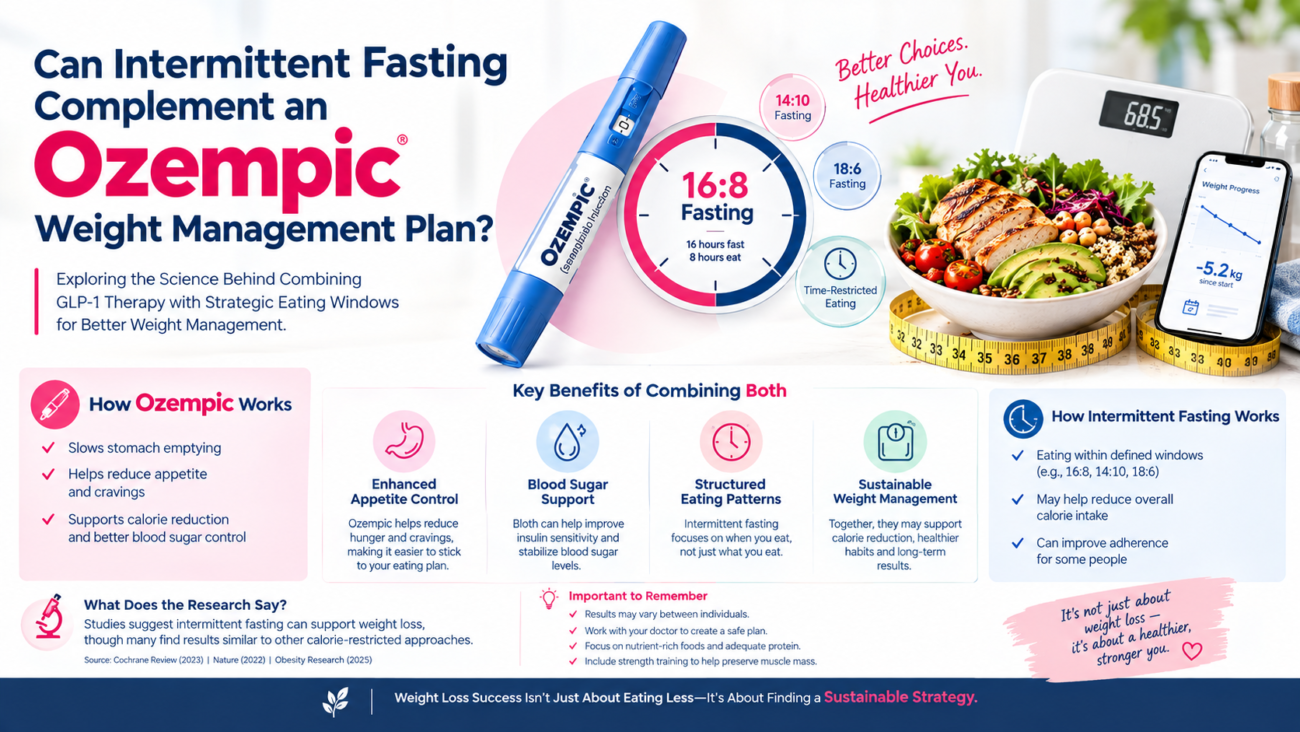
Weight management often involves more than one strategy. For some people, medication, nutrition, physical activity, sleep, and meal timing may all become part of a long-term plan. This has also led to growing interest in combining intermittent fasting with Ozempic.
But can these approaches actually work together?
Intermittent fasting is an eating pattern that limits food intake to specific hours of the day or specific days of the week. Ozempic, whose active ingredient is semaglutide, is a GLP-1 receptor agonist prescribed for adults with type 2 diabetes as an adjunct to diet and exercise. The current U.S. prescribing information does not list Ozempic as a general weight-loss medication; other semaglutide products have different approved indications.
That distinction matters when discussing weight management.
For someone already using Ozempic under medical supervision, intermittent fasting may be a dietary approach worth discussing with a healthcare professional. However, fasting should not be treated as a replacement for prescribed treatment, and combining the two does not automatically mean faster or better weight loss.
What Is Intermittent Fasting?
Intermittent fasting is less about what you eat and more about when you eat.
One of the most common approaches is time-restricted eating. For example, a person may eat within an 8-hour window and avoid calorie-containing foods for the remaining 16 hours. Water and other calorie-free beverages are generally allowed during the fasting period.
Other approaches include alternate-day fasting or fasting on selected days of the week.
Research into intermittent fasting is still developing. According to the National Institute of Diabetes and Digestive and Kidney Diseases (NIDDK), early research suggests that time-restricted eating may help some people lose weight. However, studies are still relatively limited, and longer-term research is needed.
Interestingly, intermittent fasting may work partly because people naturally consume fewer calories when their eating window becomes shorter. It is not necessarily the fasting period itself that produces all of the weight-management effects.
How Does Ozempic Work?
Ozempic contains semaglutide, a GLP-1 receptor agonist. According to the current FDA prescribing information, Ozempic is approved as an adjunct to diet and exercise to improve blood-glucose control in adults with type 2 diabetes. It is also approved for certain cardiovascular and kidney-related risk reductions in adults with type 2 diabetes.
Semaglutide can affect appetite and food intake, while also slowing gastric emptying. Common adverse reactions reported with Ozempic include nausea, vomiting, diarrhea, abdominal pain, and constipation.
This is important when thinking about fasting. If someone already has a reduced appetite while taking Ozempic and then significantly restricts their eating window, they may find it difficult to consume enough nutritious food during the hours when they are eating.
Therefore, the goal should not simply be to eat as little as possible. The goal should be to create a sustainable eating pattern that provides adequate nutrition while supporting the person’s medical and weight-management goals.
Can Intermittent Fasting Complement an Ozempic Plan?
Potentially, yes – but it depends on the individual.
There is currently not enough evidence to say that combining intermittent fasting specifically with Ozempic produces a superior weight-management result compared with Ozempic or another appropriate treatment alongside a balanced eating plan.
However, intermittent fasting may provide structure for people who prefer scheduled eating. For example, instead of continuously eating throughout the day, someone may choose a consistent eating window such as 10 a.m. to 6 p.m. During that period, meals can be planned around protein, vegetables, whole grains, fruits, healthy fats, and other nutrient-dense foods.
The benefit may come from helping reduce unplanned snacking and overall energy intake rather than from fasting being a special “fat-burning” shortcut.
NIDDK notes that studies of time-restricted eating have shown promising results, but more long-term research is needed. In a 12-month study discussed by NIDDK, time-restricted eating and daily calorie restriction produced similar weight loss, suggesting that intermittent fasting can be considered one dietary option rather than a universally superior approach.
Why Meal Timing May Matter During Weight Management
One reason people explore intermittent fasting is simplicity. Instead of tracking every calorie, a person may establish a consistent daily eating schedule.
Common Eating Window Examples:
- 8 a.m. to 4 p.m. eating window
- 10 a.m. to 6 p.m. eating window
- 12 p.m. to 8 p.m. eating window
The appropriate schedule varies from person to person.
Someone taking Ozempic may already experience reduced appetite. A shorter eating window could make it even easier to consume fewer calories, but that is not automatically beneficial if it leads to inadequate protein, vitamins, minerals, fluids, or total nutrition.
A sustainable plan should therefore focus on food quality and nutritional adequacy, not simply extending the fasting period.
What Should You Eat During the Eating Window?
If intermittent fasting is being used as part of a medically supervised weight-management plan, the eating window should not become an opportunity to fill up on highly processed foods.
A balanced meal can include:
- Lean protein such as eggs, fish, chicken, beans, or other suitable protein sources
- Vegetables and leafy greens
- Whole grains or other high-fiber carbohydrate sources
- Fruits in appropriate portions
- Healthy fats such as nuts, seeds, or unsaturated oils
- Adequate fluids
Protein deserves particular attention during weight loss because preserving lean tissue is an important consideration.
Rather than thinking, “I only have eight hours to eat,” it can be more useful to think, “I have a defined window in which I need to meet my nutritional needs.”
What About Weight Loss Products?
The market for weight loss products has expanded considerably, ranging from prescription medicines and nutritional products to supplements and meal-replacement products.
However, products marketed for weight loss should not automatically be combined with Ozempic.
Some products may contain active ingredients that could interact with medications, while others may make exaggerated weight-loss claims. NIDDK recommends looking for weight-management programs that include healthy eating, appropriate physical activity, ongoing support, and strategies for maintaining weight loss rather than relying on quick-fix promises.
If you are considering any additional weight loss product while using semaglutide, discuss it with your doctor or pharmacist first.
Why Fasting Requires Extra Care With Diabetes
People with diabetes need to be especially careful when changing their eating schedule.
NIDDK explains that fasting can create risks such as hypoglycemia, hyperglycemia, and dehydration, depending on the individual’s diabetes, medications, and type of fasting. Medication adjustments may sometimes be necessary, particularly for people taking insulin or sulfonylureas.
Ozempic itself has a relatively low risk of hypoglycemia when used alone, but the risk can increase when it is used with insulin or an insulin secretagogue. The FDA prescribing information specifically warns about this possibility.
That means someone should not independently change diabetes medication simply because they have started intermittent fasting. A healthcare professional can determine whether the eating pattern is appropriate and whether glucose monitoring or medication changes are needed.
Staying Hydrated During Intermittent Fasting
Intermittent fasting generally refers to restricting calories rather than restricting fluids. Water remains important throughout the day.
This becomes particularly relevant because Ozempic can cause gastrointestinal side effects such as nausea, vomiting, or diarrhea. These reactions can contribute to dehydration and volume depletion. The prescribing information recommends monitoring renal function in patients experiencing adverse reactions that could lead to volume depletion.
If someone experiences persistent vomiting, severe diarrhea, dizziness, weakness, or signs of dehydration, fasting should not simply be continued in the hope that the symptoms will pass. Medical advice may be needed.
Is a 16:8 Fasting Schedule Right for Everyone?
Not necessarily.
The popular 16:8 approach means fasting for approximately 16 hours and eating during an 8-hour window. Some people find this manageable, while others may experience hunger, fatigue, difficulty concentrating, headaches, or problems meeting their nutritional needs.
There is also no requirement that everyone interested in time-restricted eating must immediately start with a 16-hour fast. A healthcare professional may recommend a less restrictive eating schedule depending on a person’s health, medication, lifestyle, and nutritional needs.
NIDDK notes that research on intermittent fasting is promising but still relatively new, particularly for people with diabetes.
Who Should Be Especially Cautious?
Intermittent fasting may not be appropriate for everyone. Extra caution is important for people who:
- Take insulin or medicines that can cause low blood sugar
- Have diabetes that is not well controlled
- Have a history of eating disorders
- Are pregnant or breastfeeding
- Are older adults at risk of losing significant muscle mass
- Have medical conditions that make dehydration risky
- Are experiencing significant nausea, vomiting, or diarrhea
- Have difficulty maintaining adequate nutrition
NIDDK specifically highlights the need for medical supervision when people with diabetes change their eating pattern and medications. It also notes that people with a history of eating disorders and pregnant women may not be appropriate candidates for intermittent fasting.
Ozempic and Intermittent Fasting: What Should You Monitor?
If a healthcare professional approves intermittent fasting as part of your plan, monitoring how your body responds is important.
Hunger
Are you constantly hungry during the fasting period?
Energy
Do you feel unusually tired or weak?
Nutrition
Are you still getting enough protein, fiber, vitamins, minerals, and fluids?
Blood Glucose
If you have diabetes, follow the glucose-monitoring plan provided by your healthcare professional.
Digestive Symptoms
Are nausea, vomiting, constipation, diarrhea, or abdominal discomfort becoming worse?
Weight Changes
Is your weight changing gradually and within the target established with your healthcare professional?
The objective is not to make fasting as long as possible. It is to find an eating pattern that can be maintained safely.
Ozempic Products and Semaglutide Options
For readers researching semaglutide products, the product listing provided for this article includes several Ozempic and semaglutide options:
If you are searching for an ozempic international supplier, it is important to verify product authenticity, applicable regulatory requirements, prescribing requirements, storage conditions, and whether the product is legally available in your destination country.
A product listing alone should not be considered medical advice or confirmation that a particular medicine is appropriate for an individual.
Choosing an Ozempic International Supplier
When researching an ozempic international supplier, buyers should look beyond price. Important factors to investigate can include:
- Product authenticity and traceability
- Manufacturer information
- Applicable regulatory approvals
- Appropriate storage and shipping conditions
- Prescription requirements
- Batch and expiry information
- Documentation for international shipments
- Customer and healthcare support
- Destination-country import regulations
Semaglutide products are prescription medicines in many markets, and requirements can vary between countries.
This is particularly important when comparing branded medicines with products described as “generic,” “alternative,” or “equivalent.” These terms do not automatically mean that two products have identical regulatory status, formulation, manufacturing standards, or approved uses.
Can Fasting Make Ozempic More Effective?
This is one of the most common questions, but there is not enough evidence to conclude that intermittent fasting directly makes Ozempic more effective.
The two approaches work through different mechanisms. Ozempic is a prescription medicine that acts on the GLP-1 pathway. Intermittent fasting is an eating pattern that changes when a person consumes food and may reduce overall energy intake.
They can potentially coexist within a broader weight-management plan, but combining them does not guarantee additional weight loss.
The most useful question may therefore be: “Can this eating pattern help me follow a healthy diet consistently while using my prescribed treatment safely?”
That is a more practical way to approach intermittent fasting.
A Sustainable Approach Matters More Than an Extreme One
Weight management is generally a long-term process.
Instead of trying to combine Ozempic with very long fasting periods, extremely low-calorie diets, or multiple weight loss products, a more sustainable strategy may involve:
- Following the prescribed medication schedule
- Choosing a balanced eating pattern
- Including adequate protein and fiber
- Drinking enough fluids
- Being physically active as appropriate
- Getting adequate sleep
- Monitoring blood glucose when medically indicated
- Discussing significant dietary changes with a healthcare professional
- Avoiding unverified combinations of weight-loss medicines or supplements
NIDDK emphasizes that healthy weight management involves nutrition, physical activity, and sustainable lifestyle changes rather than relying on quick fixes.
Final Thoughts
So, can intermittent fasting complement an Ozempic weight management plan?
For some people, a structured eating window may fit comfortably alongside prescribed treatment. Research suggests that time-restricted eating can support weight loss for some individuals, but current evidence does not establish intermittent fasting as a superior strategy or prove that combining it specifically with Ozempic produces better results.
The key is personalization. If you use Ozempic, particularly for type 2 diabetes, talk with your healthcare professional before making significant changes to your eating schedule. This is especially important if you also use insulin or other medicines that can lower blood glucose.
Rather than viewing fasting as a shortcut, consider it one possible dietary structure within a broader, medically appropriate weight-management plan.
And when researching weight loss products or an ozempic international supplier, prioritize authenticity, regulatory compliance, product quality, and professional medical guidance over claims of rapid results.
Medical Disclaimer: This content is provided for educational and informational purposes only and is not intended to replace professional medical advice, diagnosis, or treatment. Individuals considering weight management medications should consult a qualified healthcare professional before starting or modifying any treatment plan.