Sumatriptan 100 Mg Tablet – Acute Migraine Treatment
Sumatriptan 100 Mg Tablet is an oral triptan medicine
used for the acute treatment of migraine attacks with or without aura
in adults. It works primarily through serotonin 5-HT1B and 5-HT1D
receptors, targeting pathways involved in migraine pain rather than
functioning as a general painkiller.
Sumatriptan
100 Mg
Triptan
Prescription Medicine
Active Ingredient
Sumatriptan
Drug Class
Triptan / 5-HT1B/1D Agonist
What Is Sumatriptan 100 Mg?
Sumatriptan is a selective serotonin receptor agonist belonging to the
triptan class of medicines. Sumatriptan tablets are
specifically indicated for the acute treatment of migraine with or
without aura in adults.
The 100 Mg tablet is one of the recognized oral strengths of sumatriptan.
Current labeling also lists 25 Mg and 50 Mg tablets. The appropriate
strength depends on the patient’s clinical history, response to
treatment, and prescribing instructions.
Sumatriptan is intended to treat an established migraine attack. It is
not indicated as a preventive medicine for stopping future migraine
attacks.
([dailymed.nlm.nih.gov](https://dailymed.nlm.nih.gov/dailymed/lookup.cfm?setid=73c9ac06-b55e-41e0-90ec-deb250f37eb5&utm_source=chatgpt.com))
How Does Sumatriptan 100 Mg Work?
Sumatriptan primarily stimulates 5-HT1B and 5-HT1D serotonin
receptors. These receptors are involved in the neurological
signaling and cranial vascular processes associated with migraine.
Activation of these receptors can reduce signaling in pathways involved
in migraine pain and affect certain cranial blood vessels. This helps
explain why sumatriptan is designed specifically for migraine attacks
rather than being used as a conventional analgesic.
Because sumatriptan acts on mechanisms associated with an active migraine,
it should be used only when an appropriate migraine diagnosis has been
established.
What Is Sumatriptan 100 Mg Used For?
Sumatriptan 100 Mg is used for the acute treatment of migraine
with or without aura in adults.
- Acute migraine attacks
- Migraine with aura
- Migraine without aura
- Migraine-associated headache symptoms in appropriately diagnosed adults
Sumatriptan is not indicated for routine migraine prevention and current
labeling does not indicate oral sumatriptan tablets for the treatment of
cluster headache.
([dailymed.nlm.nih.gov](https://dailymed.nlm.nih.gov/dailymed/lookup.cfm?setid=73c9ac06-b55e-41e0-90ec-deb250f37eb5&utm_source=chatgpt.com))
Related Sumatriptan Strength
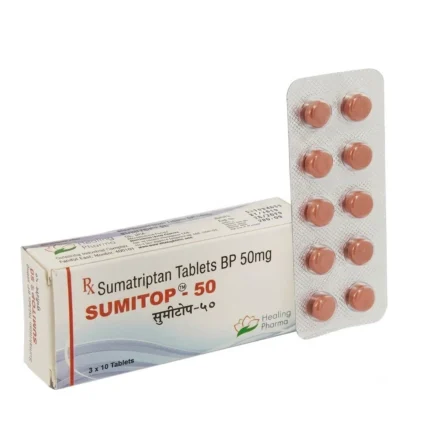
Sumatriptan is also available as a 50 Mg tablet.
Both strengths contain the same active ingredient and are used for acute
migraine treatment. The difference is the amount of sumatriptan in each
tablet, and the appropriate strength should be selected according to
medical advice and individual response.
Sumatriptan 50 Mg Tablet
Sumatriptan 100 Mg Dosage and Administration
Current prescribing information allows a single oral dose of
25 Mg, 50 Mg, or 100 Mg. The dose should be selected
according to the prescribing clinician’s instructions and the patient’s
response to treatment.
If the first dose provides some response but the migraine returns, a
second dose may be considered after at least 2 hours.
The total oral dose should not exceed 200 Mg in a 24-hour
period.
Importantly, a 100 Mg dose does not necessarily provide greater relief
than 50 Mg for every patient. The prescribing information notes that
higher doses may also be associated with more adverse reactions.
([dailymed.nlm.nih.gov](https://dailymed.nlm.nih.gov/dailymed/drugInfo.cfm?setid=e90b0eea-c424-4f00-98da-6ed6e80de1f6&utm_source=chatgpt.com))
Important:
Do not take more than the prescribed amount. Do not combine
sumatriptan with another triptan or an ergot-containing medicine
within the restricted time period.
Sumatriptan 100 Mg vs 50 Mg
Sumatriptan 50 Mg and 100 Mg tablets contain the same active ingredient.
The primary difference is the amount of sumatriptan delivered in a single
tablet.
| Feature |
Sumatriptan 50 Mg |
Sumatriptan 100 Mg |
| Active ingredient |
Sumatriptan |
Sumatriptan |
| Tablet strength |
50 Mg |
100 Mg |
| Primary indication |
Acute migraine treatment |
Acute migraine treatment |
| Dose selection |
Based on individual response and prescription |
Based on individual response and prescription |
The 100 Mg strength is not automatically “better” than 50 Mg. The
appropriate dose depends on the individual patient’s treatment plan,
response, contraindications, and tolerability.
Who Should Not Take Sumatriptan 100 Mg?
Sumatriptan is not appropriate for everyone. Important contraindications
include several cardiovascular, cerebrovascular, vascular, and hepatic
conditions.
- Ischemic coronary artery disease or coronary artery vasospasm
- Wolff-Parkinson-White syndrome or certain accessory conduction disorders
- History of stroke or transient ischemic attack
- Hemiplegic or basilar migraine
- Peripheral vascular disease
- Ischemic bowel disease
- Uncontrolled hypertension
- Severe hepatic impairment
- Recent use of another triptan or an ergot-containing medicine
- Concurrent or recent use of an MAO-A inhibitor
- Known hypersensitivity to sumatriptan
Patients with cardiovascular risk factors may require cardiovascular
evaluation before treatment. The current prescribing information should
be reviewed before using sumatriptan.
([dailymed.nlm.nih.gov](https://dailymed.nlm.nih.gov/dailymed/lookup.cfm?setid=73c9ac06-b55e-41e0-90ec-deb250f37eb5&utm_source=chatgpt.com))
Possible Side Effects of Sumatriptan 100 Mg
Like other prescription medicines, sumatriptan can cause adverse
reactions. Some commonly reported effects include:
- Tingling or unusual skin sensations
- Dizziness
- Drowsiness
- Feeling hot or cold
- Temporary sensations of pressure or tightness
- Injection-site reactions with injectable forms
Chest, throat, neck, or jaw pressure can occur after sumatriptan and may
be transient. However, new, severe, prolonged, or unusual chest symptoms
require prompt medical evaluation because serious cardiovascular
reactions are possible.
Serious hypersensitivity reactions, cardiovascular events,
cerebrovascular events, and serotonin syndrome are important potential
risks described in the prescribing information.
([dailymed.nlm.nih.gov](https://dailymed.nlm.nih.gov/dailymed/lookup.cfm?setid=73c9ac06-b55e-41e0-90ec-deb250f37eb5&utm_source=chatgpt.com))
Sumatriptan 100 Mg Drug Interactions
Tell your healthcare professional about all prescription medicines,
over-the-counter products, vitamins, and supplements before taking
sumatriptan.
Sumatriptan should not be taken within 24 hours of
another triptan or an ergotamine-containing medicine because of the
potential for additive vascular effects.
Concurrent treatment with an MAO-A inhibitor is contraindicated, as is
use within 2 weeks after stopping an MAO-A inhibitor. Other medicines
affecting serotonin pathways, including certain antidepressants, may
increase the risk of serotonin syndrome.
([dailymed.nlm.nih.gov](https://dailymed.nlm.nih.gov/dailymed/lookup.cfm?setid=73c9ac06-b55e-41e0-90ec-deb250f37eb5&utm_source=chatgpt.com))
Sumatriptan and Liver Function
Liver function can affect exposure to sumatriptan. The prescribing
information states that in patients with mild to moderate hepatic
impairment, the maximum single dose should not exceed 50
Mg.
Sumatriptan tablets are contraindicated in patients with severe hepatic
impairment. Anyone with liver disease should discuss the appropriate
migraine treatment and dose with a healthcare professional before using
sumatriptan.
([dailymed.nlm.nih.gov](https://dailymed.nlm.nih.gov/dailymed/drugInfo.cfm?setid=e90b0eea-c424-4f00-98da-6ed6e80de1f6&utm_source=chatgpt.com))
How Frequently Can Sumatriptan Be Used?
Sumatriptan is intended for acute migraine attacks rather than routine
preventive therapy. If headaches require frequent acute medication,
the overall migraine management plan should be reviewed by a healthcare
professional.
Current labeling states that the safety of treating an average of more
than four headaches in a 30-day period has not been
established. Frequent headaches may require assessment for preventive
treatment or medication-overuse headache.
([dailymed.nlm.nih.gov](https://dailymed.nlm.nih.gov/dailymed/fda/fdaDrugXsl.cfm?setid=54c6f8f4-5466-3988-e054-00144ff8d46c&type=display&utm_source=chatgpt.com))
Official Medical Reference
For authoritative information about sumatriptan indications, dosage,
contraindications, interactions, warnings, and adverse reactions, refer
to the current official prescribing information.
DailyMed – Sumatriptan Tablets
Frequently Asked Questions About Sumatriptan 100 Mg
1. What is Sumatriptan 100 Mg used for?
Sumatriptan 100 Mg is an oral triptan used for the acute treatment of
migraine with or without aura in adults. It is intended to treat an
established migraine attack and is not indicated for preventing
migraine attacks.
([dailymed.nlm.nih.gov](https://dailymed.nlm.nih.gov/dailymed/lookup.cfm?setid=73c9ac06-b55e-41e0-90ec-deb250f37eb5&utm_source=chatgpt.com))
2. How does Sumatriptan 100 Mg work?
Sumatriptan stimulates serotonin 5-HT1B and 5-HT1D receptors. These
receptors are involved in migraine-related neurological and vascular
pathways, and activating them helps reduce the processes associated
with acute migraine pain.
3. Is Sumatriptan 100 Mg better than 50 Mg?
Not necessarily. Both strengths are used for acute migraine treatment,
but a 100 Mg dose does not provide greater benefit for every patient.
The appropriate strength depends on individual response, medical
history, and the prescribing clinician’s instructions. Higher doses may
also increase the likelihood of adverse reactions.
([dailymed.nlm.nih.gov](https://dailymed.nlm.nih.gov/dailymed/drugInfo.cfm?setid=e90b0eea-c424-4f00-98da-6ed6e80de1f6&utm_source=chatgpt.com))
4. Can Sumatriptan 100 Mg prevent migraines?
No. Sumatriptan tablets are indicated for acute treatment of migraine
attacks and are not indicated for prophylactic migraine therapy.
People experiencing frequent migraines should discuss preventive
treatment options with a healthcare professional.
([dailymed.nlm.nih.gov](https://dailymed.nlm.nih.gov/dailymed/lookup.cfm?setid=73c9ac06-b55e-41e0-90ec-deb250f37eb5&utm_source=chatgpt.com))
5. How long should I wait before taking another Sumatriptan dose?
Current labeling states that a second oral dose, when appropriate,
should be separated from the first by at least 2 hours. The maximum
recommended total oral dose is 200 Mg in 24 hours. Sumatriptan should
not be combined with another triptan or an ergot-containing medicine
within the restricted 24-hour period.
([dailymed.nlm.nih.gov](https://dailymed.nlm.nih.gov/dailymed/lookup.cfm?setid=73c9ac06-b55e-41e0-90ec-deb250f37eb5&utm_source=chatgpt.com))
Medical Disclaimer
This product description is provided for general educational and
informational purposes only. Sumatriptan is a prescription medicine
and should be used according to the diagnosis and instructions of a
qualified healthcare professional. The appropriate dose depends on the
patient’s migraine diagnosis, medical history, cardiovascular risk,
liver function, other medicines, and response to treatment. This
information does not replace professional medical advice, diagnosis, or
treatment.