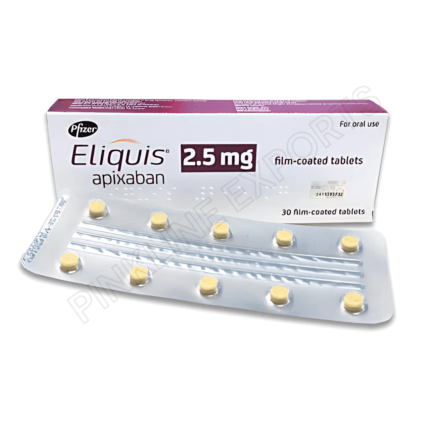
What Is Eliquis 5 Mg – Apixaban?
Eliquis 5 Mg – Apixaban is an oral prescription anticoagulant medication belonging to the class of direct oral anticoagulants (DOACs). It is indicated to help reduce the risk of stroke and systemic embolism in adults with non-valvular atrial fibrillation, and to treat and reduce the recurrence of deep vein thrombosis (DVT) and pulmonary embolism (PE). Apixaban works by selectively blocking Factor Xa, a key enzyme in the blood coagulation cascade responsible for thrombin generation and clot formation.
This prescription medicine should only be used under the direction of a qualified healthcare provider.
How Eliquis (Apixaban) Works
1. Direct Factor Xa Inhibition
Apixaban selectively blocks Factor Xa, a critical enzyme that plays a central role in generating thrombin, the protein that forms fibrin clots. By inhibiting Factor Xa, apixaban helps reduce thrombin generation and limits the formation of harmful blood clots.
2. Reduces Clot Formation
By interfering with the coagulation cascade early in the clotting process, apixaban helps prevent the growth of existing clots and reduces the risk of new clot development.
3. More Predictable Response
Compared with older anticoagulants like warfarin, apixaban generally has a more predictable anticoagulant effect and, in many cases, does not require routine coagulation monitoring (such as INR), although clinical judgment by a healthcare provider is essential.
Mineralocorticoid receptor–based cardiovascular strategies may include Eplerenone Tablets 25 Mg within long-term care planning.
Indications
A qualified healthcare provider may prescribe Eliquis 5 Mg for:
Stroke and systemic embolism risk reduction in non-valvular atrial fibrillation
Initial treatment of DVT and PE
Reduction in the risk of recurrence of DVT and PE
Thromboprophylaxis following certain surgeries (such as hip or knee replacement, if clinically appropriate)
Indications and dosing should always be determined by a licensed clinician based on patient history, risk factors, and clinical status.
Dosage & Administration
⚠ Follow your healthcare provider’s prescription exactly.
Typical dosing instructions may include:
Taken orally, usually twice daily
Can be taken with or without food
Swallow tablets whole with water
Do not crush or chew
If a dose is missed:
Take it as soon as you remember on the same day. Do not double the next dose.Advanced anticoagulation care frameworks may integrate Eliquis 5 Mg – Apixaban as part of supervised therapy planning.
Clinical Benefits
When used appropriately under medical supervision:
Helps reduce the risk of stroke in patients with atrial fibrillation
Promotes prevention and treatment of DVT and PE
Helps reduce recurrence of thromboembolic events
Offers anticoagulation with a more predictable effect in many patients
Effectiveness may vary based on clinical context and individual risk factors.
Safety Information & Precautions
Before initiating therapy, inform your healthcare provider if you have:
Active bleeding
History of a bleeding disorder
Recent major surgery or trauma
Severe liver disease
Reduced kidney function
History of intracranial hemorrhage
Asthma treatment strategies are based on evidence-based clinical data published by leading public health authorities like the CDC.
Important Safety Notes
Increased risk of bleeding is the most significant potential side effect
Avoid sudden discontinuation, as it may increase clot-related risks
Inform clinicians before dental or surgical procedures
Use caution when participating in activities with bleeding risk
Possible Side Effects
Common side effects may include:
Seek immediate medical attention if you experience:
Always consult a healthcare professional for complete safety guidance.
Drug Interactions
Inform your clinician about all medications and supplements you are taking, including:
Other anticoagulants or antiplatelet drugs
NSAIDs
Certain antifungal and antibiotic medicines
Herbal supplements (e.g., St. John’s Wort)
Interactions may increase bleeding risk or alter the effect of this medication.
Use in Special Populations
Pregnancy & Breastfeeding
Consult a healthcare provider. Use during pregnancy or breastfeeding should only occur if clearly necessary, with close clinical supervision.
Elderly Patients
Older adults may have an increased risk of bleeding and should be clinically monitored.
Renal or Hepatic Impairment
Dose adjustments and clinical evaluation of kidney and liver function may be required.
Monitoring & Follow-Up
Although routine coagulation monitoring is often not required, clinicians may:
Check kidney and liver function
Monitor for signs of bleeding
Adjust dosage based on clinical response
Regular follow-up reassures safety and treatment effectiveness.
Storage Instructions
Store tablets in a cool, dry place below 25 °C
Keep in the original container
Protect from moisture and sunlight
Keep out of reach of children
Do not use past the expiry date
FAQs