.svg)



Nipah Virus: Causes, Symptoms, Prevention & Trusted Medical Advisory (2026 Update)

Medically reviewed by: Dr. Neil K, GP and Medical Researcher
Review date: 28-01-206
Disclaimer: This article is for educational purposes only and does not replace professional medical advice. Always consult a licensed healthcare provider before starting or changing any medication.
What Is Nipah Virus?
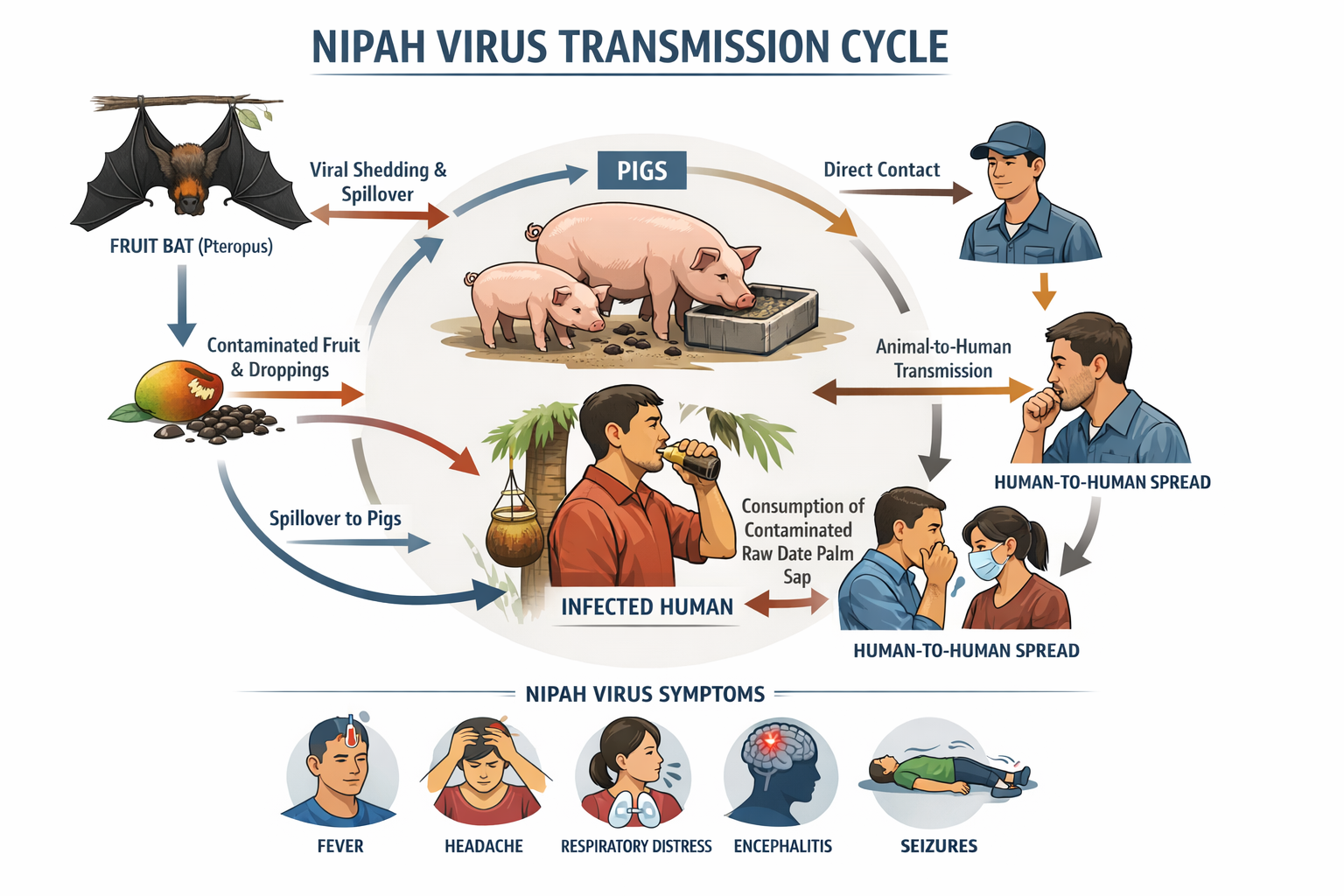
Nipah virus is part of the Henipavirus genus and is considered a priority pathogen by global health authorities due to its ability to cause severe disease and occasional outbreaks in humans. It was first identified in Malaysia in 1998 following an outbreak among pig farmers, and has since been responsible for sporadic outbreaks in South and Southeast Asia.
The virus naturally circulates in fruit bats of the Pteropus genus, which serve as the main reservoir. Infection in humans can lead to respiratory illness and encephalitis (inflammation of the brain).
2. How Does Transmission Happen?
Transmission of Nipah virus to humans occurs through several pathways:
Animal-to-Human Transmission
Direct contact with infected fruit bats or their secretions (e.g., saliva, urine).
Consumption of contaminated food products (such as raw date palm sap contaminated by bat excreta).
Contact with infected intermediate hosts like pigs.
For details on spillover dynamics, see the authoritative World Health Organization (WHO) Nipah virus fact sheet
Human-to-Human Transmission
Human transmission can occur through close contact with bodily fluids (e.g., respiratory droplets, blood, urine) of infected individuals, especially in caregiving or healthcare settings without proper infection control practices. This underscores the importance of standard and droplet precautions for symptomatic patients. See CDC clinical overview on Nipah virus for comprehensive guidance.
3. Who Is at Risk?
Persons in close contact with infected animals (e.g., bat habitats, pig farms).
Caregivers and household contacts of NiV patients.
Healthcare workers without adequate personal protective equipment.
Local health advisories often emphasize outbreak regions and exposure history when assessing risk.
4. Signs & Symptoms of Nipah Virus Infection
Symptoms typically begin 4–14 days after exposure and may vary from mild to severe:
Early Symptoms
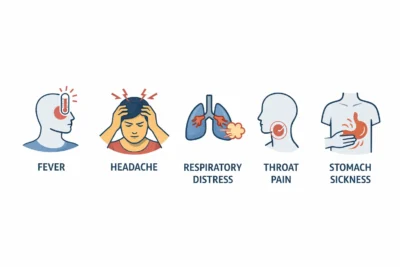
Sudden onset fever
Headache
Sore throat and cough
Vomiting
Generalized weakness
These can resemble common viral illnesses at onset, making early detection based on symptoms alone difficult.
Severe Manifestations
Without prompt supportive care, disease can progress to:
Encephalitis (confusion, drowsiness, seizures)
Altered consciousness
Respiratory distress
Rapid deterioration within 24–48 hours in critical cases
For in-depth clinical features, link to ECDC Nipah clinical manifestations guidance.
5. Prevention & Precautions
There is currently no widely approved vaccine for Nipah virus. Prevention focuses on minimizing exposure risk.
General Precautions
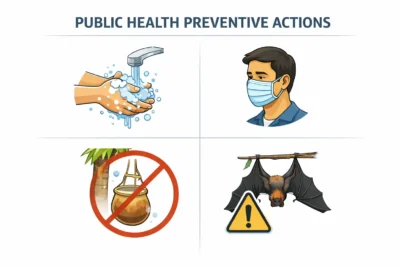
Frequent hand hygiene with soap and water.
Avoid raw or partially eaten fruits and date palm sap that may be contaminated by bats.
Keep distance from sick animals or wildlife.
Use masks and protective gear around symptomatic individuals.
Follow local outbreak advisories and travel health recommendations.
Precautions in Healthcare Settings
Healthcare facilities should practice:
Standard, contact, and droplet precautions
Airborne precautions for aerosol-generating procedures
6. Medical Advisory: Treatment & Supportive Care
No specific antiviral treatment is approved for Nipah infection. Management focuses on supportive care:
Hydration and nutrition
Oxygen therapy for respiratory compromise
Intensive care for neurological complications
Early clinical care may improve patient outcomes. Browse antiviral and antibiotic medications
7. Reporting & Public Health Response
If Nipah virus infection is suspected:
Notify local health authorities immediately.
Isolate suspected case to prevent transmission.
Follow national public health protocols for surveillance and contact tracing.