.svg)



Hair Loss: A Comprehensive Guide to Causes, Treatments, and Evidence-Based Solutions

Why You’re Losing Hair — Causes, Types, Medical Treatments on Hair Loss
Hair loss, medically known as alopecia or baldness, is a universal experience that affects millions of people across all demographics. While the average person has between 100,000 and 150,000 hairs on their head, it is perfectly normal to lose approximately 50 to 100 strands of hair per day as part of a natural growth cycle. The concern arises when new strands do not grow back to replace the ones you shed, leading to thinning or visible bald patches.
In the United States alone, androgenic alopecia—the most common form of hair loss—affects an estimated 80 million people. Beyond the physical symptoms, the psychological impact can be profound. Many individuals report that their physical appearance feels at odds with their self-image, leading to anxiety, moderate psychosocial distress, and social withdrawal. This guide provides a deep dive into the types, causes, and treatments for hair loss.
——————————————————————————–
Expertise: A Detailed Breakdown of Hair Loss Types
Experts classify hair loss based on its appearance, duration, and underlying biological cause. Understanding these categories is essential for an accurate diagnosis.
- Androgenetic Alopecia (Pattern Baldness)
This is a hereditary condition and the most frequent cause of hair loss worldwide. It occurs gradually as individuals age and follows predictable patterns.
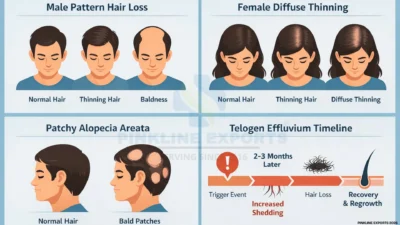
- Male-Pattern Baldness: Typically begins with a receding hairline at the temples or thinning at the crown (vertex), often progressing to a “horseshoe” shape of hair around the sides.
- Female-Pattern Baldness: Usually manifests as diffuse thinning where the hair part becomes wider and the top-central portion of the head becomes progressively less dense.
- Alopecia Areata (Autoimmune)
Affecting up to 6.8 million people in the U.S., this is an autoimmune disease where the immune system attacks the hair follicles.
- Patchy Loss: Sudden appearance of one or more circular, smooth bald patches that may overlap.
- Variations: It can range from single patches (monolocularis) to total scalp loss (alopecia totalis) or the loss of every hair on the entire body (alopecia universalis).
- Telogen Effluvium (Shedding)
This type involves rapid thinning caused by a physical or emotional shock. It occurs when a large number of hairs enter the “resting” phase simultaneously.
- Triggers: Major surgery, loss of a loved one, severe dieting, high fever, or sudden hormonal shifts.
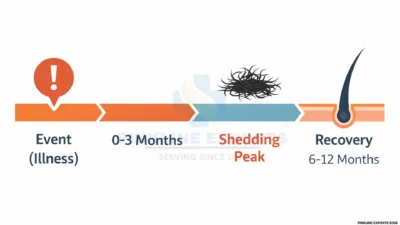
- Timeline: Shedding usually begins 2 to 3 months after the stressful event and is often temporary.
- Anagen Effluvium (Rapid Medical Loss)
This is a very fast loss of hair that occurs during the “growth” phase.
- Causes: Primarily medical treatments like chemotherapy or radiation therapy.
- Impact: Almost 90% of hairs can fall out soon after treatment starts, though they typically grow back once treatment stops.
- Traction Alopecia
Resulting from external trauma, this is caused by hairstyles that pull the hair tightly over long periods.
- Sources: Pigtails, cornrows, braids, hair extensions, and tight rollers.
- Risk: If the pulling continues, scarring can occur, leading to permanent hair loss.
- Frontal Fibrosing Alopecia
Primarily affecting older women, this condition presents as a receding hairline on the forehead. Early treatment is vital to avoid significant permanent baldness.
- Hypotrichosis and Involutional Alopecia
- Hypotrichosis: A rare condition where abnormal hair patterns lead to sparse, fine, and brittle hair shortly after birth.
- Involutional Alopecia: A natural condition where hair follicles gradually switch from the growth phase to the resting phase with age, making hair shorter and fewer in number.
——————————————————————————–
The Multi-Faceted Causes of Hair Thinning
Research indicates that hair loss is rarely caused by a single factor, but rather a combination of genetics, health, and environment.
- Heredity (Genetics): The most common factor, inherited from either parent, which dictates the age at which thinning begins and the speed of its progression.
- Hormonal Changes: Significant shifts during pregnancy, childbirth, and menopause can trigger temporary thinning. Postpartum alopecia is a common example where estrogen drops lead to shedding between 2 and 5 months after birth.
- Medical Conditions: Thyroid diseases (hypothyroidism and hyperthyroidism), fungal infections like ringworm, and lupus are known contributors.
- Nutritional Deficiencies: Not consuming enough protein, iron, or vitamin B12 can deny follicles the nutrients they need to produce terminal hair.
- Drugs and Medications: Side effects from drugs for cancer, arthritis, depression, heart problems, gout, and high blood pressure can lead to shedding.
- Stress and Trauma: Physical shocks (like major surgery or poisoning) and emotional trauma push hair into a premature resting phase.
- Environmental and Lifestyle Factors: Excessive hairstyling, hot-oil treatments, perms, and bleach can damage the hair cuticle. Emerging research even suggests that obesity-induced stress may accelerate hair thinning by targeting follicle stem cells.
——————————————————————————–
Diagnosis: How Professionals Test for Hair Loss
When you see a dermatologist, they will use several methods to determine the cause of your hair loss:
- Medical History: Reviewing family history and medications.
- Blood Tests: Measuring iron levels and thyroid function.
- The Pull Test: Gently pulling 40–60 hairs to see how many come out. If more than ten hairs are extracted, it indicates abnormal shedding.
- The Pluck Test: Plucking hair by the roots to examine them under a microscope for growth phase defects.
- Scalp Biopsy: Taking a small skin sample to differentiate between scarring and non-scarring forms.
- Trichoscopy: A non-invasive method using a dermoscope to examine the scalp and hair in detail.
- Scales: Using the Hamilton–Norwood scale for men or the Ludwig/Savin Scales for women to track the progress of thinning.
Comprehensive List of Medications
While many treatments exist, clinical success varies based on the type of hair loss. Medications work best at preventing further loss rather than regrowing hair in long-bald areas.
- Minoxidil (Brand Name: Rogaine®)
This is a non-prescription (OTC) liquid or foam rubbed into the scalp twice daily.
- Usage: Approved for androgenetic alopecia and alopecia areata.
- Expected Results: Regrowth can take 1 to 6 months to begin, and treatment must be continued indefinitely to maintain results.
- Side Effects: Mild scalp irritation, allergic contact dermatitis, and unwanted hair growth on the face or body.
- Finasteride (Brand Name: Propecia®)
A prescription pill taken daily (1 mg) by men only.
- Usage: Specifically for male-pattern hair loss.
- Expected Results: Effective within 6 weeks, it increases hair retention and weight.
- Side Effects: Experienced by about 2% of men, these include decreased sex drive, erectile dysfunction, and ejaculatory dysfunction.
- Warning: It is not recommended for women and is known to cause birth defects in fetuses.
- Baricitinib (Brand Name: Olumiant®)
On June 13, 2022, the FDA approved this as the first systemic treatment for adults with severe alopecia areata. It treats the whole body rather than just a local patch.
- Dutasteride (Brand Name: Avodart®)
Though primarily used for other conditions, evidence supports its use in treating male pattern hair loss.
- Corticosteroids
- Injections: The standard for patchy alopecia areata, injected directly into the scalp monthly.
- Oral Pills: Used for more extensive cases of autoimmune hair loss.
- Hormonal Modulators
For women with hyperandrogenemia-related hair loss, doctors may prescribe oral contraceptives or antiandrogens such as Spironolactone (Brand Name: Aldactone®) or Flutamide.
- Anthralin
There is tentative evidence that this topical medication may be useful for treating alopecia areata.
- JAK Inhibitors and Ritlecitinib
Newer targeted drugs are emerging as promising options for severe autoimmune cases, changing the outlook for those who did not respond to traditional steroids.

——————————————————————————–
Herbal Supplements and Natural Tips For Hair Loss
Many patients prefer a natural approach, but scientific data on herbal supplements is often limited.
Herbal Status
- Saw Palmetto & Pumpkin Seed Oil: Small trials show tentative benefits for mild to moderate androgenetic alopecia.
- Biotin (Vitamin B7): There is no evidence that biotin treats hair loss unless you have a rare deficiency.
- Egg Oil: Traditionally used in Indian, Chinese, and Japanese medicine, though clinical proof remains sparse.
- No Strong Evidence: Currently, ginkgo, aloe vera, ginseng, hibiscus, and bergamot have insufficient evidence to support their use for hair loss.
Prevention and Healthy Habits for Hair Loss
- Diet: Ensure a healthy intake of calories, protein, and iron.
- Gentle Care: Use a wide-toothed comb, avoid tugging wet hair, and limit hot rollers or curling irons.
- Scalp Protection: Wear a hat and apply sunscreen daily to protect your scalp from UV light, which increases the risk of skin cancer on thinning areas.
- Smoking: Quit smoking; studies show a positive association between smoking and male-pattern baldness.
- Cooling Caps: If undergoing chemotherapy, ask about a cooling cap to reduce the risk of hair loss.
——————————————————————————–
Identifying the Content Gap
While the sources provide a wealth of medical information, there are several “content gaps” worth noting:
- Specific Lab Targets: The sources mention iron and protein deficiencies but don’t specify the exact blood-ferritin levels (often 70+ ng/mL) that specialists look for to ensure regrowth.
- Chemical Irritants: While “harsh treatments” are mentioned, there is no list of specific ingredients to avoid in daily shampoos (e.g., specific sulfates).
- Supplement Purity: The sources warn that supplements aren’t FDA-regulated but don’t explain how to verify product quality through third-party testing.
——————————————————————————–
10 Frequently Asked Questions About Hair Loss
- Does Minoxidil work for everyone? No. It varies by individual and requires consistent use for at least 6 months.
- Can stress cause permanent hair loss? Stress-induced shedding (telogen effluvium) is usually temporary, but it can trigger permanent types of loss in those genetically predisposed.
- Is biotin a “miracle” for hair growth? For most people, no. It only helps if you have a rare biotin deficiency.
- Are the side effects of Finasteride permanent? Most side effects reverse if the medication is stopped, but you must consult your doctor regarding any concerns.
- When should I see a doctor? If you notice sudden loss, patchy spots, or scalp irritation like burning or itching.
- Can tight braids cause baldness? Yes, this is traction alopecia, and it can become permanent if the tension is not removed.
- What is the best treatment for Alopecia Areata? Corticosteroid injections or newer systemic JAK inhibitors like Baricitinib are common first lines.
- Does hair grow back after chemotherapy? In most cases, yes, though it may not grow back the same as it was before.
- Can I prevent genetic hair loss? No, you cannot prevent hereditary baldness, but you can slow it with early medical intervention.
- How does a hair transplant work? Strands are moved from a thick area of the scalp to a thinning area; the hair falls out initially but regrows permanently in months.
——————————————————————————–
Analogy for Understanding: Think of your hair follicles like small plants in a garden. If the soil lacks nutrients (poor diet) or is poisoned (chemotherapy), the plants wither. Genetics determines the type of soil you have, while stress acts like a sudden storm that knocks leaves off. Medications like Minoxidil act as a constant irrigation system—it keeps the plants healthy, but if you turn the water off, the garden will dry up again.