.svg)



Fenbendazole for Cancer Treatment in Humans: Evidence, Safety, and Public Questions Explained

Fenbendazole linked to cancer
Fenbendazole has recently gained global attention as a potential alternative cancer therapy for humans, driven largely by social media discussions, anecdotal experiences, and preclinical scientific research. Originally developed as a veterinary antiparasitic medicine, fenbendazole is not approved for human cancer treatment. However, emerging laboratory data have raised interest in whether it could play a role in oncology research.
This article provides a clear, evidence-based, and human-focused overview of fenbendazole for cancer, separating scientific facts from online claims. It is written to help patients, caregivers, and healthcare professionals understand what is known, what is unknown, and what remains unproven.
Important note: This content is informational only and does not replace professional medical advice. Fenbendazole is not an approved cancer medicine for humans.
What Is Fenbendazole?
Fenbendazole is part of the benzimidazole class of compounds, a group known to interfere with cellular structures in parasites. Because cancer cells also rely heavily on rapid cell division, scientists have investigated whether this mechanism could apply to human cancer cells as well.
Although fenbendazole is widely used in animals, human cancer interest is based on laboratory research, not established clinical treatment.
How Fenbendazole May Affect Cancer Cells
Laboratory studies (cell culture and animal models) suggest several mechanisms that could be relevant to human cancer biology:
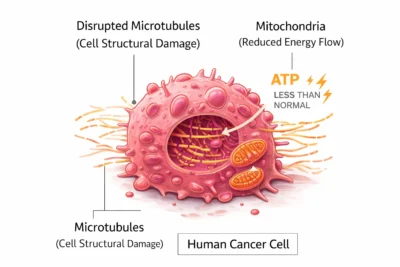
- Microtubule Disruption
Cancer cells divide rapidly. Fenbendazole appears to interfere with microtubules, structures essential for cell division. When these structures are destabilized, cancer cells may stop dividing and undergo programmed cell death.
- Energy Metabolism Interference
Some studies suggest fenbendazole may reduce glucose uptake in cancer cells. Since many tumors rely heavily on glucose for growth, this may create metabolic stress.
- Apoptosis Activation
Apoptosis is the body’s natural way of eliminating abnormal cells. Fenbendazole has shown the ability to activate apoptosis pathways in laboratory cancer models.
⚠️ Key clarification:
These effects have not been proven in controlled human clinical trials.
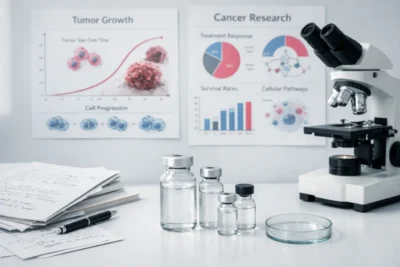
Current Evidence for Fenbendazole in Human Cancer Treatment
What We Know
- Demonstrated anticancer activity in laboratory and animal studies
- Mechanisms overlap with known chemotherapy principles
- Low cost and chemical stability
- Available in following dosages – 150 Mg, 222 Mg, 444 Mg, 500 Mg and 1000 Mg.
What We Don’t Know
- Safe and effective human dosage
- Long-term toxicity in humans
- Drug interactions with chemotherapy, immunotherapy, or targeted therapy
- Which cancer types (if any) could respond
Human Evidence Status
- Limited case reports and anecdotal stories
- No large-scale, randomized human clinical trials
- No regulatory approval for cancer use
Safety and Regulatory Status for Humans
- Fenbendazole is not FDA-approved for human cancer treatment
- Veterinary formulations are not designed for human use
- Potential risks include liver toxicity and unknown drug interactions
- Medical supervision is essential for any investigational use
Regulatory agencies consistently advise against self-medication.
Top 10 Most Common Questions About Fenbendazole for Cancer :
1. Can fenbendazole cure cancer in humans?
No. There is no scientific proof that fenbendazole cures cancer in humans.
2. Is fenbendazole safe for human use?
Safety in humans has not been established through clinical trials.
3. Why are people using fenbendazole for cancer?
Mostly due to online stories and lab research, not medical recommendations.
4. Has fenbendazole been tested on humans with cancer?
Only limited case reports — not controlled clinical trials.
5. Can fenbendazole replace chemotherapy?
No. It should never replace standard cancer treatment.
6. Does fenbendazole work for all cancers?
There is no evidence supporting effectiveness in any specific cancer type in humans.
7. What are the risks of taking fenbendazole?
Possible liver toxicity, unknown interactions, incorrect dosing, and delayed proper treatment.
8. Why do scientists still study fenbendazole?
Because its mechanisms are biologically interesting and could inspire future drug development.
9. Are there human alternatives similar to fenbendazole?
Some related compounds are under medical research, but only approved drugs should be used.
10. Should cancer patients try fenbendazole?
Patients should only follow treatments advised by licensed oncologists or enroll in approved clinical trials.
Regulatory-Safe Patient Guidance
✔ Talk to your oncologist
✔ Ask about ongoing clinical trials
✔ Avoid veterinary medicines
✔ Rely on evidence-based cancer care
Final Thoughts
Fenbendazole is not a proven or approved cancer treatment for humans. While laboratory science suggests potential anticancer mechanisms and also in Mebendazole, human evidence is currently insufficient. Responsible cancer care must remain grounded in regulated, peer-reviewed medical science.