.svg)



Affordable HIV Treatment Options: Why Acriptega (TLD) Is Commonly Prescribed


Managing HIV effectively requires lifelong antiretroviral therapy that is clinically effective, safe, accessible, and affordable. One treatment option that has gained widespread adoption in many countries is Acriptega, a fixed-dose combination commonly referred to as TLD (dolutegravir, lamivudine, and tenofovir disoproxil fumarate).
This article explains why Acriptega (TLD) is commonly prescribed, the medical evidence behind its use, key safety considerations, and authoritative clinical references.
This content is for educational purposes only and does not replace professional medical advice.

What Is Acriptega (TLD)?
Acriptega is a once-daily fixed-dose antiretroviral tablet that combines three well-established HIV medicines:
Lamivudine 300 mg
Tenofovir disoproxil fumarate 300 mg
This combination works by inhibiting HIV replication at multiple stages, helping patients achieve and maintain viral suppression when taken consistently.
Why Is Acriptega Widely Prescribed?
1. Strong Clinical Effectiveness
Dolutegravir-based regimens have shown high rates of viral suppression and a strong barrier to resistance in both clinical trials and real-world settings. These outcomes have led major international health authorities to recommend TLD-based therapy as a preferred first-line option for many adults living with HIV.
2. Once-Daily Single-Tablet Convenience
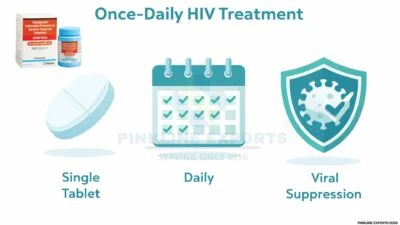
Adherence is a critical factor in successful HIV management. A single-tablet, once-daily regimen simplifies treatment routines, reduces pill burden, and supports long-term adherence—an essential factor in sustained viral suppression.
3. Affordability and Global Access
Acriptega and other TLD formulations are listed on the World Health Organization Essential Medicines List, enabling countries to procure quality-assured generic versions at reduced cost. This inclusion has played a major role in expanding access to HIV treatment through public health programs worldwide.
Safety and Prescribing Considerations
While Acriptega is widely prescribed, it may not be suitable for every individual. Clinicians typically evaluate:
Kidney function: Tenofovir disoproxil fumarate requires renal monitoring in some patients
Hepatitis B status: Stopping therapy may cause hepatitis B flare in co-infected patients
Drug interactions: Certain medicines may interact with dolutegravir
Pregnancy considerations: Clinical guidance should be followed based on individual assessment

Who May Be Prescribed Acriptega?
Acriptega is commonly prescribed for:
Adults and adolescents initiating HIV treatment
Patients transitioning from older regimens when clinically appropriate
However, treatment decisions must always be individualized and guided by a qualified healthcare professional based on clinical evaluation and laboratory findings.
FAQ’s
Patient Education Note
HIV medications must be taken exactly as prescribed to maintain viral suppression. Patients should never start, stop, or change antiretroviral therapy without consulting a licensed healthcare provider.

Medical Review Disclaimer:
This article is intended for educational purposes only and does not constitute medical advice. HIV treatment decisions must be individualized based on patient history, laboratory testing, and current clinical guidelines.
Reviewed by:
Dr. M Markis, MD
Specialty: Infectious Diseases / HIV Medicine
Review Date: 22-01-2026