.svg)



Abiraterone Acetate in Prostate Cancer: Mechanism and Treatment Insights

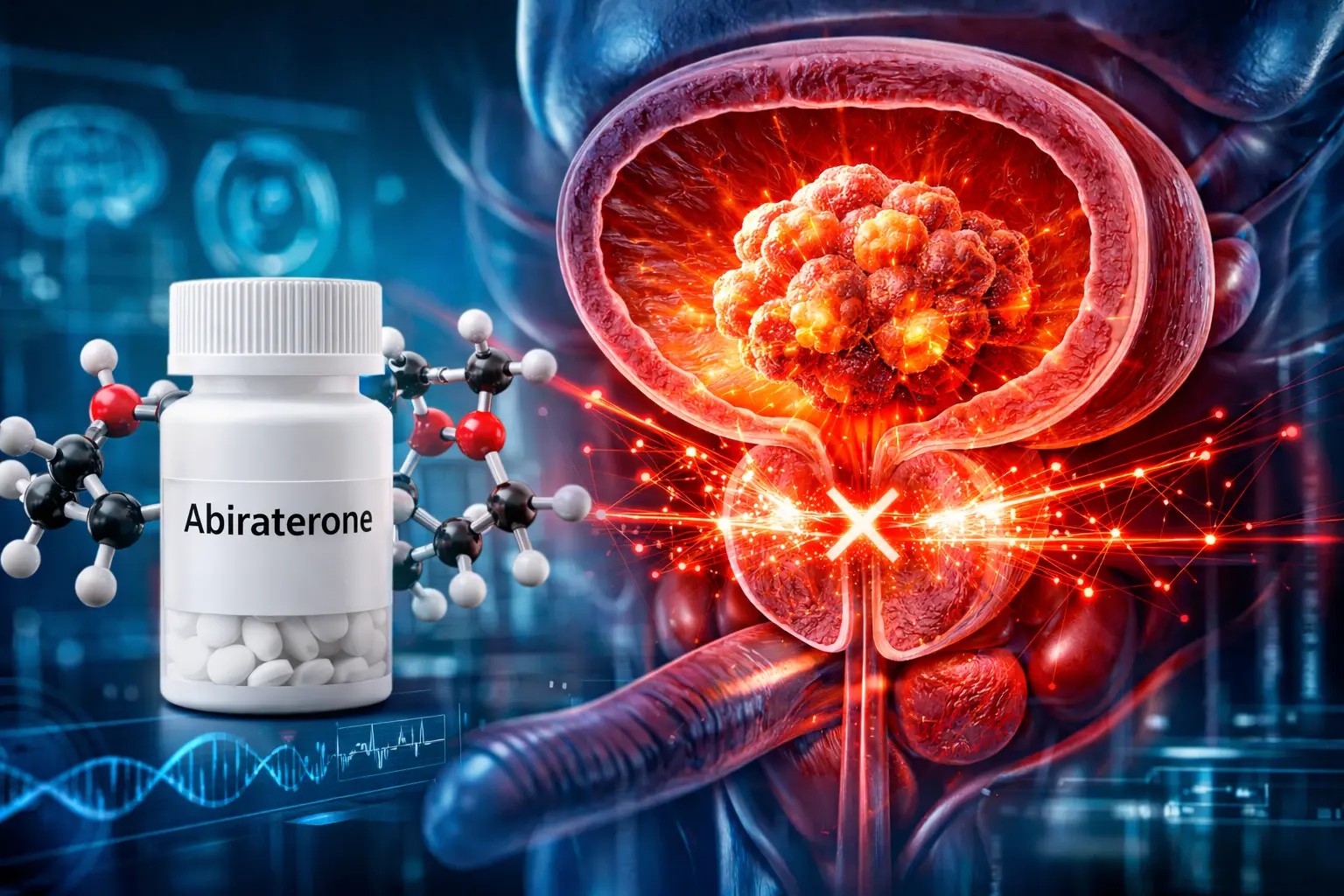
Prostate cancer continues to be one of the most frequently diagnosed malignancies among males globally. Advanced and metastatic prostate cancer need systemic treatment, whereas localized disease can be treated with a surgery or radiation therapy. Since androgens like testosterone are what fuel the growth of prostate cancer, hormone-based therapies have long been the cornerstone.
Abiraterone Acetate, an oral androgen biosynthesis inhibitor, is one of the significant therapeutic developments in prostate cancer treatment. Treatment approaches for metastatic castration-resistant prostate cancer (mCRPC) and metastatic hormone-sensitive prostate cancer (mHSPC) have changed since abiraterone was approved by the government.
Androgen Dependency and Prostate Cancer
Androgen signaling is vital to the growth and existence of prostate cancer cells. Prostate cells’ androgen receptors are bound by testosterone. Its more powerful derivative, dihydrotestosterone (DHT then triggers gene transcription that encourages the growth of tumors.
Androgen Deprivation Therapy’s (ADT) Function
The conventional systemic treatment for advanced prostate cancer has been androgen deprivation therapy (ADT).
ADT lowers testosterone levels by:
- Agonists for luteinizing hormone-releasing hormone (LHRH)
- Orchiectomy, or surgical castration
- Antagonists of LHRH
Many people develop castration-resistant prostate cancer which is a stage in which the cancer advances despite low circulating testosterone levels, but ADT initially slows disease development in the majority of patients.
According to research, cancer cells may continue to use androgens received from the adrenal glands or produce androgens even when blood testosterone levels are lowered. This knowledge led to the creation of treatments, such as abiraterone acetate, that thoroughly inhibit the production of androgens.
Abiraterone Acetate
An oral prodrug called abiraterone acetate is transformed into its active form by the body. It targets a crucial enzyme involved in androgen production and is categorized as a CYP17A1 inhibitor.
To lessen some hormone-related side effects, it is taken in conjunction with low-dose corticosteroids, frequently prednisone or prednisolone.
The following uses of abiraterone are authorized:
- Prostate cancer resistant to metastatic castration (mCRPC)
- When combined with ADT, metastatic hormone-sensitive prostate cancer (mHSPC)
- When it was introduced, it marked a major breakthrough in prolonging survival and slowing the progression of advanced prostate cancer.
Mechanism of Action: The Function of Abiraterone
Enzyme Inhibition of CYP17A1
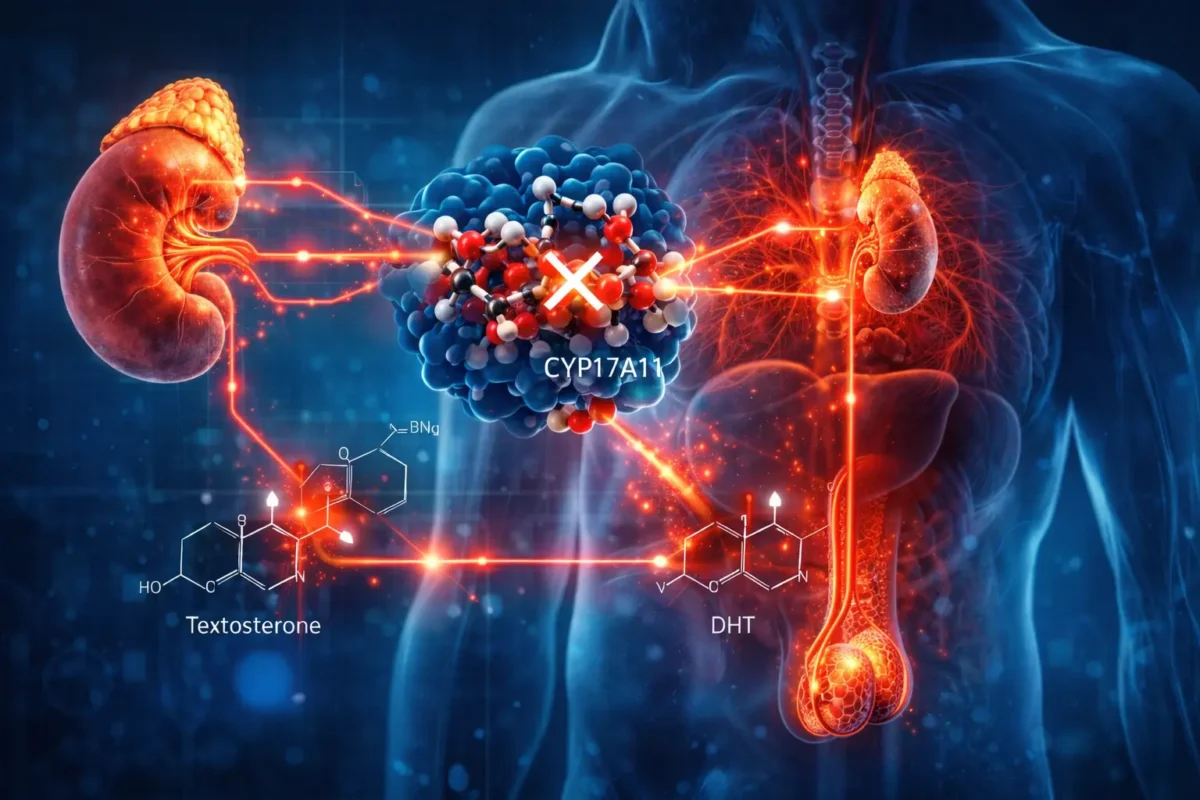
Abiraterone’s primary mechanism is suppression of CYP17A1 (17α-hydroxylase/17,20-lyase).
CYP17A1 is essential for the synthesis of androgens through two metabolic processes:
- Activity of 17α-hydroxylase
- Activity of 17,20-lyase
The capacity of prostate cancer cells to activate androgen receptors is restricted by this thorough suppression of androgen production, which slows the growth of tumors.
Why Is Abiraterone Combined With Prednisone?
Inhibition of CYP17A1 impacts the synthesis of cortisol in addition to lowering androgen production. Adrenocorticotropic hormone (ACTH) synthesis may rise in response to decreased cortisol levels, potentially producing an excess of mineralocorticoids.
This disparity could result in:
- High blood pressure
- Low potassium, or hypokalemia
- Low-dose prednisone aids with fluid retention:
- Replacing decreased cortisol
- Reduce the overproduction of ACTH
- Reduce adverse effects associated with mineralocorticoids
As a result, using corticosteroids in conjunction with abiraterone is a common therapeutic approach and a safe prescription practice. Clinical Support Supporting Abiraterone Numerous sizable, randomized Phase III clinical trials have provided evidence in favor of abiraterone’s use in the treatment of prostate cancer.
Abiraterone in individuals with metastatic castration-resistant prostate cancer whose condition worsened following chemotherapy:
- Compared to a placebo, abiraterone plus prednisone showed an increased overall survival rate.
- Also, improvements in symptom control and progression-free survival were noted.
When mCRPC patients have never had chemotherapy:
- Abiraterone slowed the advancement of radiography.
- The duration of opiate use for pain associated with cancer was prolonged.
- Many patients’ quality of life indicators improved.
As a result of these discoveries, treatment guidelines all around the world have widely adopted them.
Safety Profile and Side Effects
Although abiraterone is usually well tolerated, its method of action is linked to predicted side effects.
- Typical Adverse Reactions
- High blood pressure
- Hypokalemia
- Retention of fluid
- Exhaustion
- Pain in the joints
Abiraterone in Prostate Cancer Sensitive to Metastatic Hormones (mHSPC)
Later studies assessed Abiraterone in conjunction with ADT for metastatic hormone-sensitive prostate cancer at an earlier stage of the disease.
Standard Dosage and Administration Protocol for Treatment
- 1,000 mg of Abiraterone Acetate that is taken orally once a day
- Usually taken orally twice day, 5 mg of prednisone is administered.
- Ingested without food
- For at least two hours prior to and one hour following dosage, refrain from eating.
- It is recommended to swallow tablets whole.
Following administration recommendations is crucial because food greatly enhances absorption and can change drug exposure.

Monitoring Suggestions
Usually, patients using Abiraterone Acetate need:
- Regular clinical evaluation
- Optimizing safety and therapeutic benefit requires close collaboration with an oncology care team.
- Observing blood pressure
- Monitoring of serum potassium
- Tests for the functioning of liver
Patient Selection
- Have prostate cancer that has spread
- In spite of ADT, demonstrate disease progression
The following factors determine whether to use Abiraterone or another androgen receptor pathway inhibitor:
- Interactions between drugs
- Medical evaluation
- History of previous treatments
- Comorbidities
- The preferences of the patient
Comparison With Other Hormonal Therapies Personalized treatment planning is still crucial.
Among the several androgen receptor pathway inhibitors is abiraterone.
Additional treatments could:
- Prevent the translocation of androgen receptors
- Obstruct the binding of DNA
- Block androgen receptor signaling directly
They all seek to inhibit androgen signaling, although they do so in different ways. Clinical decision-making takes individual patient characteristics, side effect profiles, and efficacy data into account.
Future Directions and Emerging Research
Current studies on advanced prostate cancer investigate:
- Combining targeted therapy
- Following advancement, sequencing techniques
- Selection of treatments based on biomarkers
- Strategies for combination therapy
In order to more accurately identify patients who are most likely to benefit, researchers are now looking into biological markers of Abiraterone response.
In the upcoming years, precision oncology techniques should further hone its function.
Quality of Life Considerations
Quality of life is a significant aspect of prostate cancer treatment that goes beyond survival results.
According to clinical research, Abiraterone:
- Lessens discomfort associated with cancer
- Slows the progression of symptoms
- In certain situations, maintains functional status longer than a placebo.
Nonetheless, possible advantages must be weighed against adverse effects and the objectives of each patient when making treatment selections.
Considerations for Clinicians in Practice
When doctors prescribe Abiraterone, they usually:
- Assess the liver’s baseline function
- Teach people how to take their medications as prescribed.
- Verify the disease’s stage and history of treatment.
- Examine risk factors for cardiovascular disease.
- Create a plan for monitoring
A key component of choosing the right therapy is the clinician and patient working together to make decisions.